



By Jason Cruz
NORTHWEST ASIAN WEEKLY

Photo by Jason Cruz
A debate between candidates took place on Saturday, Oct. 3 between Rebecca Saldana and Tohiko Grace Hasegawa as they vie for the Metropolitan King County Council District seat 2. Each responded to questions about issues concerning their district and both responded similarly, which will make the decision difficult for voters.
Saldana currently represents Washington’s 37th District, where she has been since being appointed in 2016. She chairs the Senate Labor & Commerce Committee and serves on the Agriculture & Natural Resources, Rules, and Ways & Means committees. A proponent of representing underrepresented groups, she sponsored the HEAL Act, the first statewide law addressing the disproportionate environmental hazards faced by Black, Indigenous, and other communities of color, and the Washington Voting Rights Act, which has expanded access to democracy for historically marginalized groups.
Hasegawa is a fourth generation Japanese American. Her grandparents were incarcerees of Camp Minidoka during World War II. She currently serves as Port of Seattle Commissioner. She is the first woman of Asian ancestry elected to the Port in its over 110-year history. Previously, she was executive director of the Washington State Commission on Asian Pacific American Affairs.
The seat was left open after former Councilmember Girmay Zahilay was elected as King County Executive.
Three members of the community moderated the debate asking a variety of questions relevant to the citizens of the district, including predatory telemarketing practices, housing, and jobs.
The first question was about unsolicited calls asking about residents wanting to sell their homes.
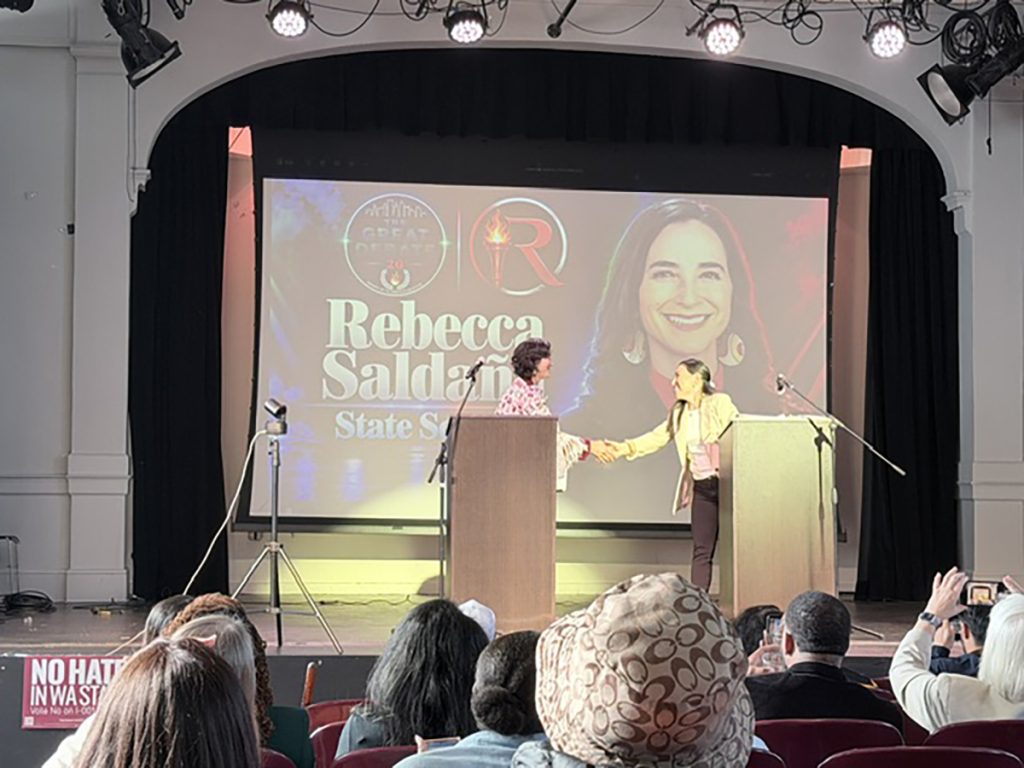
Photo by Jason Cruz
“We have to look at who is behind these calls,” explained Saldana. “[H]ow are we using our Attorney Generals or our Prosecutor’s Office to go after them to make sure that we are addressing the fact that they are trying to steal wealth from our residents.”
Hasegawa was also in favor of curbing predatory calls that occur in the district. “I think that it’s pretty basic deterrence theory that the punishment for violations needs to make sure it outweighs the benefits of harassing our community members.” She proposed having a reporting of continued violations and a potential fine for those entities that continue to harass.
The issue of “right to return” was addressed which refers to displaced tenants and the legal guarantee to move back.
“As a state senator, it has been a priority for me that Black homeowners, people with disabilities, people on fixed incomes that have lived in their communities for a generation or more have an opportunity to stay in their communities,” Saldana explained. She talked about raising the cap on property taxes and attempted to eliminate some of the paperwork so it can be more streamlined.
“As a County Councilmember, we must make sure that the county is proactively reaching out to those that are eligible,” said Saldana.
“What community organizations have pushed and fought for is a community reinvestment program,” said Saldana. “We use some of the money from our cannabis legislation and the industry and to reinvest back into our communities.” She emphasized support given to programs that allowed for home ownership.
Hasegawa lauded the use of participatory budgeting, a program that shifts decision-making power directly to community members. This approach allows for residents to determine how public funds are allocated. It allows for the community to decide how public dollars are invested, promote racial equity, and build trust through transparent decision making.
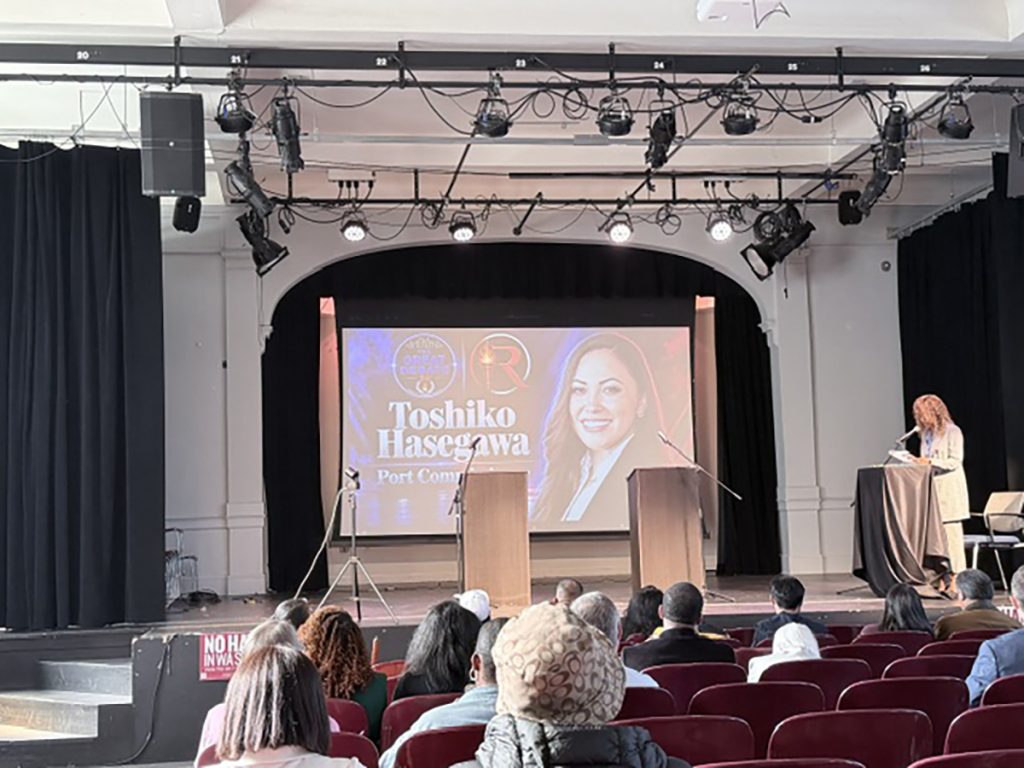
Photo by Jason Cruz
“For me, over my 20 years of public service…we don’t know it all,” said Hasegawa of how she would be in the position on the King County Council. “I have learned the lesson of making sure that I can take up less space when needed and listen and practice active listening so I can practice humility to be the best responsive representative that I can be.” She added, “[W]e have to be able to change our minds, we have to be able to change and grow.”
Both were given an opportunity for closing remarks and each supported the same progressive measures for the district. “We have two progressive women of color that will stand ten toes down for our community,” exclaimed Hasegawa to cheers from both Saldana and Hasegawa supporters. “We are in on this together, we are neighbors, for me when we reflect upon the experience of my family which is the fire for my passion for civil rights and social justice,” said Hasegawa.
“We both agree that housing should be affordable to everyone, raising our wages and improving transit, and making universal child care a reality for our residents,” said Saldana. “We know that this requires that we are doing transformative work, showing up, being creative, and pushing back on what was said was not possible.”
District 2 covers University District, Laurelhurst, Ravenna, Eastlake, Capitol Hill, the Central District, South Seattle, Allentown, and Skyway.
“The Great Debate ‘26” was held at the Rainer Arts Center in South Seattle by the Robinson Collective. It featured candidates running in this year’s election as well as provided an opportunity for multiple candidates to introduce themselves to voters and provide them with information on their platforms.
The general election is Nov. 3, 2026.
For more information on Rebecca Saldana, visit rebeccasaldana.com.
For more information on Toshiko Grace Hasegawa, visit votetoshiko.com.
Jason can be reached at newstips@nwasianweekly.com.