

By Carolyn Bick
NORTHWEST ASIAN WEEKLY
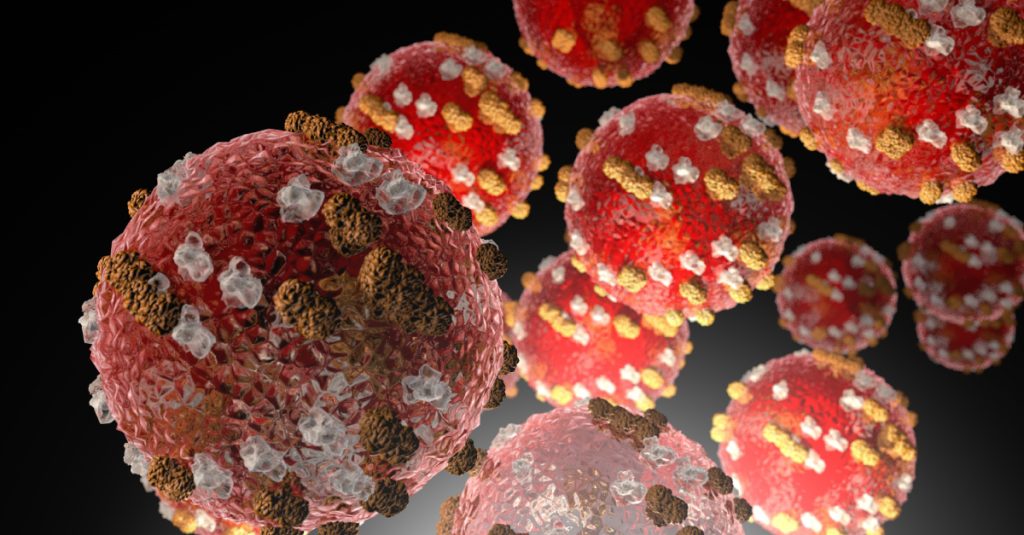 Measles is making a troubling comeback in the United States. With 5,412 confirmed cases as of Nov. 12 this year alone, there is the possibility that the U.S. could lose its “eliminated” status, which it has held since 2000.
The Pan American Health Organization (PAHO) had already put off making a decision about the country’s status in March.
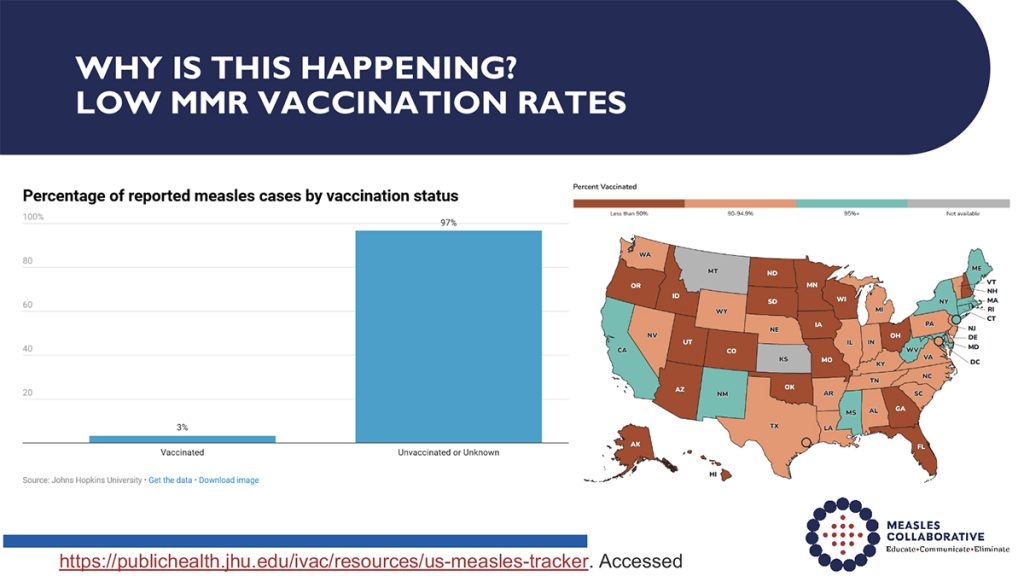
But counter to some claims that unvaccinated immigrants bring the disease, it is actually the overall decrease in Americans’ vaccination rates that are prompting the surge. This includes refugees.
“Refugees are usually vaccinated at the same level or better than U.S. people,” said Patsy Stinchfield, a pediatric nurse practitioner and the executive director of the Measles Collaborative. She and fellow panelists spoke at an American Community Media briefing focused on the rate of measles in older immigrant populations, and why those populations may be susceptible to infection. “Most arriving who have not had measles or evidence of vaccine will be revaccinated upon arrival.”
 Infection can bring with it “immune amnesia”
 Infection can bring with it “immune amnesia”
Measles brings with it a host of complications, even after the initial infection and its associated symptoms have cleared up. Measles is a disease that creates what is known as “immune amnesia.”
According to UCLA Health, immune amnesia “is a phenomenon in which portions of the immune system’s memory are wiped clean. It occurs because the measles virus can invade not only the cells of the respiratory system, but also the cells of the immune system.”
This includes specialized white blood cells that are supposed to recognize diseases the body has previously fought off. Under normal circumstances, these specialized white blood cells will mount a defense against the previously encountered pathogen. This is why vaccines—most often the inactive, and therefore safe, form of a virus—are so crucial in medical care.
But without the specialized white blood cells’ ability to recognize the pathogens that the body has encountered before, UCLA Health states, “the immune system is perpetually flying blind. This leaves the person susceptible to contracting secondary infections from other pathogens, including those that they have successfully fought off before. Researchers have found that, after recovering from the measles, the immune system is suppressed for at least several months, and for up to two years.”
One of the most highly contagious airborne diseases, measles is easily spread from person to person, and can linger in the air for up to two hours after an infected person has passed through an area. Symptoms include fever, cough, and spots on the body.
Unvaccinated children highest risk to older immigrants
Older immigrants are at risk for measles for a variety of reasons.
People born before 1957 in the U.S. have long been presumed immune to the disease, because of childhood infection. Between 1963 and 1967, people who received a measles vaccine in the U.S. and elsewhere may have gotten what’s known as a “killed vaccine,” meaning that the vaccine was ineffective and inactive. Measles vaccinations for children in the U.S. became mandatory in the 1970s. Even then, it took several decades for PAHO to consider the disease eliminated.
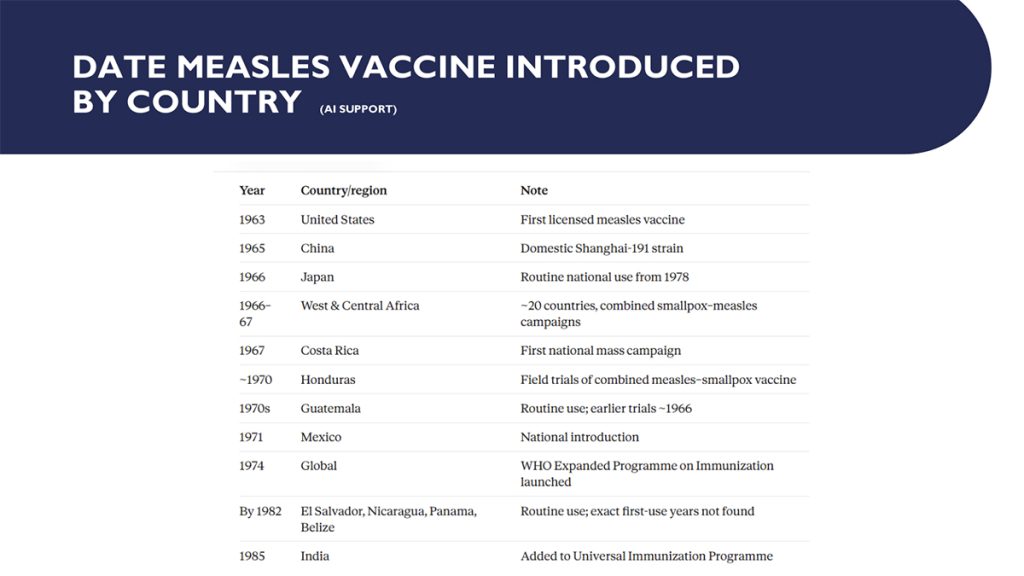
However, many countries did not establish vaccination timelines until the late 1970s or mid-1980s. For instance, India did not establish a vaccination timeline until 1985. This means that some older immigrants may never have recovered from a measles infection or had the opportunity to be vaccinated.
Additionally, sometimes, immigrants can have missing or fragmented birth records and may also face extra barriers to care, such as language access barriers, financial barriers, and difficulties navigating the healthcare system.
These combined reasons, alongside fewer Americans vaccinating their children against measles, lead to higher rates of measles infections among older immigrants, explained Andi Shane, the Chief of the Pediatric Infectious Disease Division at Emory University School of Medicine.
“What’s happened with a lack of vaccination is that we have now had circulation of the measles virus. We’ve had loss of community protection. And so now, what we’ve seen are more adults who have had measles,” Shane said. “Because of the loss of immunity of children, measles is now being spread to adults who do not have protection and were previously relying on the protection of children.”
Measles in detention centers
Measles outbreaks have repeatedly been confirmed in Immigration and Customs Enforcement (ICE) detention centers throughout the U.S., but they are not a driving factor in the current outbreak, Stitchfield said.
Reports throughout the year show that measles outbreaks in ICE detention centers are not infrequent. Just this past summer, for instance, federal officials quarantined 180 detained immigrants, following an outbreak at Camp East Montana at Fort Bliss in El Paso, Texas. The same facility had previously reported another outbreak earlier in the year.
However, this does not always mean that immigrants within these facilities are driving the outbreaks. In Arizona, for instance, a measles outbreak appears to have started among detained immigrants, but the ongoing spread of the disease was tied to federal immigration staff who refused to get vaccinated.
The detained immigrants got vaccinated, but federal officials continued to refuse to do so, even after the link was identified. This means that they became disease vectors, bringing measles into their communities and continuing the spread within the detention center.
Establishing trust
Panelists stressed that it is important that people who do not know whether they were vaccinated or infected get vaccinated. But convincing someone to get vaccinated may not be quite so simple as presenting them with the facts, said Munira Maalimisaq, a family nurse practitioner based in Minneapolis, Minnesota. Maalimisaq is also the founder and CEO of Inspire Change Clinic.
When she was 9 years old, Maalimisaq lost her sister, who was just 7, to measles. The family was living in Somalia at the time, and did not have access to vaccinations.
“I’m pretty sure my mom would do anything to vaccinate my sister right now, if we could,” Maalimisaq said. “If you lived in rural Somalia, you may not have access to it.
Even today, I go back after and that’s something that we see. It is how much influence your family has, how much money they have—all of that still is a barrier anywhere.”
But it’s not just a question of availability, Maalimisaq said. Minnesota’s vaccination rates have plummeted. The state has experienced five measles outbreaks since 2011, outbreaks that have cost the state $7.7 million in response. It doesn’t appear to be a lack of access, though. It appears to be a lack of trust.
For instance, Maalimisaq runs something called a Motherhood Circle for Somali women. Every year, the circle has a cohort of about 75 people who sign up. At the beginning of the year, measles vaccination rates among these mothers’ children are low. In 2025, the cohort began with a vaccination rate of just 12%. By the end of the cohort, nearly 90% of the mothers in the circle had vaccinated their children.
“What that showed me was, if we give families space where they can learn, share experience, ask questions, and support each other, they are going to make a decision that is well informed, and that comes from them,” Maalimisaq said. “Every mom deserves to have a space where she can ask those questions.”
But trust can only come with listening without judgment, education, and cultural understanding, Maalimisaq said.
“I would say, as a healthcare provider, as a community advocate, the founder of [a] clinic … I want families to feel heard,” she said. “I want to bring their voices to places that they may not have access to and bring community voices to different places that make decisions for them, whether it’s advocacy or through policies and all of those things. … I cannot change what happened to my sister. But what I can change is what happens to other families.”
Leave a Reply