

By Nina Huang
NORTHWEST ASIAN WEEKLY
In many Asian families, asking someone if they’ve eaten is more than a question about food. It’s a way of showing care, checking in, and expressing love without directly saying, ‘I love you.’
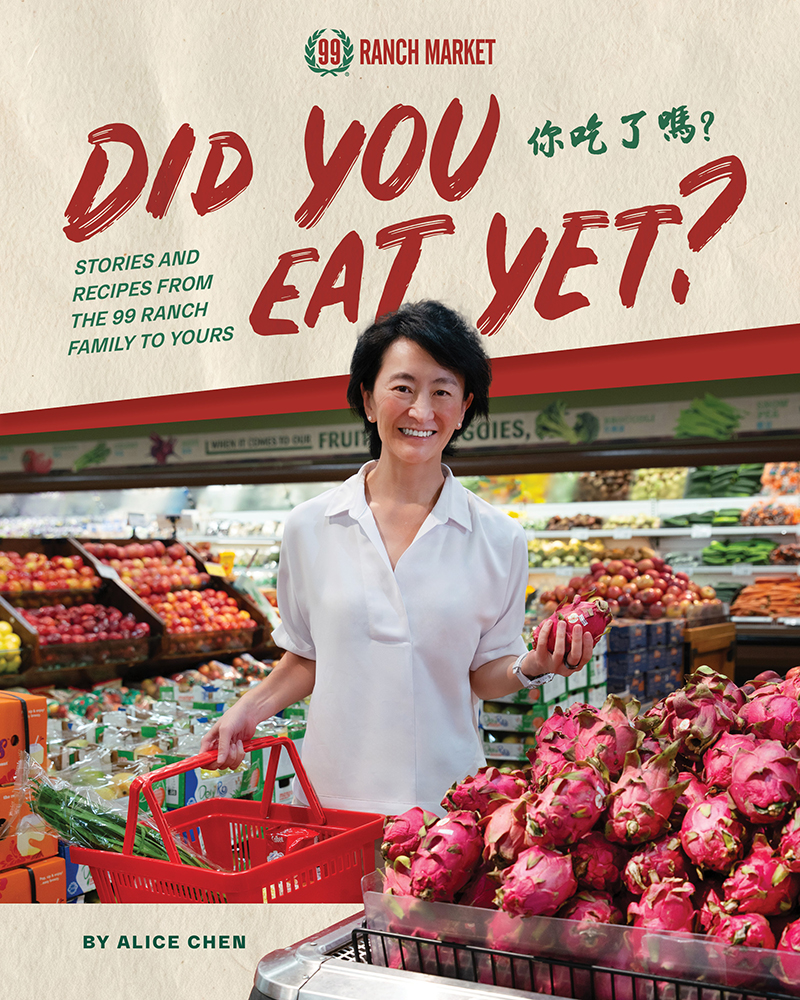
That familiar sentiment is at the heart of Did You Eat Yet?, the first-ever cookbook from 99 Ranch Market, featuring 88 Pan-Asian recipes alongside personal stories from the grocery chain’s employees and the memories that connect them to food.
Food as a love language
For Emily Huang, vice president of marketing at 99 Ranch Market, the cookbook is about more than sharing recipes. It’s also an opportunity to celebrate Asian food culture and the ways families pass down traditions through cooking.
She explained that the cookbook is a love language to Asian Americans. The recipes range from quick, 10-minute meals for busy weeknights to more involved dishes for gathering around the table—not just for Asians, but for everyone.
Huang, who has been with 99 Ranch Market for nearly five years, said the idea originally came from CEO Alice Chen, who had been thinking about developing a cookbook for years. Huang worked with the marketing team and colleagues across the company to curate the recipes, develop the concept, and position the cookbook as a way to introduce the brand to a wider audience.
Founded in 1984 by Taiwanese immigrant and businessman Roger Chen, 99 Ranch Market is celebrating its 42nd year in business. What began as a grocery store serving Asian immigrant communities has grown into a national chain with 66 stores across 11 states (California, Texas, New Jersey, Nevada, Washington, New York, Oregon, Arizona, Virginia, Maryland, and Massachusetts), and soon to be 12 states with an upcoming store opening in Naperville, Illinois early next year.
For many customers, the grocery store has become part of their family history. Some grew up shopping there with their parents and grandparents and now return with children of their own.
Ingredient-filled memories
Huang, who was born and raised in Taiwan until age 14 before growing up primarily in the Los Angeles area, understands that connection personally.
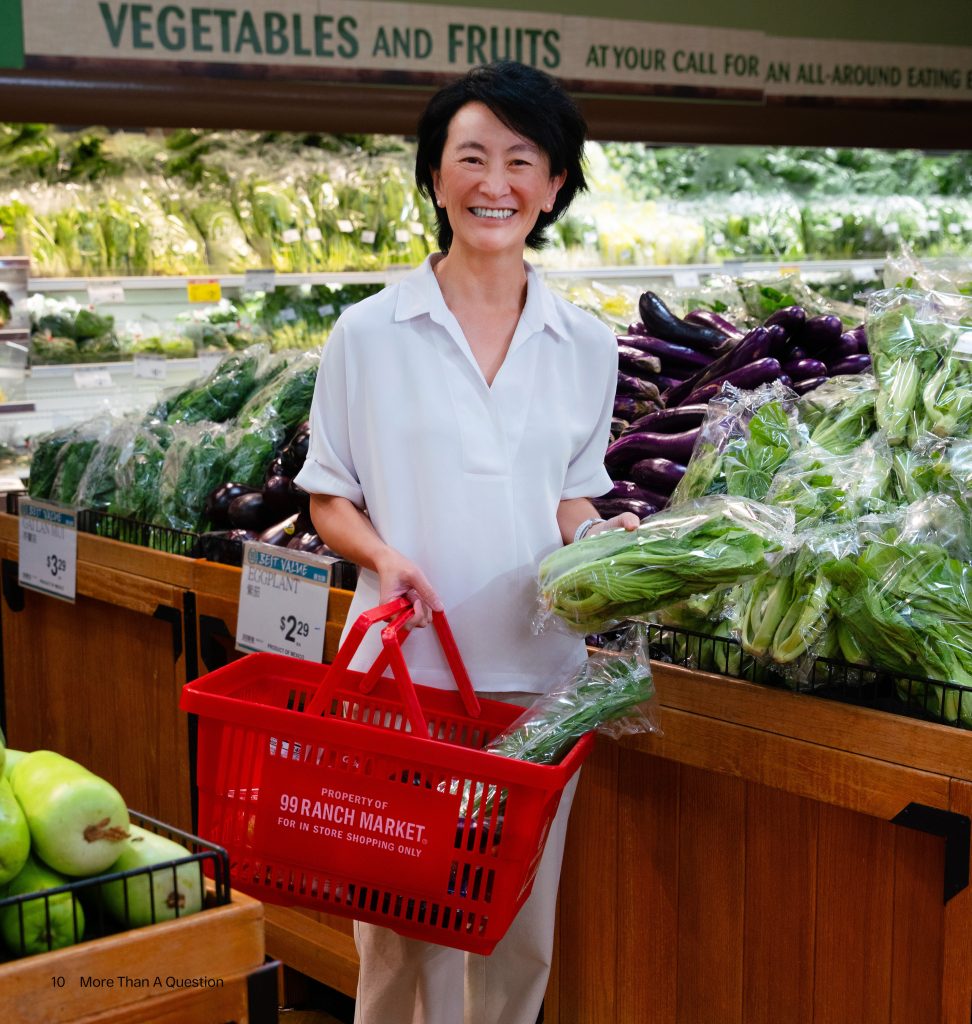
“I grew up eating this dish,” she said, describing the memories attached to familiar foods and the experience of being able to recreate them with friends and family. “It’s really learning about your roots and culture and being able to recreate the memory.”
She said that connection became even more meaningful after she started her own family.
“I never really knew about this until I built my own family,” she said. The cookbook is a quintessential love letter, she explained, reflecting the way many Asian parents and grandparents express affection through food.
Sourcing recipes from 99 Ranch’s own extended family
Did You Eat Yet? brings that idea to life through recipes submitted primarily by 99 Ranch employees. When the team first developed the concept, they knew they wanted it to be a Pan-Asian cookbook, rather than focus on just one culture.
The internal recipe search eventually turned into what she described as a “Shark Tank” moment, with employees enthusiastically submitting dishes and sharing the personal stories behind them.
The team wasn’t simply looking for recipes that tasted good. They wanted to understand what each dish meant to the person sharing it.
The response was emotional for the marketing team. Employees shared stories about dishes they grew up eating, meals prepared by their grandmothers, and foods that reminded them of home.
“It was touching and emotional,” Huang said. “We really appreciated them sharing their stories with us.”
Some of those memories and personal notes are included throughout the cookbook, giving readers a glimpse into the people and family traditions behind the recipes.
After collecting submissions, the team worked to ensure the final selection represented a broad range of Asian cuisines. More than 80% of 99 Ranch employees speak a second language, and the team received recipes reflecting the diverse backgrounds and food traditions represented across the company.
The result is a collection of 88 recipes spanning Chinese, Taiwanese, Korean, Japanese, Southeast Asian, and other cuisines.
Accessible pantry basics
For Huang, making the cookbook accessible was equally important. The team wanted it to appeal to people who already shop at 99 Ranch and grew up eating Asian food, as well as those who may be less familiar with the ingredients and cooking techniques.
The cookbook begins with a pantry guide introducing readers to different types of rice and grains, cooking wines, vinegars, aromatics, sauces, and spices.
“For people not familiar with Asian foods, they can follow the recipes,” Huang said. “In the beginning, we have pantry basics, educating people about different types of rice, aromatics, to get familiar with the Asian food culture.”
Another priority was ensuring that every ingredient in the recipes could be found at 99 Ranch Market.
“We make sure every single ingredient, we’ll be able to find in 99 Ranch Market,” she said.
Among the recipes, one of Huang’s personal favorites is Taiwanese dan bing, or egg pancake, a familiar breakfast dish that she appreciates for its simplicity and versatility.
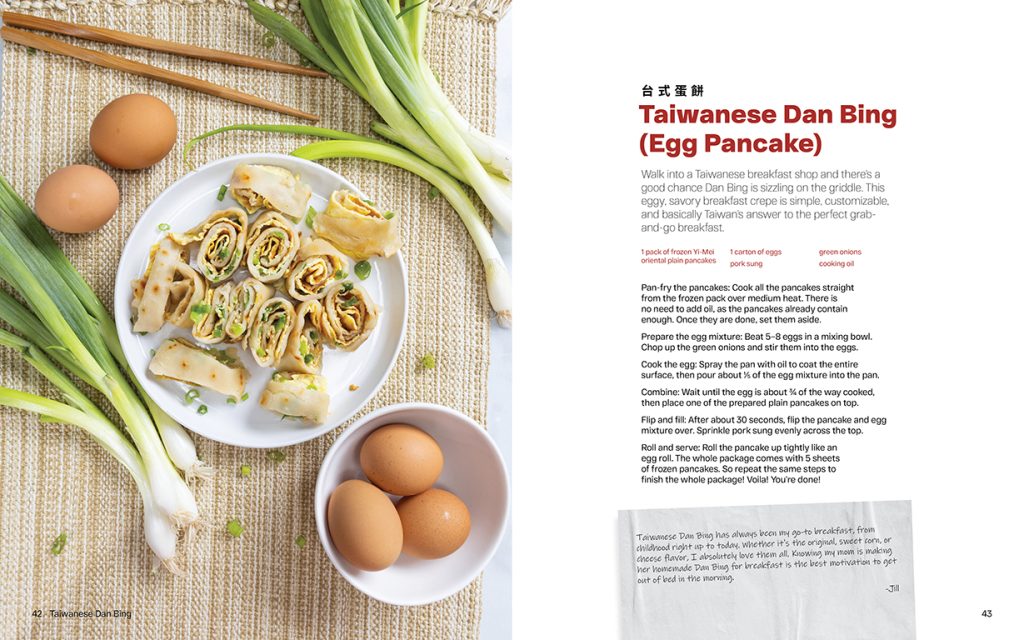
“It’s so versatile and something we all enjoy. It’s awesome comfort food. You can eat it anytime,” she said.
Huang likes that the basic pancake can be adapted with different fillings and toppings, including corn or pork floss (rou song). The same foundation can become something different depending on what someone has available in the kitchen.
The dan bing recipe was also a favorite among employees, including Chen.
Huang’s second favorite is Vietnamese pho, particularly the cookbook’s approach to making the traditionally time-intensive dish more accessible.
“It takes a long time to create pho broth, but we’re able to provide a semi-homemade version using ingredients from our store.”
From a simple dish such as egg pancake, to something as classic as a tomato egg, to the more sophisticated lion’s head meatball, there’s something for everyone.
The cookbook’s chapters also reflect the different ways food can express care, with playful titles such as “Eat Before You Go,” “Finish Every Grain,” “I Saved You the Best Piece,” and “Drink It All: The Good Stuff’s in the Soup.”
Continuation of “Raised by 99 Ranch” campaign
For Huang, the project is also a continuation of a campaign the company launched in May called “Raised by 99 Ranch.”
As part of that campaign, the marketing team interviewed customers at 99 Ranch stores and asked them what it meant to be raised by the grocery chain.
The cookbook builds on those connections, giving customers another way to reflect on their experiences with the brand and the role Asian grocery stores play in their lives.
“It’s a continuation of that generation of connection for our customers with 99 Ranch,” Huang said.
As the company looks toward its next chapter, it is also continuing to expand its footprint. A new store planned for Naperville, Illinois, just outside Chicago, will mark the company’s first location in the state and its 12th state overall. The opening is anticipated sometime next year.
After more than four decades, 99 Ranch Market continues to serve customers looking for the ingredients that help them care for their families. For Huang, the cookbook captures the emotional connection behind that everyday experience.
One ingredient she considers essential in any Asian kitchen is green onion, or scallions.
“It’s a quintessential ingredient that is in a lot of Asian cooking,” she said.
It’s a fitting reminder of the cookbook’s larger message: Sometimes, the smallest ingredients and simplest meals carry the biggest memories.
Did You Eat Yet? is available as an e-book through Apple Books, Amazon, and Barnes & Noble. Printed hardcover editions are being sold through the 99 Ranch Market website for the holiday season.
Nina can be reached at newstips@nwasianweekly.com.
Leave a Reply