



The U.S. Supreme Court will review the admission standards at a Maryland county’s elite public magnet schools, following a challenge by a group of mostly Asian American parents. The case could have national implications.
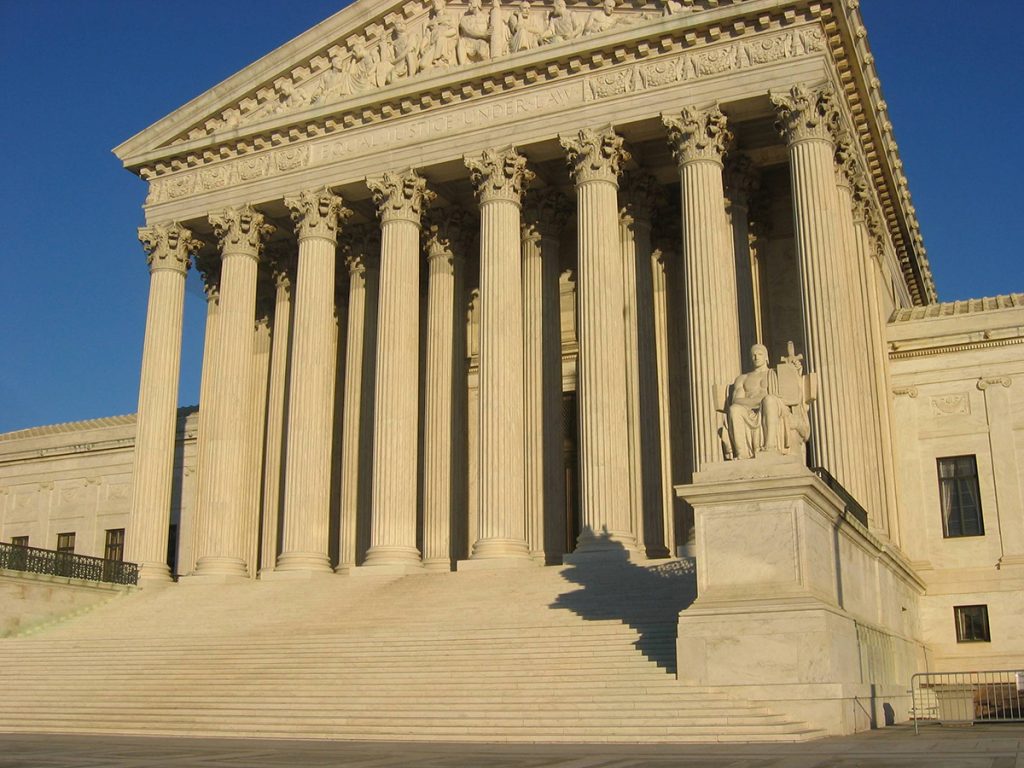
U.S. Supreme Court building, December 2004. Wikimedia Commons. Photo by: Duncan Lock.
The parents, who are bringing the challenge against Montgomery County, Maryland, belong to the Association for Education Fairness, SCOTUSblog reported. The group, which describes itself as “concerned Asian American parents in Montgomery County,” argues that the county’s admission standards are discriminatory against Asian Americans.
In 2020, the county implemented a new standard intended to increase diversity by increasing enrollment in Black and Hispanic students at four selective magnet middle schools in the area.
The association argued that this violated the constitutional rights of Asian American students, even though the standards did not outwardly take race into account. Among other things, the county policy involved screening all fifth graders for possible admission, instead of only those whose parents had asked for them to be included. The policy eliminated teacher recommendations and comparisons to their fellow students at local schools.
Starting in 2021, the county adopted a new policy. All fifth graders who met certain criteria were placed in a pool and selected by lottery for admission to magnet programs. The association amended the complaint to argue that the new policy still discriminated against Asian American students.
Attorneys who filed arguments with the U.S. Supreme Court on behalf of the school district described the system as a “colorblind lottery.”
While the school board filed a successful motion in district court to dismiss the case, in 2022 and an appeals court upheld that decision in February, the association brought the case to the U.S. Supreme Court. The association alleged that the standards are intended to decrease the number of Asian American students, and that they therefore constitute intentional discrimination, in violation of the U.S. Constitution’s fair treatment clause. The group maintained that the case can go forward without additional allegations that the Montgomery County policy has a disproportionate impact on one specific race.
The association cited the Supreme Court’s 2023 decision in the case of Students for Fair Admissions v. President and Fellows of Harvard College, in which the court held that the use of affirmative action in the college admissions process was unconstitutional.
“Under the applicant pool benchmark,” the association wrote in its court brief, “the government can set specific racial targets, hit them, and avoid even an inquiry into discriminatory intent.”
Leave a Reply