



By James Tabafunda
NORTHWEST ASIAN WEEKLY
An hour before Mi La Cay opened its doors on Oct. 24, dozens of people were already lined up outside the Little Saigon restaurant.
Vicki Le of Lynnwood was first in line.
“We will really miss the noodles,” she said. “So special. The taste is so good. That’s why we had to come.”
Mi La Cay, the Vietnamese Chinese noodle house founded by Ha Ong and managed by his younger sister, Trinh Ong, will close at 8 p.m. on Oct. 29, ending a Chinatown-International District (CID) institution that began in 1993.
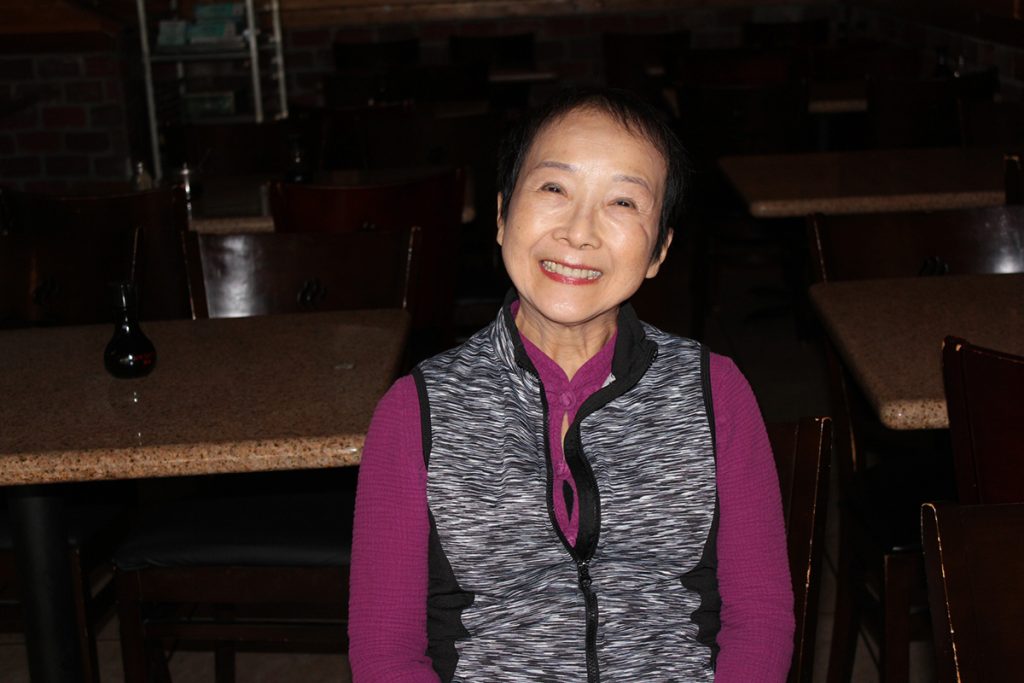
Trinh Ong poses for a photo at Mi La Cay. Photo by James Tabafunda.
A family uprooted twice
The Ongs’ journey began in China, then moved to Vietnam. Their grandparents left China for Vietnam, where Trinh Ong was born in Binh Duong, a province about 15 miles north of what was then Saigon. The family was ethnically Chinese, part of a community that, Trinh said, largely made its living running small businesses.
“Pretty much all of the Chinese immigrate to Vietnam doing business,” she said. “And we were pretty good at it at the time.”
That changed after the Communist takeover. Around 1977, she said, authorities seized businesses owned by ethnic Chinese families, taking the Ongs’ inventory and property. Because her father was serving in the army, her mother’s name was on the business license, and officials threatened to put her in jail.
“They just took everything,” Trinh said.
The Ongs arrived in the U.S. in 1980 and settled in the Seattle area. Their parents opened Café Kim in Renton, a Vietnamese restaurant that drew Boeing employees at lunchtime, according to a 1997 Northwest Asian Weekly profile.
The oldest son steps in
Then came an unexpected crisis. Their father was seriously injured in an accident, and for a period of time, the family did not know whether he would survive. Ha Ong, the oldest child and a gifted math student who loved numbers, left school to help their mother run Café Kim.
“He sacrificed for his siblings,” Trinh said, her voice filling with emotion. “Even after so many years, I’m still really touched when I mention it. If not for him, we probably would not be where we are right now.”
Ha managed Café Kim for more than a decade. But he wanted something of his own, his sister said—something different.
A recipe, years in the making
So, Ha began experimenting. A relative who ran a Mi La Cay restaurant in Santa Ana, California, provided inspiration and, at first, the egg noodles. But the broth and the fried shrimp were his own creations, Trinh said.
“It took him years to come to the point of what you have now,” she said.
The restaurant’s name carries a special meaning. Ha told The Seattle Times in 1993 that La Cay was a Saigon district known for Chinese egg noodles and that “mi” means noodles. In Chinese, a 1997 Northwest Asian Weekly article stated, the name translates to “happy noodle house.”
In summer 1993, Ha approached the owner of the Blue Lagoon, a restaurant at the corner of Rainier Avenue South and South Dearborn Street that had been closed for six months, and asked to try running a noodle house in the dining room. Early customers were mostly Vietnamese who had heard of the Mi La Cay name and found the flavors they remembered and treasured.
About three months later, Seattle Times restaurant critic John Hinterberger stopped in for lunch. His Oct. 17, 1993 review praised the “light, clear chicken-pork-duck stock” and ultra-thin egg noodles, called the place a “good find, great value,” and noted that every bowl cost less than $5.
“I didn’t want to be like every other Vietnamese restaurant,” Ha told the newspaper. “And I didn’t want to be another pho restaurant either.”
Trinh developed a passion for cooking at age 12 in Vietnam. She later earned a bachelor’s degree and worked as an accountant, but she tired of office work and joined her brother at the restaurant.
“I don’t like the cubicle type of life,” she said. “I like to talk. I like to socialize.”
Ha told her to try it and leave if she didn’t like it.
“I tried, and I got hooked,” she said. She ran the front of the house; he ran the kitchen. They worked side by side for many decades until he decided to retire.
A move to Little Saigon
In 2016, redevelopment of the Rainier and Dearborn property forced the restaurant to move. Mi La Cay reopened at 212 12th Avenue South in a Little Saigon strip mall that once housed Malay Satay Hut. A Seattle Times review that June said the food “is no less worthy of devotion,” highlighting the house noodle soup with fried chicken, pork, and fried shrimp.
Over the years, the restaurant drew customers of many backgrounds, including Chinese, Filipino, Korean, Vietnamese, Russian, Mexican, and “many more” diners, the Ongs wrote in their Oct. 21 farewell post on Facebook. They described children who grew up, married and returned with families of their own, and a widowed customer who still hung a late spouse’s jacket on a chair and ordered that spouse’s favorite bowl.
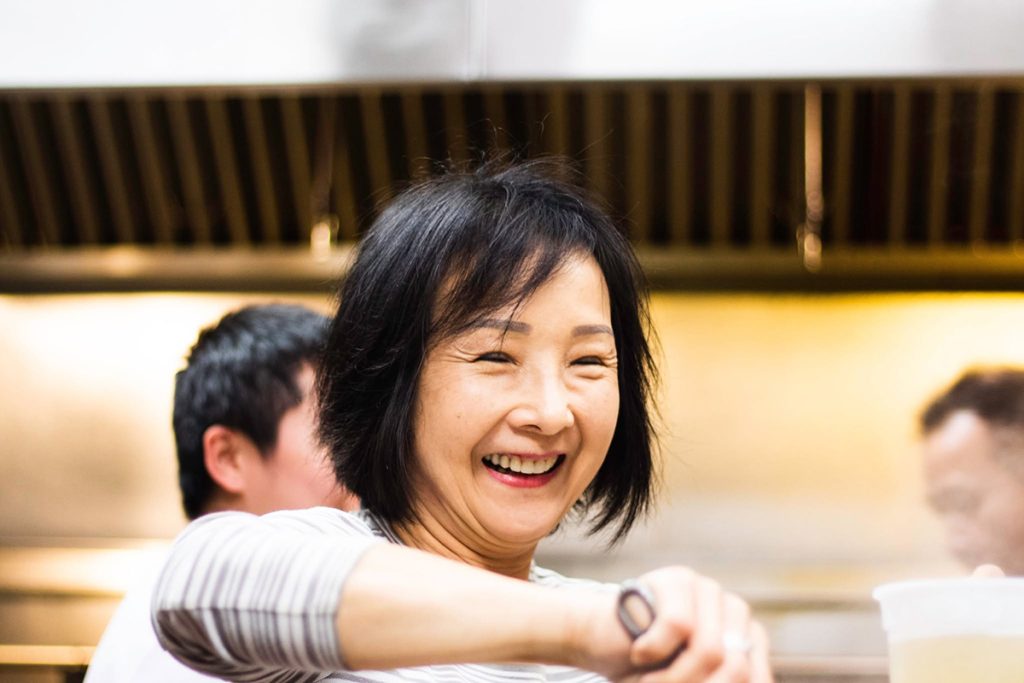
Trinh Ong. Via Mi La Cay’s Facebook page.
An Hong, who arrived at the restaurant with Le, said they had been customers since the Rainier Avenue days.
“The taste is just like back home,” he said. “Every time you eat, it reminds you of back home.”
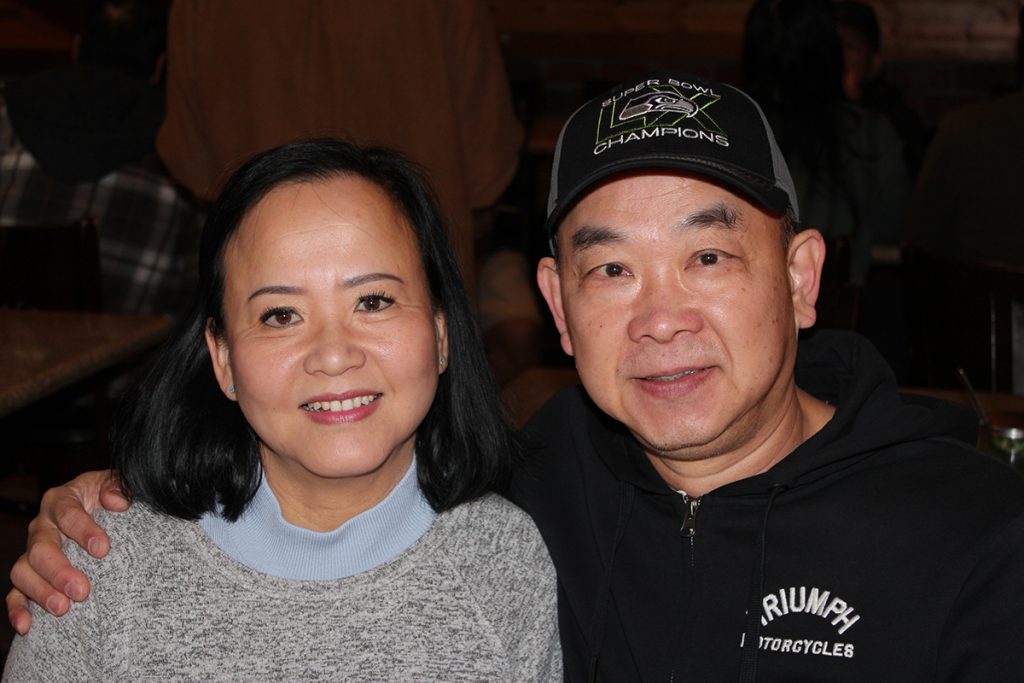
Vicki Le, left, and An Hong, right, pose for a photo at Mi La Cay. Photo by James Tabafunda.
Surviving the pandemic
The COVID-19 pandemic nearly spelled the end of Mi La Cay. Trinh credits the Seattle Chinatown International District Preservation and Development Authority, Friends of Little Saigon, and Laura Clise, founder of Intentionalist, with support and grants that kept the doors open.
“If not for the community, I probably would not be around since 2020,” she said. “I was down to the bottom.”
In 2021, as anti-Asian attacks rose nationwide, she spoke publicly about harassment and robberies that Asian business owners had long endured in silence.
“If it happens, we speak out, we don’t hold back,” she told KIRO-TV at the time.
Many factors went into decision to close
The decision to close was a complicated one.
Trinh was diagnosed with acute myeloid leukemia in June 2021, according to a 2022 Bloodworks Northwest blog profile. “My energy is not what it was before, so my husband really doesn’t want me to do it,” she said about working at Mi La Cay. “And I’m getting older, a lot older, and my brother, too.”
Another factor in the siblings’ decision to close was the lack of a successor. Trinh’s daughter, Adeline, works in nursing, and her son, Ethan, lives in Chicago and works in a “consulting business.” She said she would not ask them to take over.
Hong said he understood.
“They have their own lives and their own new things,” he said. “You cannot just force the kids to take over.”
In Vietnam, he noted, some Chinese noodle shops pass down through four generations. In Seattle, he doubted he would find another like Mi La Cay.
“I don’t think you can find the same one,” he said.
Mi La Cay will not reopen under new ownership. The siblings have sold the space to a couple who own a restaurant in Federal Way, Trinh Ong said. She has not met them; the sale was handled through her agent and signed electronically.
“It will be a new restaurant,” she said. “I don’t know what they’re going to do.”
As for Trinh, she simply plans to rest. But it is hard to say goodbye, she said, especially as customers arrive with hugs, tears, and flowers for the Ongs—and line up out the door for one last bowl of their favorite noodles.
Leave a Reply