



When Seattle police installed dozens of high-tech cameras in the Chinatown-International District (CID) last spring, residents and civil liberties advocates questioned whether the cameras would improve safety or threaten privacy.
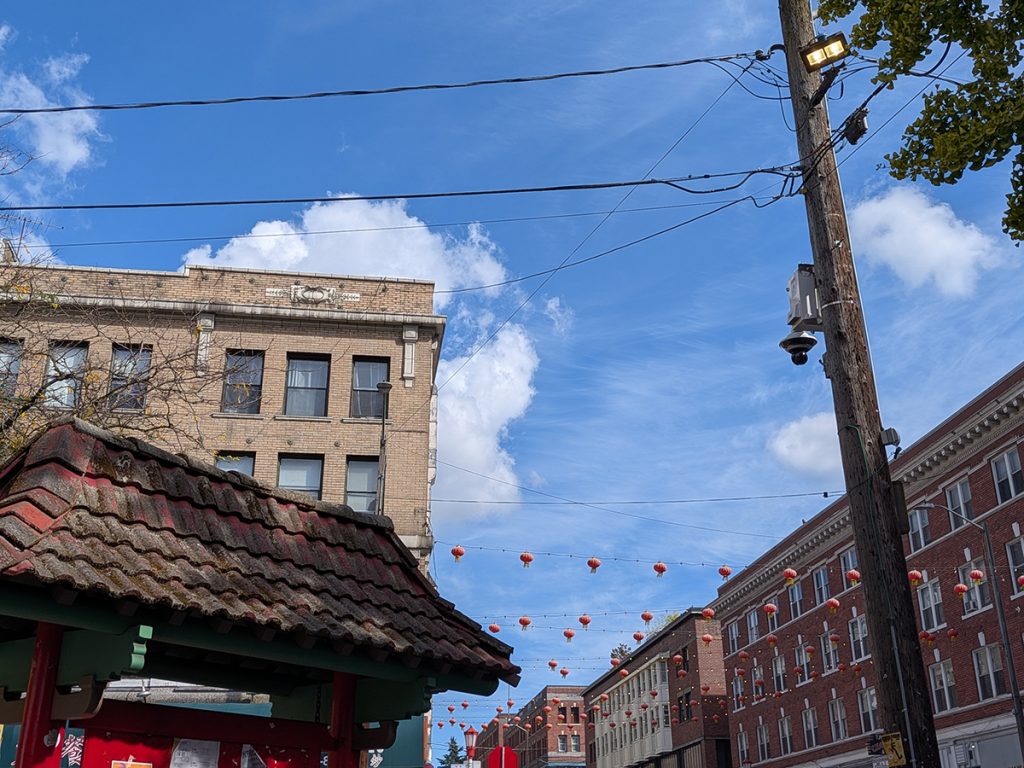
A surveillance camera near Hing Hay Park (Photo by Ruth Bayang)
A new report from the city’s Office of Inspector General found that police have largely followed the rules so far, though some oversight gaps remain.
The audit reviewed surveillance through 2025 in the CID, downtown and along Aurora Avenue. It found that 98% of saved video clips were tied to serious or violent crimes or high-priority 911 calls. Only 38 clips involved minor or nonviolent incidents, most related to traffic crashes.
The system also has several safeguards. It does not use facial recognition, routine footage is generally kept for just five days, and cameras are supposed to blur private areas such as apartment windows. Auditors found only five instances where private windows were visible and said police ordered adjustments.
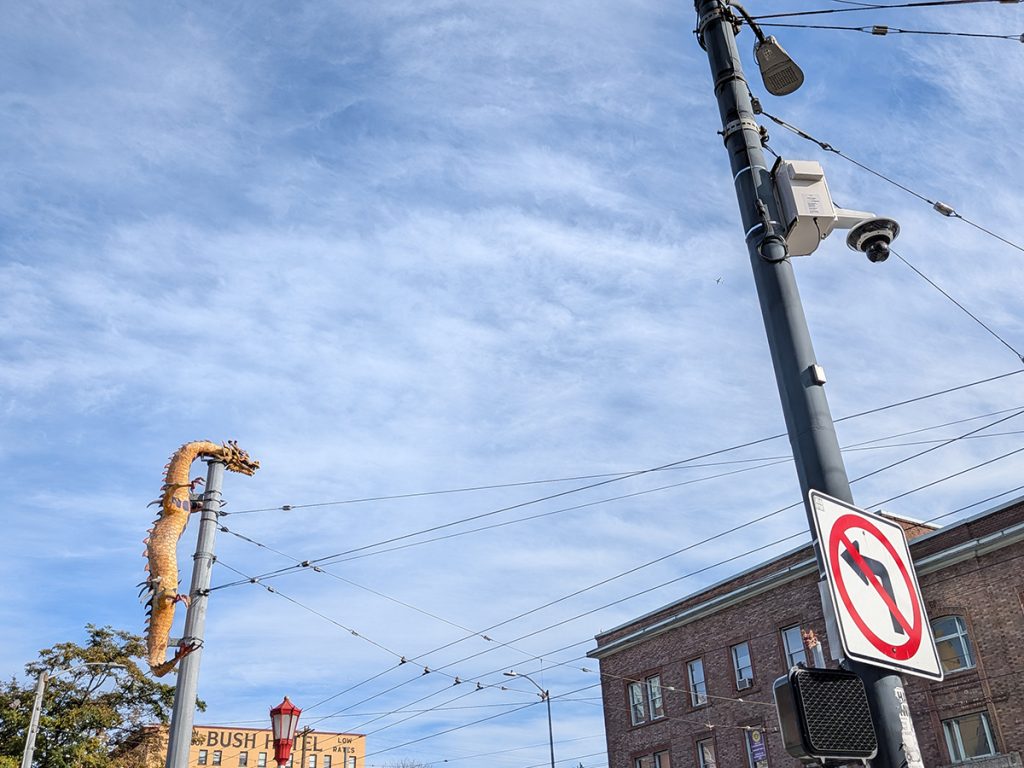
A surveillance camera near 5th and Jackson (Photo by Ruth Bayang)
Still, the report found that the software doesn’t require officers to enter a case number before viewing live camera feeds, leaving room for potential misuse. The city also lacks clear rules for connecting private business cameras to the police system.
The audit found that police generally stayed within the program’s civil-liberties safeguards. But it doesn’t answer the bigger question: Do the cameras actually reduce crime?
A separate University of Pennsylvania study is examining that question, and that report is expected at the end of 2027.