



By Kai Curry
NORTHWEST ASIAN WEEKLY
On any given day, menopause and perimenopause affect thousands of women. This natural phase of life, with its challenging physical and mental impacts, makes it difficult for women to function at home and at the workplace. It can lead to lost productivity and lost careers, and yet, menopause and perimenopause are poorly understood and rarely considered in workplace policy. On Monday, June 1, Gov. Bob Ferguson signed an executive order to address this issue.
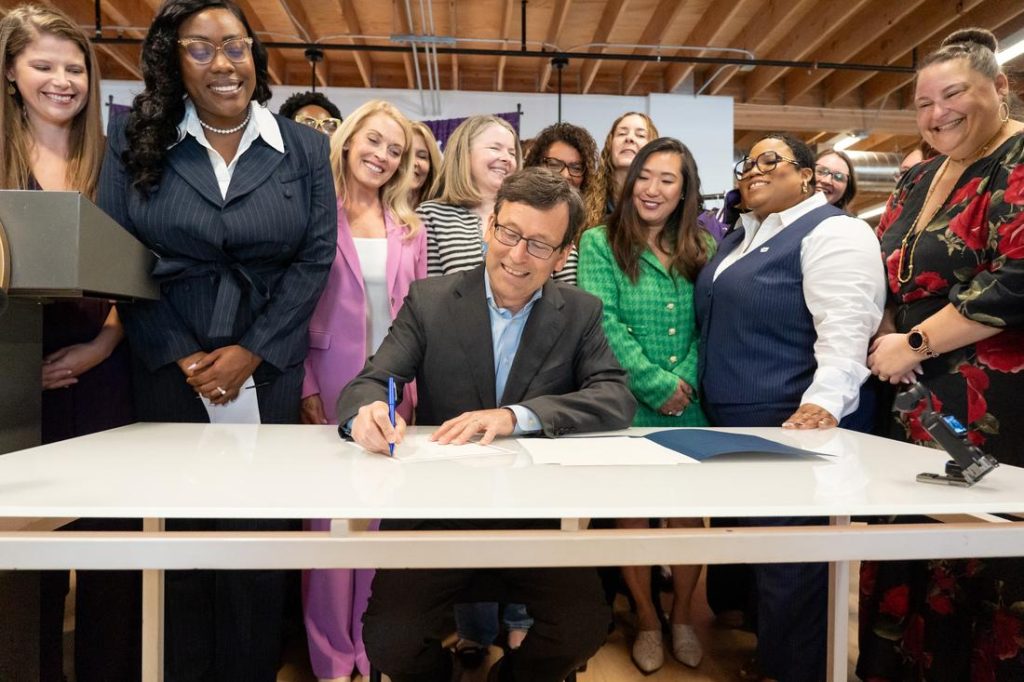
“Like too many issues around women’s health, we don’t talk much about menopause, and certainly not from a podium with government leaders standing in support,” said Ferguson, who held a press conference featuring multiple speakers from the women’s health and labor spaces.
More than 1 million women experience menopause at work every year, and yet rarely do these women receive support from employers or from medical professionals. As Ferguson pointed out, 75% of women are still working during their menopause years—which commonly fall in women in their 50s but can happen earlier or later. Many women have no idea they are experiencing perimenopause or menopause, are not diagnosed as such by their doctors, and do not receive any treatment for these conditions, pointed out April Heberman, CEO and founder of MiDOViA. Heberman started MiDOViA after a harrowing two years in which she suffered through perimenopause and menopause without any diagnosis. “My OBGYN never said the word ‘menopause,’” Heberman said. “I truly thought that I was going crazy.” Heberman founded MiDOViA specifically to help employers and their employees navigate menopause.
Research indicates that Asian, Black, and Latina women tend to enter menopause earlier than white women. Women of color also tend to stay in perimenopause longer. They may have higher rates of related hot flashes, depression, and sleep deprivation. Also, due to economic disadvantage, as well as racial discrimination, they have less healthcare access and are less likely to receive hormone therapy or other applicable care. Stress and knowledge gaps, says AARP, can compound symptoms. Provider bias may delay treatment and raise risks to one’s health.
“We know that when workers have the support they need, they are better able to succeed on a job and contribute to the economy,” said Cherika Carter, secretary treasurer of the Washington State Labor Council. Workers in jobs that require heavy labor and workers of color are disproportionately impacted, Carter pointed out, by workplace inequities and by lack of support surrounding women’s health issues. “The challenges do not affect everyone equally,” Carter said. “Addressing menopause in the workplace is part of a broader commitment to equity, ensuring that all workers have the opportunity to advance, lead, and retire with dignity.”
Symptoms of menopause can include what is called “brain fog”—difficulty concentrating and mental exhaustion—as well as headaches, hot flashes, and at the onset, very heavy menstruation. Women experiencing these symptoms often find themselves unable to function as previously at the workplace, and may feel like giving up, leaving, or retiring early. Cases were mentioned of women who routinely took days off due to migraines, or who could not go to work because of heavy periods. All of this may lead to lack of income for both the worker and their employer, when there are solutions to be had, explained Dr. Naomi Bush. Bush started Seattle Menopause Medicine, where she assists clients experiencing perimenopause and menopause by prescribing medication—which are usually inadequately covered by insurance—or helping them apply for FMLA (Family and Medical Leave). Bush is out-of-network for most insurers, which also points to the general lack of prioritization of this phase of life for women patients.
“I looked everywhere I could for menopause education, but what I didn’t do, what I wasn’t able to do, was look in my backyard,” Bush described as her motivation for starting her company. Women experiencing menopause are on the verge of a “revolution” inside themselves, Bush explained. They are, or could be, at the most productive stage of their lives, when they have the most experience and know-how; and then, perimenopause and menopause hit. A woman might be in the middle of a business meeting and not remember the next word she was going to say, Bush described. “They don’t even know what’s happening and they come to me and they say, ‘I’m done.’” Bush answers, no, you just need assistance, medication, time off, room to breathe.
“We are losing people in the workforce with tremendous knowledge and tremendous experience. We are losing their voices and leadership because we are not doing enough to prepare for a natural stage of life that impacts half our population,” said Ferguson.
According to the Mayo Clinic, productivity losses at the workplace due to menopausal symptoms total approximately $1.8 billion nationwide. Two in five women consider leaving their job or do leave a job due to menopausal symptoms, and one in four consider not pursuing or do not pursue a leadership opportunity as a result, says the Society for Women’s Health Research.
This executive order directs the Washington State Women’s Commission to work with state agencies to review and strengthen existing policies and practices related to menopause and perimenopause accommodations. It includes recommendations on practical measures such as
telework, dress codes, and temperature control. The order also directs the Women’s Commission to work with the Department of Health, the Health Care Authority, and the Bree Collaborative
to draft guidance and training resources on menopause and perimenopause accommodations for state agencies and other public and private employers. According to this order, the Commission will ensure agencies’ management and employees are trained on their rights and responsibilities.
The press conference was held at Armoire, a Seattle-based clothing rental organization led by women and for women. Armoire’s [founder, Annie Barker], along with all of those standing at the podium, expressed deep appreciation to the governor for the signing of this executive order. As the host of the conference, Barker received the pen the governor used to sign the order.
“We should not be relying on a patchwork of employer accommodations to plan for something we know will impact half our population,” said Ferguson. “We must do more to support women and to support employers who want to keep their experienced staff in the workforce.”
Kai can be reached at newstips@nwasianweekly.com.