




By Carolyn Bick
NORTHWEST ASIAN WEEKLY
With the FIFA World Cup days away, Seattle is preparing in myriad ways—working to streamline transit, coordinating community events, and distributing information.
But in and among all of this, it’s also working to incorporate human rights considerations. Human rights became a requirement of any country that wanted to host the games, following a report by FIFA’s human rights subcommittee that found egregious violations of migrant workers’ rights leading up to and during the 2022 games in Qatar. FIFA agreed to the report, following pressure from international organizations like the United Nations and Amnesty International.
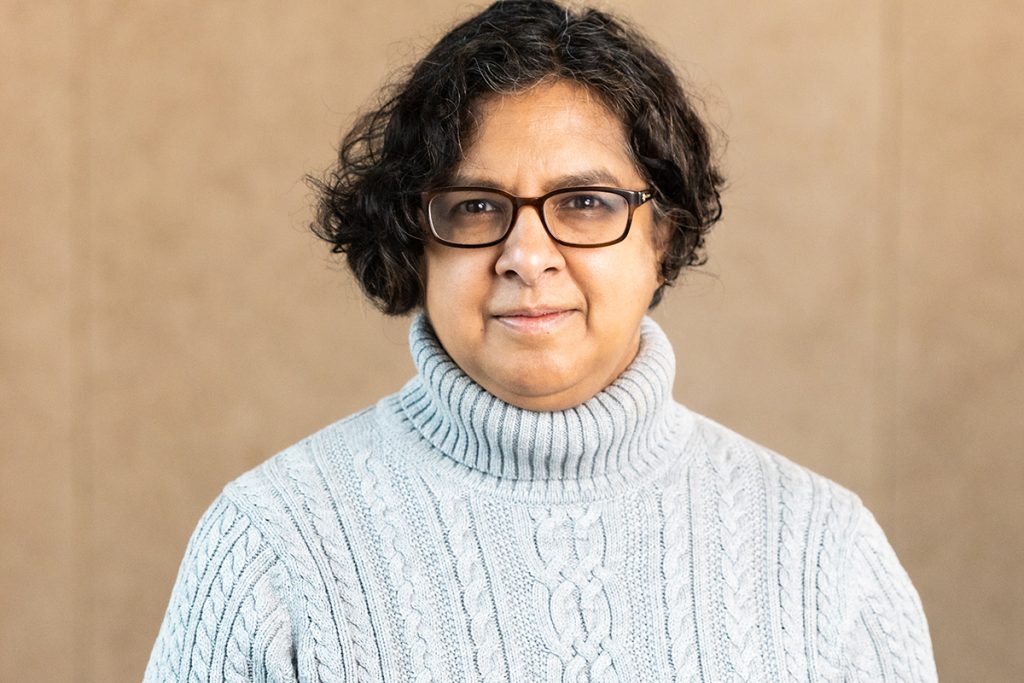
Anita Ramasastry
University of Washington (UW) Professor Anita Ramasastry not only specializes in, but helped to create the academic field that studies the intersection of business and human rights. She worked on the human rights subcommittee that commissioned the post-Qatar games report, and serves as chair for the human rights expert advisory group for FIFA 2026. Alongside students at UW School of Law and different community stakeholders, she co-created Seattle’s human rights action plan in advance of the games.
Though she was only speaking from her personal standpoint, and not for a committee or FIFA, Ramasastry reflected that creating a plan and putting it into action are two very different things—and humans can only plan for so many scenarios.
Rapidly changing social issues
Ramasastry said that the political climate now is much different than when Seattle won the bid to host the games.
“Some of the issues that are now more pressing or more coming to the top of the list, like potentially immigration, for example, were not the ones on people’s radar back when,” she said. “I think a challenge has been dealing with immigration or rights of visitors, community members, and others. It’s been an issue that’s difficult to tackle when it’s a federal issue … it’s a thorny issue.”
She also addressed the raids that Massage Parlor Organizing Project (MPOP) and other workers’ rights organizations have been spotlighting in the months leading up to the games. Recently, following police and fire raids on 50 Asian massage businesses, the MLK Labor Council passed a resolution supporting massage parlor workers and condemning the raids. Though jurisdictions say that these raids are meant to help workers, and stop human trafficking, actual massage parlor workers and advocacy groups have repeatedly explained to the public and to lawmakers how these kinds of raids only serve to harm the workers, rather than help them.
“I think there is at least an understanding, I’m hoping, among the councils—King County Council and others—that there shouldn’t be this kind of raid or focus on massage parlors for precisely that reason,” Ramasastry said. “Treating this as a criminalization issue is not the right approach. … There’s also just issues of, if people do need assistance, who are actually seeking it? How and where do they go?”
“I think what stakeholder engagement is meant to do for host cities,” she continued, “is to raise these issues, like the massage parlors saying, ‘Don’t target us … look at the consequences of what you’re doing.’”
Different zones of responsibility—literally
Ramasastry also highlighted that there will be a temporary shift in responsibility for literal physical spaces, and that these decentralized, differentiated zones of responsibility could create gaps for human rights violations to occur.
For instance, she said, FIFA will be in the responsible entity for the stadium, and therefore oversee the treatment of people within that space—the players, staff, and personnel—while yet another group, the local organizing committee (which is not the City of Seattle) functions as a company meant to run the tournament and raise money, and will oversee the fan fest and community engagement spaces. The City of Seattle has been working to handle things like issues of neighborhood and community safety and communication outside the stadium.
One of the biggest areas where Ramasastry will be focusing her attention is how to provide remedy, if someone is harmed, during the tournament. This includes everything from bullying and discrimination to illness and injury related to extreme heat. The latter scenario happened last year, when Seattle hosted the FIFA Club World Cup games.
“People hadn’t planned for [the extreme heat], so they had to … react and suddenly provide water stations, cooling stations, make sure that workers had places to go to shelter, because … the temperatures were so high,” Ramasastry said. “Now, I think there’ll be a better plan for addressing those issues.”
FIFA will have an app-based grievance portal to address other kinds of non-physical issues. She also said that there are plans in place for larger, systemic issues, like if a subcontractor is not paying their workers. The City’s Office of Labor Standards is set up to address that.
“Entities are responsible for human rights in different parts of the tournament’s life cycles, and the resources provided to the local host cities are very limited,” Ramasastry continued. “They weren’t given a budget from FIFA for human rights. They were meant to deal with that as part of their own [budgets]. So, I think a big challenge has been not only the zones of responsibility, but also just the issue of money. And that I think a lot of local host cities have had a challenge around, ‘How are we meant to really do all of this without money?’”
So what comes next?
One of the highlights to come out of the FIFA games preparation is that there have been strong labor agreements between unions and the stadium, Ramasastry said, and workers in more temporary positions at the stadium, like janitorial or hospitality staff, now also belong to unions.
“That protection of worker rights has been, I think, a successful byproduct of the World Cup,” she said. “The MLK Labor Council has been very involved, and the workers themselves, and [this shows] that there are really interesting models of how labor can organize through cooperatives that will be hopefully long-standing for the future.”
For Ramasastry, how to prevent harm remains the biggest issue, in part because there is no way to predict exactly what will happen during the games.
“It’s still very much an experiment. You don’t want mega sporting events to cause additional harm. That’s the larger issue,” she said. “You can call soccer a beautiful game, but you want that beautiful game not to come at the cost of harm to people. And so that’s the goal of having human rights plans.”
Like any best-laid plan, it hasn’t been completely smooth sailing, “but getting cities to have plans to think about these issues, to think about prevention, to think about providing remedies and clear channels—if any of it does work, even if imperfectly, the concept is that a lot of these things can be then legacies for future major events and for other kinds of activities in cities in the U.S. and Canada and Mexico.”