




By Andrew Hamlin
NORTHWEST ASIAN WEEKLY
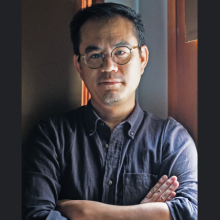
Chi-wang Yang
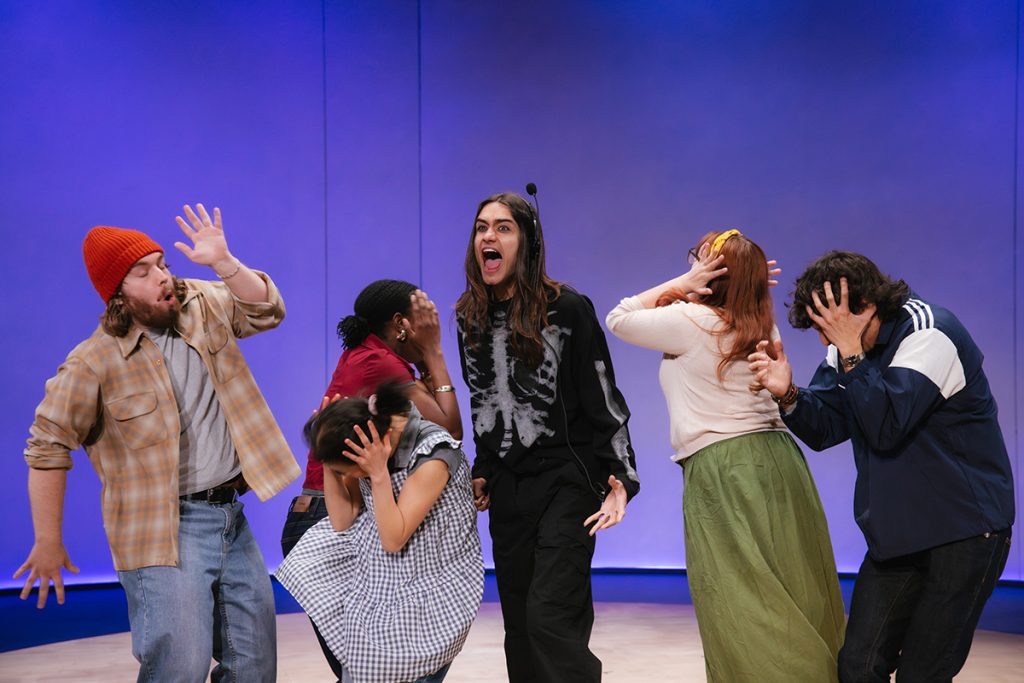
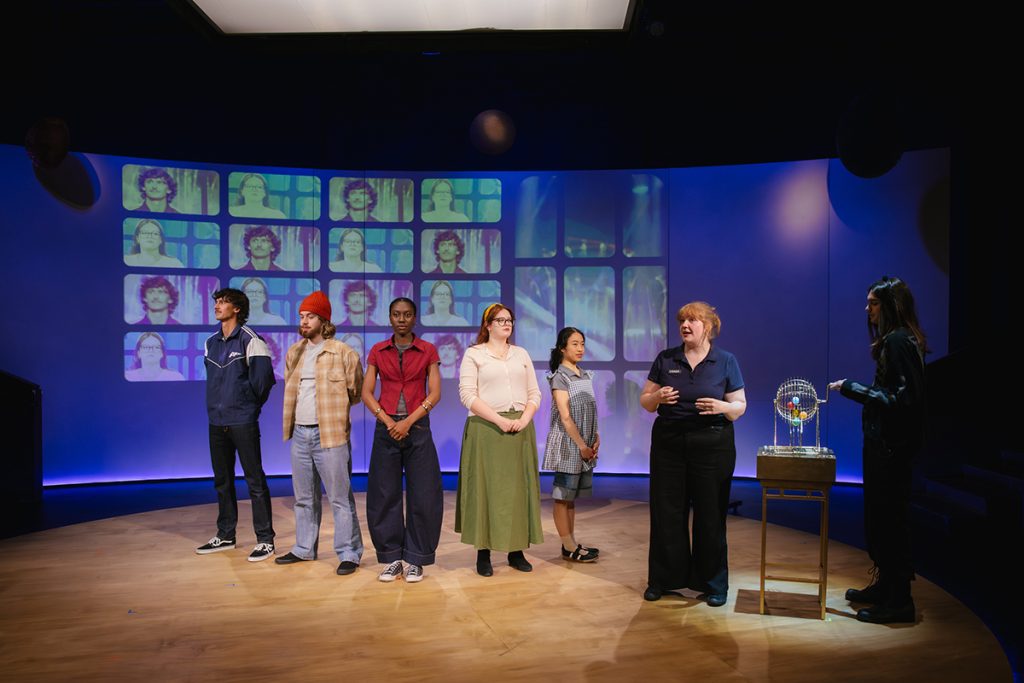
Mounting a stage show, where five actors draw lots at the start of every show to determine who plays what, sounds intimidating. But Chi-wang Yang, assistant professor of acting at the University of Washington (UW)’s School of Drama, says this presentation of the play, “Everybody,” sits in keeping with his other work and other obsessions.
“My Asian American identity is certainly a foundational influence on my work, and I think plays a big part of why I gravitate towards interdisciplinary and experimental forms of theater and performance,” explained Wang, whose production of “Everybody” plays May 21-31. “As someone who has always straddled multiple cultures and languages, I’m always curious about how to find new or unusual associations between different subjects, and play within dissonance and harmony.
Credit: Sunny Martini
“In the past decade, we’ve seen all the arts reaching across their traditional disciplinary and architectural boundaries, as artists and institutions are keeping up with changes in technology and culture. Although the theater is supposedly constantly dying or anachronistic, I find it to be a uniquely relevant form to be working in, given the emergence of experiential storytelling across the arts and marketing. I find it fascinating to explore what does and doesn’t change in a live artistic experience if it goes from the theater to a concert hall to a film festival.”
Credit: Sunny Martini
Yang was born and raised in Bellingham. “After my parents immigrated to the U.S. from China and Taiwan, they ended up settling in this area. After heading to the East Coast for college, then living and working in Los Angeles for the past 20 years, I’ve come full circle back to the Pacific Northwest.
“Growing up here in the 1990’s, my favorite TV show was ‘Twin Peaks,’ of course. I first started out trying to make it as an actor in New York, but I came to the realization that focusing on directing would give me the best opportunities to make the kind of work that I wanted to.”
His first important teachers were his own parents, who modeled hard work, humility, and kindness. But then “the punk rock shows I frequented as a kid in the ‘90s were teachers to me. I consider those my first experiences of theater and they taught me about the power of bodies expressing themselves freely and ecstatically.”
Credit: Sunny Martini
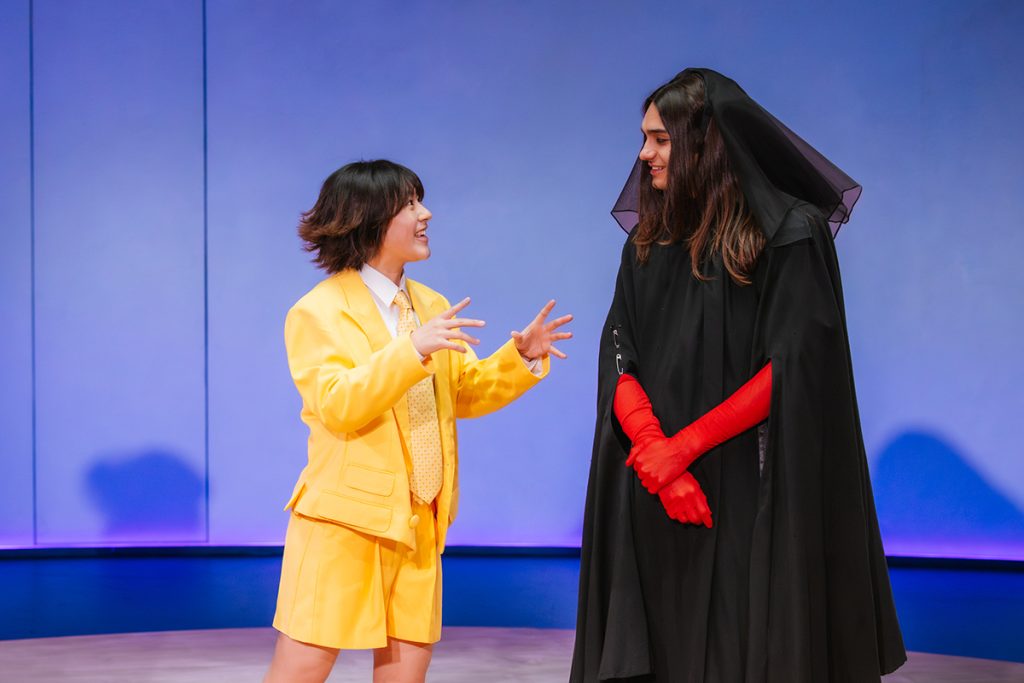
“Everybody” got started as a 15th-century play called “Everyman,” author unknown. “This adaptation by Branden Jacob-Jenkins follows the general template of the original, but it’s very modernized and is full of humor and breaking of the theatrical ‘fourth wall.’
“It acknowledges the Christian as well as Buddhist influences of the story, but tries to have a more inclusive dialog about what it means to accept, and perhaps find solace, in letting go of our own egos and the idea of being in control. In the original, the allegorical figure of ‘Good Deeds’ is the one who is willing to accompany Everyman to the grave. But in this adaptation, a different set of virtues comes along for the ride. No spoilers!”
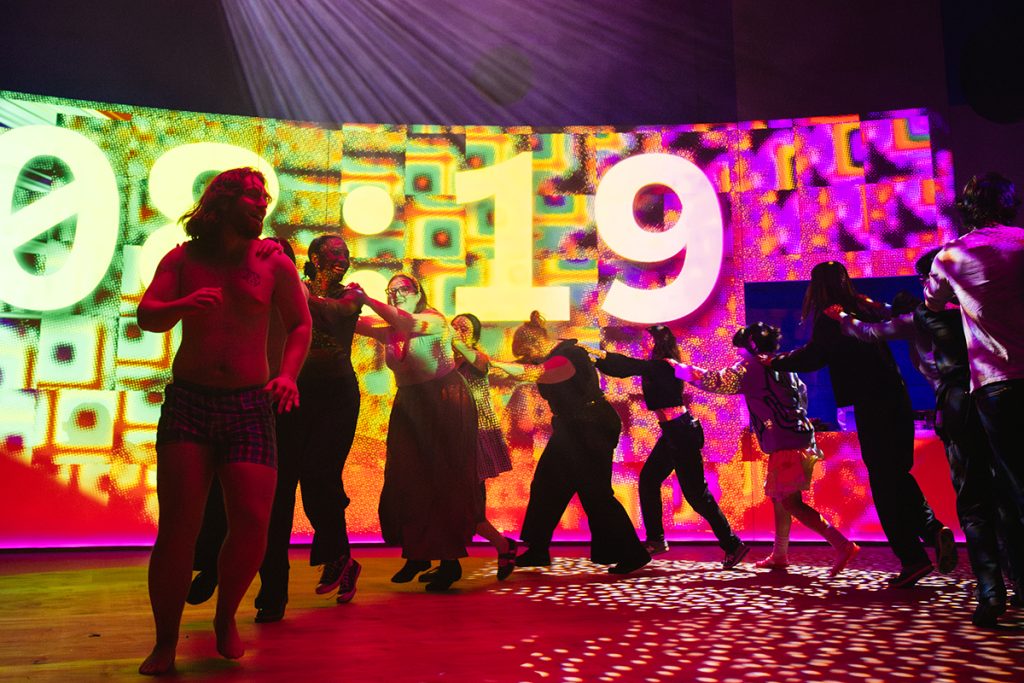
The acting lottery system means, of course, that each actor prepares to play five roles, for a total of 120 possible combinations.
“But what’s been beautiful about that is that instead of a role only being played by one actor, each member of our five ‘Somebody’ actors brings their own take on each character, while also rehearsing as an ensemble and learning from each other. It takes a lot of bravery and discipline to learn all those roles and be ready to do any of them at a moment’s notice, and our undergraduate acting company is doing phenomenal work. I’m so proud of them all.
Credit: Sunny Martini
“A challenge our whole community has been grappling with lately is the tragic murder of Juniper Blessing, an undergraduate student here at UW and a member of our trans community. Since our show is about mortality and how we approach the inevitability of death, it’s an especially sensitive moment. However, I’ve been so impressed at the thoughtfulness, care, and compassion that exists in our team. And although it doesn’t make the topic of death easy, this project hopefully reminds us of how powerful it is to be together, and to remember the joy and humor alongside the struggle.”
 Asked about new projects beyond “Everybody,” Yang mentions, “I’ve got a variety of new projects that are brewing, including an opera with body builders, and a show with an AI oracle.
“Everbody” plays May 21-31 at the Floyd and Delores Jones Playhouse Theatre, 4045 University Way N.E. in Seattle’s University District.
For prices, showtimes, and other information, visit https://drama.washington.edu/events/2026-05-21/everybody.