



By Samantha Pak
NORTHWEST ASIAN WEEKLY
This spring, Seattle Public Library (SPL) isn’t just recommending a book—it’s joining a coastwide conversation.
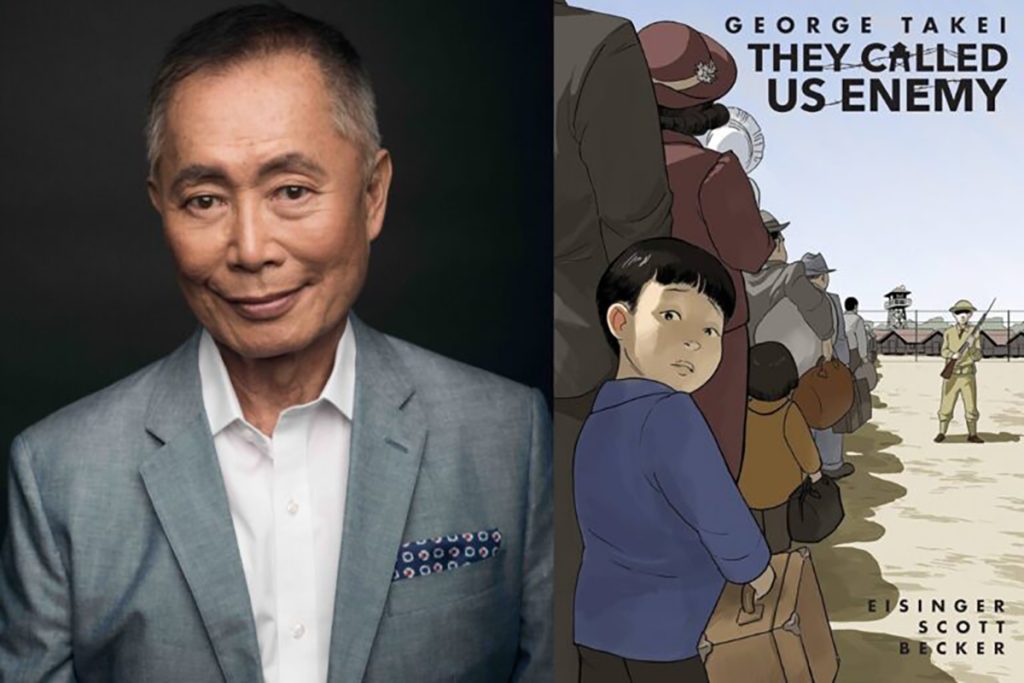
The first-ever One Book, One Coast program brings together nearly 200 library systems across Washington, Oregon, and California—including almost 60 in Washington—to read and discuss “They Called Us Enemy” by George Takei. The program is an extension of LA County Library’s One Book, One County program, which SPL helped conceive as Seattle started its similar Seattle Reads program in 1998.
“It’s been replicated all around the world,” Elisa Murray, communications strategist for SPL, said about Seattle Reads. “We’re kind of a resource on that. And so it’s kind of a nice full circle thing, but LA County is the one who organized [One Book, One Coast].”
In addition to making the book more available to the community—including unlimited copies of the ebook available to check out through Libby, OverDrive, or Hoopla—SPL is also hosting a number of events tied to the book. Murray said the idea is for this to be a shared reading initiative along the West Coast, focused on one book that is very important to the region. They don’t just want to encourage people to read the book, they want folks to engage in programming and discuss the themes of the book.
“They Called Us Enemy” was published in 2019 and is a graphic memoir recounting Takei’s childhood when he and his family were unconstitutionally imprisoned in concentration camps during World War II, alongside about 120,000 other Japanese Americans on the West Coast.
Upcoming events
SPL has hosted a number of events this month, with more on the docket coming up in May, highlighting local organizations and authors whose work explores the history of Japanese American incarceration and resistance, and other related themes. According to an SPL press release, these programs are opportunities for communities to “explore themes of identity, patriotism, family, loyalty, and resilience, while strengthening connections through dialogue and learning.”
The two remaining events featuring local authors will be May 5 and May 30 with Tamiko Nimura and Scott Kurashige, respectively, at the Central Library. Nimura will be speaking with author Shawn Wong and Densho’s director of archives Caitlin Oiye Coon to discuss her memoir, “A Place for What We Lose: A Daughter’s Return to Tule Lake.” Kurashige will discuss his book, “American Peril: The Violent History of Anti-Asian Racism.” Registration is required for both events.
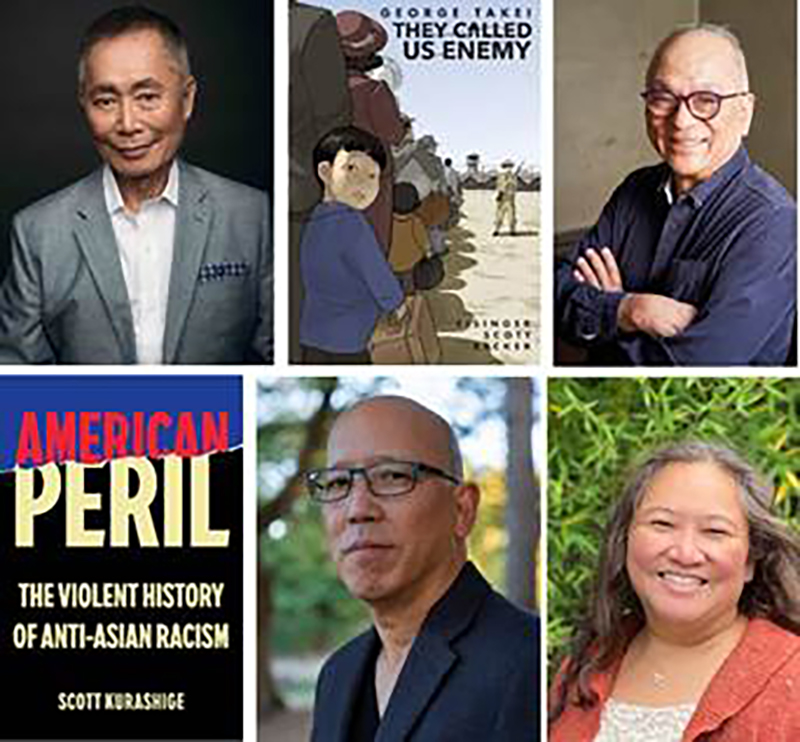
In addition, SPL will host three in-person watch parties on May 31 at various branches to livestream a discussion with Takei, hosted by the LA County, as a culmination of the One Book, One Coast initiative. For those who are unable to attend a watch party, the livestream will also be available online. Registration is required for the online livestream, but not for the in-person watch parties.
Highlighting the local community
Stesha Brandon, literature and humanity programs coordinator for SPL, said LA County chose “They Called Us Enemy” for One Book, One Coast to emphasize the importance of civil discourse, particularly across diverse experiences, and that SPL is participating in the program because topics addressed in the book resonate with the local community.
“We felt like it was a really great opportunity for folks to be able to learn about the topics if they don’t know already, and then for people who have been impacted directly, to share their experiences about that and see that reflected in programming at the library,” she added.
Brandon added that the fact that Seattle is a huge resource for the topic of Japanese American incarceration—especially having Densho, which focuses on preserving and sharing the history of the wartime incarceration of Japanese Americans, based in Seattle—felt like SPL should participate in One Book, One Coast. There are also people like Frank Abe in Seattle, who was part of an event earlier this month and worked on the first Day of Remembrance in Seattle in 1978 and has been a part of the national movement for redress from the government.
“That’s a key role that our members of our community have been involved in, and I think it’s amazing that they’re here and we are able to highlight and celebrate their contributions,” Brandon said.
Kindred institutions
Densho has been and will be a part of a number of the One Book, One Coast events at SPL—including the kickoff event earlier this month that highlighted Densho itself—and Executive Director Naomi Ostwald Kawamura said as an organization rooted and founded in Seattle, they have had a long and established partnership with SPL.
“As archives, libraries are kindred institutions to the kind of work that we do,” she said. “And so I think whenever we have a chance to support the Seattle Public Library, we do work with them.”
Coon added that Nimura, whose book talk event she will also be attending, has had close ties with Densho before this, as she allowed them to scan her family’s collection into the organization’s digital repository. They have also worked with Nimura on the South Sound Day of Remembrance in Tacoma, so it made sense for Densho to be involved in her event at SPL.
A consequential historical event
With SPL’s work reaching a broader, more general audience than Densho typically does, Kawamura said it was also a great way for Densho to get their materials and information to people beyond the Japanese American community. Because while Densho’s work—recording oral histories of wartime incarcerated Japanese Americans—created a natural community with their sources, and now their descendants, the history itself is Seattle history. From people who were students at local high schools, to those who worked at Pike Place Market, their stories are of “everyday folks who live in the Seattle area and broader Washington,” she said.
And Densho’s work goes beyond local and regional history, Kawamura said. Their work can also help people understand broader parts of U.S. history when it comes to race, civil liberties, constitutional rights, the fragility of democracy, and more.
“When you look at the wartime incarceration history, even if you’re not Japanese American, it’s just a very, very rich and consequential historic event. So we don’t necessarily think of our audiences being just tethered to Japanese Americans,” Kawamura said. “I think we feel very much a care for the narrators, for whom we steward their stories. And that grounds our work in a particular community. But the history itself is naturally one that we think has just more universality for Americans.”
That universality has become more relevant now as topics such as executive orders, detention centers, and mass incarceration are in the news today. Those mechanisms still exist, Kawamura pointed out.
For Brandon, she hopes that one of the things people get out of participating in any of SPL’s One Book, One Coast events is to learn about this part of American history and to see the patterns of what happened then and what is happening now.
For more information on One Book, One Coast, visit www.spl.org/OBOC.