

By Nina Huang
NORTHWEST ASIAN WEEKLY
For many immigrant families navigating the healthcare system, finding in-home care can feel overwhelming—especially when language barriers stand in the way.
A Washington-based nonprofit is working to change that.
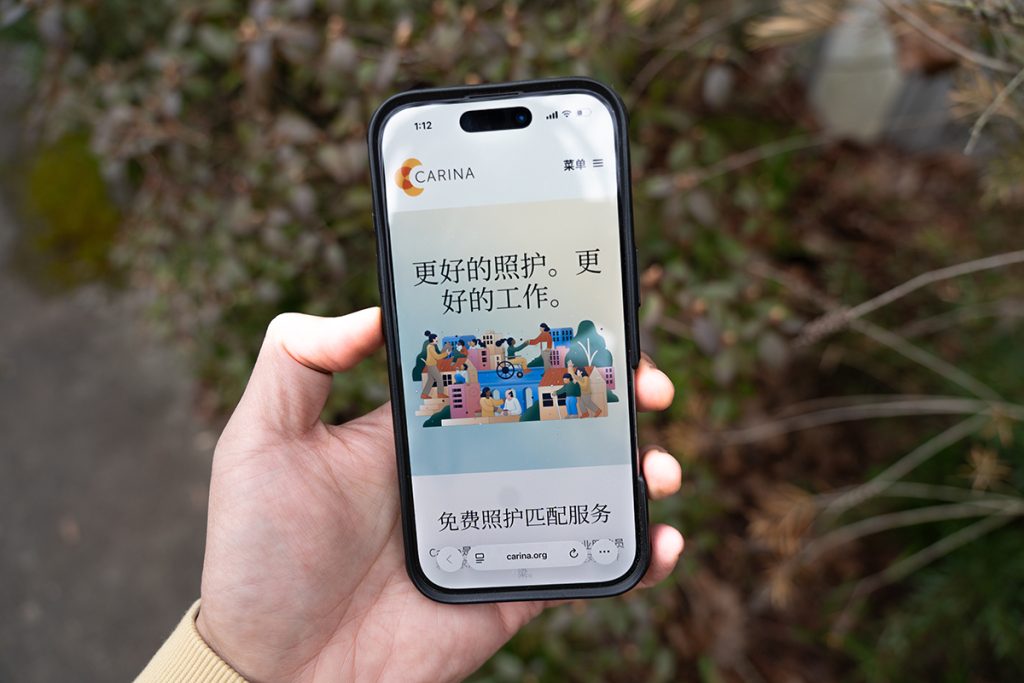
Carina, a care-matching platform that connects caregivers with people seeking in-home care, recently expanded its website to include 10 additional languages, bringing the total to 13. The new offerings include Chinese, Vietnamese, Korean, Khmer, Arabic, and Farsi, among others—an effort designed to help immigrant families more easily access care and connect with caregivers who share their language and cultural background.

Jocelyn Moore
“It’s a two-sided marketplace,” explained Jocelyn Moore, a marketing manager at Carina. “If someone needs someone to come into their home to provide care, we function as a pool where people can source care workers.”
Unlike many other platforms, Carina operates as a nonprofit and does not charge users for the service. The platform partners with labor organizations and government programs to sustain its model.
“We provide the service at no cost,” Moore said. “Everything Carina does is about providing access for people who need care to find quality caregivers.”
From Seattle pilot to statewide platform
Carina began in Seattle in 2016 as part of a collective bargaining agreement for home care workers represented by Service Employees International Union (SEIU) 775. The platform was originally created to help caregivers find reliable jobs in their own neighborhoods.
Initially available only in English, Carina expanded statewide in 2018 and later into Oregon. But the organization soon realized that language barriers were limiting access for many communities.
In 2024, the platform added Spanish and Russian. By late 2025, it expanded further to include 10 additional languages based on data showing which languages were most commonly spoken by home care workers in Washington.
“We took a snapshot of what languages caregivers speak across the state and followed that list to address the greatest needs,” Moore said.
The expansion was not done with automated translation alone. According to Moore, Carina worked with professional translators and native speakers to ensure the language is culturally appropriate and accurate.
“As a member of the AANHPI community, it’s a big win for us because it shows that we care.”
Why language matters in caregiving
The caregiving relationship is often deeply personal. For many families, the ability to communicate in their native language can shape trust, comfort, and quality of care.
“We want to help facilitate that experience and close that gap in the search for care,” Moore said. “It’s about bridging access for communities that are often underrepresented.”
That need is reflected in how caregivers themselves use the platform.
Winny Chow, a Chinese-speaking caregiver who joined Carina two years ago, said the platform has helped her find more work opportunities.
“The first time I heard about Carina was the day I registered with CDWA (Consumer Direct Care Network Washington),” Chow said in Chinese. At the time, she already had one client but needed additional hours to qualify for her union health insurance.
“I was worried about how to find additional clients to make up enough hours,” she said. “Carina gave me a way to connect with new clients I wouldn’t otherwise know.”
Previously, because the platform was available only in English, Chow said communication barriers sometimes made it harder for Chinese-speaking families to use it.
“Our work as caregivers goes beyond assisting with daily needs,” she said. “We also communicate with clients to support their emotional well-being.”
Sharing a language and cultural background, she added, often makes that connection easier.
“A shared cultural background fosters deeper understanding and fewer misunderstandings,” Chow said. “Carina expanding into Chinese is truly a win-win for Chinese-speaking caregivers and clients.”
Finding care —and connection
For care seekers, the platform can also offer more control and flexibility than traditional agencies.
Chinh Vo, who has used Carina since 2021, said he turned to the platform after struggling to find consistent caregiving support following a stroke that left him with limited mobility.
“I was trying to seek caregivers through agencies, but it was pretty tough,” Vo said. “With Carina, I had the power to interview people and see where they fit into what I needed.”
Within a few months of joining the platform, he was able to find a caregiver.
“Probably within a month, I started getting responses,” he said. “I found my caregiver within two months, which was much faster than the agency.”
Vo said language and cultural familiarity also made a difference when working with Vietnamese caregivers.
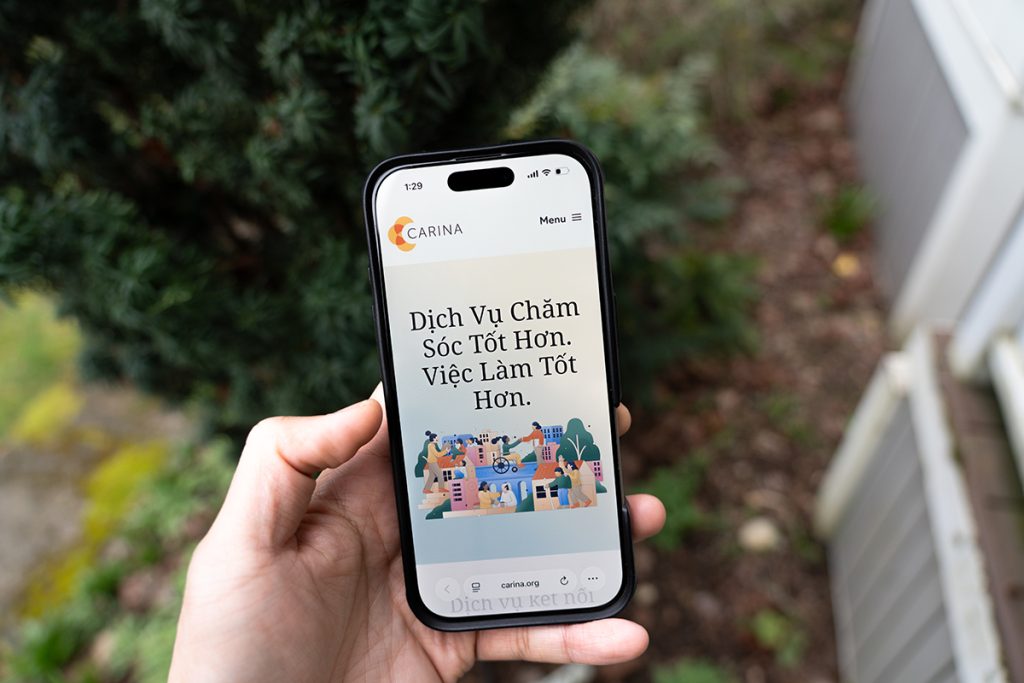
“Finding someone who can cook the food from your culture—it makes you feel close to home,” he said. One caregiver even prepared traditional dishes like braised pork and helped with Lunar New Year preparations. “To me, that’s a wonderful asset.”
Looking ahead
Carina’s leadership says language access is just one part of a broader effort to expand support for caregivers and families across Washington.

Nidhi Mirani
CEO Nidhi Mirani said the organization is particularly focused on its role in the state’s new WA Cares program, a public long-term care insurance initiative designed to help residents pay for caregiving services.
“For the first time, people in Washington have public long-term care insurance,” Mirani said.
“Carina helps individuals and families using WA Cares find a caregiver near them.”
For immigrant and multilingual communities, Mirani said language accessibility is key to making programs like WA Cares truly usable.
“When someone can search for a caregiver in the language they’re most comfortable in, they’re not just getting information—they’re gaining access to dignity and safety for their family,” she said.
By expanding its language options, Mirani said Carina hopes to support both sides of the caregiving relationship.
“When workers have good jobs, people get good care,” she said. “Opening doors for caregivers and families in their own languages helps everyone thrive.”
Nina can be reached at newstips@nwasianweekly.com.