


By Carolyn Bick
NORTHWEST ASIAN WEEKLY
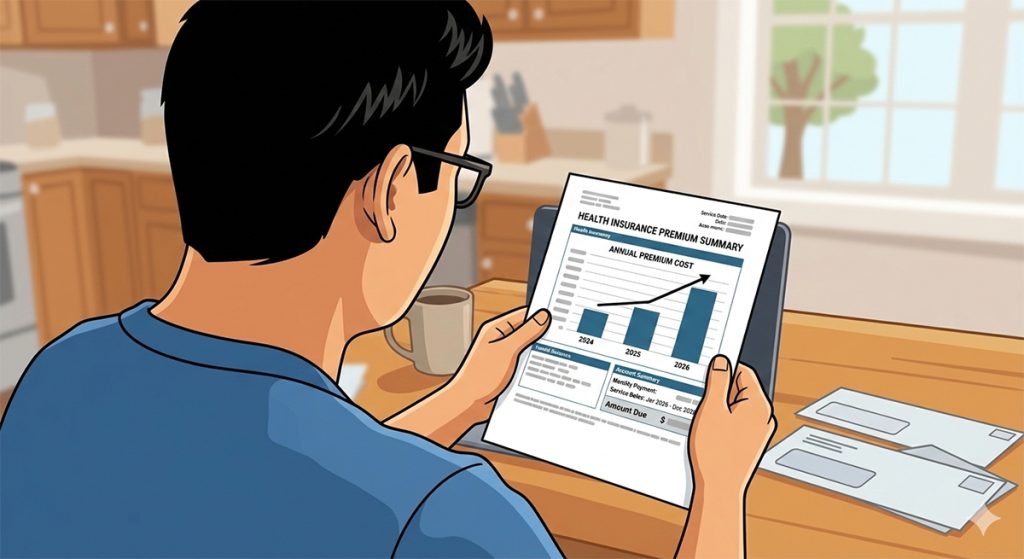
When his health insurance came up for renewal this year, one International Community Health Services (ICHS) patient saw his premium jump by 1000%.
That’s not an extra zero, or a typo. Across the U.S., millions of people are seeing their health insurance costs skyrocket, thanks to the expiration at the end of last year of special credits that significantly lowered the cost of health insurance. Because of this, some are choosing not to re-enroll at all. They just can’t afford it. Though the exact number of people without health insurance is still unknown, current estimates place that number at more than one million people.
But it’s still unclear just how many people will be affected.
“At ICHS we just don’t know yet how many patients decided to go without insurance,” said Sherryl Grey, ICHS’ director of community health, where about 60%—70% of the 36,000 clients they serve are Asian American, Native Hawai’ian, or Pacific Islander (AANHPI). “Without the … subsidies, people who need care are likely slipping through the cracks because they lack coverage.”
The federal government created the credits in 2021 as part of a suite of pandemic relief subsidies for the public. Many in the AANHPI community are among those who depend on these credits to keep their health insurance coverage. The loss of these credits—and, thus, individuals’ health insurance—carries long-ranging consequences, including more people opting to skip seeing their primary care providers, due to cost, and more emergency room visits.

Michael Itti
At the Chinese Information and Service Center (CISC), Michael Itti, the center’s executive director, said that they saw a noticeable drop in enrollment this year. The center serves many immigrants, many of whom have arrived in the U.S. within the last one or two years. The center is often their first stop in health insurance enrollment.
“In previous years, if they had not yet found a job, many were still eligible for very low premium health insurance. With the new policy change, many clients were shocked to see how expensive the health insurance premium became,” Itti said. “Because of the increased cost, when clients came to seek help last Open Enrollment Period, some … decided not to reenroll for 2026, since it is now unaffordable for them.”
The expiration of these credits was, for Republican lawmakers, a non-negotiable part of the funding package Congress passed last year. Democrats refused for months to pass a funding package that included letting these credits expire, triggering a 43-day government shutdown, the longest in history. Democrats eventually approved the funding package, extracting certain promises from Republican lawmakers that they would revisit certain healthcare-related cuts this year.
But for many in the AANHPI community, the damage is already done.
Grey said that for many of the organization’s patients, the expiration of these credits means that they have been forced to choose between “purchasing lower quality health care coverage with a higher price tag and higher deductibles or foregoing health care services altogether.”
The jump is taxing for patients ICHS helps, particularly because they tend to already face both linguistic and financial barriers. While ICHS provides health care services on a sliding scale, most patients who have chronic health issues and specific medical needs will have to stay on their now much more expensive health insurance plans. They will struggle to make ends meet, Grey said, and will be forced to make difficult decisions about where to reduce costs elsewhere.
Overall, the loss of health insurance coverage means that many people will be forced into a no-win situation.
Itti said that many clients fear falling ill or becoming injured without health insurance, but also fear enrolling in a plan they can’t afford. The center provides educational workshops on free and low-cost healthcare options, he said, and helps clients to apply for financial charity care, if they are facing high medical bills. But, “[w]e believe many clients may go without health check-ups this year, even older adults, due to not having health insurance. This may lead to delays in preventive care and dental visits.”
Grey said that the situation at ICHS is much the same. She worries that patients will skip visits with their primary care providers, dentists, behavioral health specialists, and other healthcare staff, because they are either uninsured, or can’t afford the co-pays.
“Instead, patients will head to the emergency room when they become very sick or injured,” Grey said. “Accessing emergency care is a negative care choice in two ways. First, it means our neighbors are living sicker, they are suffering more and thriving less. Second, emergency care is very expensive for the individual, and for taxpayers, and that’s all of us.”
Moreover, Grey continued, most people didn’t even know their premiums would increase until they received their 2026 renewals. This complicated the process for many patients, and led to a significantly busier open enrollment season for ICHS’s 25 health insurance navigators—and a crush at the end of the period.
“ICHS enrollment navigators were very busy right before the open enrollment deadline. It was common for ICHS patients to wait until the last moment to select health care coverage because they hoped enhanced subsidies would come back and lower their costs,” Grey said. “ICHS navigators heard stories of patients facing financial challenges and weighing whether they should drop their health care coverage.”
ICHS CEO Kelli Nomura emphasized that financial challenges shouldn’t be a barrier to healthcare, and said that, in addition to helping people find health insurance and offering sliding scale health services, ICHS has an uncompensated care fund that covers healthcare costs for people who can’t pay. The coverage ranges from partial payment for a patient, to co-pay coverage, or the full cost of care.
“ICHS provides health care services regardless of your ability to pay,” she said. “We have people with the knowledge and expertise in place to help you navigate the financial elements of getting quality health care without taking on a costly burden.”
Because of increased costs, ICHS forecasts a 15% increase in requests for uncompensated care this year. ICHS is currently fundraising to help support its uncompensated care fund, which will go towards covering uncompensated care requests.
Readers interested in donating to ICHS can do so here.
Readers interested in donating to the CISC can do so here.