
By James Tabafunda
NORTHWEST ASIAN WEEKLY
Filibuster tactics and a crowded legislative calendar can combine to become a potent obstacle. A Washington state bill that would have required the teaching of Asian American, Native Hawaiian/Pacific Islander (AANHPI), Latino American, and Black American history in K-12 public schools is dead for the 2026 legislative session, after failing to receive a Senate floor vote before the Feb. 17 cutoff.
Senate Bill (SB) 5574, sponsored by Sen. T’wina Nobles (D-Fircrest), had cleared the Senate Early Learning and K-12 Education Committee and the Rules Committee—further than it had ever advanced—only to be stranded on the Senate floor calendar when time ran out at 5 p.m. on the final day for bills to pass their chamber of origin.
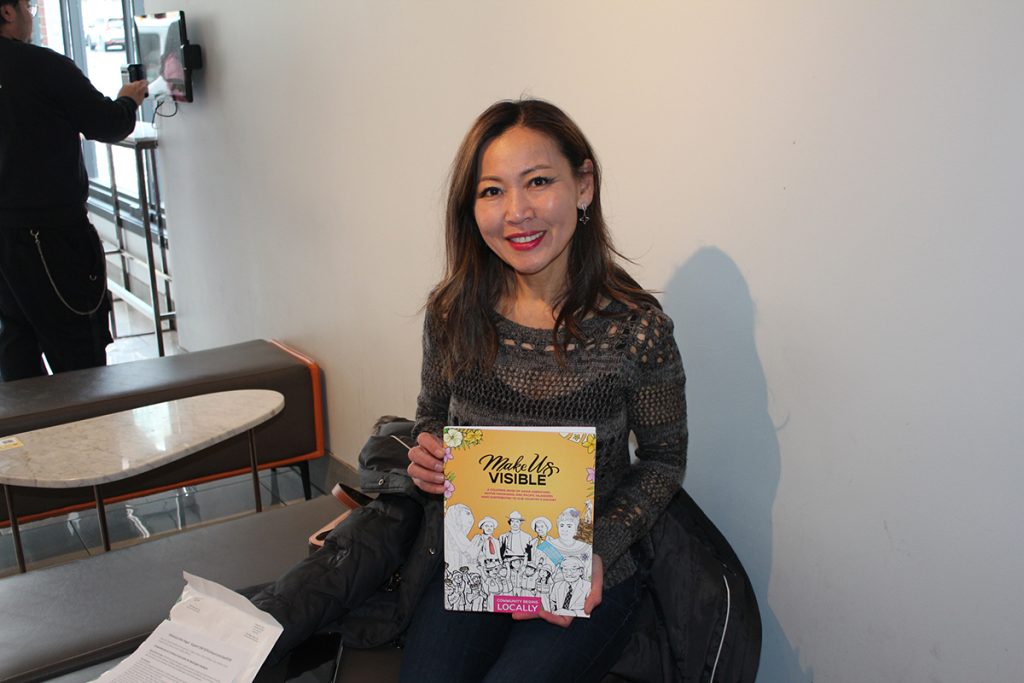
Angelie Chong, director of Make Us Visible Washington, holds a copy of the coloring book, “Make Us Visible: A Coloring Book of Asian Americans, Native Hawaiians, and Pacific Islanders Who Contributed to Our Country’s History”. Photo by James Tabafunda.
“We were very disappointed that time just ran short,” said Angelie Chong, director of Make Us Visible Washington (MUV WA), the volunteer-driven advocacy group that has led the three-year push for the bill. “It was very disappointing, almost heartbreaking because of all the hard work and energy that went into getting the bill to that point.”
Washington’s stall comes as other states move forward with similar legislation. Maine became the eighth state to pass an AANHPI history instruction law in January. New York Gov. Kathy Hochul signed the AANHPI Education Equity Act in December 2025, directing a statewide survey of how schools teach Asian American and Pacific Islander history. Arizona and Alaska also have pending legislation.
“It’s interesting that I get to hear from people. When they hear states like Florida have passed it, they’re wondering why Washington can’t pass a bill,” Chong said. “And this is long overdue.”
Advocates plan to reintroduce the bill in the 2027 session, the start of a new two-year biennium, while exploring any remaining procedural options before the current session ends March 12.
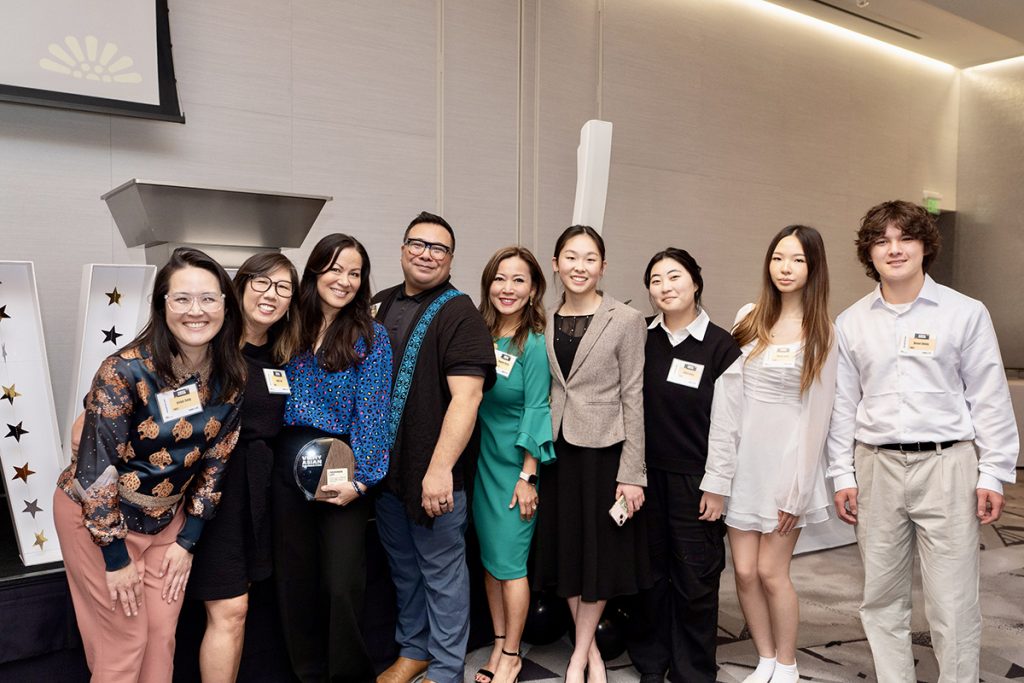
Make Us Visible Washington members and Shannon Lee (third from the left), Bruce Lee Enterprises chief executive officer and Bruce Lee Foundation chair. Courtesy of Angelie Chong.
What the bill would have done
The bill would have required school districts to adopt instruction policies by Sept. 1, 2028. Instructors would have begun to teach that history the following school year.
The bill did not call for new courses, curriculum, or additional funding. Districts could use existing ethnic studies materials, public or private resources, and accept gifts or grants for training. Once adopted, districts would post their policies online and submit annual reports beginning June 30, 2030, confirming instruction was planned, ongoing, and systematic.
Filma Fontanilla is a Washington Education Association board member and Soundview UniServ Council president. She testified in support of the bill at the Jan. 14 public hearing before the Senate’s Early Learning and K-12 Education Committee.
“It is important for our students to learn and understand the histories and contributions of various racial and ethnic groups in our country,” Fontanilla told senators. “Our group … has been writing lessons to teach about Filipino American history, and we strive to make our lessons intersectional across different racial and ethnic groups. I know how meaningful and important it is to our students when they can identify with the content, and they are represented in the books and lessons they are taught.”
A filibuster and a logjam
The bill’s failure was part of broader legislative overload on the Senate floor, sitting at number 14 on the Senate’s calendar. This means that Senators would have to take up at least 13 other bills before getting to it.
On the afternoon of the deadline, Floor Leader Sen. Shelly Short (R-Addy) demanded that the Senate secretary read aloud all 39 pages of SB 5466, a bill on upgrading and expanding the state’s electrical transmission system, before proceeding to a vote.
Chong said the millionaire’s tax bill debated the day before also ate up significant floor time, leaving little room on the final day.
“There were many amendments and a lot of discussion,” she said. “It made me nervous that after that, there was just one day left before the cutoff.”
Coalition continues push for SB 5574
Chong said MUV WA is exploring whether any procedural path remains in the current session, but acknowledged that the likelihood is “probably slim.”
“Miracles can happen, and I’ve learned that for bills without a fiscal note, sometimes it can be added on to a broader bill,” she said. “We are currently exploring all possibilities, and it isn’t over until the session is over.”
For the 2027 session, advocates plan to prefile the bill and seek a champion in the House, where the legislation would need to pass after clearing the Senate to reach the governor’s desk.
“It would be really great if we had a champion on the House side,” Chong said. “That is something we’re going to be seeking.”
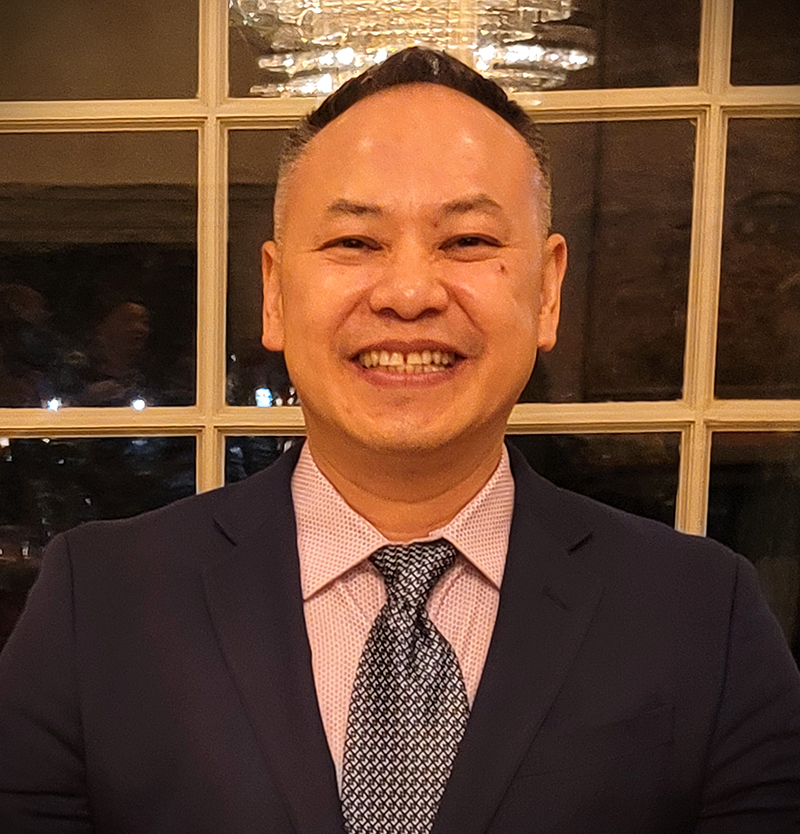
Ekkarath Sisavatdy, Washington State Commission on Asian Pacific American Affairs commissioner and Make Us Visible Washington’s steering committee member. Courtesy of Ekkarath Sisavatdy.
Ekkarath Sisavatdy, a commissioner with the Washington State Commission on Asian Pacific American Affairs and member of the MUV WA steering committee, said the commission will continue pressing the issue at its monthly meetings.
“We will continue to advocate,” he said. “This is a huge achievement. Three years in. And we were able to make it past the Rules Committee.”
The 2026 session ends on March 12. For the bill to have another chance at becoming law, it must be reintroduced in the 2027-28 biennium.
Sisavatdy, a Lao American educator who grew up in Pasco without seeing Southeast Asian stories reflected in his classrooms, said the bill carries deep personal significance.
“Being heard and being seen, knowing that our stories are as much a part of the stories in U.S. history, in Washington state history—it would mean a lot,” he said.
For more information on Make Us Visible, go to makeusvisible.org. To download free MUV WA coloring books and other resources, go to makeusvisible.org/resources.
Leave a Reply