
By James Tabafunda
NORTHWEST ASIAN WEEKLY
Local organizers reviewed key FIFA World Cup 2026 issues to a packed civic forum, including a projected $929 million economic windfall for King County.
With 127 days until the tournament kicks off, six matches at Lumen Field—temporarily renamed Seattle Stadium per FIFA rules—are expected to draw 750,000 visitors, generate $650 million in direct spending, support 20,762 jobs, and produce more than $100 million in state and local tax revenue, according to Visit Seattle projections. The overall tournament runs June 11 through July 19, with Seattle hosting matches June 15 through July 6.
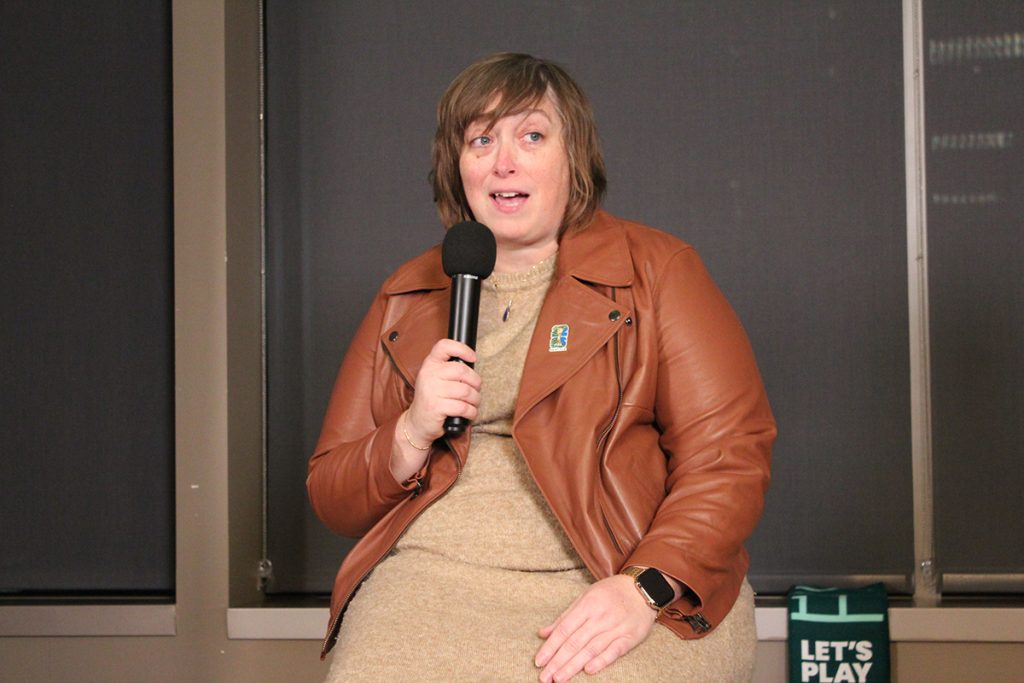
April Putney, chief strategy officer, SeattleFWC26
SeattleFWC26 Chief Strategy Officer April Putney dismissed concerns about federal intervention during the Feb. 4 forum organized by Seattle City Club at The Collective Seattle. “The World Cup is happening here. Period. Hard stop. Will not be removed,” she said. Putney noted that organizers hold weekly meetings with a White House task force and called progress across all 11 U.S. host cities “productive and helpful.”
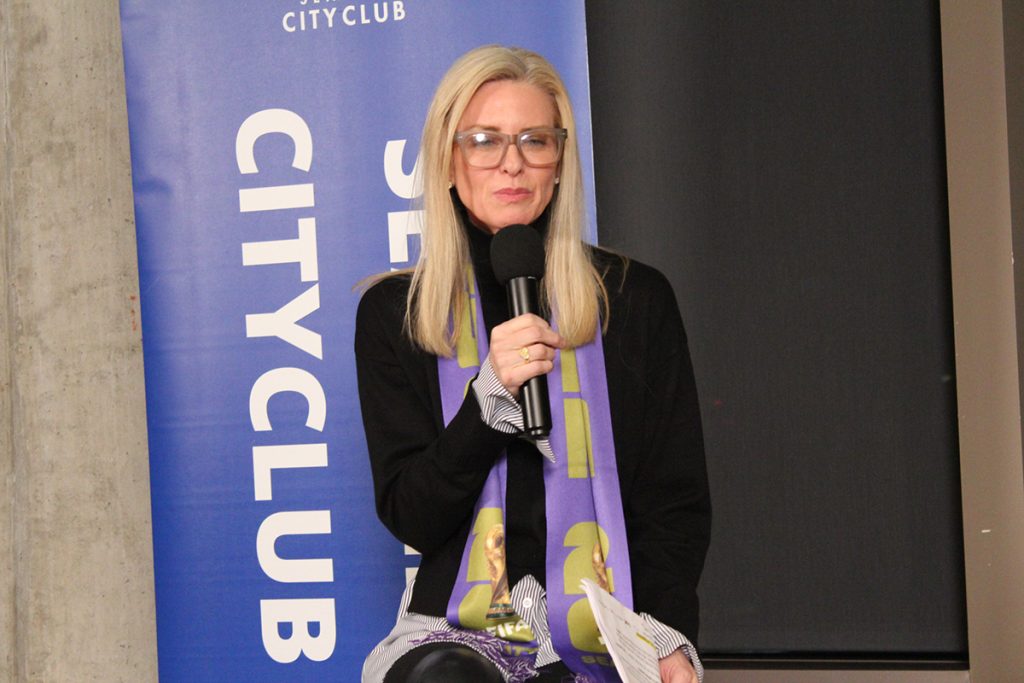
Erin Mayovsky, co-anchor of Good Day Seattle at FOX 13 Seattle
Erin Mayovsky, anchor of Good Day Seattle at FOX 13 Seattle, served as moderator for the forum event titled “Beyond the Match: Maximizing the Impact of FIFA World Cup 2026.”
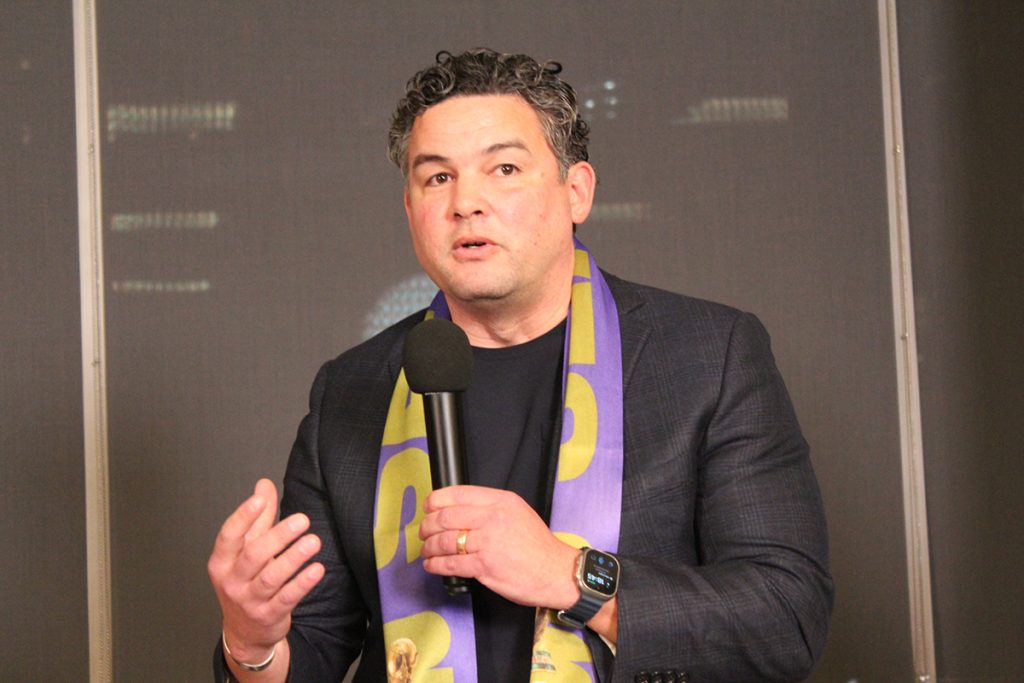
Leo Flor, chief legacy officer, SeattleFWC26
Leo Flor, chief legacy officer for SeattleFWC26, said organizers are still testing strategies to spread economic benefits to stadium-adjacent communities like the Chinatown-International District (CID) and Little Saigon. How much of the projected windfall reaches those neighborhoods remains undetermined.
He outlined translated business surveys conducted with Seattle CID Business Improvement Area, Seattle CID Preservation and Development Authority, Friends of Little Saigon, and the CID Vision Group.
“About half of the small businesses surveyed, they want in, they want more access,” he said. “About a quarter really were like, we just don’t want disruption. And about a quarter, we need more information.”
Match schedule reflects city values
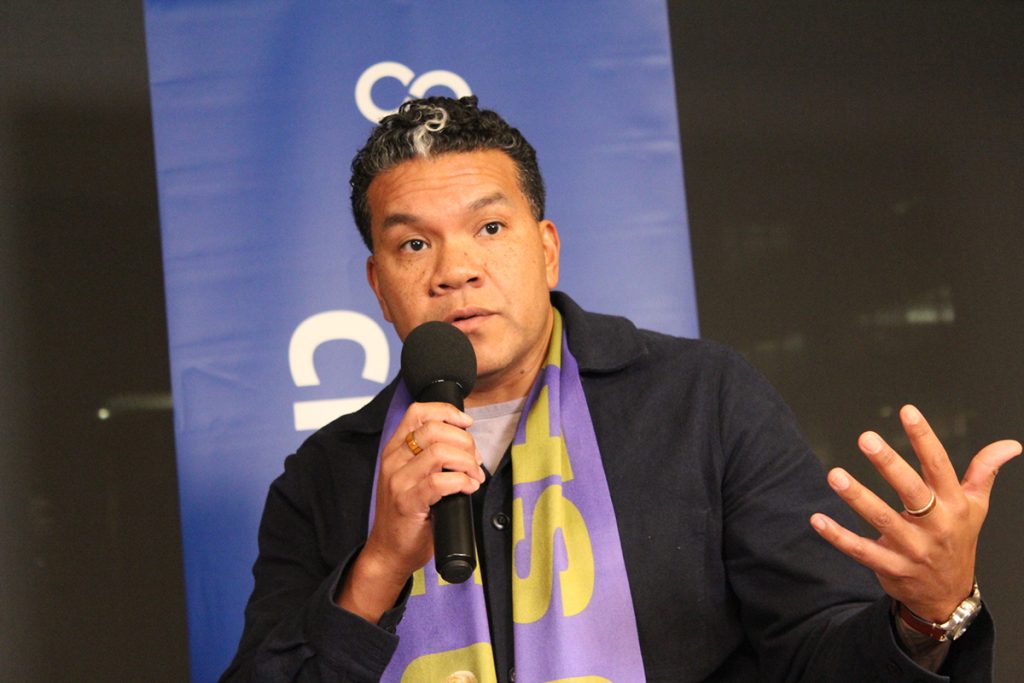
Brian Surratt, deputy mayor, City of Seattle
Seattle Deputy Mayor Brian Surratt said the match schedule deliberately reflects Seattle’s progressive identity. The U.S. men’s national team will face Australia on June 19—Juneteenth—and a June 26 match pitting Egypt against Iran falls during Seattle’s Pride Week.
“We leaned in hard on our values as a welcoming city, and we’re not letting go of that,” Surratt said.
Surratt also addressed homelessness concerns, saying Mayor Katie Wilson has ordered the creation of 500 transitional housing units before the June 15 opener.
“We’re not going to sweep them away,” he said of unhoused residents. “We want them to be in safe and supportive housing during this period.”
Wilson’s executive order directs city agencies to identify city-owned land suitable for tiny homes and shelters ahead of the tournament.
Strategies targeted CID businesses
To channel visitors into neighborhood businesses, organizers are deploying the Unity Loop—a walking route connecting the stadiums, waterfront, Capitol Hill, Central District, Pioneer Square, and CID—and the SEA&WIN mobile app, which offers rewards for patronizing local shops.
Flor called it “a specific strategy to get hundreds of thousands of people to keep walking, keep rolling.”
SeattleFWC26 has funded full-time neighborhood liaisons, including CID sports economy coordinator Carmen Pan, to provide in-language assistance to immigrant-owned businesses navigating marketing opportunities and operational changes.
“We’re frankly testing it.” Flor said. “How effective is it to be able to get in-language, interpreted small business assistance?”
Japanese-born artist Shogo Ota’s official Seattle host city poster—featuring an orca tail rising from Elliott Bay beneath Mount Rainier—has become the top seller among all 16 World Cup cities, according to FIFA and Sports Illustrated rankings. Neon versions of the whale flukes will mark participating businesses along the Unity Loop.
Business playbooks unveiled
The forum’s second segment shifted from projections to practical tools. Representatives from Visit Seattle, the Seattle Metropolitan Chamber of Commerce, and the Seattle Sports Commission unveiled three coordinated playbooks designed to help businesses—including immigrant-owned shops in the CID—navigate FIFA’s strict trademark rules while capitalizing on tournament traffic.
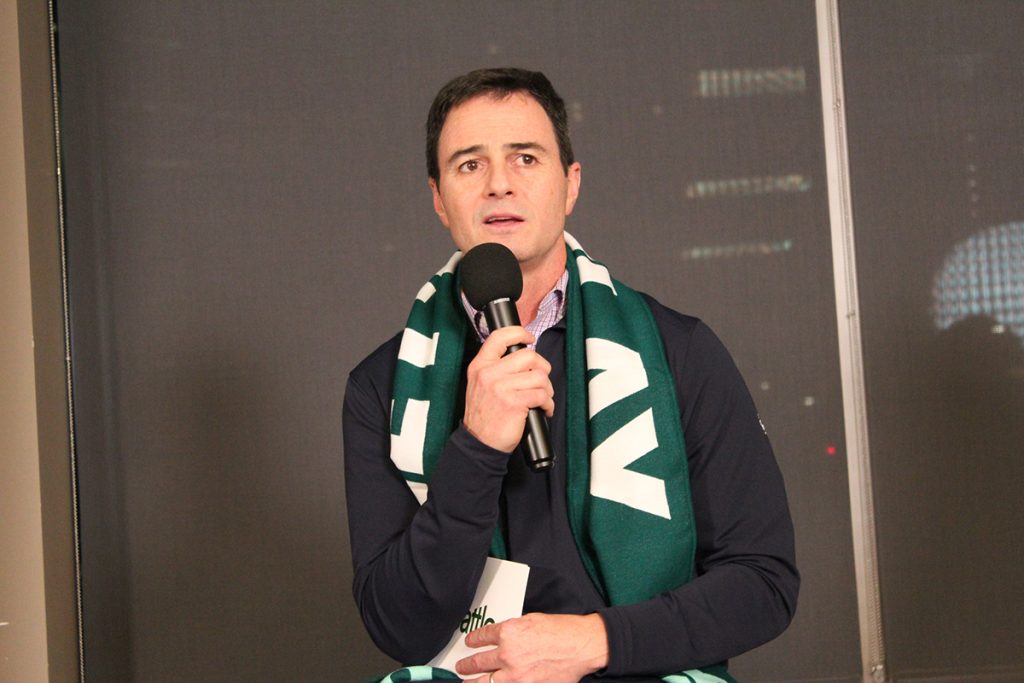
Jorge Gotuzzo, World Cup activation lead, Visit Seattle
Jorge Gotuzzo, Visit Seattle’s World Cup activation lead, introduced the “Let’s Play SEA 26” Community Brand Playbook, which offers free logos, templates, and social media assets that circumvent FIFA’s intellectual property restrictions.
“It’s a big problem when the big parties come into town and we’re hosting it and we can’t talk about it,” Gotuzzo said. “So this playbook came to solve that challenge.”
The toolkit includes four logo variations, whale-fluke patterns inspired by the host city poster, and ready-to-use storefront signage. Gotuzzo urged small businesses without marketing staff to download assets at the Let’s Play SEA 26 website and leverage social media.
“You want them to find you before they arrive,” he said.
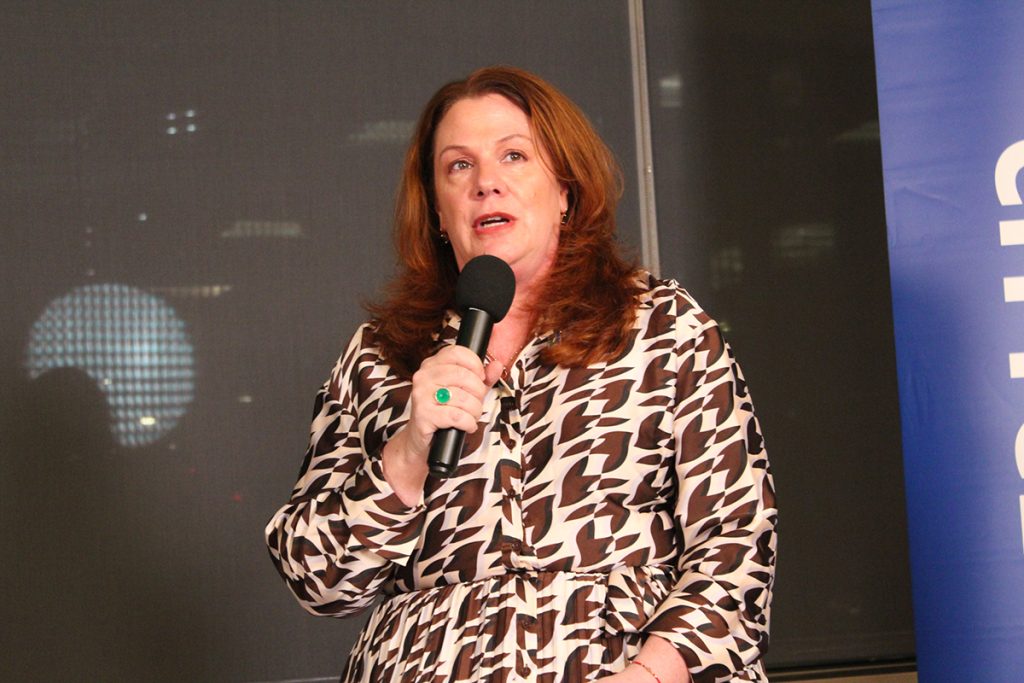
Lynnette Buffington, chief of staff, Seattle Metropolitan Chamber of Commerce
Lynnette Buffington, chief of staff at the Seattle Metropolitan Chamber of Commerce, said her organization’s Small Business Readiness Playbook drew lessons from COVID-19 disruptions.
“If you were frontline working with businesses during COVID, you learned a lot about business resiliency or lack thereof,” she said.
The guide emerged from nearly 70 meetings with chambers, business improvement areas, and technical assistance providers statewide. It includes case studies from the 2023 MLB All-Star Game, Taylor Swift’s Eras Tour, the Detroit NFL Draft, and the 1996 Atlanta Olympics. Buffington said the resource has been translated into five languages and is supported by an AI-powered knowledge manager.
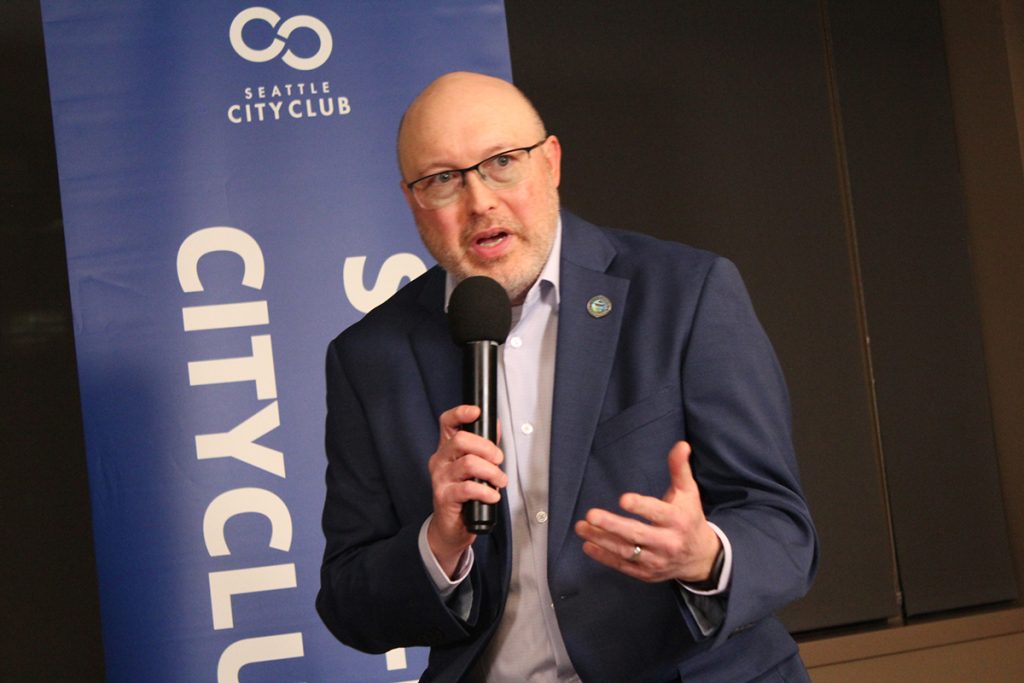
Alex Webster, vice president of sporting events development, Seattle Sports Commission & SSC Foundation
Alex Webster, vice president of sporting events development at the Seattle Sports Commission, presented the Watch Party Playbook, a guide for businesses and community groups hosting public viewing events. The commission tested the format during last year’s FIFA Club World Cup and refined it for 2026.
“So many people are going to experience the World Cup in a way that’s not inside the stadium,” Webster said.
All watch parties require a FIFA television license, and larger gatherings on public property need city permits—a process Webster urged organizers to begin immediately.
“Resources can get scarce closer to the event,” he warned. The playbook notes that neither FIFA nor local organizers will provide funding, though the Chamber may offer small grants to qualifying applicants.
Buffington delivered a pointed message to hesitant business owners.
“Early on, businesses, small businesses especially, were looking for permission to start,” she said. “There’s nothing in your way. There’s no starting gun. You need to start preparing for these games.”
She announced a March 12 transportation webinar and additional sessions on the Unity Loop.
Statewide reach
Panelists emphasized that the tournament’s economic ripple will extend far beyond Seattle’s downtown core. Buffington noted that nine official fan zones are planned across Washington’s largest counties, with communities from Snohomish County to Kelso planning localized celebrations.
“Our tiniest hotels in the corners of our state will be full,” she said.
Gotuzzo described an I-5 billboard initiative stretching from the Canadian border to Oregon, inviting businesses to co-brand welcoming messages. He also revealed partnerships with UK podcasters to market Seattle internationally.
Webster framed success in terms of future opportunities.
“For us with the Sports Commission, it’s about what comes next,” he said, noting that a well-executed World Cup strengthens Seattle’s bids for future major events. “Events like this create deadlines, and deadlines drive communities to come together and reach successful outcomes.”
Asked what victory looks like, Buffington offered a cultural benchmark.
“I want us to have our swagger,” she said. “I want our small businesses to be really thrilled about it. These games are for us, too.”
Long-term funding uncertain
During the question-and-answer session, panelists were asked whether guaranteed funding exists to continue support for the CID and other Asian American communities after the tournament ends.
Flor acknowledged no permanent commitment is currently in place.
“We don’t have permanent funding for it right now,” he said.
The neighborhood liaison positions in the CID, Pioneer Square, and SODO were funded by the state Department of Commerce and the Public Stadium Authority as a first-time experiment, Flor explained. Community organizations in those neighborhoods used the funding to hire full-time sports economy coordinators who relay information from the local organizing committee, FIFA, and the city directly to small businesses.
“We’re trying it really as an experiment to see if it works, having an embedded person who knows the information straight from FIFA or from the city,” he said.
Flor said organizers are collecting data to demonstrate the program’s value and advocate for its continuation.
“We all do better when the stadium neighborhoods do better,” he said.
Surratt, representing a Wilson administration just 30 days old, said he was unaware of the liaison program’s funding status.
“This is new information for me,” he said. “I want to know, has it been impactful? That is something I definitely want to follow up on and see if this is something we can continue on.”
SeattleFWC26 is the local organizing committee for Seattle’s participation as one of 16 host cities selected for the FIFA World Cup 2026. For more information, go to www.seattlefwc26.org.