



This is sponsored content.
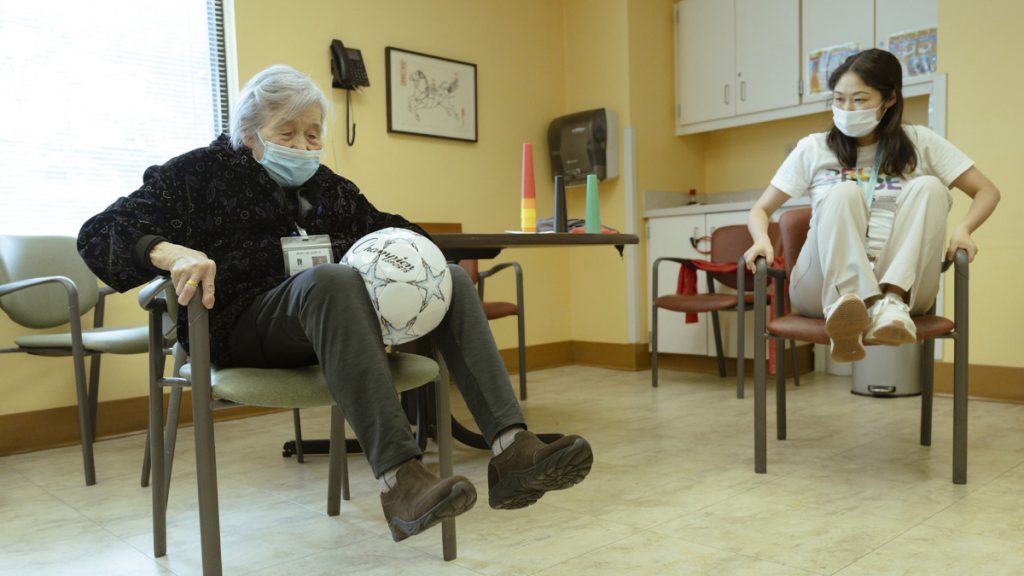
Certified Occupational Therapy Assistant Chie Kondo works with Huizhu Jin, a participant in the ICHS Adult Day Service program, April 23, 2025. At ICHS PACE, each enrollee receives a personalized care plan that includes physicians, home care nurses, nutritionists, and physical therapists. Seniors who have multiple health challenges and are at-risk of nursing home placement could be a good fit for PACE. Call 206-531-2194 or email enrollpace@ichs.com to learn more.
International Community Health Services (ICHS) has launched Together We Rise, a wellness podcast with useful information aimed at keeping our communities safe and healthy. In this episode, we meet retired veteran Tupu Siolo and learn about the benefits of PACE, or Program of All-Inclusive Care for the Elderly, which provides comprehensive wraparound services with the goal of keeping seniors living at home. Joining Mr. Tupu is occupational therapist Candace Lock and registered nurse Yotsana Tripathi.
Learn how PACE supports people 55 years of age and older in living independently and safely in their own homes while providing a comprehensive care model that includes medical, social, and personal support. If you or a loved one are considering options for elder care, this episode is essential for understanding what makes PACE unique. Don’t forget to check out our website at ichspace.org for more information!
Transcription:
Maggie McKay (Host): Welcome to Together We Rise, a podcast from International Community Health Services. ICHS advocates for health as a human right and welcomes all in need of care, regardless of health, immigration status, or ability to pay. I’m your host, Maggie McKay. Today, we are joined by occupational therapist Candace Lock, PACE participant and retired U.S. veteran Tupuinu’u Siolo, aka Mr. Tupu, and registered nurse Yotsana Tripathi. Thank you all for being here to discuss PACE, the Program of All-Inclusive Care for the Elderly.
Candace Lock, OTR/L: Thanks for having us.
Yotsana Tripathi, RN-BSN: It is a pleasure to be here, Maggie.
Host: Absolutely. Thank you for being here. Candace, what kind of care and services are available at ICHS PACE?
Candace Lock, OTR/L: So at ICHS PACE, we provide wraparound individualized care to help our elders live safely and independently at home and in their communities for as long as possible. We’re not just a clinic, we are a full care team. So, that includes doctors, nurses, occupational therapists, physical therapists, social workers, recreational therapists, dieticians, transportation, and even personal care services. And we also have a day center where our participants can come participate in various activities, stay active and connected to others. And a big part of PACE doesn’t just happen in a clinic, it also happens at home too. So, we offer both home health and home care services that keep our participants safe, supported, and independent in the place that they love most.
Host: You have covered a lot of ground in that it seems like any service somebody would need is there. That’s amazing. Mr. Tupu, how long have you been enrolled in the PACE Program at ICHS, and how did you find out about it?
Tupuinu’u Siolo: About three years now. Dr. Allen Chung, when he got a job with PACE, he was my original provider, and he told me that this would be a very good program for me because of all the health issues I had. So, he was pretty good with that. So, I found out that I could get into PACE. So, that’s about it.
Host: That’s great. Can you tell us about the enrollment process? How long did it take?
Tupuinu’u Siolo: For me, it didn’t take that long. I just had to fill out some forms. The people took me around the place, and I decided then I just wanted to find out, see what it is, because I never been in a program like PACE before.
Host: What was life like before you enrolled in the program?
Tupuinu’u Siolo: I was in a very bad place. I was very sick at the time. I couldn’t walk a block without stopping three or four times. I had very bad COPD, and my heart was in really bad shape and I was in a bad place. I really didn’t feel like, you know, to tell you the truth, living at that time. So then, I came to PACE, and I looked around, met a lot of nice people, even though there’s a language barrier there. But we all get along. We kind of have our own little language.
Host: Your own code like twin speak. What is a typical day like for you as a PACE participant?
Tupuinu’u Siolo: They pick me up at about nine o’clock, I get here. The workers are always there to help me out. Have coffee or something, whatever, tea if you prefer. And then, we start off with exercise class. And then, after the exercise, they have certain classes that we take, if you take that class, or you can do your own activity. Like, I do puzzles and other things that we do or you can just sit there and talk to people.
Host: So, that sounds great. You mentioned your previous doctor. The trust we build with our doctors is so important. But program participants must receive their care and services exclusively through ICHS PACE or ICHS PACE’s network of providers. So, how was that transition for you letting go of your previous doctor?
Tupuinu’u Siolo: I think it worked out very (well) for me. I got here, and they told me I had a team. And this team consists of a social worker, people that help me with the aid that I have at home, the therapy, and everything else that goes with it. Nurses, you know, that help me out a lot.
Host: So, Yotsana, what’s the most challenging aspect of your job? And what’s the most rewarding?
Yotsana Tripathi, RN-BSN: The most challenging aspect of my job as a nurse and also as the case manager, I handle a large population of people who are enrolled in PACE. Managing the elderly and frail population in itself is a big task. As a nurse, it does take an emotional toll on me. But I try my level best to provide the care that they need and deserve. I’m always constantly balancing competing needs, like juggling demands of multiple patients along with team coordination, admin notes, just trying to get everything a patient might need at the right time in the right form of services. So, that’s the most challenging part.
And as a nurse, we have to do a lot of charting. Like if it’s not documented, it never happened. So, we are always trying our level best to provide documentation for any team to take over and provide the care.
The most rewarding part of my job is building relationships. I have known Tupu ever since I joined here. Sometimes, when I have time, I do join him in making puzzles. So, those are the nuggets where I am building long-term relationships with my patients.
Another most rewarding part of being a nurse at PACE Program is promoting independence. Our primary goal is that a participant is able to live in their home or in the community. We don’t want them to be hospitalized. We don’t want them anywhere other than their home. That’s their safe spot. So, that is the most rewarding part. We really try very hard to make sure that all our patients are in the comfort of their homes, and we provide the care they need.
Another rewarding part of my job is the collaborative team environment. There are 11 interdisciplinary teams that come together to provide care to one patient or participant. And all these 11 teams work closely together. There is Candace, who comes from OT, there is PT, there is respiratory therapy.
There is recreational therapy, there is social work, there is transportation, there is day center, there is home care. All these teams come together, and they work so closely with all our participants that we ensure that they get the care they need, and they truly deserve. That’s the most rewarding part of being a nurse at PACE.
Host: And what inspires you about working with seniors in the PACE program?
Yotsana Tripathi, RN-BSN: When I was a little girl, I never had the opportunity or the privilege of being with my grandparents, both my mother’s side and my father’s side. My grandparents passed away very early. So, I have never known what it’s like to spend time with elderly people. When I joined PACE, it was a different thing, like I was able to communicate with people. I was able to know their stories. As a young girl, I have loved stories. And now, I know so many stories, so many inspiring stories. We have so many success stories here. We have patients who have literally come back from positions that we thought that they wouldn’t make out of. And they are here thriving. They come to the day center, they wave at me. They know who I am. In Cantonese, a nurse is called Woo Sze. And every time they see me in the corridor, they’ll be like, “Woo Sze, Woo Sze.” I have a difficult name. So, I understand it’s not easy for my patient population to say my name. But the fact that they know I’m the nurse and they wave at me is truly fulfilling and rewarding.
Host: I can imagine. Candace, why is PACE so important for the immigrant and refugee communities that you serve?
Candace Lock, OTR/L: Yeah. PACE is important for this community because navigating the healthcare system is very, very hard, even more so when English is not your first language. And at ICHS PACE, we lower these barriers by providing coordinated, but also culturally and linguistically appropriate care. Many of our elders came here decades ago, they made many incredible sacrifices to build a life here for their families.
So, being able to serve them now is not just healthcare for us. It’s a way of honoring their stories and their legacy and helping them live to their final years with dignity, purpose, and joy. I know that PACE accepts a variety of participants, and sometimes people come with a lot of complex medical and psychosocial needs. So, we really work hard to provide that wraparound care, and it takes a lot of our creativity and teamwork and patience to meet them where they’re at. But I totally echo what Yotsana said. It’s very rewarding for us and amazing to just see families and our grandpas and grandmas thrive under our program.
Host: I love that you’re honoring them and all the sacrifices they made to be here and all the challenges they must face, just language barrier, like Mr. Tupu mentioned. Candace, how can someone find out information to determine if joining is right for them?
Candace Lock, OTR/L: So if you or someone else you love might benefit from PACE, we would love to connect with you. You can visit our website for more information. It is I-C-H-S-P-A-C-E.org, ichspace.org. You can also call us at 206-531-2194 or email enrollpace. That’s E-N-R-O-L-L-P-A-C-E@ichs.com. And that’s where you’ll reach an amazing enrollment team, and they would be able to schedule a tour with you if you want to come in and see our center and our clinic and see us at work in person if this is the right fit for you.
Host: It sounds really great. So, thank you all for sharing your experience and your expertise. We so appreciate you making the time to be here and to tell us more about this great program.
Candace Lock, OTR/L: It’s our pleasure. Thanks for having us.
Yotsana Tripathi, RN-BSN: Thank you, Maggie.
Host: Thank you all again. That’s Candace Lock, Mr. Tupuinu’u Siolo, and Yotsana Tripathi. To learn more about PACE at ICHS, check out our website I-C-H-S-P-A-C-E.org or ICHSPACE.org. And if you found this podcast helpful, please share it on your social channels and check out our entire podcast library for topics of interest to you, I’m Maggie McKay. Thanks for listening to Together We Rise from International Community Health Services.