


By Annika Hauer
NORTHWEST ASIAN WEEKLY
A sour crunch through cabbage or cucumber and then the spices set in, created from Korean red pepper flakes, garlic, and ginger, and intensified by fermentation. Kimchi is known for these flavors and its presence in every Korean meal.
Though kimchi has shifted from its ancient Korean roots and traditions that many Korean American immigrants grew up with, it lives on in restaurants and home kitchens across King County.
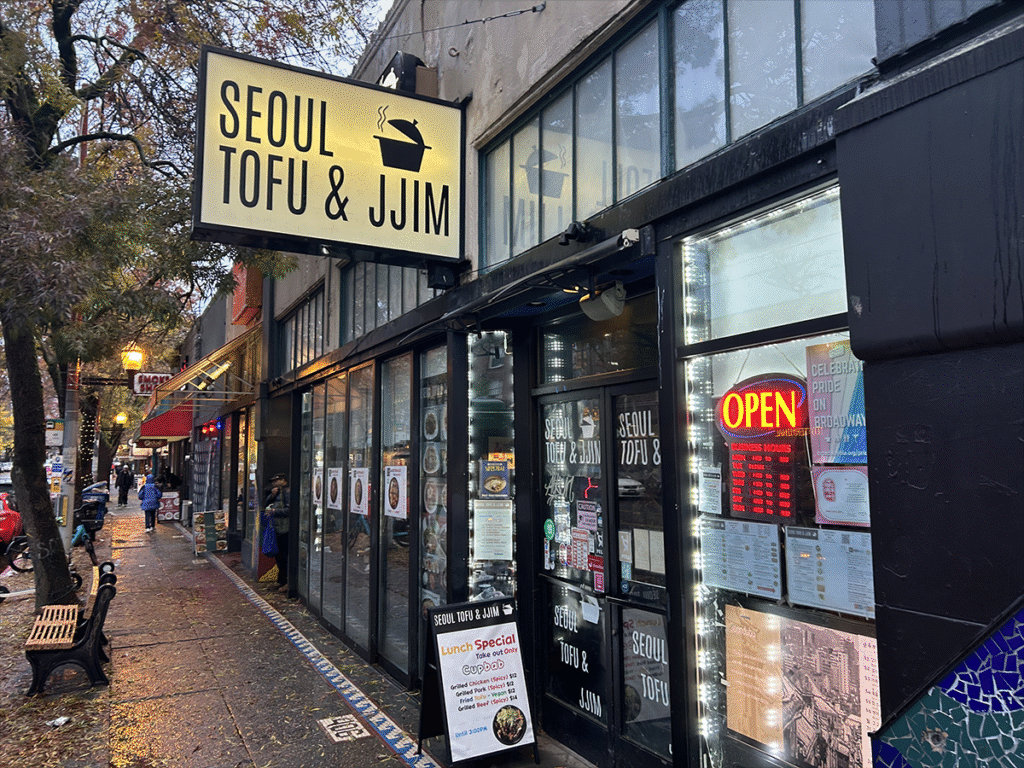
Seoul Tofu & Jjim in Capitol Hill proudly serves “authentic Korean food,” which means kimchi is a part of every meal. (Photo credit: Annika Hauer)
In Capitol Hill at Seoul Tofu & Jjim, restaurant owner Heyryena Lee (이 혜레나) serves kimchi to American and Korean American customers every day.
“I want everybody to know real Korean food,” Lee said. “I have a Korean restaurant. I have to make kimchi.”
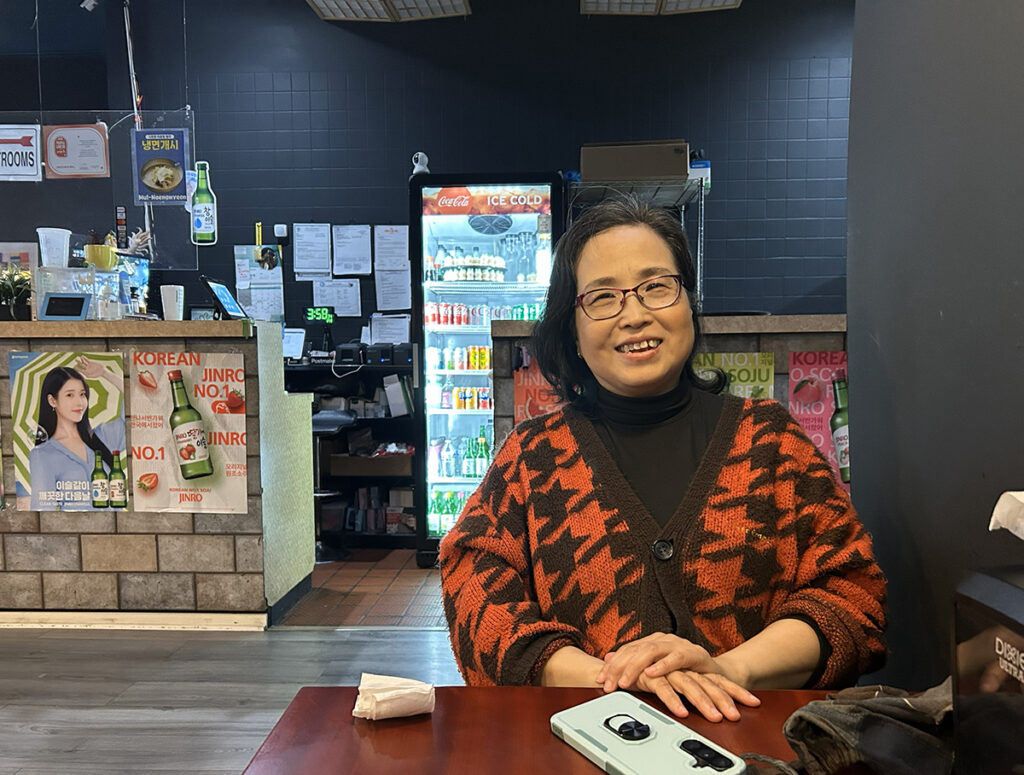
Heyryena Lee grew up in Seoul and now lives in Seattle with her family. She owns Seoul Tofu & Jjim in Capitol Hill. (Photo credit: Annika Hauer)
Lee grew up in Seoul and learned to make kimchi from watching her mom. She was a picky eater growing up, but kimchi was the exception.
“I don’t like any meat,” she said, “but I loved the kimchi.”
Heyryena Lee talks about loving kimchi (audio)
Lee grew up with kimjang (김장), also spelled gimjang, which scholars and many Koreans themselves say began thousands of years ago with the existence of kimchi itself. Kimjang is the practice of making huge batches of kimchi to eat through the winter, Lee said, when the weather in Korea got harsh and vegetables were out of season.
For Lee and many Koreans and Korean Americans, kimjang is a yearly late fall ritual that has Korean values of community and sharing at its core.
“We made the kimjang and every neighbor would make it together,” Lee said. “We do it one at a time. One day is our home, tomorrow is my neighbor’s, tomorrow is another family.”
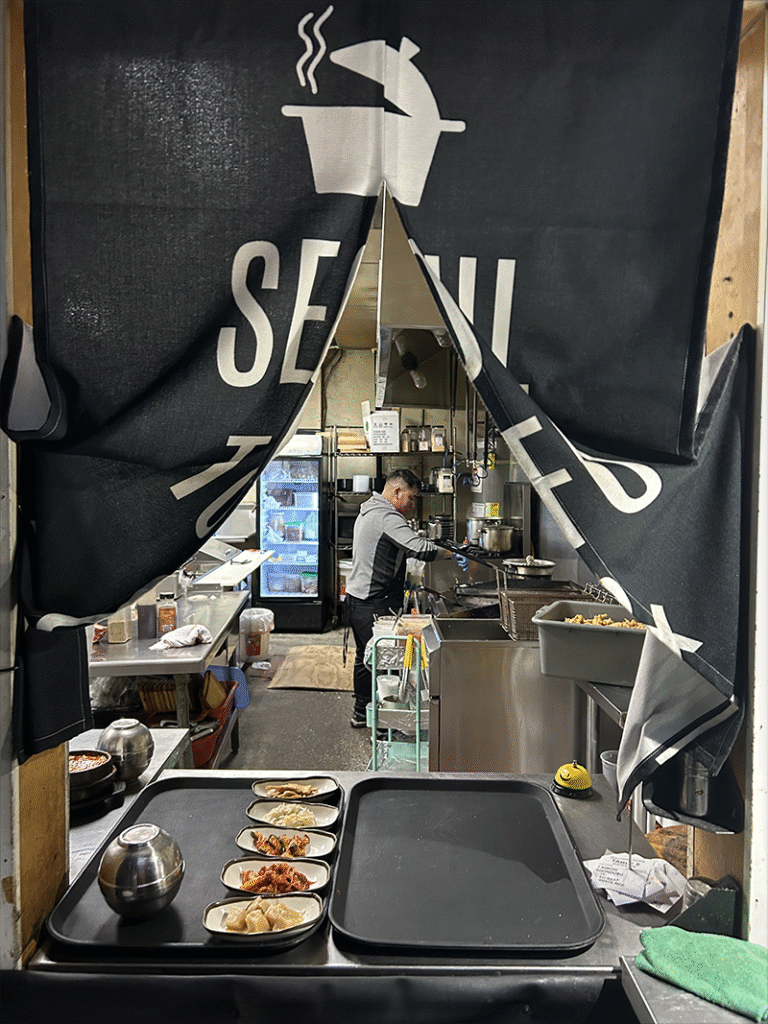
At Korean restaurant Seoul Tofu & Jjim in Capitol Hill, kimchi is served with every meal. (Photo credit: Annika Hauer)
Kimchi lasts up to six months in the refrigerator, or in Lee’s case growing up, in big pots (항아리) stored in holes she’d help dig in the ground, she said. A batch for one family used up to 300 heads of napa cabbage.
Living in Seattle now with her husband and two kids, Lee does kimjang differently.
“Every year during this season, I make it myself and my whole family,” Lee said. “But not too much, just 20 napa, but still I make it because kimchi is very special.”
As kimchi ferments over time, it changes. As if it has a life cycle, each stage correlates with a different use. Kimchi that has fermented through the winter is Lee’s favorite, she said.
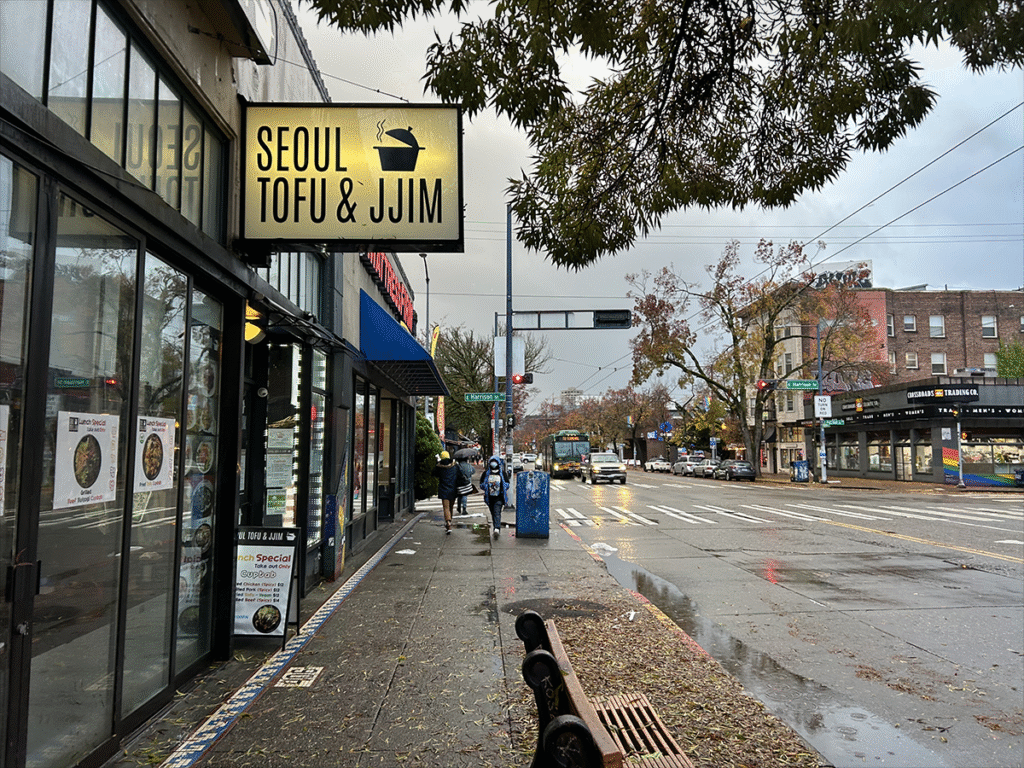
Photo credit: Annika Hauer
At Seoul Tofu & Jjim, the kimchi is fresh, made just two to three days before it is served to customers. It has a crunch that longer fermented kimchi does not, and it is less sour. Her American customers prefer that, Lee said.
In her restaurant, the base is usually the same—fish sauce, garlic, ginger, and pepper blended together, then mixed into a vegetable base—but every kimchi batch is a little different, depending on the person or family who makes it. Lee remembers going to neighbors’ homes in Seoul and tasting the varying family recipes.
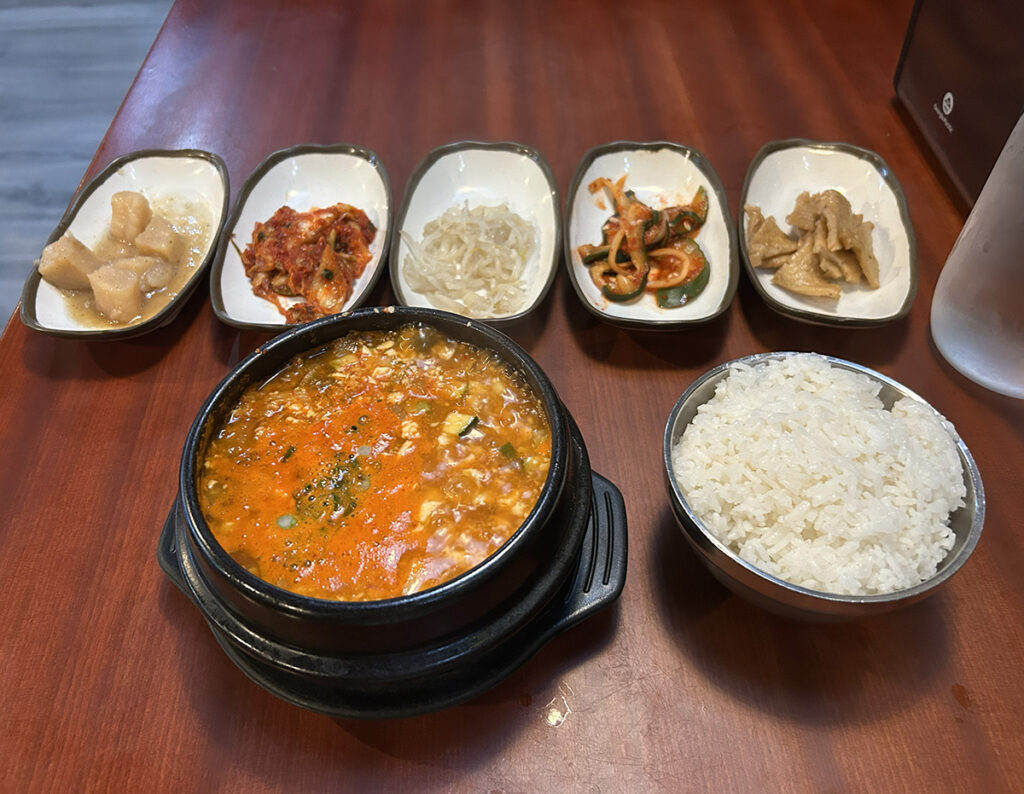
At Seoul Tofu & Jjim, meals are served traditionally with multiple kinds of kimchi, a kimchi stew, and more. (Photo credit: Annika Hauer)
A lot of factories, especially in Korea, Lee said, make good kimchi. It can be cheaper, too, so many families opt to buy it rather than make it, nowadays. Some women work outside and don’t have time to make it at home, Lee said.
“But 10 years later, 20 years later, maybe no one can make the kimchi, everybody buys the kimchi,” Lee said. “Everybody eats the same-tasting kimchi.”
Lee doesn’t want that for her kids, she said, so she’s raised them making kimchi every year, hoping they continue the tradition.
Photo credit: Annika Hauer
At her restaurant, Lee sees many young Americans bring their grandparents in for their first time trying Korean food, and now, she says, the grandparents and parents come in on their own. One of her customers has even been inspired to make kimchi on his own.
“He’s not Korean, but he loves it,” she said. “I’m proud.”
Southeast of Seattle in Renton, resident Hyojin Kim (효진김) makes her kimchi at home. Kim lived in Korea until she was 12, before moving to the United States. She first ate kimchi as soon as she could have solid foods, and to this day, if she travels, she craves it after just a few days.
“Emotionally, you feel full if there’s a batch of kimchi in the refrigerator,” Kim said. “If I don’t have anything to cook, I could make kimchi fried rice or kimchi stew.”
Kim now makes kimchi with her mother at home in Renton. They use what is most available or in season. In the winter, they use radish; in the summer, Korean cucumbers that Kim grows in her garden.
“This summer, a box of napa cabbage at H-Mart was on sale so my mom and I made the whole box,” Kim said. “Then we were like, oh, the price was so nice…so we made two boxes.”
That batch of kimchi will last until February, Kim said—about eight months in total.
It took Kim and her mom more than six hours to make this batch: prepping the onion and garlic takes an hour, and another four to five washing the napa cabbage, and then pulling back each leaf to salt it, she said. This draws out the moisture and helps the seasonings soak into the cabbage later.
When she runs out of kimchi, it can feel like a daunting task to make another batch, Kim said, but it feels good to have done it afterwards and to be stocked for another few months.
Like Lee, Kim feels every batch of kimchi, even varying between her own, is different. She used the Korean phrase “every hand makes a different taste (손맛).”
Northeast of Seattle in Woodinville, residents Seonja Lim (임선자) and Jae Yoon Ahn (안재윤) decided to start selling their kimchi online. Their business, Seattle Kimchi, opened two months ago.
Like Kim, Lim first had kimchi as a toddler. At that age, her parents rinsed it with water and served it with rice to be less spicy.
After working and living in Italy and Spain, they moved to the U.S. to open Tapas Lab in Green Lake and Korn Dog in Capitol Hill. Both have since closed, and now they focus on Seattle Kimchi.
“After I moved to the U.S., my life was very busy, so I always bought kimchi instead of making it,” Ahn said. “I ate the store market kimchi. But I kept thinking, why is it so hard to find a really good one? … My wife and I talked a lot and said, ‘Why don’t we just make it ourselves?’”
They decided to make the business online-based so they could reach more people than they were reaching with a restaurant.
“My wife and I wanted to do something that could have a bigger positive impact,” Ahn said. “Let’s have people all across the United States taste real, traditional, authentic Korean kimchi, the kind we grew up with that became our kimchi, too.”
Their ingredients are sourced locally from Jin’s Farm in Centralia.
“The Pacific Northwest has clean water and fresh air and really rich soil,” Ahn said. “That means that it’s perfect for growing good vegetable and cabbage and radish.”
The couple makes the kimchi themselves and ships it fresh to customers across the United States, with a guide to fermentation.
“Kimchi is the talent we know best,” Ahn said. “It’s a relationship with people in a meaningful way. So for us, kimchi is not just food, it’s how we connect, how we give something positive back, and how we keep our identity while contributing to America at the same time.”