

By Andrew Hamlin
NORTHWEST ASIAN WEEKLY
The new Godzilla movie previewed on Election Night and I probably wasn’t the only critic at the preview checking results before the projectionist dimmed the lights. Americans voted on what kind of government they wanted over the end of Trump’s second term. I thought, before those lights went down, of the humans in each Godzilla movie, like those voters across the country. Struggling to make a change, to establish control, in a milieu where huge, heavy forces predominate and the actions of one person, or a small group, seem very small indeed.
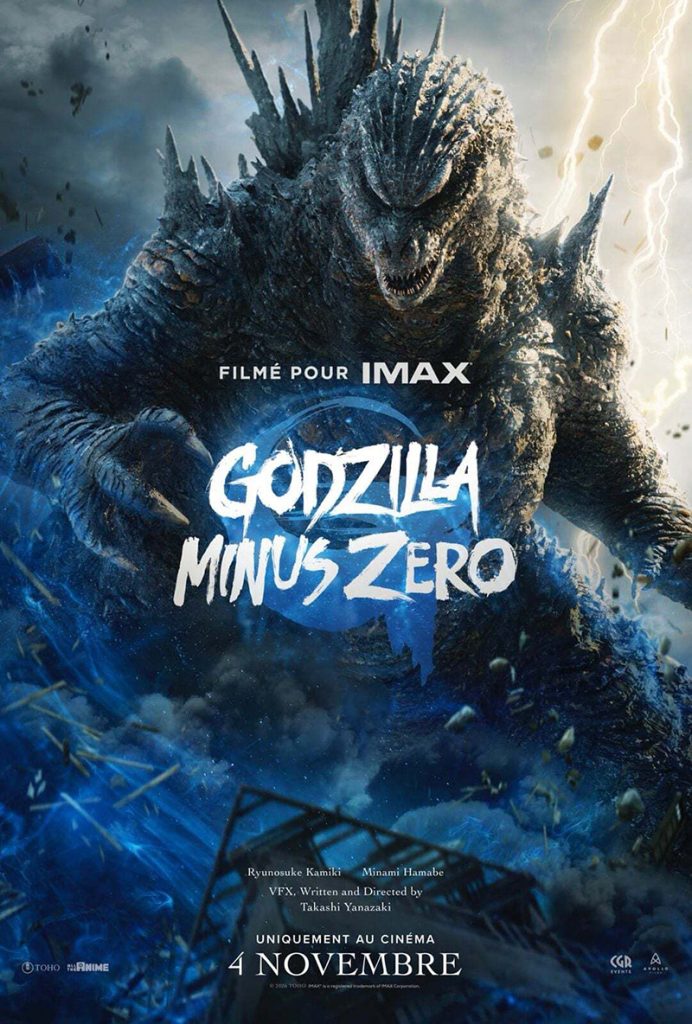
“Godzilla Minus Zero” came with a long list of spoilers from the publicist, putting critics on our honor to not reveal crucial plot points. But I can tell you the movie, like its predecessor “Godzilla Minus One,” opens around the end of World War II. I can tell you that Dr. Kanji Murakami, played by prominent Japanese actor and dancer Min Tanaka, gives a deep sigh before quietly concluding, “I seemed to have survived…again.”
This echoes Takashi Shimura as Kambei Shimada, saying much the same thing in the classic “Seven Samurai” (1954). Both men exhausted, both men wishing for a better world not likely to come. Both men grimly hold on to survival, without which they would have nothing.
I can tell you that the giant monsters play out their routine destructions, on a Japan that’s already destroyed: bombed, burned, and buried, jagged remnants of once-mighty buildings dotting the landscape like so many broken teeth. I can tell you Godzilla’s opponent is a creature long-running Godzilla fans have seen before, but invigorated with a new structure, new powers.
I can tell you that the end of the war spelled destruction, not just for a nation, not just for buildings, but for psyches and souls. The main characters move to save what’s left of their country, but frank matters of life, death and suffering underpin their every step.
I can tell you that weight figures in many forms. The weight of Godzilla, certainly: No more discrete thumping noises as with early franchise films, this Godzilla moves slowly, carrying his weight, but with enough noisy force in each step, to collapse a village. The other monster, too, seems massively unstoppable. Human countermeasures using airplanes, balloons, tanks, and artillery seem small and fragile.
I can tell you that the humans in the film seem hamstrung, not only by the weakness of physical defenses, but by guilt, shame, the compulsion for revenge, inward scars that may never heal, even as they work, ant-like, to rebuild what has been destroyed, and stave off new monster menaces. Humans have the sophistication to plan, to build, and to hope; but the monsters can wipe out human plans, and human legacy, within minutes, just as a rowdy bunch of teens can swiftly demolish an anthill.
The film finished, and our small band of critics went down the elevator to the street, and the parking garage. We spoke of the plot gimmicks, or tropes, common to Godzilla films. The very first one in the series, from 1954, featured a lone soul going into the field, face-to-face with a monster, knowing he would not return. Knowing all was lost without a supreme sacrifice, something he and only he could render. And something like that happens here, too.
In real life, of course, a happy or happier ending, depends upon many. Our world lacks the giant monsters, but sits besieged by human monsters, who would stifle and strangle sympathy, empathy, mercy, and compassion, from the body politic.
Leave a Reply