




By Kai Curry
NORTHWEST ASIAN WEEKLY
Provided by ACOM
This midterm election, what is motivating people of color to vote? What might keep them home? What issues are top of mind? So discussed panelists at an American Community Media webinar, “What’s Driving (or not) our Communities to the Polls?” For the hour-long briefing on Oct. 30, ethnic media journalists from several different communities were invited to give their take.
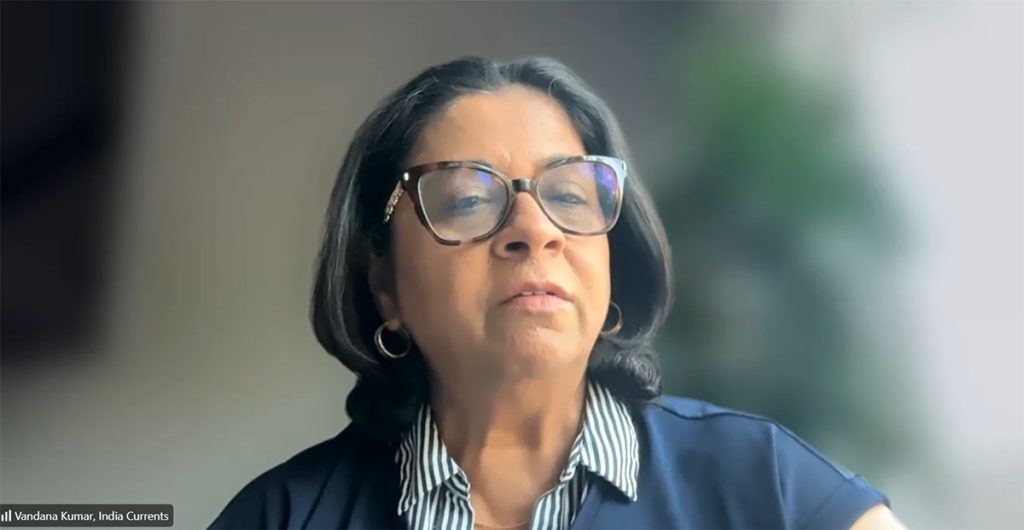
Vandana Kumar
Vandana Kumar is the publisher and CEO of India Currents, which is based in San Jose, California, and has been covering the Indian diaspora since 1987. She commented that interest in voting among south Asian residents of Silicon Valley is low. While adding that one mustn’t forget that the Asian population is not a monolith, and different groups have different moods at the moment, Kumar said that one reason people might struggle to get to the polls is that they are simply juggling too many other things. Financial hardship and immigration policy fears are causing many people to restrict their engagement to activities outside of voting itself.
“There is a difference between political engagement and electoral engagement,” Kumar reminded. “People may be following the news, they’re debating issues on WhatsApp groups, without necessarily participating in local civic processes.” The South Asian community, she said, is facing a lot of hate currently, and even within the community, there is toxicity.
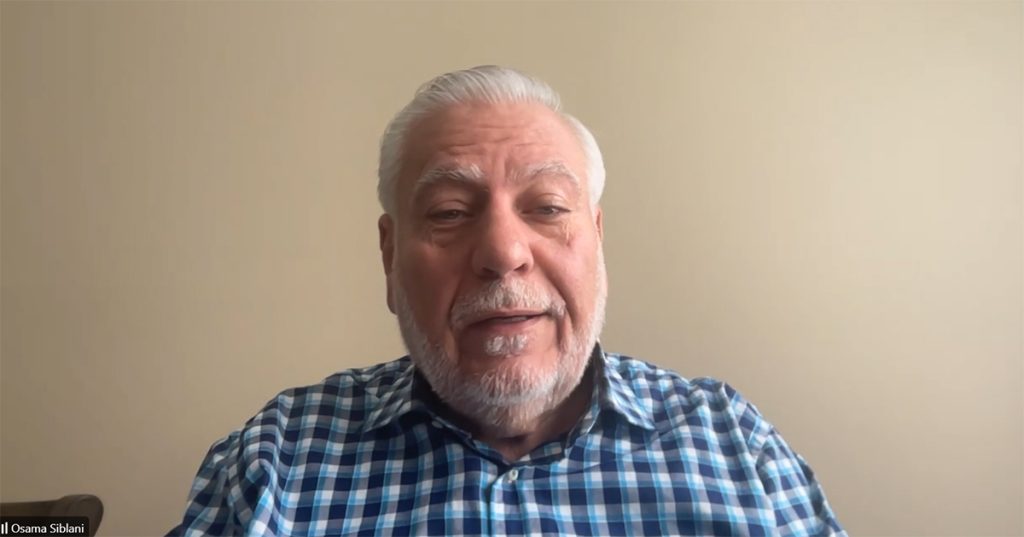
Osama Siblani
Along the same lines, Osama Siblani, the publisher of The Arab American News, based in Dearborne, Michigan, told attendees that his community—and he himself—are facing a fiercer hate campaign right now than he has seen in his 42 years with the newspaper. He told the audience that just in the minutes since the webinar had started, he had received notice of pro-Israeli media claiming Siblani had said things that he had never said. “They put out a story about me without even talking to me,” he explained. In Siblani’s case, this harassment arises out of the Israeli-Gaza conflict, in which he has personally lost 24 family members. “They spread hate and lies and by the time it’s over, it’s over,” he lamented, meaning that there was no taking a story back once it has already been published, even if what was published was not true. “It has become a ridiculous and gross violation of our Constitution, of our rights,” Siblani said of cases such as these and of the current administration, which he compared unfavorably to that of Ronald Reagan, who Siblani said encouraged immigrants to celebrate themselves and their cultures.
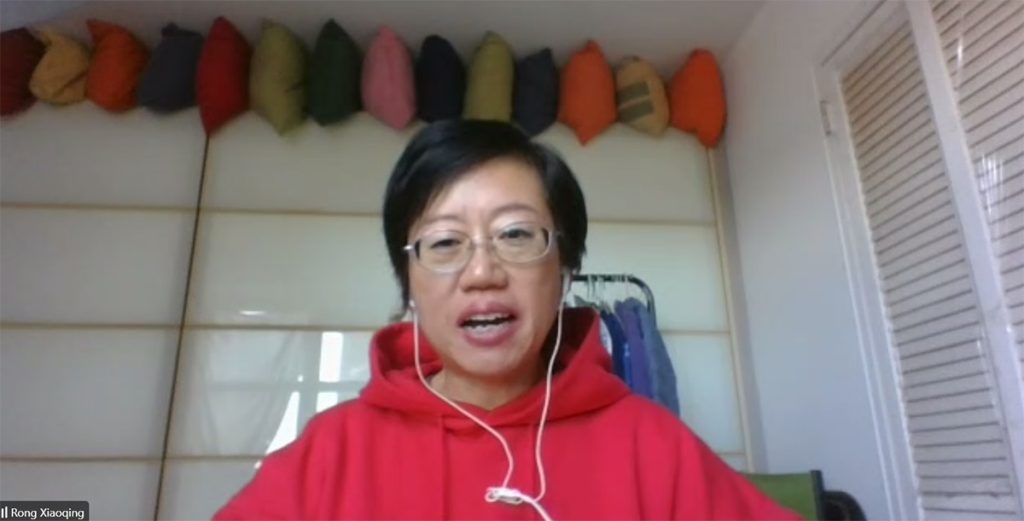
Rong Xiaoqing
In contrast to Kumar’s view that voters might stay away from the polls, Rong Xiaoqing, a reporter for the Chinese language newspaper, Sing Tao Daily, said that the desire to participate in the midterms is likely to be very strong. In New York, where she is based, the number of people who had already voted in early voting at the time of the briefing was 70% higher than the previous midterms. While Kumar did mention that surveys have estimated 90% of Asian Americans to show up to vote, she was less willing to predict such a number would actually materialize. In Rong’s view, Chinese Americans, in particular, were “rushing” to vote this fall. “I think, like many people, they have realized that this is a very consequential election,” she said. At the same time, people’s concerns, such as immigration rights and the economy, are even more urgent than in the past.
Journalists on the panel pointed out the struggle over rising cost of living and fear of deportation. Sho-Ban News editor, Birdwing (or what she coined her “colonizer name” Lori Edmo), of the Shoshone Bannock tribes in southeastern Idaho, mentioned a concern about a proposal to do away with identifying race and ethnicity in the census. This type of data is important, Edmo reminded, because it helps communities in need receive funding. Federal funding cuts have already negatively impacted not only Edmo’s tribal community, but most people of color around the nation, including Asians and Asian Americans. “We do really need that funding for the programs to help fill the gap, so we are able to take care of our people and provide the services they need,” Edmo said.
These two issues—rising cost of living and immigration fears—came up repeatedly throughout the briefing as most pressing for ethnic communities in the United States. “Everyone wants the prices to come down,” said Rong. The high price of goods and services is keeping people from eating out, which is affecting Asian-owned restaurants, she pointed out. High prices are keeping people from traveling as much as they normally do, which might mean they do not visit relatives in other countries as much as they would like. Another reason, she continued, is that they fear when they leave they will not be allowed to come back, due to the current administration’s immigration policies and the activities of I.C.E. “It really affects the community.”
Tied into this is the fear of losing one’s job or of not finding a job in the first place, Kumar commented. Whereas Silicon Valley had previously been thought of as a welcoming place for South Asians, it was now difficult even for those with a good salary to make ends meet, she said. “This is a region that has created extraordinary opportunities for Indian Americans. But then, there is a growing sense of insecurity right now.” California, the United States as a whole, what used to be the Land of Opportunity, is not proving itself to be right now, more than one panelist agreed. But in spite of all of this, Siblani assured that “we are not fearful” and that even though the United States is moving in an opposite direction from when he first came here, he still speaks and acts from love and hope for this country.
“For many immigrants, the stakes are personal. We all know that fear can silence people,” said Kumar. “People can feel deeply invested in America’s future, and at the same time, uncertain about whether it’s safe or welcome for them to speak up.”
Kai can be reached at newstips@nwasianweekly.com.
Leave a Reply