


By Madison Morgan
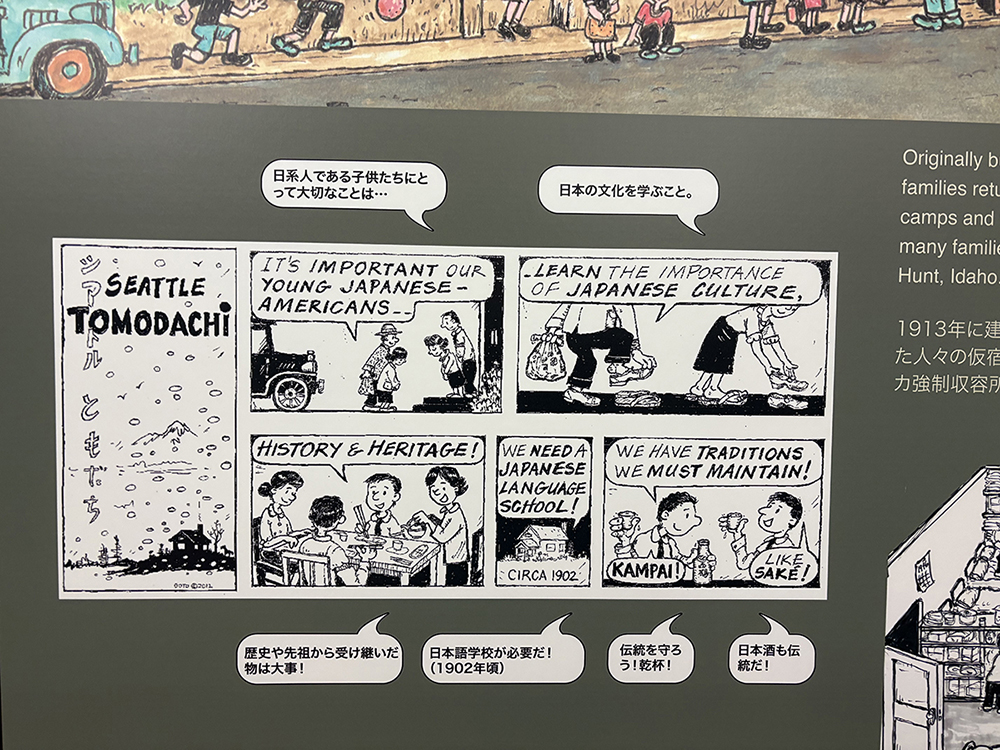
A panel of Sam Goto’s comic “Seattle Tomodachi” on display during the Nov. 1 Bunka no Hi cultural festival. Photo by Madison Morgan.
The Japanese Cultural & Community Center of Washington (JCCCW) marked its 20th annual Bunka no Hi cultural festival on Nov. 1, drawing families and community members to the Seattle Japanese Language School (SJLS) for a day centered on the life and legacy of Japanese American cartoonist Sam Goto and the samurai code that guided his work.
This year’s theme, “Seattle Samurai,” explored the tenets of bushidō—the traditional samurai code of conduct—and how those principles shaped Goto’s approach to storytelling, community engagement, and cultural preservation. The event spotlighted “Seattle Tomodachi,” Goto’s comic strip that ran in the North American Post from 2012 until his death in 2017.
The afternoon’s programming opened with story readings by the Omoide Project, which Goto’s wife, Dee, co-founded more than 30 years ago to preserve memories of Japanese Americans incarcerated during World War II.
The group Beikoku Shodo Kenkyukai, which has promoted and preserved Japanese calligraphy in Seattle for nearly 50 years, then wrote out the eight virtues of bushidō—righteousness, heroic courage, benevolence/compassion, respect, honesty, honor, duty/loyalty, and self-control—connecting the brushwork tradition to the values that guided Goto’s life and comics.
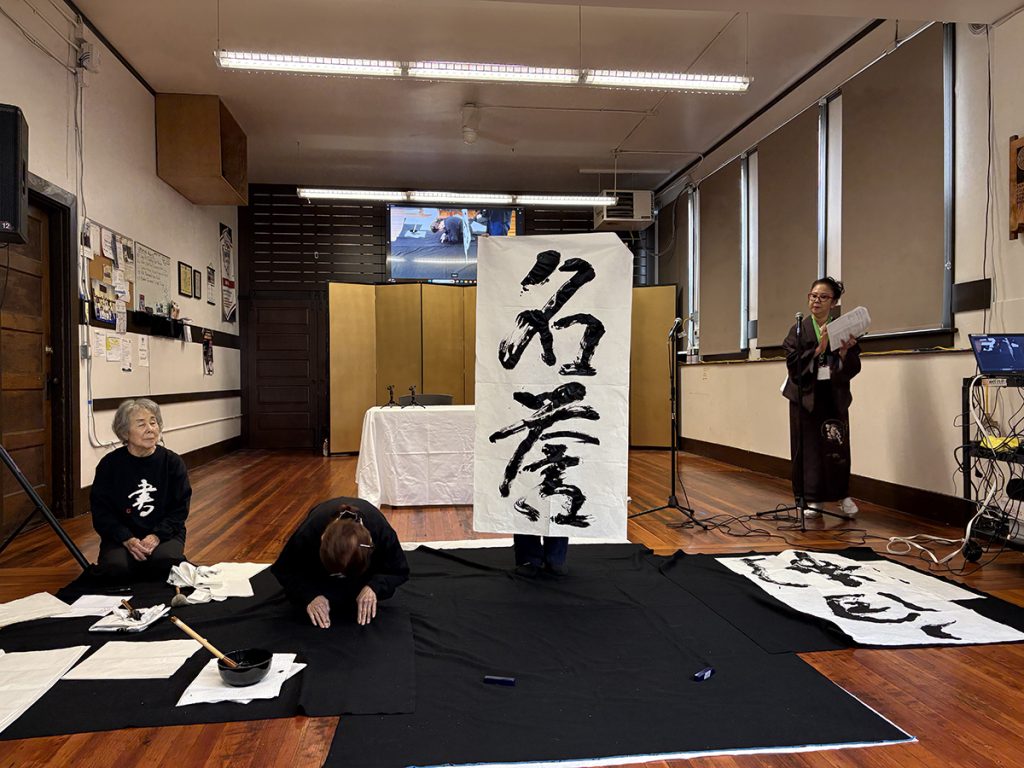
A calligrapher displays the character for honor (meiyo) at the 20th annual Bunka no Hi festival in Seattle. Photo by Madison Morgan.
Goto’s daughter, Kelly, discussed her father’s work in a talk highlighting the book, “Seattle Samurai: A Cartoonist’s Perspective of the Japanese American Experience,” reflecting on his legacy and the bushidō principles that guided his life. She said the principles continue to resonate with younger generations.
“I think that if we think about these virtues and how they translate to this next generation, why do we believe that we are Japanese, what do we stand for,” Kelly said. “A lot of the bushidō code is all about everything that we stand for, what we believe, how we respect the environment, how we respect our generations.”
Goto’s comic strip featured two central characters: Shigeru Tamura, an American-born Nisei (second-generation Japanese) eager to pursue the American dream, and Samurai Shigeru, his alter ego representing Japanese cultural values. According to Kelly, the tension between these identities reflected the experience of many Japanese Americans.
“You have this American side over here and you just really want to integrate and become American,” she said. “And then you have this Japanese side over here where it’s all about culture and history and values, and you’re trying to maintain both sides.”
Kelly expressed gratitude that the JCCCW chose to center this year’s milestone celebration on her father’s life and work.
“I’m completely blown away by it,” Kelly said. “When I walked in this morning, I almost cried. They did such a beautiful job of representing his life and my mom and dad’s legacy.”
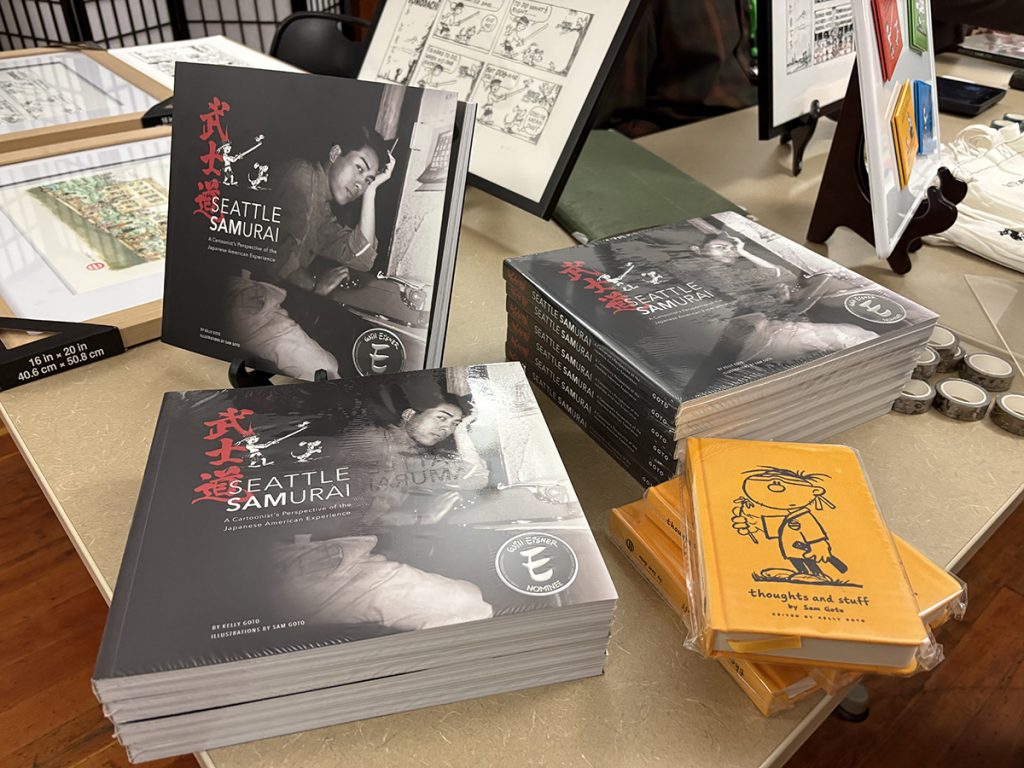
Copies of Kelly Goto’s book, “Seattle Samurai,” along with notebooks featuring excerpts from Sam Goto’s comic series “Seattle Tomodachi.” Photo by Madison Morgan.
That storytelling tradition continued through local manga artist Arisa Nakamura, who discussed her comic series, “Shin Issei Journey.” Nakamura created the series after taking over the North American Post comic strip following Goto’s death, drawing on her own experiences as a Japanese immigrant. She also demonstrated manga drawing techniques during her presentation, showing attendees how she develops characters and narratives.
Attendees also had the opportunity to engage in a Japanese tea ceremony hosted by the East-West Chanoyu Center. The practice, which has deep connections to the samurai, illustrated another aspect of traditional Japanese culture that emphasizes mindfulness, respect, and harmony.
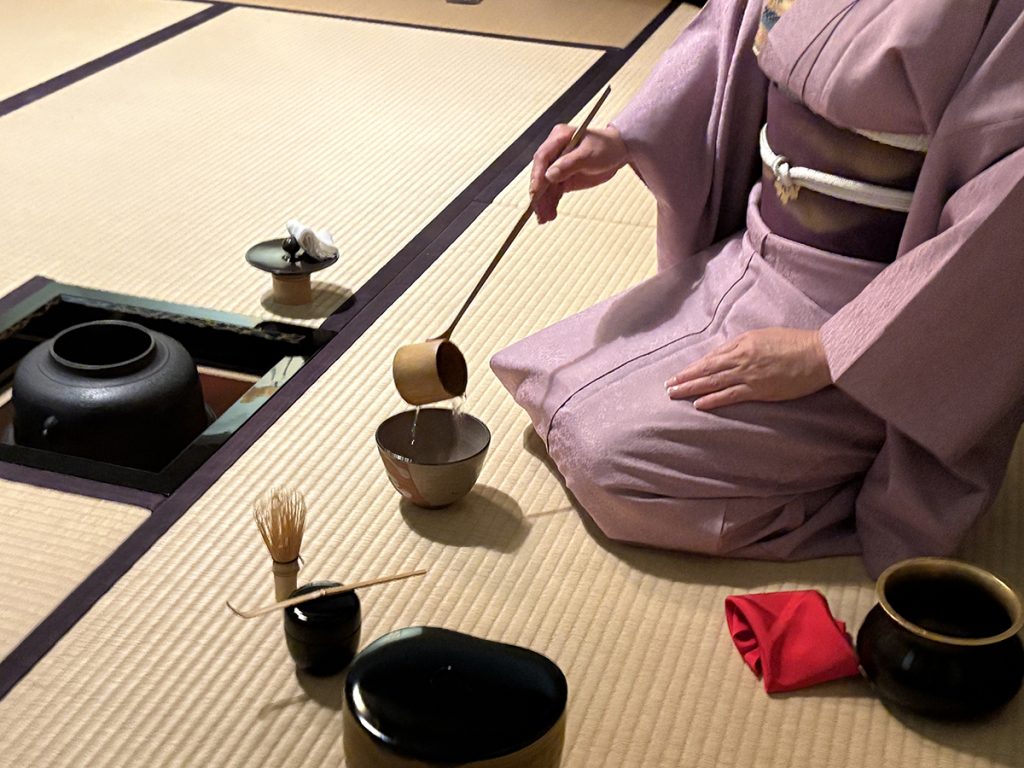
A member of the East-West Chanoyu Center prepares matcha during a traditional Japanese tea ceremony. Chanoyu was originally established as the Seattle Japanese Garden teahouse in 1979. Photo by Madison Morgan.
Food vendors served traditional items like onigiri, wagashi, and matcha throughout the afternoon, and the Hosekibako resale shop remained open during the event, offering Japanese goods and the center’s seasonal cultural booklets.
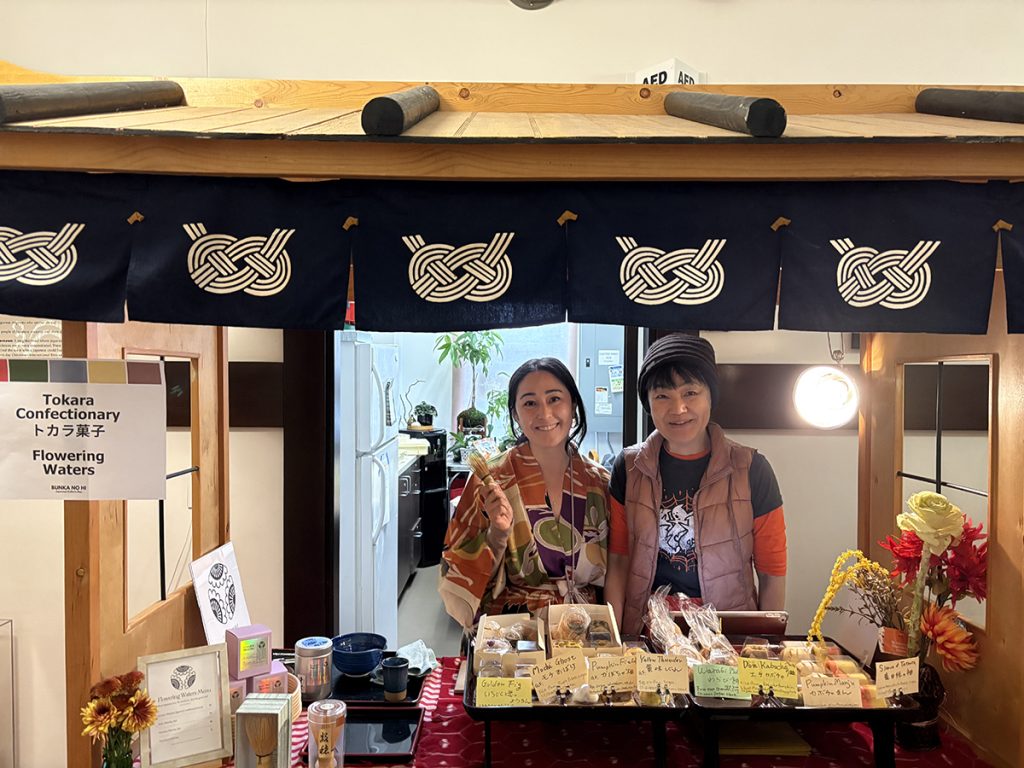
Tokara Confectionery and Flowering Waters were two vendors present at the Nov. 1 JCCCW cultural festival. Both have been serving Seattle’s Japanese community for over 15 years. Photo by Madison Morgan.
For Koichi Kitazumi, the SJLS chair and JCCCW board member, Bunka no Hi’s programming aims to welcome people from all backgrounds.
“Japanese culture and traditions can be shared with everybody,” Kitazumi said. “Anime became really big; cosplay is very big now. They’re not just Japanese. It goes way bigger than our skin [color] and what we look like.”
The Musokai Dojo closed the event with a Muso Shinden-ryu Iaido (Japanese Swordsmanship) demonstration, displaying Japanese armor and swords while offering children the opportunity to try on replica armor.
Replica Samurai armor on display at Seattle’s Bunka no Hi festival. Photo by Madison Morgan.
“There’s so much interest in all things Japanese,” Joy Misako Saint-Germain, another JCCCW board member, said. “[Bunka no Hi] is a place of gathering for everyone. Everyone feels welcome and that they can learn about the culture.”
Leave a Reply