

By Kai Curry
NORTHWEST ASIAN WEEKLY
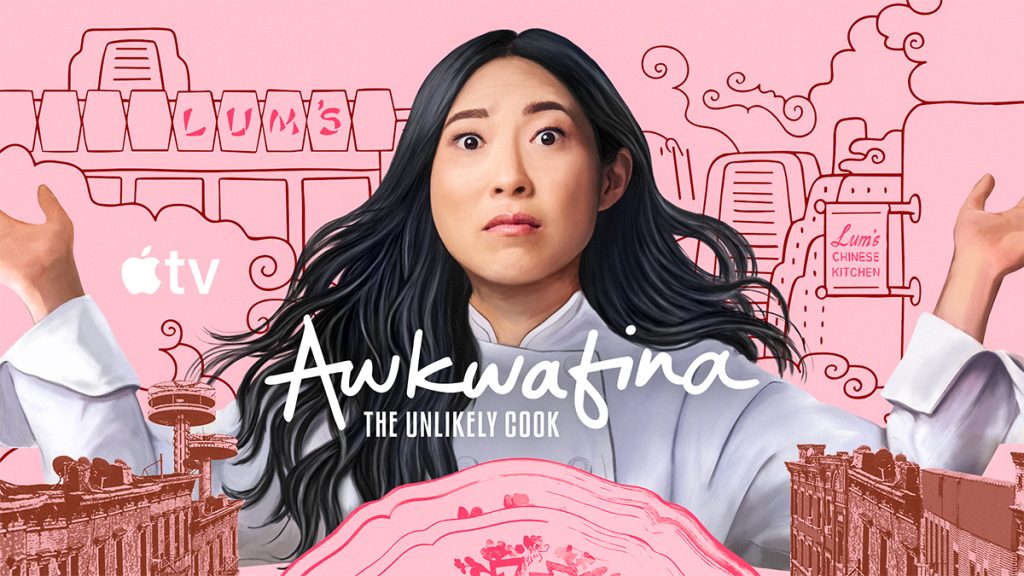
Awkwafina (stage name of Nora Lum) does not know how to cook. That could be the running joke of her new series on Apple TV, “Awkwafina: The Unlikely Cook,” except that she will learn. “Chinese restaurant royalty,” as she is described in the show, Awkwafina’s family once owned the famous, and now closed, Lum’s Restaurant in New York City. In the show, Awkwafina goes to great lengths to become a likely cook, with the goal of (possibly) re-opening Lum’s.
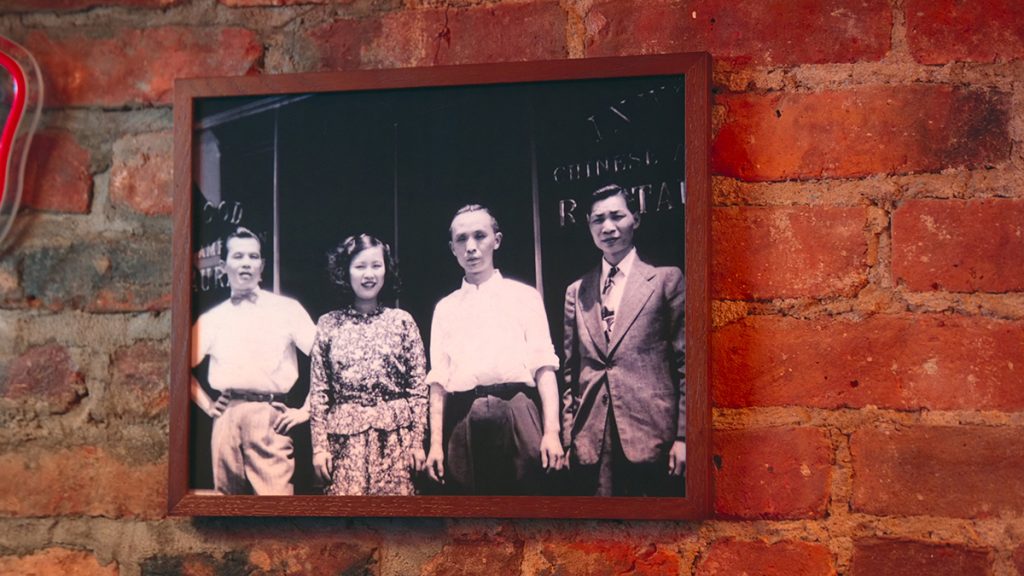
Archival photo of the original Lum’s Cantonese Kitchen in New York City.
The actor, recognized for her breakout role in “Crazy, Rich Asians,” originally became known to the public in 2012 as a rapper. She has appeared in multiple feature films to this date and received a Golden Globe for her performance in “The Farewell” in 2019. Awkwafina has shown that she has acting chops, but can she chop an onion? Not so much. Even basic cooking maneuvers are beyond her, if the show is to be believed, yet she is a quick learner. At the start, she shows a concoction of ramen and spam to her grandmother. By the end, it’s roast duck, char siu pork, and lobster rolls. All are recipes based on the former menu of her family’s restaurant.
Each of the first three episodes is framed by Awkwafina’s journey to learn one iconic recipe. Along the way, she not only becomes a better cook, but also more connected to her roots. Awkwafina travels to visit different chefs in different states and find out how they do what they do. All of the chefs have something in common in that they, like Awkwafina, are Asian American. They also all have come up with restaurant brands that mesh American and Asian food into a delicious, and successful, fusion. Almost none of them are traditional, per se, and yet all of them base their recipes on traditional classics in Asian cuisine.
Awkwafina starts out at the Culinary Institute of America for a crash course on how to use a wok, and other essentials that will help her “find my inner ‘Ratatouille,’” she jokes. Other stops include Potluck Club, to meet co-owner Cory Ng and executive chef Zhan Chen, who are writing “the next chapter for Chinese American food.” She also visits Curry Boys BBQ, started by Sean Wen and Andrew Ho, who mix the Asian food they grew up on with Texas BBQ. Future episodes promise a visit to Hawai’i to learn about “tiki culture,” and a stint of Awkwafina waitressing in Chinatown in Los Angeles.
“This whole thing is about me going back to my family’s roots,” she says. The final coup will be Awkwafina opening a pop-up restaurant in Manhattan for a night to show what she has learned to her family, other VIP guests, and investors. Will it turn into something permanent? The rumor is yes, but we will have to wait to see.
It’s very hard to picture Awkwafina/Nora Lum as a cook, let alone a chef. She herself expresses surprise throughout the show, and off the show, in finding that she has any affinity whatsoever with the culinary arts. “Out of 365 days a year, I’m not cooking 362,” she says. The restaurant industry is “in her DNA,” but is it for her, right now? Lum’s was opened by her great-grandfather when the family came to the United States.
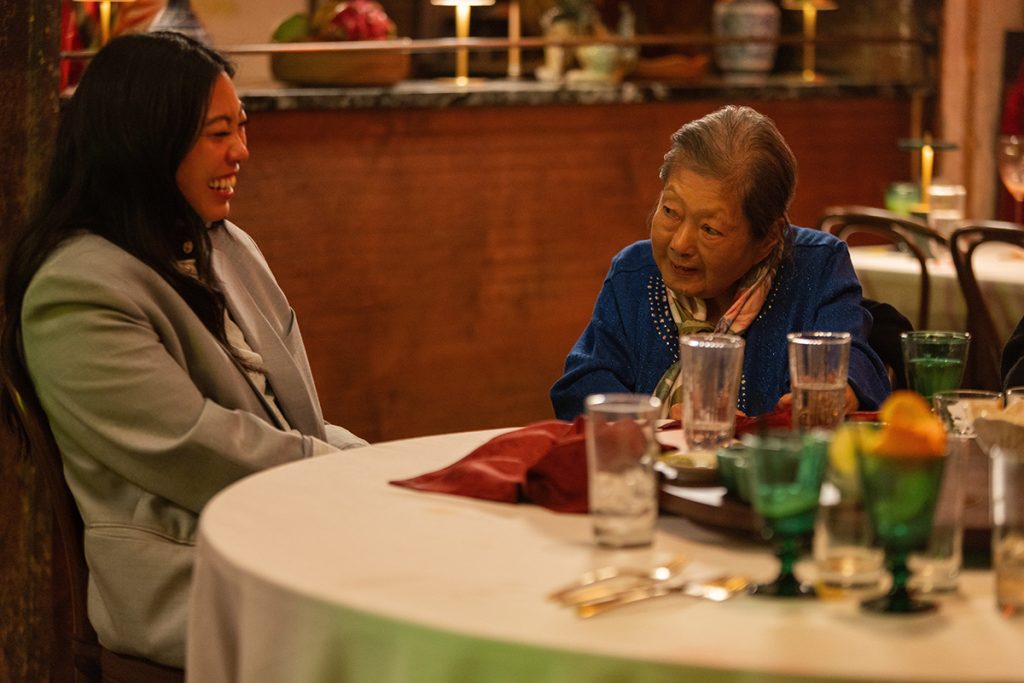
Awkwafina and her grandmother, Powah Lum
“Lum’s was kind of my family’s attempt at belonging,” Awkwafina says. Her grandmother, too, had her own restaurant, which Awkwafina grew up around, and yet does not seem to have absorbed much about cooking (or more than she realizes). Even her grandmother, 93 years old, laughs when Awkwafina suggests re-opening Lum’s. But her grandmother also cries, in one of the most touching scenes in the show, to think that the Lum legacy might be reborn, and that her granddaughter might be the one to do it.
“Awkwafina: The Unlikely Cook” is just as much about the history of Asians in America, and what it means to be Asian American, as it is about cooking. The chefs that Awkwafina meet have found ways to “make it”—and those ways often mean a surprising lack of compromise as to who they are and what they represent. As Boo Eaker, part of a husband-and-wife team at Eaker’s Barbecue in Fredericksburg, Texas, explains, putting her culture into their menu presents them as a couple. Through their fusions of old and new, the innovative chefs on the show introduce the American public to Asian cuisine in a roundabout and delicious way. Awkwafina pulls from each of them to figure out what her final result will be. What will her restaurant serve? Primarily, she intends to re-create the recipes from the original Lum’s—but with her own personal touches.
The cooking scenes are entertaining and interesting, yet some of the best scenes in the show are not about cooking at all. Rather, they are about what it means to be Asian in America. In the second episode, for instance, Awkwafina has in-depth conversations with Jimmy O. Yang about their backgrounds and feelings. Yang talks about coming to the U.S. at the age of 13 and being called “Chinaman” by other kids. Awkwafina describes the dilemma of feeling neither Asian nor American enough. “Two Asians in Texas!” they declare, as they set off on their Texas BBQ journey—part of the path to making spare ribs, Awkwafina’s dad’s favorite dish.
Awkwafina and Yang met on the set of “Crazy, Rich, Asians” and have been friends ever since. Although both are known for their comedy, Yang has a grounding presence beside Awkwafina’s chaotic energy. Yang is a great chef, Awkwafina says, who is probably “appalled” by how little she knows about the culinary arts. Both are huge foodies. It’s a fun jaunt, while at the same time, we learn there are a lot of deep feelings behind the journey, such as Awkwafina’s semi-unconscious search for someone to fill the gap from losing her Korean mother as a child. Everyone might be acting upbeat, and even goofy, but there are serious stakes here as well.
By the time you finish watching “Awkwafina: The Unlikely Cook,” you are going to have a very long bucket list of Asian American restaurants to visit, if you haven’t been already. You will also have a greater appreciation for the Asian cuisine, then and now, in the United States, and for the ability of a person to become more fully themselves, representing past, present, and future.
“I am truly at a time in my life where I want to feel more connected to my family,” she says. “I think it starts with cooking.”
Kai can be reached at newstips@nwasianweekly.com.
Leave a Reply