



By Nina Huang
NORTHWEST ASIAN WEEKLY
Butter chicken is arguably the most well-known Indian dish for people in the United States. But how did it come to be, and is it truly representative of Indian cuisine?
Established in 2020 by food writer Leslie Brenner and restaurateur Monish Gujral, World Butter Chicken Day is celebrated on Oct. 20 in recognition of Moti Mahal, the Delhi restaurant credited with popularizing the dish. The annual observance offers an opportunity to explore butter chicken’s history, enduring popularity, and the Seattle chefs and restaurateurs putting their own spin on the classic.
At Saffron Grill, Zaika Seattle, and in the cooking classes taught by Shri Repp, the Seattle-based Indian food educator behind Moon Rice, butter chicken is more than a bestseller. It is a starting point for conversations about tradition, adaptation, and the many regional cuisines of India.
From restaurant innovation to global favorite
Mohammad Arfan Bhatti, who took over Taste of India in the University District and Saffron Grill in Northgate from his father, Mohammad Bhatti, in 2020, traces the dish’s appeal to a simple combination of ingredients and technique.
Butter chicken, also known as murgh makhani, originated in northern India as a way to repurpose leftover chicken tikka, or chicken cooked in a tandoor oven. The chicken was added to a tomato-based gravy enriched with butter and cream, creating a dish that became a restaurant favorite.
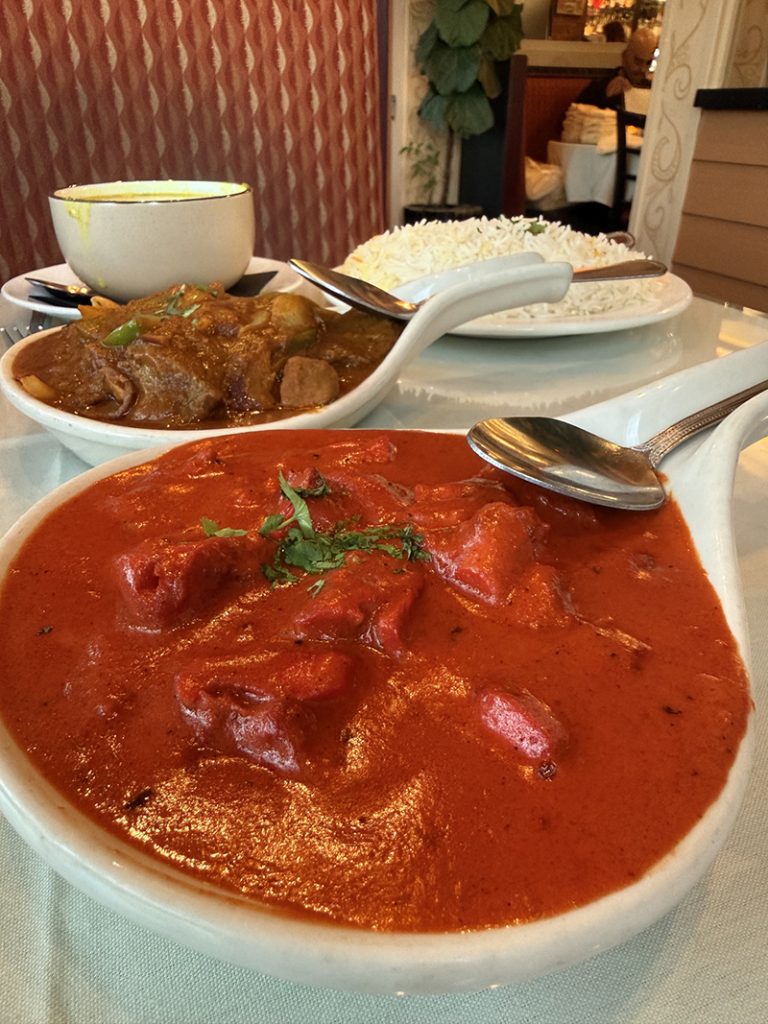
Phone by Nina Huang
Bhatti’s father, who was born in Pakistan and eventually immigrated to the U.S. after seeking political asylum, built his career in the restaurant industry, including management positions at five-star restaurants. He opened restaurants in Seattle as the city grew in the 1990s, eventually building a successful business with his son. His father started the original Cedars Restaurant in the University District and later sold it.
Bhatti took over the restaurant operations in 2020, continuing the family business his father had built.
For him, the secret to longevity is consistency, from the quality of the spices and meats to the richness of the sauce.
“The taste is so delicious. With naan, there’s nothing like it. It feels like a fettuccine alfredo and it hits the spot. It’s not healthy at all, full of fat, pure fat, but so good,” he said.
At Saffron Grill, butter chicken remains one of the top-selling dishes, alongside chicken tikka masala. The restaurant also offers variations such as butter prawns, butter tofu, and other proteins prepared in a similar sauce.
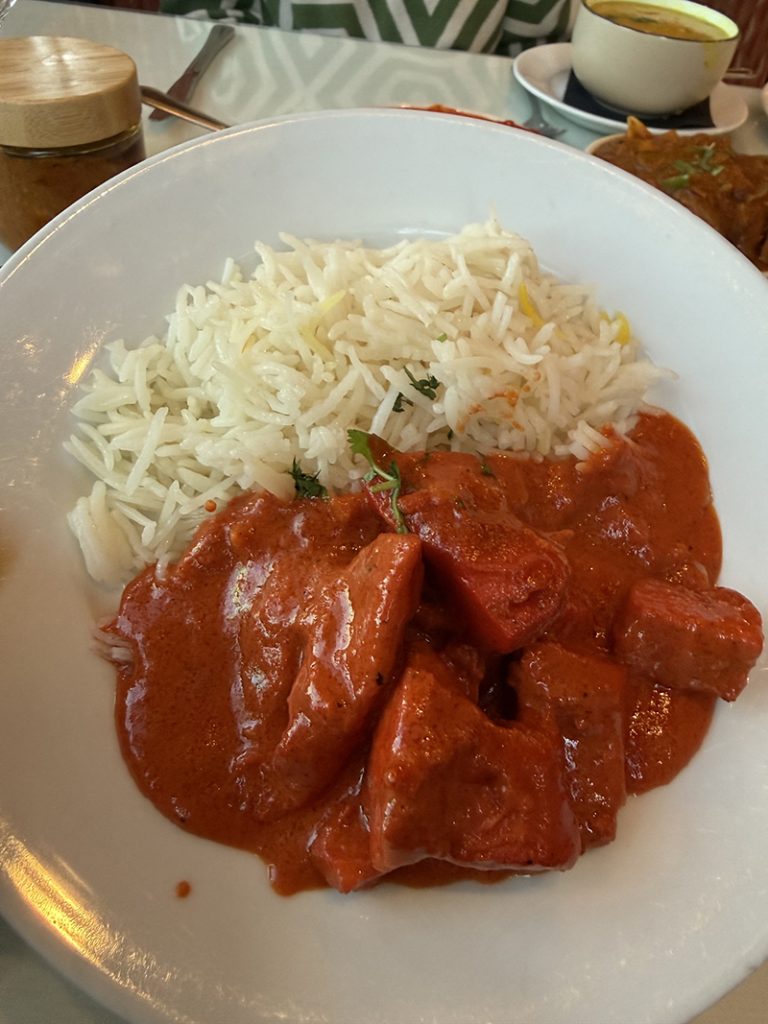
Photo by by Nina Huang
Although the dishes may look similar, Bhatti said butter chicken tends to be sweeter, while tikka masala has a different color, thickness, and flavor profile. Both require time and attention to build their layered flavors.
The process begins with a tomato-based gravy and sautéed onions, followed by a blend of spices that can include cardamom, fennel, paprika, turmeric, cinnamon, ginger, and garlic. Butter, heavy cream, and a little sugar round out the sauce.
Bhatti said the restaurant continues to invest in high-quality ingredients like Darigold cream rather than cutting costs, a decision he believes makes a difference in the finished dish.
An introduction to Indian cuisine
For Repp, who has taught online classes on butter chicken, the dish’s popularity offers an opportunity to introduce people to the breadth of Indian cuisine.
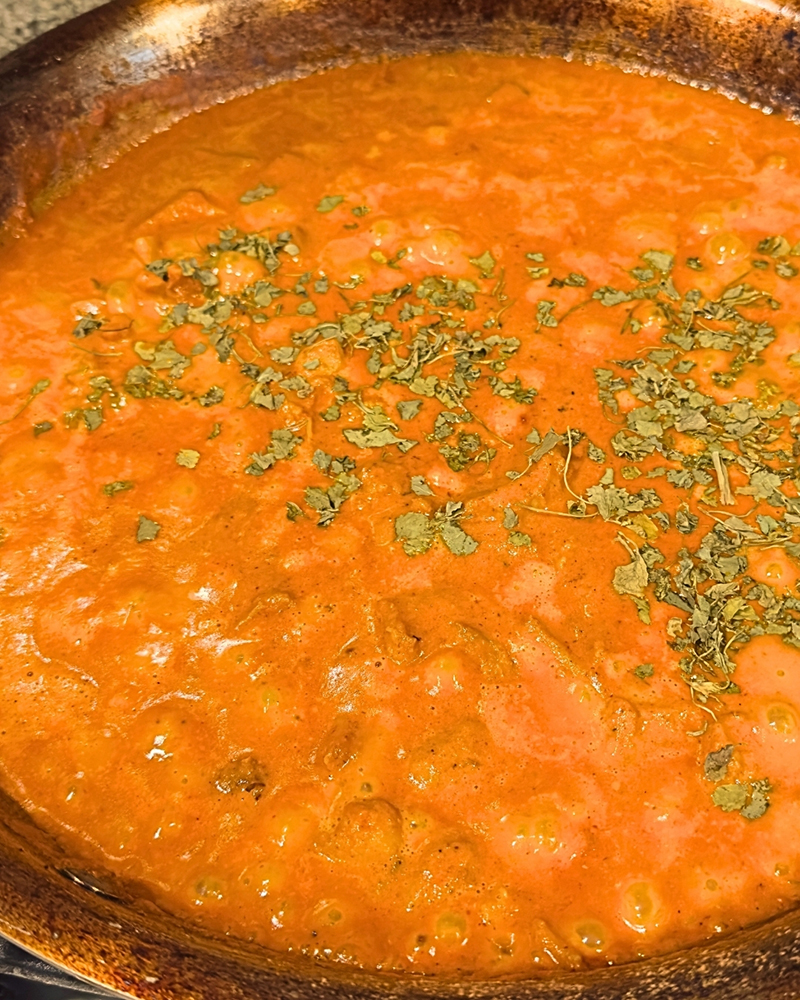
Originating in northern India, butter chicken has become one of the most recognizable Indian dishes in the Western world. While it serves as a familiar entry point for many diners, Repp sees it as just one example of the country’s diverse regional food traditions. Chicken tikka masala, by comparison, is generally credited to Britain.
“It doesn’t fully encompass Indian food but it’s such a beloved dish,” Repp shared.
Born in India, Repp moved to the U.S. around age 6. She spent years working as an engineering manager before pivoting to cooking and teaching people about Indian cuisine. Her approach emphasizes the history and science behind dishes, along with the many ways they can be prepared.
Repp has been cooking for four years. She used to be an engineering manager and then pivoted to wanting to teach people about Indian cooking.
Repp identifies as South Indian, where the foods she grew up eating looked quite different from the creamy curries and naan commonly found on Indian restaurant menus in the U.S.
“I’m South Indian and we didn’t necessarily eat dishes that look like butter chicken,” she said.
Her family ate more rice-based dishes, and were more likely to enjoy foods such as naan and butter chicken at restaurants than at home. Many restaurants in the U.S. focus on North Indian cuisine, in part because those are the dishes Western diners have come to expect.
“My family still loves it and we’ll make butter chicken at home, but it’s hard for any dish to encompass Indian culture. There are over 27 languages that are spoken in the country. Every state is so different in how they cook cuisine,” she said.
Repp has incorporated butter chicken into her cooking classes, sometimes pairing it with an Indian dessert or another regional dish that students may not have encountered before.
She teaches two approaches to butter chicken. One involves marinating and roasting chicken to recreate the smoky flavor associated with a tandoor oven. The other cooks the chicken and sauce in the same pan, using the browned bits left behind to deepen the flavor.
She also uses soaked cashews alongside heavy cream, adding richness and texture that shortcut recipes may miss.
Repp sees the familiar dish as an effective way to bring people into Indian cooking, even if it is only the beginning.
“I try to really understand the history and science behind things and explain it to folks. There’s not one right way to do it. There are different methods and I try to really go in-depth about that,” she explained.
Similar to Repp, owner of Zaika Seattle, Nitin Panchal, also worked in the tech sector before transitioning to food.
He opened Zaika Seattle on Capitol Hill in December 2019. His original vision was to create an upscale Indo-fusion restaurant, combining Western and Indian cuisines.
Panchal has built butter chicken into the menu for a restaurant that aims to introduce diners to a broader range of Indian cuisine.
Even when a group of four diners visits, Panchal estimates that roughly one person will order the dish. Its familiar flavors make it an easy choice for diners who may be less comfortable experimenting with unfamiliar foods.
Though butter chicken tastes similar at many restaurants across the country, Panchal said Zaika distinguishes itself through its preparation.
“We strain the sauce to make it smoother—more fine-dining related. The key ingredient is the chicken. We actually grill it in the tandoor oven and then it’s cooked in the sauce. The good part is when it gets chickens in the tandoor, and everything is fresh right then and there,” he explained.
The restaurant also makes adjustments to appeal to local preferences. Panchal said Washington diners tend to favor sweeter or thicker sauces, but he aims to keep the essential ingredients and flavor profile consistent.
For him, butter chicken is both a signature dish and a way to introduce customers to something new.
Zaika has experimented with regional food festivals featuring dishes from different parts of India.
Its offerings have included a Mumbai street food festival, a biryani festival featuring 32 combinations from eight regions, and an Indo-Chinese festival highlighting the fusion cuisine that developed when Chinese immigrants settled in India.
Panchal said introducing these less familiar dishes can be challenging, especially when customers arrive expecting the butter chicken they already know. But he continues to create opportunities for diners to expand their palates.
Beyond butter chicken
The popularity of butter chicken reflects both the power of restaurant culture and the possibilities of food as an entry point into another culture.
For Bhatti, the dish’s creamy richness and familiar flavors have helped sustain a successful restaurant business. For Repp, it is a chance to teach students about Indian food while encouraging them to explore beyond the familiar. For Panchal, it provides a reliable favorite alongside more experimental offerings.
Butter chicken may not represent every region, household, or tradition in India. But its appeal is undeniable, and its story illustrates how food evolves as it travels across borders and generations.
For diners celebrating World Butter Chicken Day, enjoying the dish can be a starting point: order the naan, savor the sauce, and perhaps try something unfamiliar on the menu next time.
Nina can be reached at newstips@nwasianweekly.com.
Leave a Reply