




Eighty-four years after they were marched onto a ferry at gunpoint as children, 13 survivors returned to that same location to ensure their story is never forgotten.
On Oct. 11, more than 400 people gathered to dedicate the new Visitor Center at the Bainbridge Island Japanese American Exclusion Memorial, including the 13 who became the first in the nation forcibly removed from their homes under Executive Order 9066 and Civilian Exclusion Order No. 1.
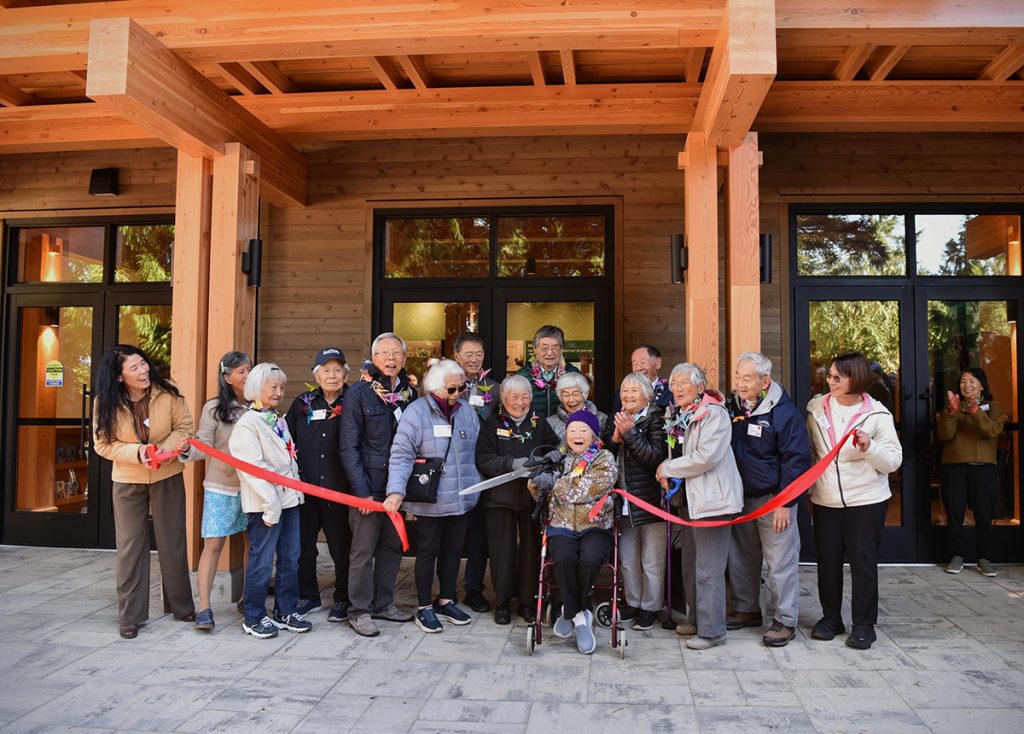
Incarceration survivors take part in the ribbon cutting ceremony at the new Visitor Center at the Bainbridge Island Japanese American Exclusion Memorial on Oct. 11, 2026. (Photo by Nancy Treder/BIJAEMA)
The ceremony and ribbon cutting, hosted by the Bainbridge Island Japanese American Exclusion Memorial Association (BIJAEMA), marked the completion of the memorial’s final major phase.
Sen. Maria Cantwell called the site an essential reminder of a painful chapter in the nation’s history.
“It is a difficult and shameful chapter, but that is exactly why this site is so important. … It will stand as an enduring symbol of what should never happen again.”
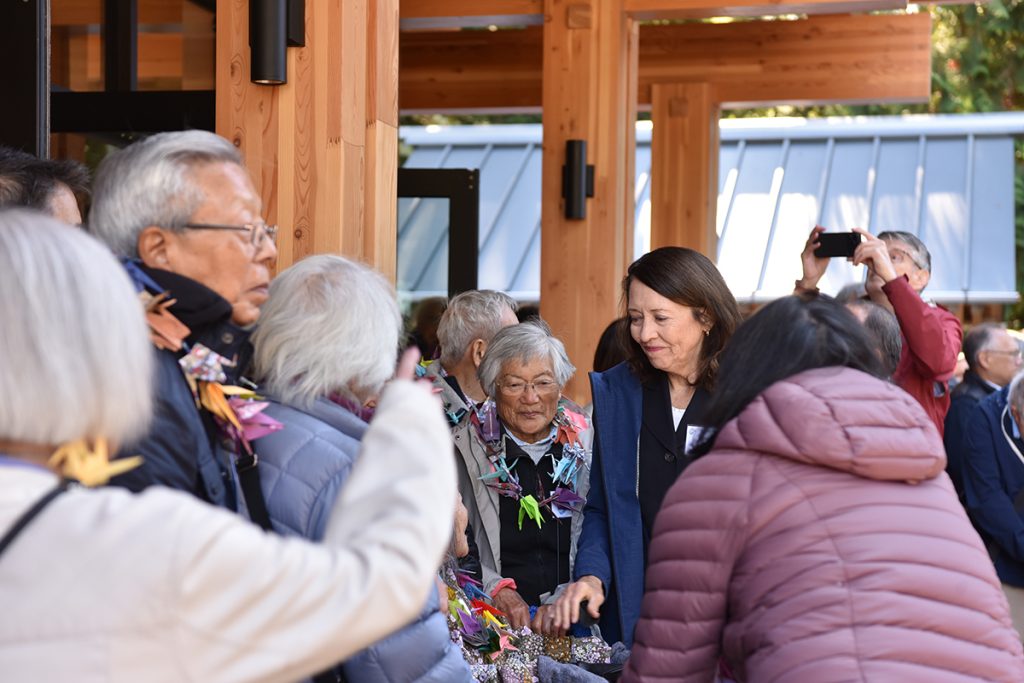
Sen. Maria Cantwell interacts with incarceration survivors. (Photo by Nancy Treder/BIJAEMA)
Cantwell, who helped pass the 2008 legislation establishing Minidoka National Historic Site and adding the Bainbridge Island memorial to it, thanked the survivors and their families for their resilience. Working with Sen. Patty Murray and former Rep. Derek Kilmer, she helped secure $767,000 in federal funding to complete the Visitor Center. “Today’s visitor center and its exhibition will remind all of us that exclusion is wrong,” she said.
The $6.5 million, 1,545-square-foot Visitor Center, designed by Seattle architect Johnpaul Jones, gives the memorial its first permanent indoor space for education, interpretation and reflection.
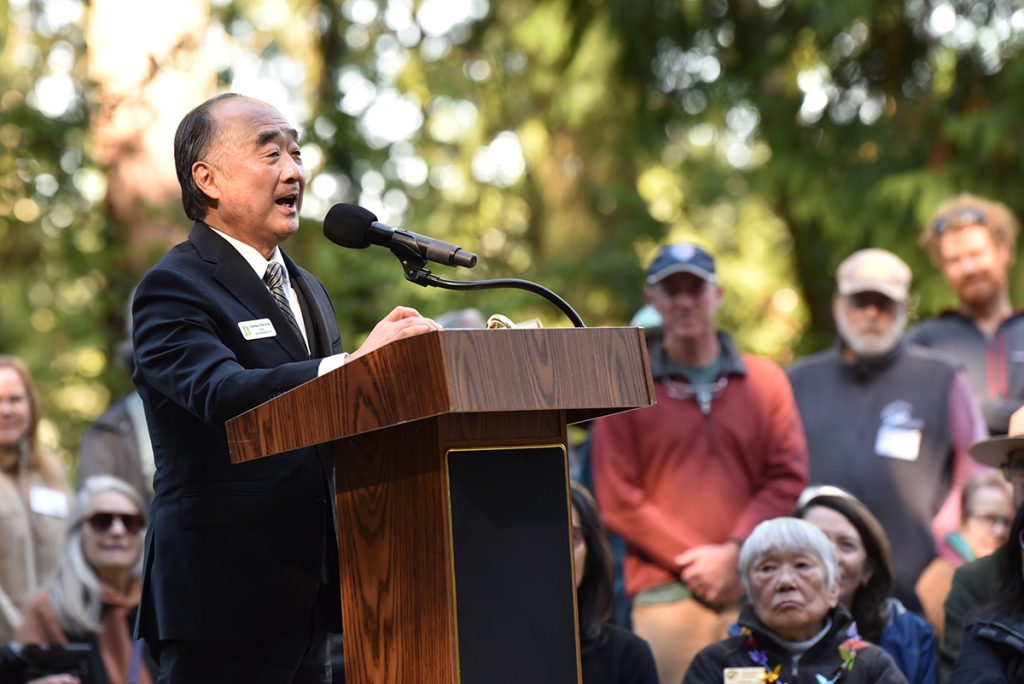
Bainbridge Island Mayor Clarence Moriwaki (Photo by Nancy Treder/BIJAEMA)
Bainbridge Island Mayor Clarence Moriwaki, part of the founding group that shaped the memorial’s early vision, recalled accompanying the late Fumiko Hayashida to testify before Congress in 2006, at age 95. Moriwaki shared that he noticed more than one committee member wiping away tears. The vote was unanimous.
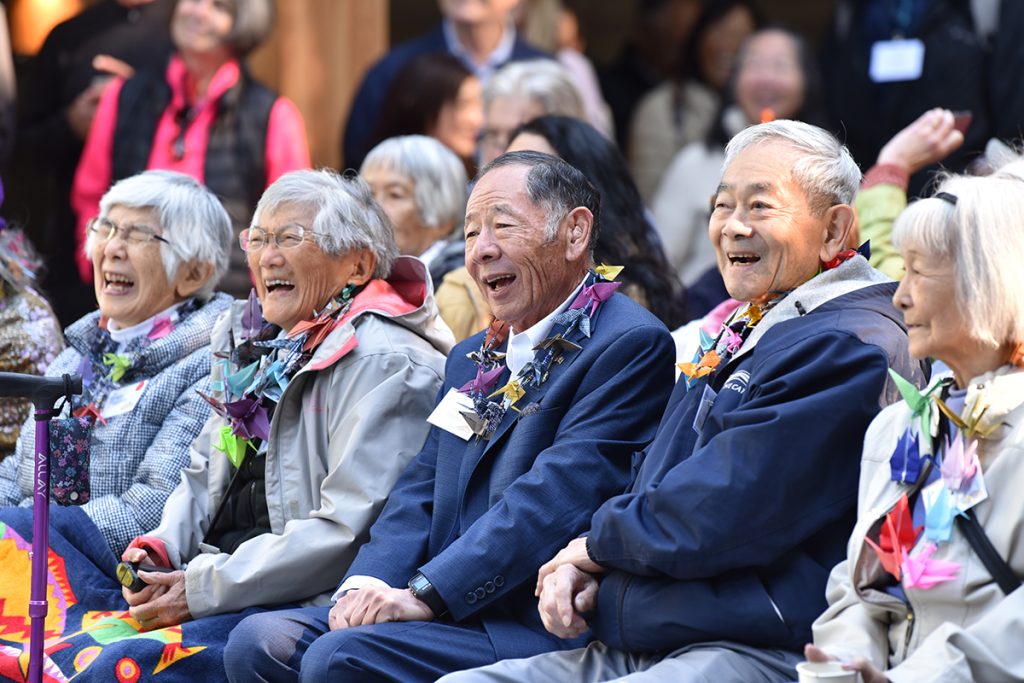
Photo by Nancy Treder/BIJAEMA
“I’m honored to have been given the chance to help get this across the finish line,” BIJAEMA Executive Director Ellen Sato said. “But I am acutely aware that it’s been 20-something years and hundreds of people who have worked on getting this built.”
The Visitor Center will open on a limited basis with volunteer staff in the coming weeks. Public hours will be posted at bijaema.org.
Leave a Reply