



By Samantha Pak
NORTHWEST ASIAN WEEKLY
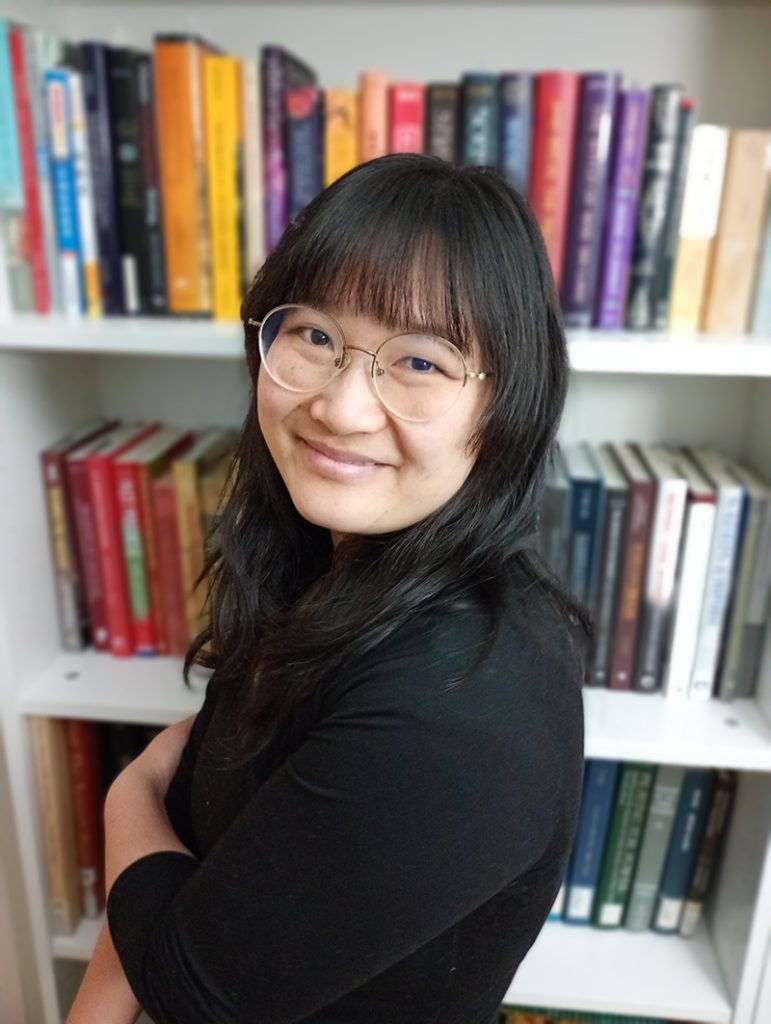
Mengxi Seeley
Mengxi Seeley’s first introduction to Jane Austen was in 2007. She was a teenager and her father had given her a book that contained all of the author’s completed novels.
Having immigrated to the United States from China when she was 5, English was Seeley’s second language, and she initially struggled with reading. So she didn’t read very much for fun. It took till her teen years for her to find that enjoyment and once she did, her dad gifted her the Austen book because he wanted her to get into classic literature. And for the 34-year-old, Austen became her favorite classics author because she was one of the only ones whose stories consistently had happy endings, which was really important to Seeley.
She also gravitated toward Austen so much because for Seeley, who grew up mostly in Utah and now lives in Charlottesville, Virginia, to be joyful is quietly subversive—especially for a woman, and a woman of Austen’s time.
“I feel like when she was alive, a lot of men would denigrate her work as not as serious, and they would attack her on these grounds,” Seeley said. “But I think her work has withstood the test of time, which shows that there’s something very valuable there that people still want to explore.”
An ‘intellectual pilgrimage’
Seeley’s love for Austen runs so deep that her first novel is a retelling of Austen’s “Sense and Sensibility.”
Set during Ming Dynasty China, “Silk and Sensibility” follows two sisters, Ailin and Meilin, following their father’s death. While Ailin is torn between duty and desire, knowing that she must marry well in order to help her family’s financial situation, Meilin believes in being honest about one’s feelings no matter what other people think. These clashing philosophies on love, romance, and life come to a head when both sisters meet men they fall in love with. Despite this, they each would do anything to help the other find happiness.
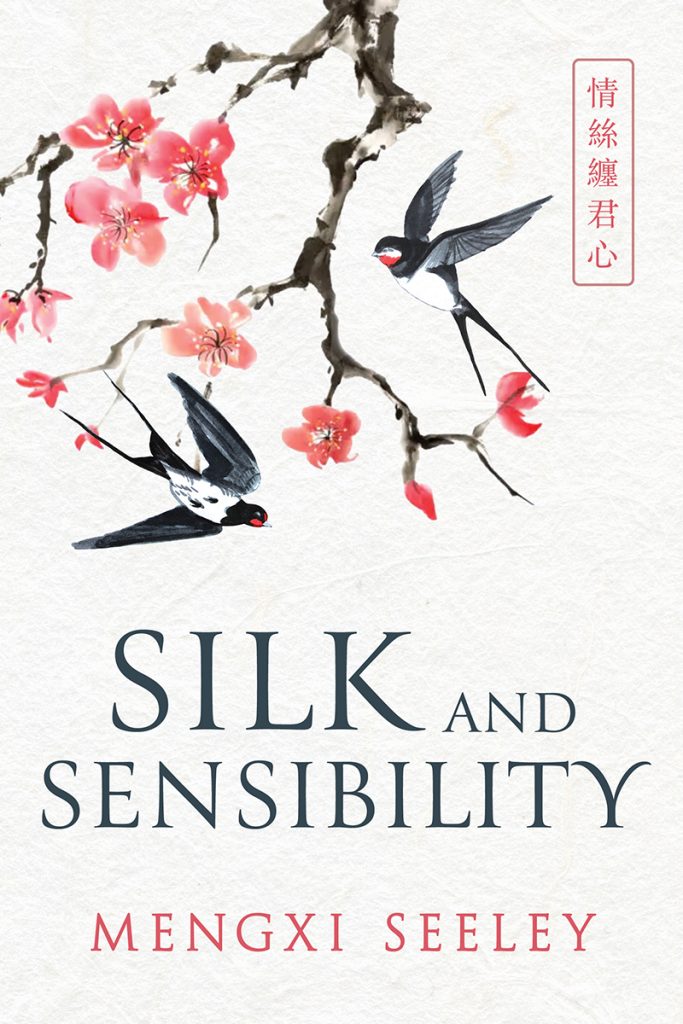
Seeley chose to adapt “Sense and Sensibility” for her debut novel because this was also Austen’s first published novel. Seeley’s mindset was to go on an “intellectual pilgrimage” and write adaptations of all of Austen’s books, in the order they were published. As an adult, Seeley realized that each of Austen’s books were a sort of reaction to her previous book, and Seeley wanted to see if she could glean Austen’s thought process and what was going through her mind when she wrote each of her books. Seeley wanted to see what she could learn from the experience.
Continuing on her pilgrimage, Seeley is currently in the midst of working on adapting “Pride and Prejudice,” Austen’s second novel. It’s a task she admitted to be nervous about since it is Austen’s most popular (and most adapted) work.
“Everyone has strong opinions on ‘Pride and Prejudice,'” she said, adding that since “Sense and Sensibility” hasn’t been adapted as much, she had more freedom in some ways because the story isn’t as well known.
The Austen universe in Ming Dynasty China
When it came to where and when the story took place, Seeley said setting “Silk and Sensibility” in China was easy since she’s Chinese herself, but it was also a conscious choice. Since Seeley immigrated to the United States at such a young age, she didn’t actually learn to read and write Chinese until she got to college. Seeley has a master’s degree in East Asian studies from Stanford University and she said learning the language enough to be able to do research in the language was another conscious choice she made.
During her studies, one of the most impactful classes she took was about gender and sexuality in Chinese history, which included a section on women’s history. In that class, she learned about the Ming Dynasty, which lasted from about the 1300s to the 1600s, and how much literature flourished during this time, thanks to the emergence of commercial printing, and how it was during this era that the earliest preserved women’s writing can be found. “Silk and Sensibility” is set in the 1500s because Seeley wanted a time period that felt historical, but was modern enough that there were primary sources she could draw on for her research.
Seeley added that for her future books, she plans to move through history a bit, but keep it in the family. For example, her upcoming “Pride and Prejudice” adaptation is set in the 1600s and will feature the grandchildren’s generation of the characters in “Silk and Sensibility”—distant enough to be a standalone story, but with Easter eggs for anyone who has read the first book.
“My ultimate goal though is to populate this entire world around different time periods—all in the Ming Dynasty, but different historical events,” Seeley said, adding that she wants to pick historical events that could serve as parallels to events in Austen’s work.
In adapting Austen’s story to fit within the historical context of her story, Seeley said it wasn’t the historical events that were challenging because history echoes itself across different time periods and places.
“There’s always somebody fighting a war. There’s always an economic crisis,” she said. “Those things are kind of universal.”
The challenge was more of the societal expectations as there is a big difference in those when comparing Austen’s time, and when “Silk and Sensibility” takes place. For example, there was more mingling between men and women during Regency England than there was during Ming Dynasty China, so Seeley had to create circumstances in her book that were believable to have her characters interact.
Matters of representation and stories being told
In addition to her love of Austen’s work, Seeley was inspired by Korean Canadian author June Hur, who published her own Austen adaptation earlier this year: “Behind Five Willows,” which is a “Pride and Prejudice” retelling that takes place during Korea’s Joseon Dynasty in the 18th Century. When Hur began posting about her book a few years ago, Seeley was excited to read it. But she also wished someone would do it for Chinese history. Then she realized she couldn’t wait around for publishing to get on it. She had to do it.
And for Seeley, writing the story was important to her because it was taking a history that she thinks is very interesting and relatable—but too often exoticized in Western literature—and combining it with a familiar storyline and familiar characters. By setting it in the time period she chose, she wanted to show there are some human characteristics, such as familial love and romantic love, that are very universal.
“These stories have been here for a long time, and the sources are there. It’s just when we choose to pay attention,” Seeley said. “Yes, sometimes some source bases are less preserved and stuff, but like a lot of things are extant. Actually, it’s just when we choose to pay attention.”