



By Andrew Hamlin
NORTHWEST ASIAN WEEKLY
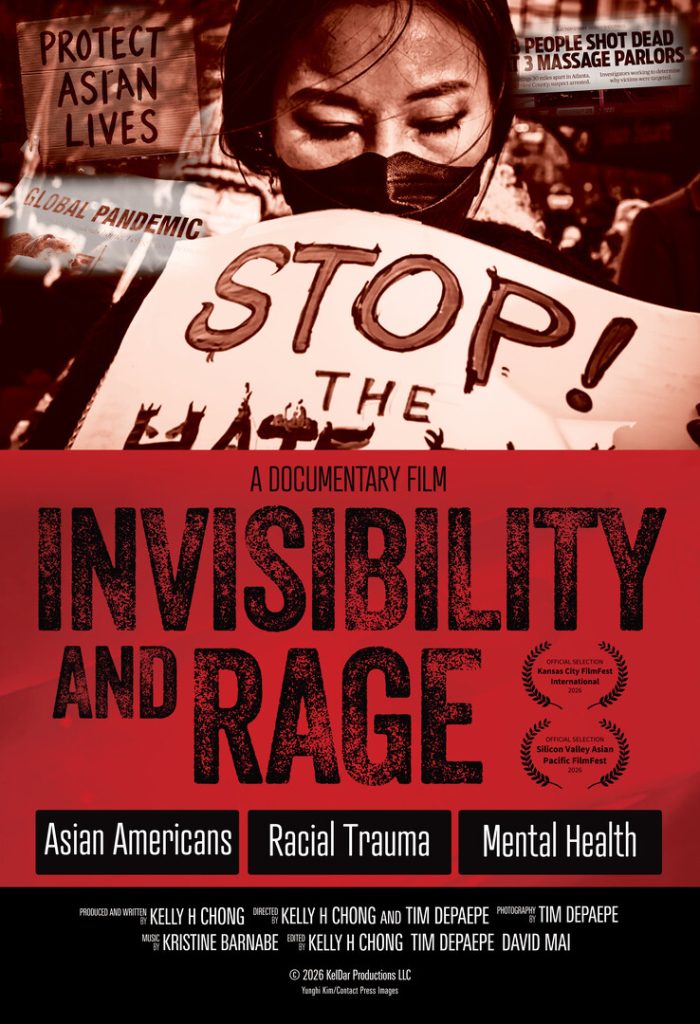
Invisibility and Rage poster. Courtesy of Tim DePaepe.
In a new documentary, the audience watches as Asians are knocked to the ground. Some are trampled. Some are beaten. Some are attacked with clubs. Korean American filmmaker Kelly H. Chong warns that her film, “Invisibility and Rage: Asian American, Racial Trauma, Mental Health,” isn’t easy to watch.
But despite the film’s graphic nature, she hopes that people will still watch it for its portrayal of violence against Asian Americans, the Asian community’s response to that violence, and how that response has grown and changed.
“For several years since my last book and prior to the pandemic, I was thinking about doing a project on anti-Asian racism and mental health,” Chong—who is also a professor and author—explained. “And as I learned how documentary films were made, I realized that doing this project as a film would be a great thing because film is a much more accessible medium with a potential to reach a wider audience.”
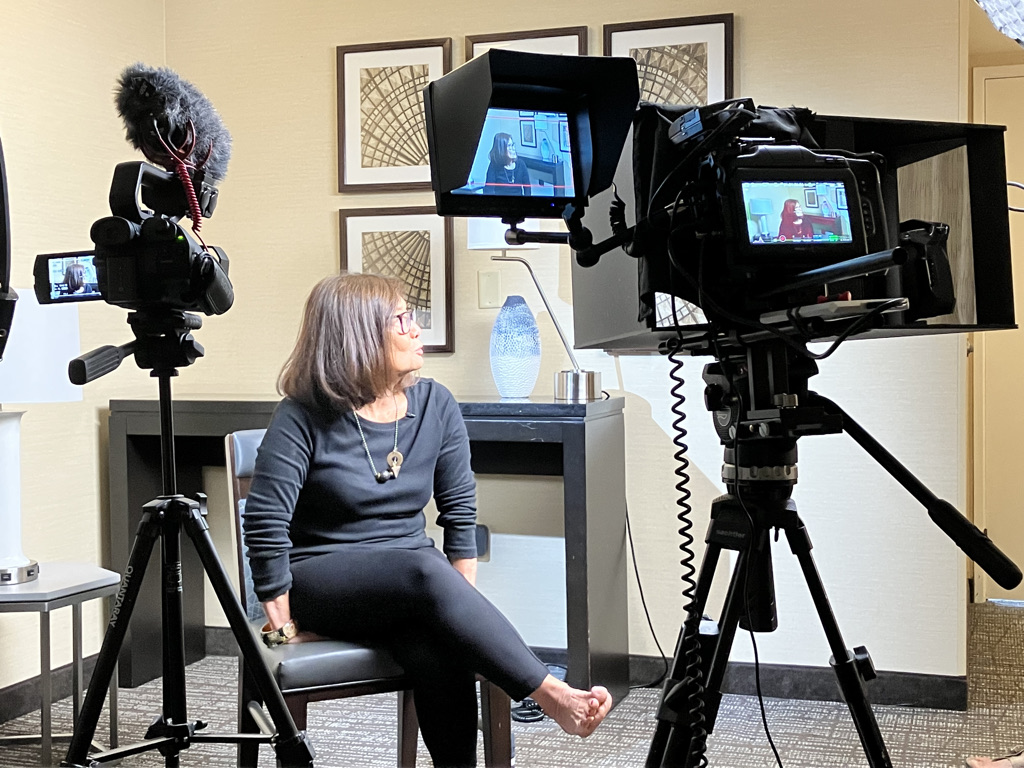
Invisibility and Rage co-director Kelly Chong prepares interview with DJ Ida Phd, Executive Director NAAPIMHA. Courtesy of Tim DePaepe.
Chong immigrated to the U.S. at age 10. She grew up in the Queens borough of New York City, and later moved to Long Island.
“My strongest memories of my growing up period were how challenging daily life was, how difficult it was to adjust to a new environment and culture within the context of daily racism experienced in school and society at large,” she said. She also remembered “being subject to all manner of racist and demeaning treatment that was an affront to their dignity. Those feelings and observations stayed with me all my life at the gut-level and drove a lot of what I did with my life, such as becoming a sociologist.”
Kong described herself as a “school junkie,” and attended Cornell University for a bachelor’s degree in English, Columbia University for a master’s degree in International Affairs, and the University of Chicago for her Ph.D in Sociology. A sociology teacher for more than 20 years, she currently teaches at the University of Kansas.
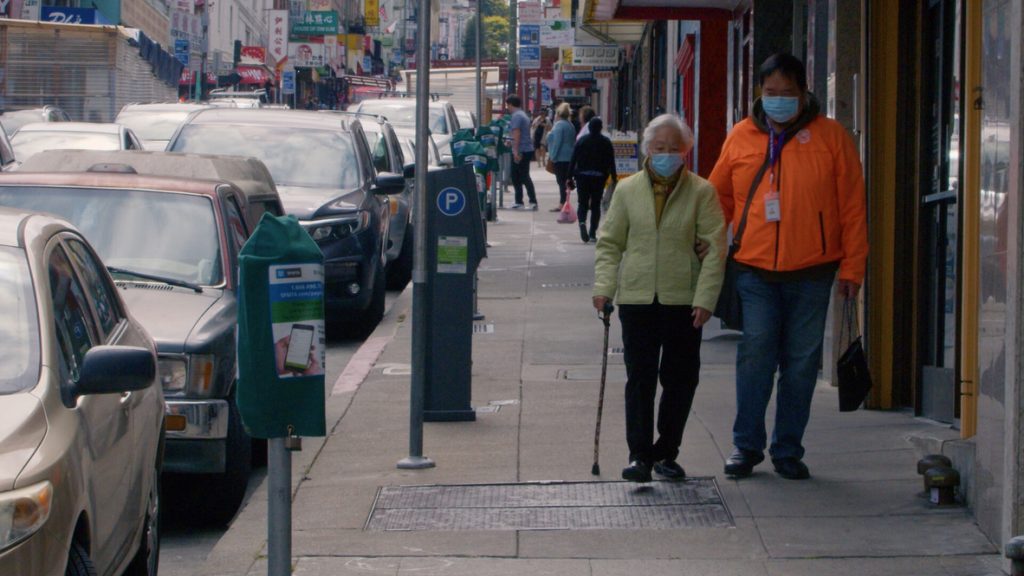
Senior Escorts with San Franciscos Self-Help for the Elderly. Courtesy of Tim DePaepe.
She’s written two books and numerous articles, but got involved in filmmaking when she met her film collaborator, Tim DePaepe, several years ago. She said that she was able to “persuade” DePaepe to join her on the project, after COVID hit, because he and others “became convinced how important this topic was.”
The two directed and edited together, and Chong handled financing, finding interviewees, and post-production.
“I would say I was responsible for crafting the narrative of the story and Tim did a lot of heavy lifting in the technical realm,” she said.
But even though they have completed the film, Chong still hasn’t processed her feelings about it yet.
“The film has been completed too recently for me to have many different types of feelings about it,” she reflected. “Whatever the reception of the film going into the film, I am really proud of the film and that isn’t going to change.”
But she is sure of one feeling: “My attitude toward my subjects is pure gratitude and that isn’t going to change either. The extent of enthusiasm for the film from the interviewees was overwhelming and many didn’t hesitate to jump in without knowing much about us, trusting in us. I am very moved by that.”
As for the most important things she hopes viewers take away from the film, Chong emphasized exposure, visibility, and community.
“I hope that this film helps to make visible what had been invisible regarding the link between racial trauma and mental health in the AAPI community for the wider audience and make Asian Americans feel more seen and heard. I hope we have helped in this endeavor in our small way.”
For more information about the film and where to find screenings, visit the film’s website.
Leave a Reply