



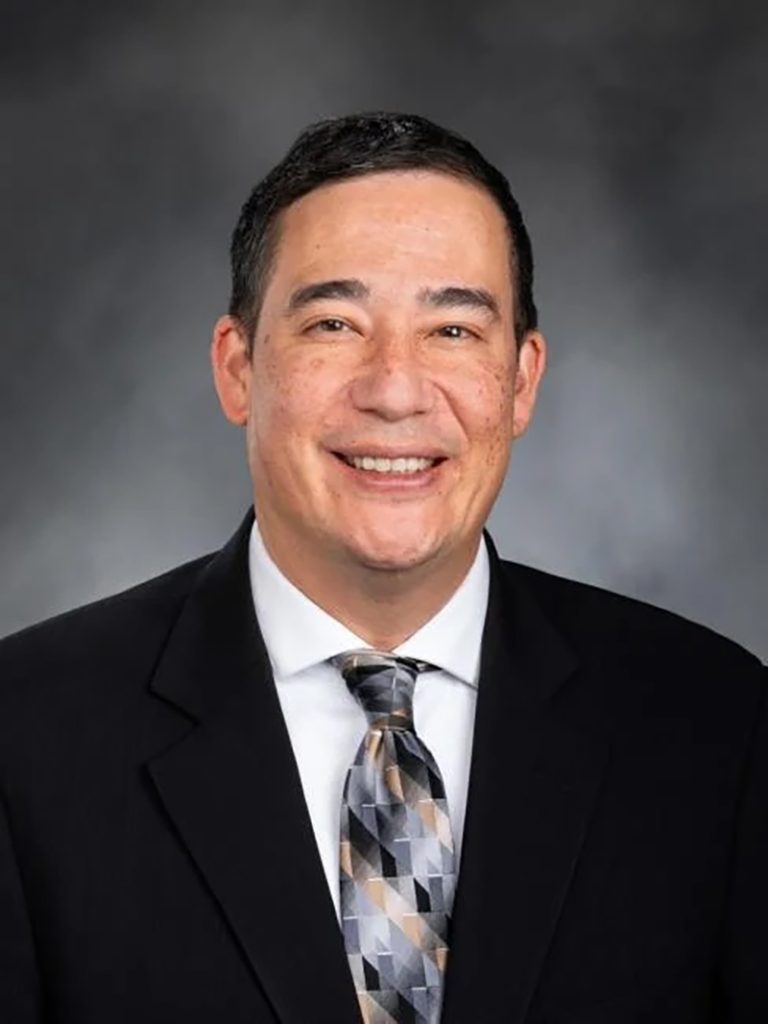
Secretary of State Steve Hobbs. Photo via WA Secretary of State website.
In a response to a Department of Justice (DOJ) letter his office received earlier this week, Secretary of State Steve Hobbs delivered a strongly worded letter to the department, stating in a letter of his own that “[t]he information you provided contains several glaring deficiencies,” including incorrect claims of ineligibility.
The DOJ letter claimed to include a list of people who were allegedly noncitizens who are registered to vote, and requested that Hobbs’ office not count ballots from those voters.
But, Hobbs stated in his letter, “[a] preliminary investigation confirms what your letter acknowledges: This list includes United States citizens and is not reliable.” He invited the DOJ to provide “individualized proof” of ineligibility, if it exists.
“The timing of your letter is profoundly disappointing. As your letter makes clear, you are aware Washington mailed ballots to all active registered voters no later than October 16. Despite that, you sent your letter well after that date and barely one week before Election Day,” he wrote. “As you know, my office holds regular consultations with your office in the months leading up to elections. If you had valid concerns about voter registrations, the time to raise them was months ago. Your decision to wait until the eve of an election and announce those concerns at a press conference instead of timely providing the list and any corroborating evidence to my office is not a sign of good faith to ensure a free, fair, and accurate election.”
He also questioned the manner in which the department gathered the information. The department does not give any information about how it collected the information, or what sources it used. It also does not provide any supporting documentation.
This echoes the allegations in a lawsuit brought yesterday against the federal government by a coalition of AAPI organizations, the ACLU, and Common Cause.
“Given the Department of Justice’s recent acts of election interference in California, Alaska, and now in Washington, it would be particularly inappropriate for Washington to simply assume the Department’s unsupported allegations here are credible,” he wrote.
Hobbs also noted that the way in which the DOJ provided the list was not meant to facilitate a quick review of its request. Instead of providing an electronic spreadsheet, he wrote, the department gave his office a PDF document and a printed-out spreadsheet, which “lacked publicly available fields that would facilitate review, such as the Voter ID number or the person’s address.”
“The absence of these fields makes it difficult—if not impossible—to confirm whether an entry on the list matches a voter registration,” he wrote. “And the list provided includes some duplicate entries, which indicates the list was created in a rushed manner. The rushed manner is confirmed by your incorrect statement that the election is ‘November 2, 2026.’ Election Day—as you should well know—is November 3. Basic factual errors like this are unacceptable and risk confusing voters.”
But despite these “deficiencies,” Hobbs continued, his office was able to conduct a preliminary analysis. This analysis showed that a “significant number” of people on the DOJ’s list were not registered to vote or were listed as inactive, which contradicted the department’s claims that they would receive ballots.
Additionally, the review confirmed that many on the list were, in fact, U.S. citizens.
“It is almost certain more people named on this list are also United States citizens; those already identified may just be the ‘tip of the iceberg’ of individuals that would be wrongfully disenfranchised by the actions you request,” he wrote, adding that the “discrepancies come as no surprise,” given how often the federal government’s claims about noncitizen voting turn out to be either false or “greatly exaggerated.”
Hobbs refused to decline to count ballots, as the DOJ requested.
“[F]ederal and state law provide strong protections against wrongful disenfranchisement,” he wrote. “State and local election officials in Washington work tirelessly to administer free and fair elections. They are truly heroes of democracy. As you might imagine, the days leading up to Election Day are incredibly busy, as election officials assist voters seeking to exercise their fundamental right to vote.”
“Rather than distract these dedicated public servants from their important work at this late hour with a meritless lawsuit,” he wrote, “I strongly encourage you to re-visit the deeply flawed data you provided earlier this week, identify any actual proof, and work collaboratively with my office in the weeks or months to come.”
Leave a Reply