



By Carolyn Bick
NORTHWEST ASIAN WEEKLY
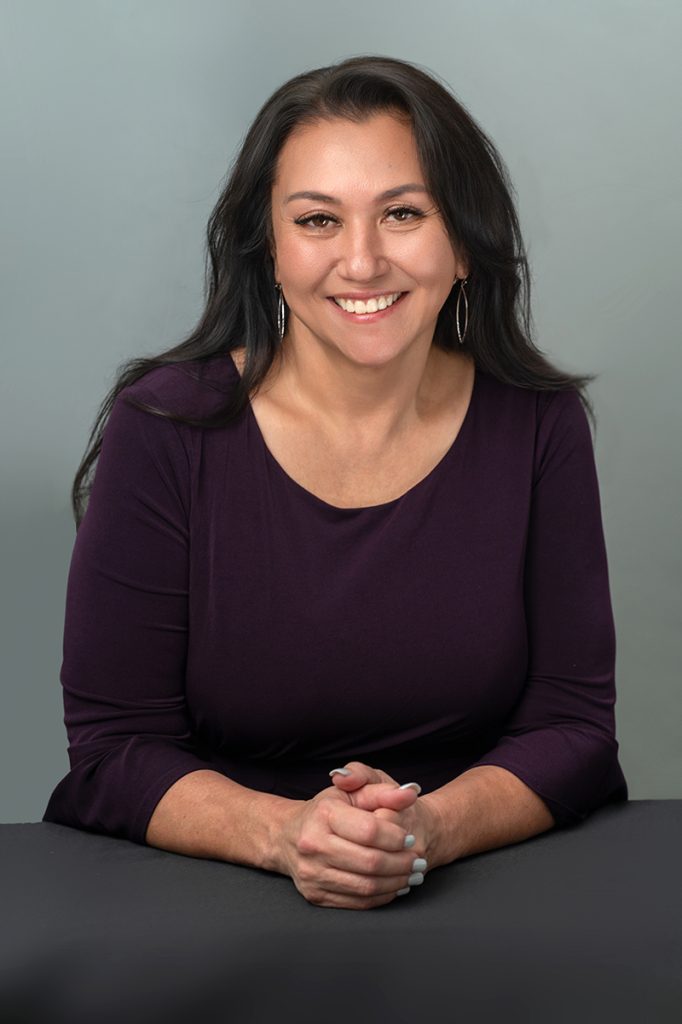 Throughout her life, Renee Walls has witnessed how injustice can shape families and communities. Her experiences as an adopted multiracial child in a multicultural family led her to pursuing a career in law, first in environmental law and then in criminal law. For the last 17 years, Walls has served as a judge pro tempore. She also runs the Walls Law Firm.
Walls is running for King County District Court Judge in the Southwest Electoral District, Position No. 5. She spoke with the Northwest Asian Weekly about her personal and professional experiences as an Asian American woman, her most difficult case, and what she believes she can bring to the bench, if elected.
This interview has been lightly edited for length and clarity.
Northwest Asian Weekly
One of the first questions I wanted to start with was your background, because I think a lot of our readership will be able to relate to not only being raised in different, mixed cultures. I wanted to ask how you went from being born in South Korea, to adoption by a Filipino immigrant mother, and a husband who’s a rural Minnesotan farmer.
Renee Walls
I was born in 1969 in Seoul, South Korea. That was a really turbulent time politically. There was a law at the time … but partly in response to all the colonization and imperialization of Japan and other countries that Korea had gone through, that if your father was not Korean, you could not be part of your family register. My mother was unmarried, and my father was in the military. So I think, ultimately, he did not know about me at all because he was shipped away to another country, I believe, before my birth.
And there were stories about stolen babies. I was one of those. … My mother went out to run an errand, and when she came back, I was gone from the home. I’ve been lucky enough to find my family, and that’s how I got the rest of the story, which fits with what I knew before from my adopted family, although I don’t think they knew the whole story. So it is all dovetailed together.
…
I was placed with a family when I was 3 months old, and formally adopted at a year old. I came to the United States when I was about 2 or 3. … My parents were missionaries in Korea. My mother was from the Philippines, and my father was a farmer from Minnesota. They moved back, ultimately, to the United States, and here I am.
NWAW
How did growing up in this multicultural, mixed-race household shape your worldview? Did your household provide an intentionally multicultural upbringing?
Walls
I actually grew up in Arizona. My mother had an MS-like disease, so we only lived in Minnesota for a very short time. I don’t remember it, although I often visited as I grew up. We were in Arizona, because the climate was very dry. That was also interesting because we lived very near a Native American reservation, and there was a large Hispanic and Latino population there. I learned to speak some Spanish, and also grew up with Filipino culture. All my relatives are first-generation immigrants as well.
All my cousins were born in the Philippines and all immigrated to the U.S., and lived in California. [My dad] was raised on a farm in Minnesota and had his early education in a one-room schoolhouse, then went to college and became a mechanical engineer. My mother grew up without a lot of money, but ultimately became an OB-GYN. There’s a lot of people in medicine on that side of the family. They taught me the value of education. That was really impressed upon me.
I also remember the difficulty of my parents’ biracial relationship, because … my grandmother [on my dad’s side in Minnesota] was clearly [from an] old-school farm … kind of culture, and there was sometimes tension. I was too young to truly understand it, but I could see it, and got the gist of it, being young.
So, I could see the push and pull of being biracial, and how my mother tried to navigate being Filipino in a white society. We did go to cultural events and things like that, so it was truly a biracial upbringing, although she did not pass the language down. I’m the only one on the Filipino side who doesn’t speak Ilocano or Tagalog.
NWAW
May I ask why you think she didn’t?
Walls
I don’t know. I think, ultimately, because she got so much pushback. Maybe she internalized a little shame, where her sister didn’t. I don’t know what the reason is, but that’s my take. At the same time, I have friends who are bilingual Spanish speakers who haven’t necessarily taught their children to be bilingual, and that’s not based in shame at all. It’s hard to say, at the end of the day.
…
My dad didn’t speak Tagalog or Ilocano, but my aunt’s husband does. She married a Filipino. So that may have something to do with it. When both parents speak the same language, it happens more easily. When they don’t, sometimes it doesn’t happen. I think it’s more of a concerted effort to make it happen.
NWAW
Moving on into your childhood and young adulthood, did anyone or anything in that time make you want to enter the field of law, and what generally set you off down this path?
Walls
I’ve always been triggered by the idea of injustice. I have a strong reaction to that. I’m 57, and when I was a child, they’d give you those standardized tests in school where you’d have to fill out the bubble forms and pick a race, and there was never one I could fill out. I remember having to think, “Which part of me am I going to deny today?” I had a strong sense of injustice, for myself and for other people, and I’ve always had a strong reaction to that.
As I got into college and took logic classes, my mind felt good thinking in that manner. Putting those two things together is what drove me to law school.
NWAW
When you entered law school, what was that experience like? You entered at a time when everything was changing and evolving — around when women had really just entered the workforce on a much more visible level, but that didn’t mean women of all races were respected equally, even at the baseline, which wasn’t very high to begin with. What was that like for you?
Walls
I was really lucky, because the law school I attended had a minority program. We started early. A group of us came and started a few days before law school officially began, so we all met as a group, which was really nice. We got to form a base of people who shared a similar experience. So when the school divided all the 1L students into groups for the first year, we’d have somebody, or a few people, that we already knew in our group. That was quite helpful.
But as far as being a woman, or a person of color … it was more difficult in the workforce than it was in law school.
…
I first worked at the King County Prosecutor’s Office as a special deputy when I graduated. That was just a six-month stint. My first permanent job after that was for the City of Federal Way.
That’s when I really started. I was there a long time, negotiating cases.
I was … one of the prosecutors that …defense attorneys would negotiate cases with. It would be me and one other person. [If it was a male law student assistant], they’d be waiting to talk to him. I’d say, “You can continue to wait and speak to him, but he’s just going to come back and have to ask me if that negotiation is okay. Or you can just talk to me, because I’m available right now.” So there would be certain assumptions, because he’s male and I’m female.
There was that. Or people would pinch my cheeks. I got that. I’ve had somebody pinch my cheeks during negotiations. I was like, are you kidding me right now?
But where I’ve struggled the most is at the intersectionality of being a woman, and then being another race, or being interpreted as some kind of “other.” Where those things meet is where I’ve had the most problems. It’s a struggle, but that’s true for anybody who walks that same path. It’s unfortunately not an individual story. It’s common. It’s commonplace.
NWAW
As a judge pro tempore, what was the hardest case you ever had to decide on, and why?
Walls
It’s been 17 years. There have been plenty of them. But there was a domestic violence case where somebody had a history that was very concerning to me, and the parties were asking me for a particular sentence.
I really struggled with it. I trusted the parties and their experience. I was trusting my opinions of their credibility, and what I knew of them. I had a discussion with the defendant himself and said, “Look, I know this is in your past. Tell me why today you’re ready to change.” We had a discussion, and I said, “All right. These people are here on your side, and I’m going to choose to believe you today. But we’re going to put guardrails on this thing, and you’re going to have to earn it. I’m going to put my faith in you, because I believe you can do it. When we come back here in two years, I’m going to be happy to tell you I was wrong in my reservations.”
I asked, “Are you truly ready to change?” And he said yes.
We did it, and I kept going back over the next two years. I happened to be there on the day he came back two years later, and he did it. I told him that very thing. I said, “I was wrong when I hesitated, and you said you were ready, and you were ready, and I’m happy to be here today. I’m happy that you’ve done the work. You’ve earned it.” That was a very difficult case for me, because I didn’t want to do it, but there was something that made me believe it, when history would say, “No, don’t believe them.”
That’s why I think experience is important—active listening and experience.
NWAW
You’ve got these 17 years under your belt—this comes to the heart of the matter: Why do you want to be a King County District Judge? And not only what would you bring, but what could you do in a positive way from that position that you can’t do right now?
Walls
The world is changing, and I feel like I might be able to do more good from that position than the one I’m in now. Our King County District Court, through retirements in January [2027], is losing about one-third of the bench.
That’s a lot of collective knowledge that’s about to leave. I think it’s important that whoever comes onto the bench to replace it brings acquired skill and knowledge, too. I think I’ve got something to contribute, while also understanding that I have a lot to learn, even after … 26 years of doing the kinds of hearings I’d preside over, and 17 years of presiding over hearings. There’s still a lot to learn, because there’s a lot that judges do, both on and off the bench.
South King County has a large immigrant population, and I come from a multilingual family. I’ve also lived in a multilingual community, and my friends are multilingual. A lot of my Korean family don’t speak English. So when I work in court, we work with a lot of translators, because a lot of people are Spanish speakers, [as well as speaking] other languages, too.
[In my office] 50% of our paralegal staff is bilingual. We hired a domestic violence advocate who is not only bilingual, but culturally sensitive and culturally relevant. That’s important when you’re talking to victims of crimes. … It’s a two-fold situation because things like that are important. One of my priorities, for example, is making sure that we are doing our best to provide information and access to services or access to information in the relevant languages of the areas that the courthouses are in. And what’s our ability to do that?
NWAW
Is there anything related to your campaign, or the substance of what we talked about today, that you want to mention that’s important for both readers and voters?
Walls
Yes. I know it’s difficult for voters to vote for judges, because a lot of times people aren’t sure exactly what judges do. Judges have a lot of control, but we’re not the [Washington State] Supreme Court. The Supreme Court sets a lot of policy and creates law. District court judges, courts of limited jurisdiction, don’t do that. We follow the law. We have to uphold the Constitution [and] follow the decisions made by the Supreme Court and the appellate courts.
But what we’re able to do is, when somebody’s sentenced, [we can figure out] what we can do to try to stop cycles. What is it that we have access to? Are there more resources out there that we can have access to? Can we piggyback onto other resources, for example?
It takes experience, and it takes knowledge of how the systems work to be able to figure that out. Because you also can [have] 100 cases loaded up a day, so you have to be able to … work through those in an efficient manner. So, if you don’t have the experience, you can’t do it in an efficient manner. Especially now with ICE and things like that, there’s a lot of challenges with immigration policies and things that are constantly changing. It can be problematic.
NWAW
Lastly, why is it important to you, as an Asian American woman, particularly with your background and lived experience, to hold such a visible role in public office?
Walls
Because of the way I look, I’m not white enough, and I’m also not Korean enough. I’m rejected by both my heritages quite frequently. I also fit in with different ethnic groups. It’s just wherever you put me. People sometimes don’t know why they’re having issues with me. They’re not quite sure. I’m kind of ambiguous in that way.
But I think it’s important, because, just by looking at somebody, you never know what life they’ve led, or the path they’ve walked, or what struggles they’ve had. I think it’s an important lesson to have learned that you really have to have active listening skills, and be willing to hear and truly see everybody who comes before you. If you’re not really looking, and you’re not really actively listening, you’re not doing the people in front of you justice. I think that takes some life experience, and I think people also need to see that not every judge is a cookie-cutter.