



By Madison Morgan
NORTHWEST ASIAN WEEKLY
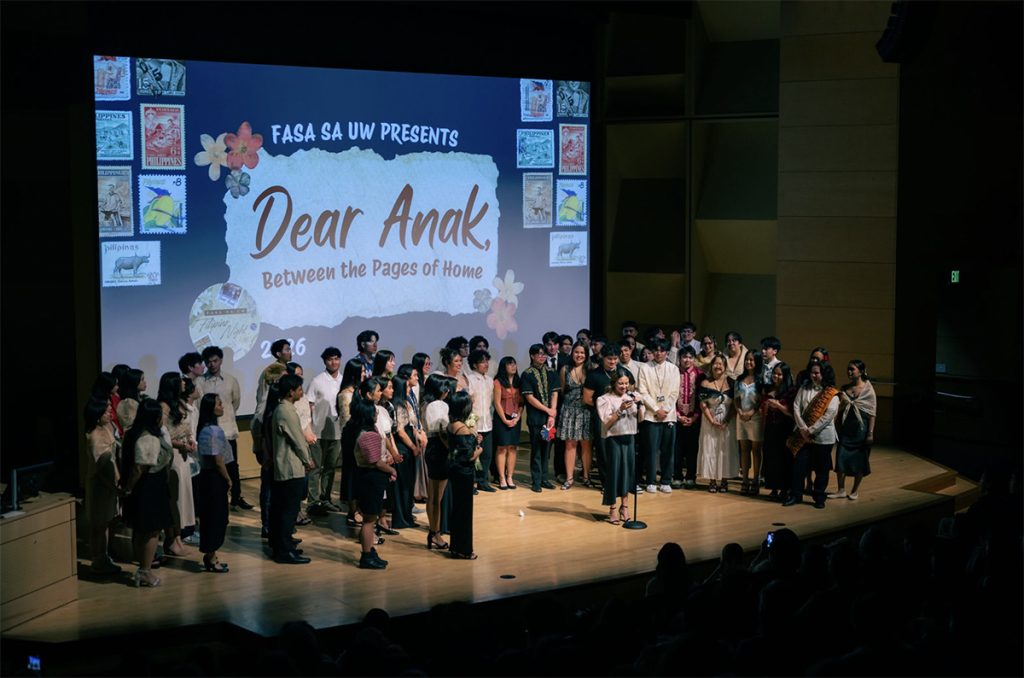
Filipino American Student Association students during the 2026 Filipino Night celebration. Photos courtesy of Christian Kleemann (Instagram @photos.bychristian).
Tala Isabel Pantua was looking for a community when she arrived at the University of Washington (UW) from the Bay Area. She found it in the Filipino American Student Association (FASA).
“An easy way to describe FASA for me would be like my family or my home away from home,” Pantua, now a second-year student at the UW and the FASA secretary for the 2026-27 academic year, said. “It was really hard for me to get adjusted my first year, and I guess I just really was seeking a community that I was familiar with, like people who had the same values and cultural understanding as me.”
Built on advocacy
The Pensionado Act of 1903 created a scholarship program enabling Filipinos to study in the United States. During this time, the UW enrolled the highest number of Filipino students of any U.S. institution—students who went on to create the Filipino Club in 1917.
The organization served as both a social outlet and a response to the socio-political challenges its members faced, including racial discrimination. This was at a time when Filipinos in Washington state numbered in the dozens: The 1910 census recorded just 17 Filipino residents statewide, according to the Encyclopedia of Filipina/x/o American Studies.
Over the next century, the organization evolved through several name changes reflecting generational shifts: Fil-Unist (1952), Filipino Student Association (1960), before settling on the Filipino American Student Association (1994).
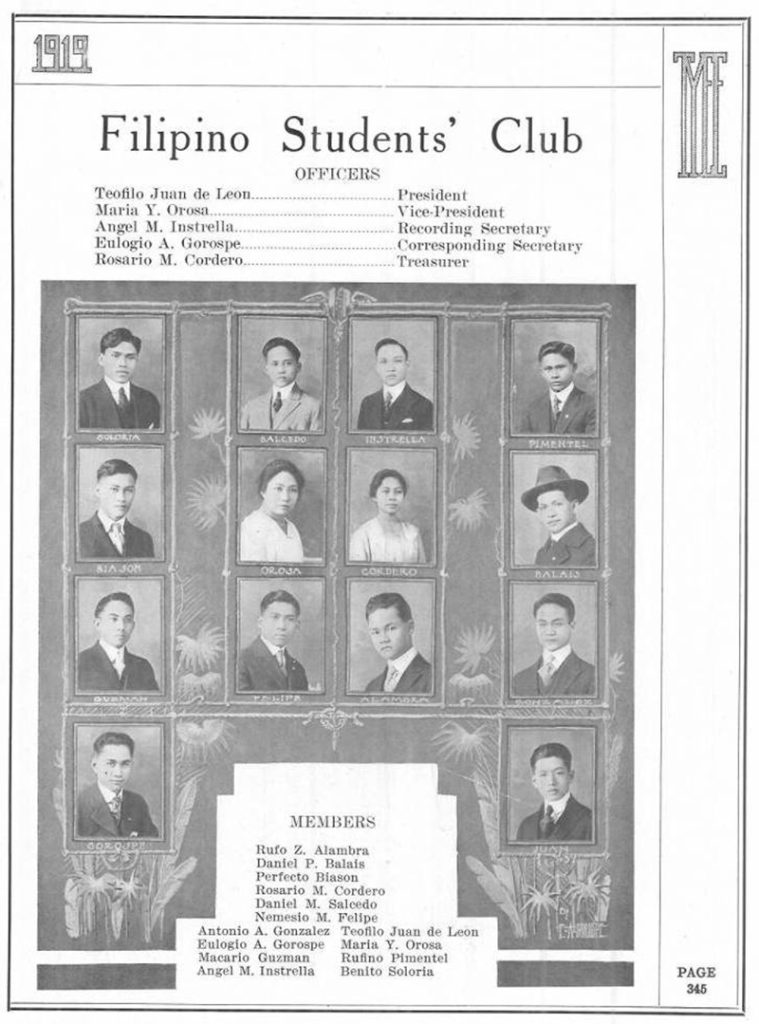
Members of the Filipino Students’ Club in the 1919 University of Washington yearbook, The Tyee. Courtesy of the University of Washington Libraries Digital Collection.
Heritage in practice
Today, FASA hosts bi-weekly general meetings and operates through a committee system covering community service, social activities, political work, and academic support. According to Pantua, all events—even the most casual—incorporate Filipino cultural elements.
“For Valentine’s Day, as an example, we did cookie decorating,” she said. “Instead of ‘Be mine’ or ‘You’re so sweet’ … we made them with Filipino phrases that are kind of equivalent, like ‘Mahal kita,’ which means ‘I love you,’ or ‘Ang cute mo,’ which is like, ‘You’re so cute.’ We just try to tie in Filipino culture in any way.”
Through its Sayaw dance troupe, FASA brings traditional Filipino folk dances to campus. Routines extend beyond well-known dances like the Tinikling and Pandanggo to regional suites reflecting rural Cebuano and Mindanao-based Muslim influences.
“You’re basically becoming an ambassador for your culture,” Pantua said. “And it’s just really empowering to be like, ‘Wow, I’m able to share a part of me with everyone else.’”
For Pantua, FASA represents both the diversity of the Philippines and a shared identity for Filipino students across campus. She pointed to adobo, a classic Filipino dish that varies by region and family, as an example.
“No matter what, at the end of the day, adobo is still adobo to you,” she said. “And it’s still representative of who you are.”
Events that connect
This October, FASA is marking Filipino American Heritage Month with specialized workshops, including Sayaw dance intensives and Baybayin (traditional writing) sessions.
“We feel more inclined to really show who we are and where we came from since we’re already being recognized during the month,” Pantua said. “We just want to take advantage of the fact that it is our month to showcase who we are.”
FASA also maintains a year-round calendar of events. Flagship events include:
- Rising Up for Relief: A November charity talent show with proceeds supporting philanthropic causes—the 2026 beneficiary is Alon and Araw, a Philippines-based youth surf club
- Filipino Night: A cultural showcase in May featuring dances and performances relating to the Filipino American experience
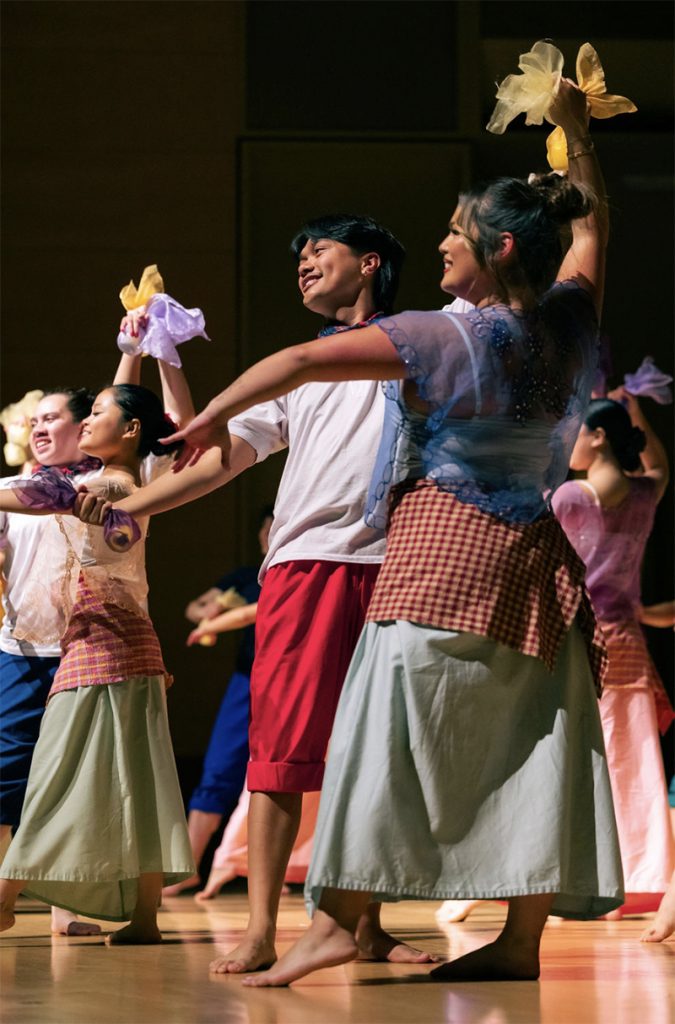
Filipino American Student Association students perform a traditional Filipino dance routine during the 2026 Filipino Night. Photos courtesy of Christian Kleemann (Instagram @photos.bychristian).
Campus organizing, community impact
At the UW, FASA has contributed to the establishment of the Office of Minority Affairs and Diversity in 1970, the Samuel E. Kelly Ethnic Cultural Center and Theater in 1972, and the Department of American Ethnic Studies in 1985.
Additionally, FASA alum Trinidad Rojo co-led a successful campaign in the 1970s to rename Seattle’s 12th Avenue South Bridge to Rizal Bridge and create Rizal Park—the first major public space in Seattle honoring Filipino heritage.
Before the campaign, Seattle’s Philippines-related monuments primarily commemorated U.S. imperial ambitions from the Spanish-American War, according to the UW Civil Rights and Labor History Project. The Rizal Bridge dedication in 1974 flipped that narrative.
“The City’s positive response to Rizal Park was based, at least in part, upon a realization that Filipino Americans had reached a level of political maturity … it means that Filipino concerns, although they may at times be outweighed by competing concerns, can no longer be ignored,” UW alum and scholar Peter Bacho later wrote.
109 years and counting
According to Pantua, FASA is recognized as the oldest collegiate Filipino organization in the nation. For many, that history carries meaning.
“I’m part of this organization that has such a great legacy, not just at UW but also across the nation,” Pantua said. “I’m just so happy to be part of it, and I want to do what I can to continue on that legacy.”
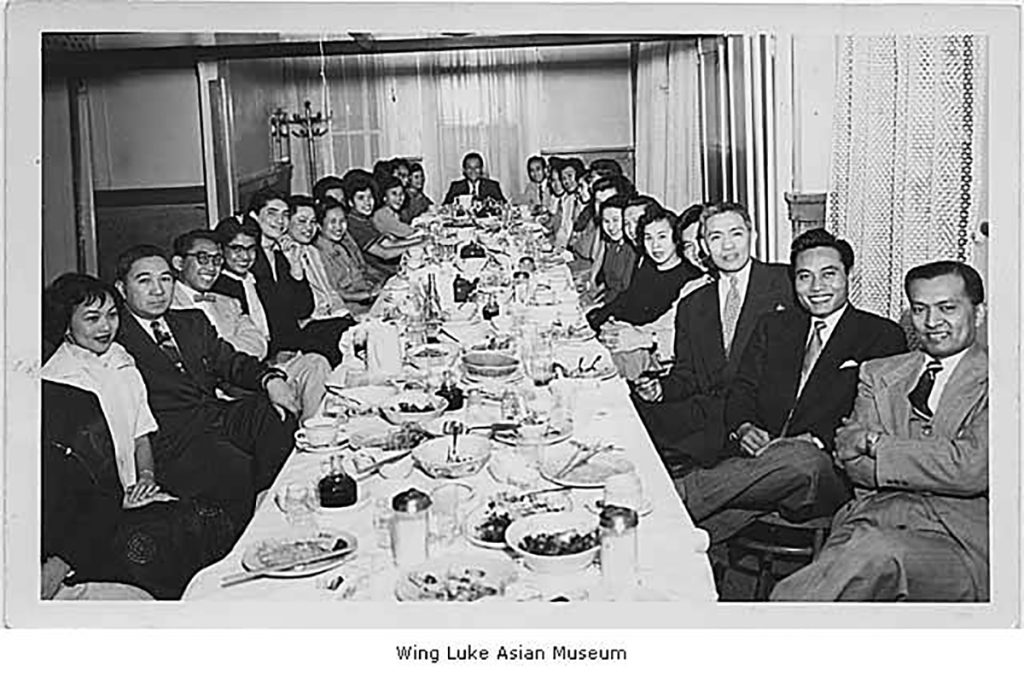
Members of the Filipino Student Association at a tribute dinner sponsored by the Philippine consul in 1952. Courtesy of the University of Washington Libraries Digital Collection.
For students considering getting involved, Pantua offered a straightforward pitch.
“FASA is just the place for you to discover your roots, as well as who you are or who you want to be as a person,” she said. “And if you want to do that in a way where you also indulge in your cultural heritage, then there’s no better place than FASA.”
FASA’s first general meeting of the 2026-27 year is Oct. 8.
“We’re just a big friend group that’s welcome and open to everyone,” Pantua said. “It’s always nice to see a new face, and I’m always excited to be able to welcome people and make those new connections.”
Leave a Reply