



By Samantha Pak
NORTHWEST ASIAN WEEKLY
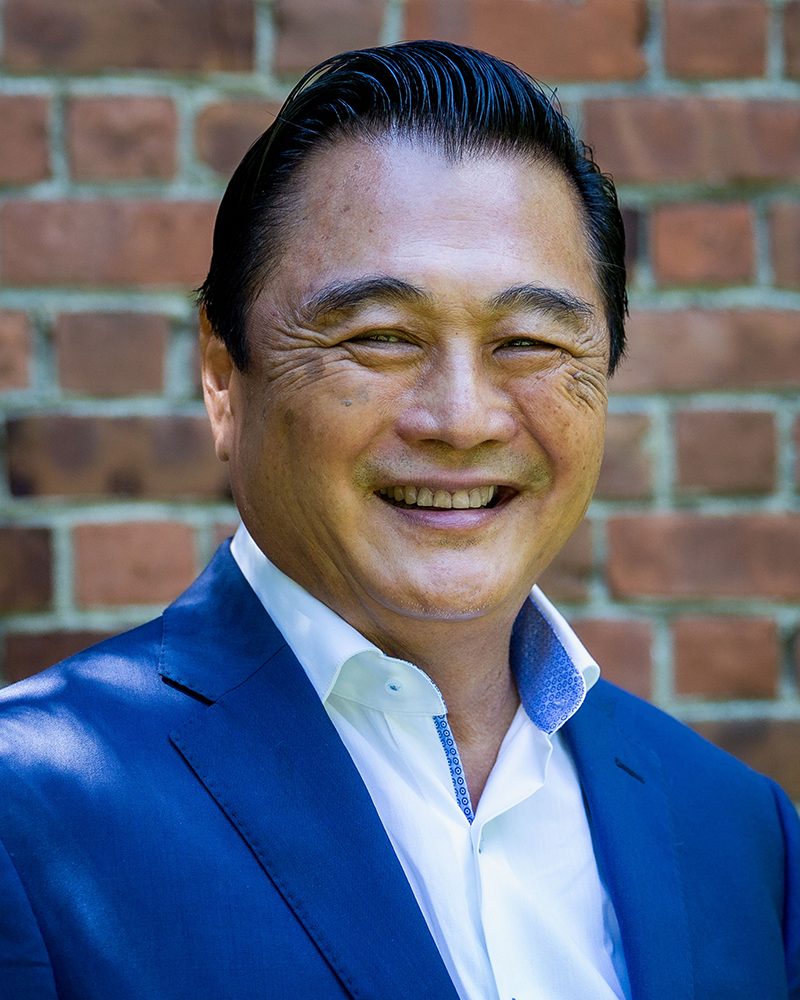
David Mura (Photo by Laichee Yang)
When “Miss Saigon” first came to the Ordway Theater in St. Paul, Minnesota in 1992, David Mura published a piece in “Mother Jones” critiquing the musical’s racist undertones and the arguments he’d been having with his white artist friends about it.
As a result, he was ostracized from his predominantly white writing community. But he ended up connecting more deeply with other writers of color, which led to the creation of the Asian American arts organization, the Asian American Renaissance, as well as the second-largest Asian American theater company in the country, Theater Mu.
“I was surrounded by other Asian Americans who readily understood why I found ‘Miss Saigon’ objectionable,” Mura said. “And when the local theater brought in ‘Miss Saigon,’ we all protested ‘Miss Saigon.'”
Mura also spoke on the topic on college campuses and he had to come to terms with the fact that while his white artist friends were angry about him speaking up, students and teachers of color—from Asian American and Latino American, to Black, Arab American, and Native American—were glad that he shined a light on the issue.
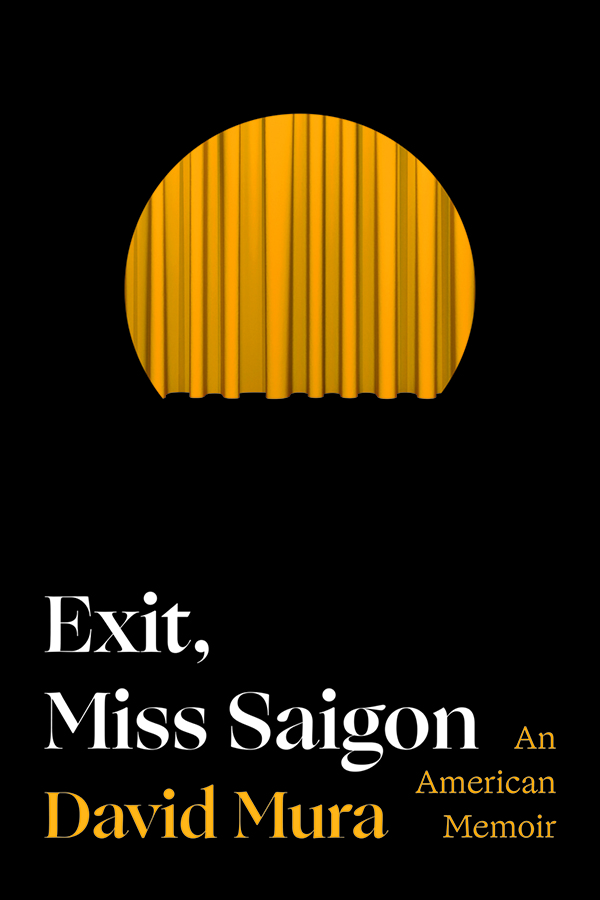
Mura, who is 74 and has lived in Minneapolis since 1974, details his experience in “Exit, Miss Saigon: An American Memoir.” The collection of essays, which was published Tuesday, chronicles his life and experiences, and how they are rooted in the internalized and systemic racism that is so prevalent in American culture.
“Part of the story of the book is how I turned from a banana—yellow on the outside, white on the inside—into an Asian American artist,” Mura said.
Becoming Asian American
With parents who were both imprisoned by the U.S. government at the ages of 10 and 15 during World War II, Mura was raised to assimilate into white America. He said this was their reaction to being in the camps, likening it to someone who has been arrested and put into prison for shoplifting: to show that they are reformed, they no longer shoplift. So, what happens if you’re imprisoned for your race and ethnicity? Mura asked, pointing out that neither German Americans nor Italian Americans were imprisoned during the war. It was only Japanese Americans, and so Mura’s parents abandoned their Japanese cultural roots.
It wasn’t until Mura began reading Black authors in his late 20s that he realized that he wasn’t white and he was never going to be white, and “Exit, Miss Saigon” explores what it means for him to be Japanese American, Asian American, and to say he is a person of color.
Mura also looks at the different stereotypes that can come out of works like “Miss Saigon”—in which a meeting between an American GI and a 17-year-old sex worker could lead to a romantic tale (while being seen as statutory rape in other cases), and all Vietnamese men are portrayed as morally corrupt—and the lasting effect such portrayals can have.
“So the book is both an examination of my own journey as an artist, but also an analysis of where these stereotypes about Asian Americans come from, how they have a pernicious effect on Asian Americans in terms of the way we look at ourselves and our self-image, and how to heal from the internalized racism that many of us experience because of these negative racial stereotypes,” he said.
A sign of power
When asked what he hopes readers get out of the book, Mura said he wants readers to understand that Asian Americans live a much more complicated life than people outside of the community realize, and that “we live lives and go through experiences that are more complicated than we ourselves may realize.”
In addition, the book is also about what he has learned about the identity histories of other BIPOC groups.
“The purpose of Asian American art is in part to give people languages and images that reflect and enable us to articulate our experiences,” he said. “I see this in part as a self-help book for Asian Americans and other Americans of color. But it is also a book about how anybody can learn to deal with the vast diversity of America and how enriching that is. How wonderful it is! And rather than see our diversity as a sign of weakness, see it as a sign of power.”
Mura’s book is also about how the Asian American community is recovering from the racism it has experienced over centuries. Looking at younger generations, he said it is exciting to see people embrace more of their identities because we should all want everybody to come to the table, to be themselves, be seen accurately, and to be valued for who they are.
A full-circle moment
This being said, he does acknowledge there will be people who will have negative feelings or see others through the lens of a stereotype, “but you don’t have to take their judgment of you and internalize.” And for those who have internalized such judgments, he recommends they try to exorcize them from their psyche.
And sometimes, people who have had those negative feelings or seen people through a stereotypical lens may acknowledge the errors of their ways. Mura said in the decades since he fell out with his white writer friends over “Miss Saigon,” only one of them has reached out to him. It was about 2010 and the woman, who had become a schoolteacher, had written him an apology for what had happened.
“Her students were diversified, and so she realized, ‘Oh, my students have different experiences, and they have a different outlook on the issues of race. And if I’m going to connect with them, I need to understand them,'” he said. “If you’re just hanging along with a bunch of white writers, you don’t have to do that.”