



By Madison Morgan
NORTHWEST ASIAN WEEKLY
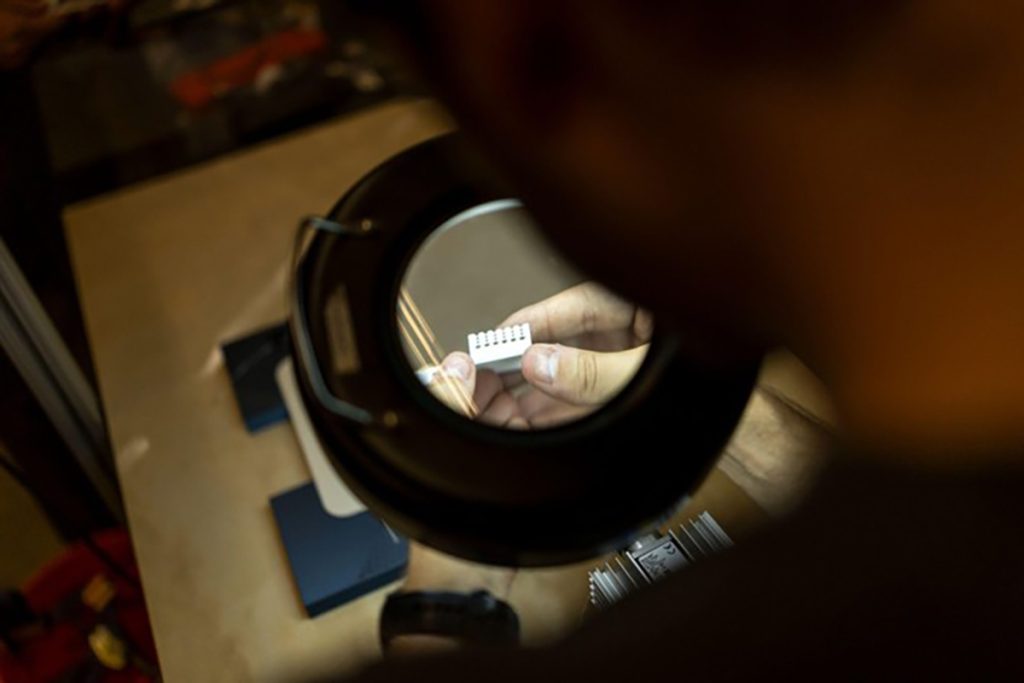
A student works on a piece of robotics technology Aug. 11, 2026. Photo courtesy of Dennis Wise/University of Washington.
This autumn, the University of Washington (UW) is launching a Master of Science in Robotics, a 38-credit degree designed to meet the demands of one of the fastest-growing careers in technology. The program arrives as global robot deployment accelerates, with more than 500,000 industrial robots installed worldwide in 2024 alone.
“For me, anything that makes our efforts less makes sense,” Sunil Chandra, a graduate student in the program, said. “Robotics is one way to achieve that.”
Planning for the program began in 2023 through the College of Engineering (COE) Dean’s Office, with a formal committee established in early 2024. Xu Chen, an associate professor of mechanical engineering, chaired the visioning committee and will serve as chair of the program.
“The fact that we can pull together the engineering departments and have all the industries here as our advisers and collaborators means robotics is a great opportunity to build something for the public good,” Chen said. “I’m actually very proud that we get to launch this [M.S.] with so much excitement from these collaborating people and units.”
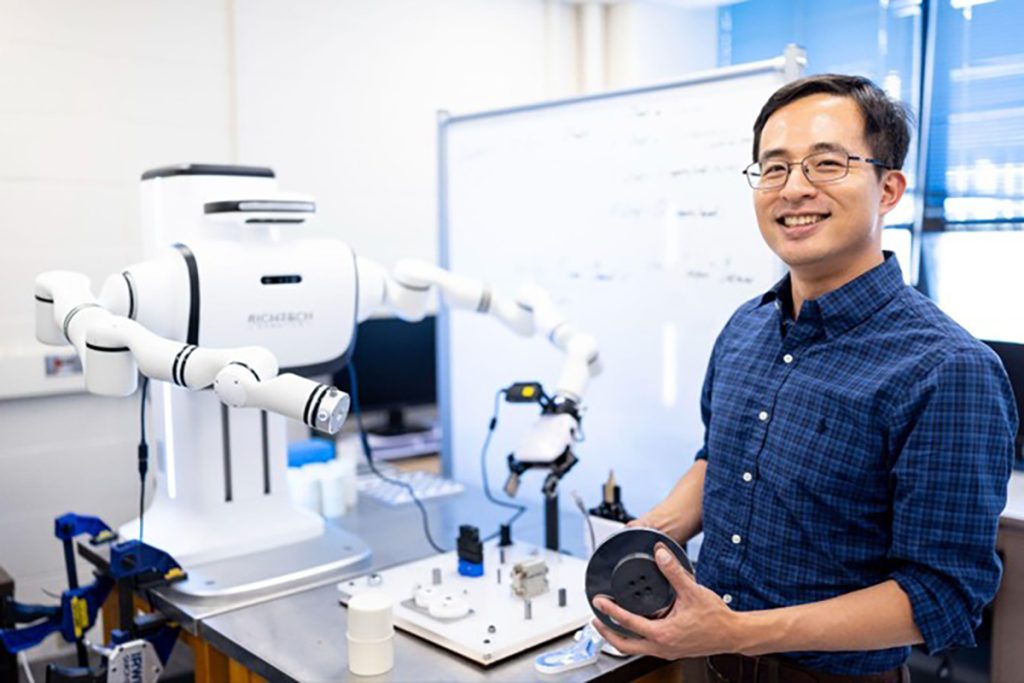
Professor Xu Chen stands next to a robot created by UW students Aug. 11, 2026. Photo courtesy of Dennis Wise/University of Washington.
The M.S. received almost 30 applications during a 10-day period. However, according to Chen, the inaugural cohort will be smaller, with admitted groups expected to grow substantially in the coming years.
Three central pillars structure the curriculum: core foundational knowledge in robotics, immersive learning experiences, and application-focused projects. Students complete three core courses plus 18 elective credits across five concentration areas, then apply that knowledge through a capstone project.
Capstones include a research and thesis pathway or the Integrated Challenge, which places students in a startup-style environment to build an end-to-end functional robotic system that is then judged by industry advisers.
“We believe it’s very important to have these hands-on experiences,” Chen said.
Both Chandra and Chen noted Seattle’s position as a technology hub as a major strength of the program. The region ranks first nationally in aerospace labor with more than 1,500 aerospace-related vendors and suppliers, and second in AI jobs after New York City. Seattle also hosts some of the Pacific Northwest’s leading healthcare facilities, creating additional opportunities for robotics applications in medical settings.
“We celebrate the uniqueness and strengths of our university, as well as the region,” Chen said.
For Chandra, those connections translate directly into hands-on experience. His team developed a component for Boeing to clean water collection tanks at the company’s facilities.
“It’s like we are doing our own internship,” Chandra said. “It gives us another opportunity to interact with their researchers and engineers … who have enormous experience.”
Chandra hopes the program delivers a comprehensive perspective on robotics as an integrated discipline, rather than isolated technical domains.
“I would like to see this program help students get an overall understanding of robotics as a whole, not just from a mechanical point of view or from software perspective,” he said. “Robotics itself is a new field. It stays at the overlap.”
COE seeded funding for the education program, supplemented by company donations providing hardware and infrastructure support.
“We have been actively discussing additional resources needed to make the program even more successful,” Chen added.
On Sept. 15, COE hosted a kickoff retreat for the robotics initiative. The day-long agenda covered program overview, academic pathways across engineering departments, and capstone project structure. Eight students demonstrated robotics projects—including Chandra’s, while company representatives from Amazon, Microsoft, Boeing, Meta, NVIDIA, and Oracle toured facilities and discussed potential collaborations.
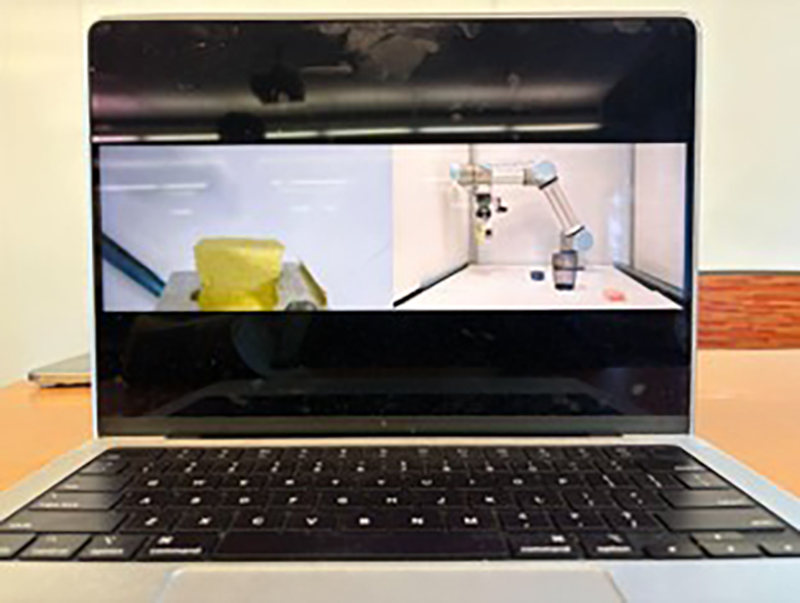
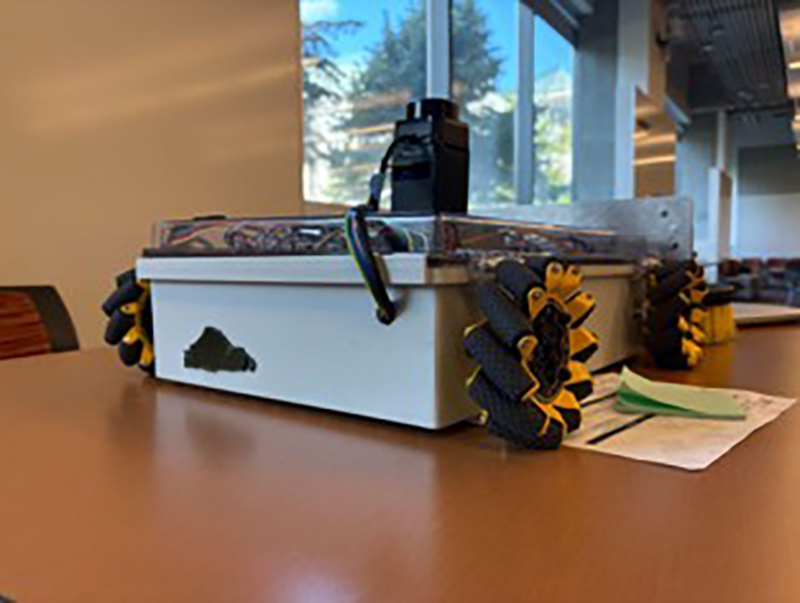
Student robotics projects from the Sept. 15, 2026 UW COE Robotics Program Kickoff & Retreat. Photos by Madison Morgan.
“I think in the long term, we are actually building something that’s substantial,” Chen said.
UW will also be offering a 16-credit Graduate Certificate in Applied Robotics. The certificate features the same core curriculum as the master’s degree but is designed for working professionals, with classes offered primarily in afternoons and evenings.
Students who complete the certificate can later apply those credits toward the master’s degree if admitted, creating a flexible pathway for career advancement.