



By James Tabafunda
NORTHWEST ASIAN WEEKLY
About 75 people gathered on Sept. 26 at the Van Asselt Community Center gym for the first of three public listening sessions intended to guide the city of Seattle’s search for its next police chief.
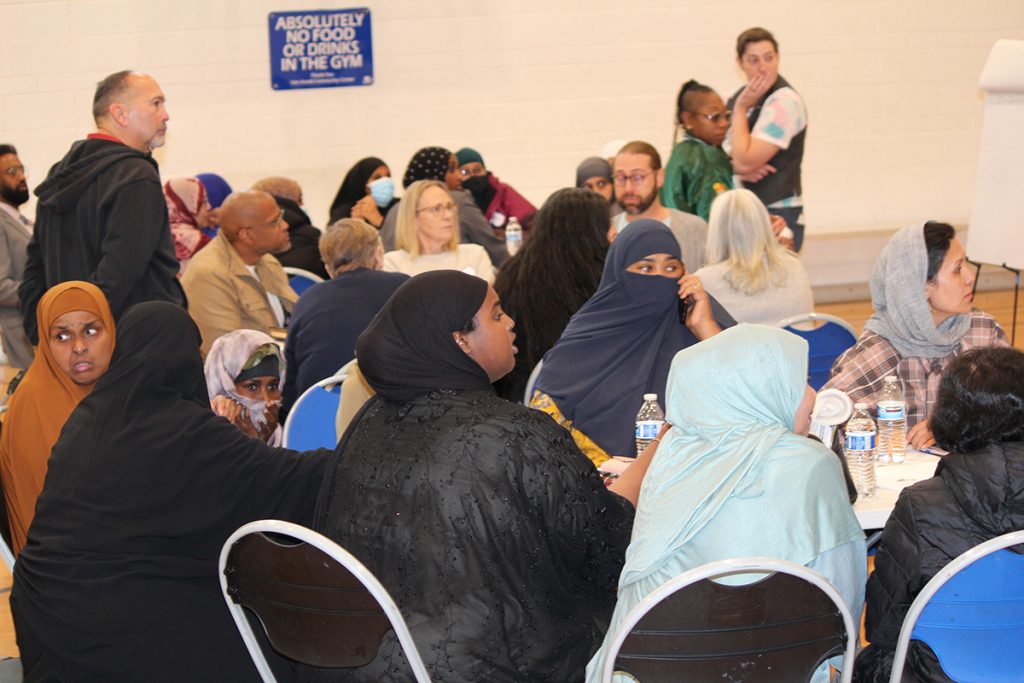
Participants in the Seattle Police Chief Community Listening Session (Photo by James Tabafunda)
Seattle Mayor Katie Wilson launched the national search in August, after former Seattle Police Department (SPD) Chief Shon Barnes resigned July 30 at her request. The first phase includes public forums across the city.
At 11 tables, they met in groups of eight to 10 and described the police chief they want: someone who knows Seattle’s neighborhoods, understands immigrant and refugee communities, stays calm in crises, and accepts public accountability. They also called for faster police responses, stronger action on gun violence, more engagement with young people, and officers who build relationships outside their patrol sports utility vehicles.
Seattle Neighborhood Group (SNG) organized the two-hour session with the mayor’s office. “We want to talk about experience. We want to talk about their character. We want to talk about how they’re going to build trust with the community,” SNG Executive Director Aaron Yoon said. “What we’re doing here today is a foundational piece of where public safety in Seattle is going.”
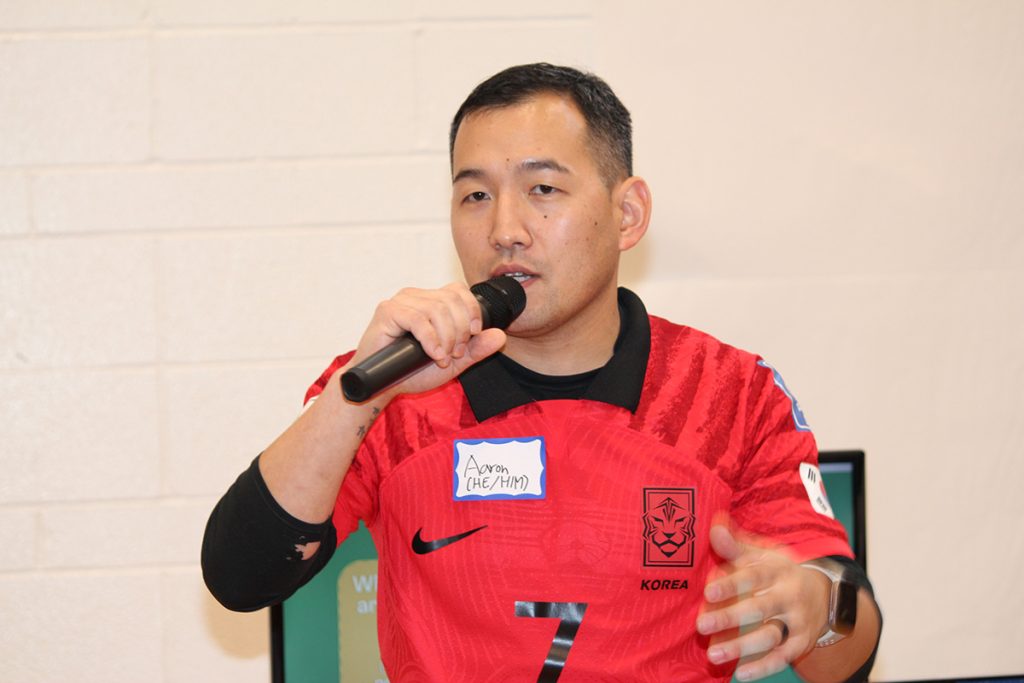
Aaron Yoon, Seattle Neighborhood Group executive director (Photo by James Tabafunda)
Calls for trust and access
The discussions repeatedly returned to accessibility and visibility. Participants said they wanted a chief who would attend neighborhood events, listen to families and youths, understand immigrant and refugee communities, and maintain relationships before a crisis occurs. Organizers provided interpretation in seven languages, including Cantonese, and attendees could submit written comments or speak.
Cultural understanding sought
When the groups shared their discussions with the room, speakers said cultural competence should be a requirement for the next chief, not simply a desirable trait. They said the chief should understand different traditions, communicate across language barriers, respect civil rights, and work with civilian responders, social workers, and other city departments.
One table of Somali mothers emphasized patience, empathy, and openness toward families affected by violence. Another group said the chief should include youth voices and hold community events. Participants at another table called for officers to form direct relationships with young people.
Responsibility, integrity, sound judgment, and courage also appeared in the table reports. Participants said the chief should make clear decisions during crises, but also be willing to admit mistakes.
Seattle City Councilmember Eddie Lin, who represents District 2, said that presence is especially important in southeast Seattle, where he believes residents too often feel unheard or unrepresented.
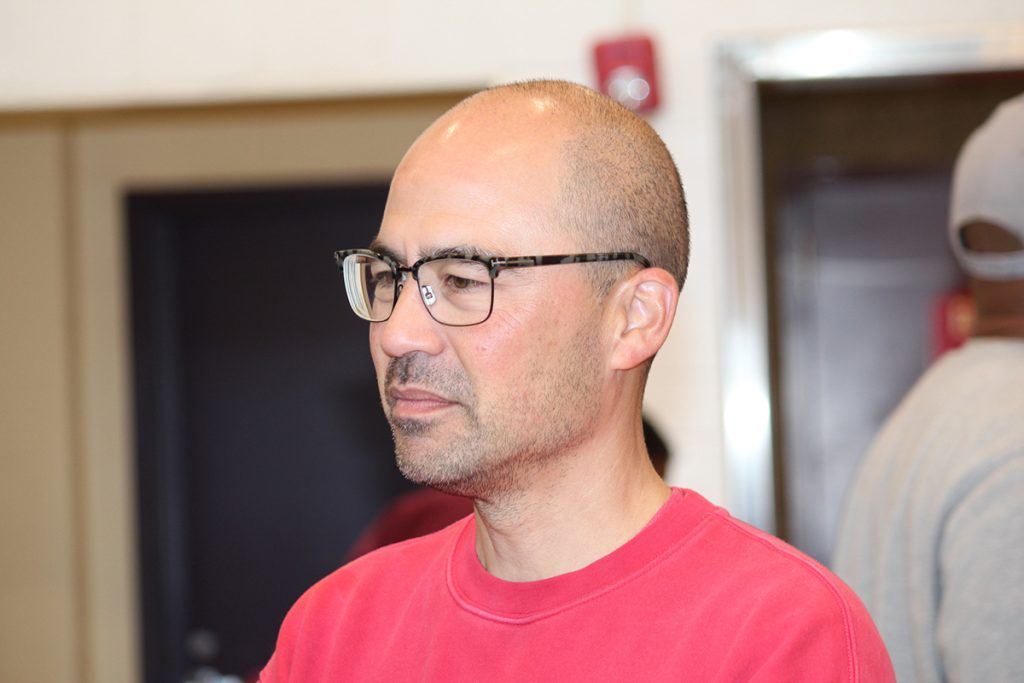
Eddie Lin, Seattle City Councilmember, District 2 (Photo by James Tabafunda)
“The most important thing that I hear is that people want you present and available, so that they feel heard,” he said in an interview after the session. “And it’s a two-way dialogue.”
District 2 includes the Chinatown-International District, Beacon Hill, Rainier Valley, Columbia City, Mount Baker, Yesler Terrace, and Rainier Beach.
Lin said police accountability emerged as a concern in his group’s discussion. He said residents worried that officers could resign without misconduct appearing on their records and called accountability a difficult but essential issue for a police chief and the community to address.
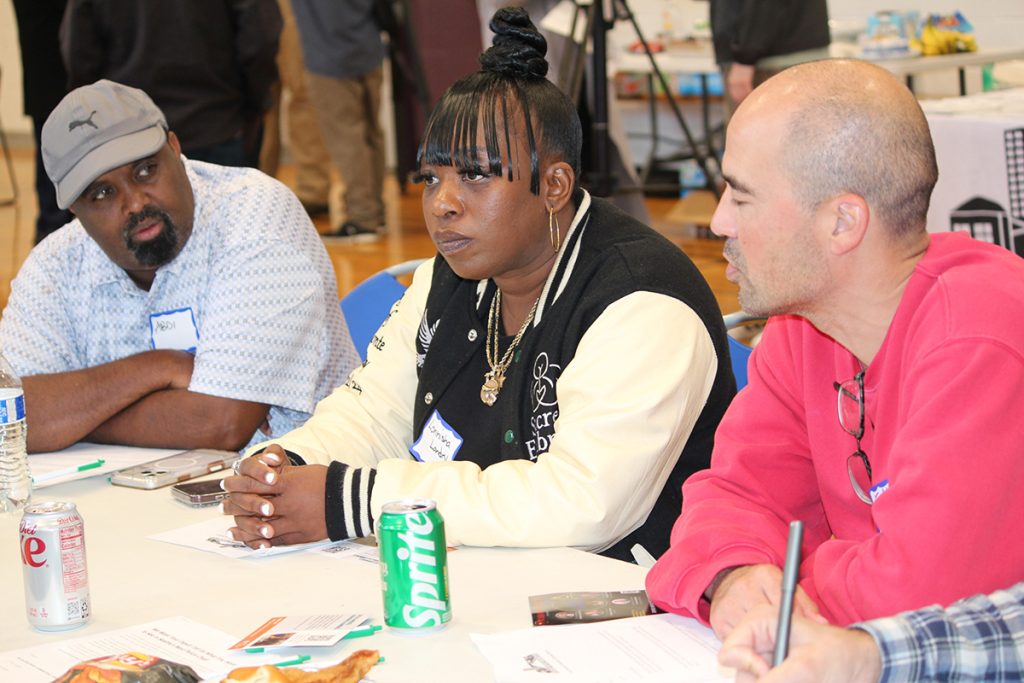
Eddie Lin, Seattle City Councilmember (right) participates in the discussion at one of 11 tables (Photo by James Tabafunda)
Input to shape screening
Alison Holcomb, the mayor’s executive operations manager for public safety, told participants the city had about 23 applicants who appeared to meet the position’s basic qualifications. She said several were internal candidates “in the queue.”
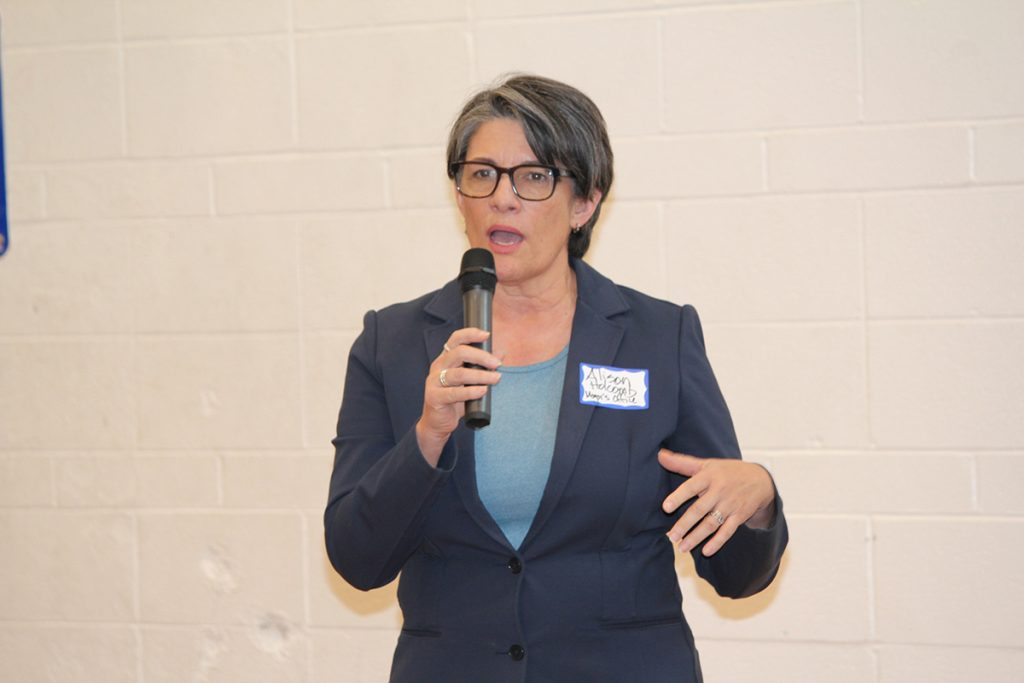
Alison Holcomb, Mayor Katie Wilson’s executive operations manager for public safety (Photo by James Tabafunda)
She said feedback from the public survey, listening sessions, and community roundtables would be compiled into a tool for the 18-member Chief of Police Search Advisory Committee. Committee members are expected to use that feedback when they review applications and conduct first-round interviews.
“We are going to be looking carefully and talking very seriously with one another about whether or not the candidates who have applied align with the concerns, the hopes, the expectations of the community,” she said.
The committee is co-chaired by retired Washington Supreme Court Justice Mary Yu and Ian Warner, public policy director at Vulcan Real Estate. Its members include public safety professionals, police labor representatives, business leaders, and community advocates.
Asian American community representatives on the panel include Jamie Lee, co-executive director of the Seattle Chinatown International District Preservation and Development Authority, and Valerie Tran, interim executive director of Friends of Little Sài Gòn. Sophia Benalfew, executive director of the Ethiopian Community Center of Seattle, and Eci Ameh, executive director of the Community Police Commission, are also members.
Each committee member must attend at least one listening session, Holcomb said. The panel will assess candidates’ executive leadership and law enforcement experience.
Organizers promise follow-up
Yoon said SNG would analyze the comments and present prioritized feedback to the mayor’s office. He said the organization planned to contact participating residents within two weeks, if they provided contact information.
“We’re not here for the check boxes,” he said.
He said the small-table format was designed to give participants more time and a safer setting to speak than a meeting built around brief remarks at a microphone. Registration helped organizers prepare facilitators and interpretation, but it was not required.
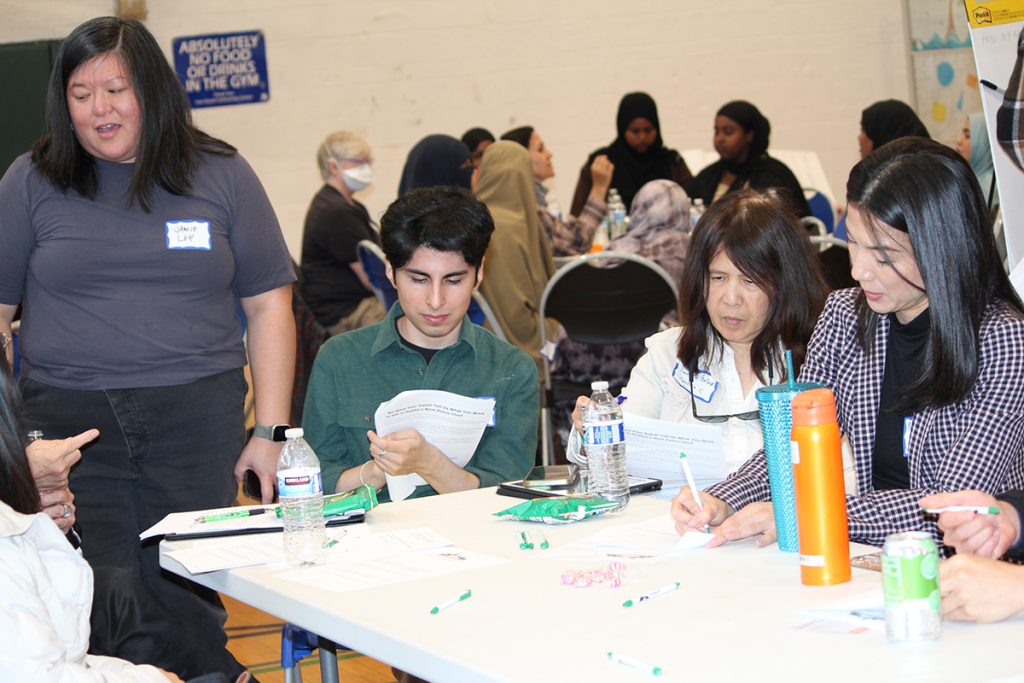
Participants in the Seattle Police Chief Community Listening Session (Photo by James Tabafunda)
Lin said selecting a chief mattered, but not one single official could make every neighborhood safe. He urged residents to continue building connections with one another while holding the mayor’s office and City Council responsible for honoring what they heard.
“This is not a one-time thing,” Lin told the room. “It needs to be a continual engagement process.”
Search follows leadership change
The next permanent chief will lead Washington’s largest municipal law enforcement agency. The job posting seeks an experienced executive with a record of organizational leadership, change management, responsible use of public resources, work with police unions, and community-relationship building. The posted annual salary range is $234,294 to $374,900.
Candidates must meet Washington certification requirements for police officers and chiefs.
Under the process outlined by the mayor’s office, the advisory committee will recommend up to five candidates for a competitive examination required by the City Charter. Holcomb told participants the finalists would undergo extensive background reviews, including social media checks and, for candidates outside the SPD, interviews with people in communities where they previously worked.
The city’s published schedule calls for community engagement through September and October, candidate review in October and November, and the examination and mayoral interviews in November and December. Wilson expects to announce her choice by the beginning of 2027. The appointee will require confirmation by a majority of the City Council.
Two sessions remain
The second listening session is scheduled for Sept. 28 at the Seattle University Campion Ballroom. The third is scheduled for Sept. 30 at North Seattle College’s World Community Center.
Yoon encouraged participants to bring constructive proposals to the remaining meetings. The organization’s task, he said, is to turn residents’ urgency, frustration, and experience into recommendations that can be weighed as the city narrows the field.
“Trust takes time to build,” he said. “I just want to reassure the people that are here today, taking time out of their Saturday, that we are here to authentically engage and really try to listen as best we can.”
For more information and registration for the Seattle Police Chief Community Listening Sessions, go to www.sngi.org/listen.