



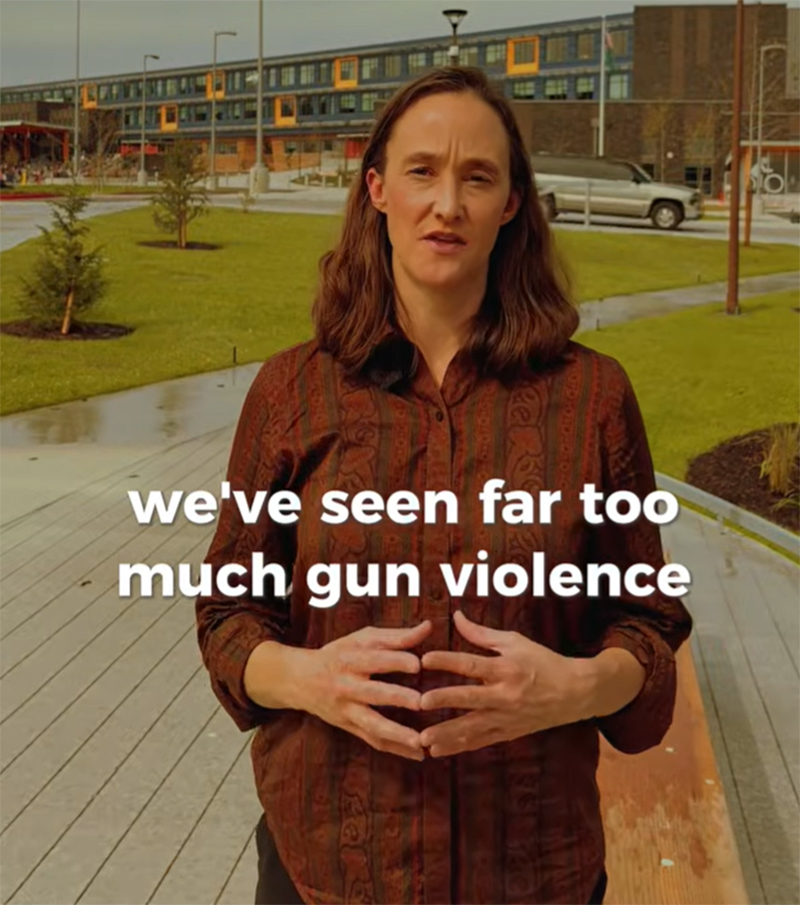
 Mayor Katie Wilson announced a new citywide plan on Tuesday aimed at reducing gun violence through a combination of community intervention, police resources, youth programs and regional partnerships.
The plan moves Seattle’s community violence intervention work into the Community Assisted Response and Engagement (CARE) Department, which operates the city’s 911 Communications Center and coordinates emergency responses.
“Seattle will not accept gun violence as inevitable, and neither will I,” Wilson said. “We have a responsibility to make sure that communities in this city feel safe, and today I am acting on that responsibility.”
The mayor’s proposed 2027 budget includes more than $5 million annually to continue community violence intervention contracts with nine organizations, along with new leadership positions within CARE.
Tanya Kim, director of the Human Services Department (HSD), said the move builds on work already established through community partnerships.
“This is the right time for CARE to take on a larger role, connecting this work more closely with the City’s first response system and broader public safety strategy. HSD will continue to support community-based organizations providing the services and resources that help prevent violence and create pathways to support.”
Seattle police will increase bicycle patrols in Little Saigon, Belltown, North Aurora, and Rainier Beach. The city also plans to expand youth programs, mental health services and employment opportunities for young people.
King County Prosecuting Attorney Leesa Manion said success will depend on coordination and measuring whether the programs work.
“Reducing gun violence is a team effort that requires the partnership of police, prosecutors, elected officials and community leaders.. I appreciate the City and CARE’s commitment and focus on this critical priority. Implementing effective interventions includes data-based decisions and effective monitoring and evaluation to make sure programs are getting results.”
The city is also proposing additional investments in youth programs, including a $600,000 investment in Seattle Parks and Recreation for a new after-school program at Rainier Beach High School, peer mentoring and expanded support for organizations serving teens.
Other efforts include free counseling for people ages 13 to 24, after-school activities, conflict mediation and life-skills programs. The city plans to continue its Seattle Youth Employment Program and expand union apprenticeships.
The city also plans to work with the University of Washington and Johns Hopkins Bloomberg School of Public Health to evaluate existing programs, review homicides and identify opportunities to prevent future violence.
The goal, city officials say, is to turn a collection of programs into a coordinated system that can be measured and adjusted over time.