



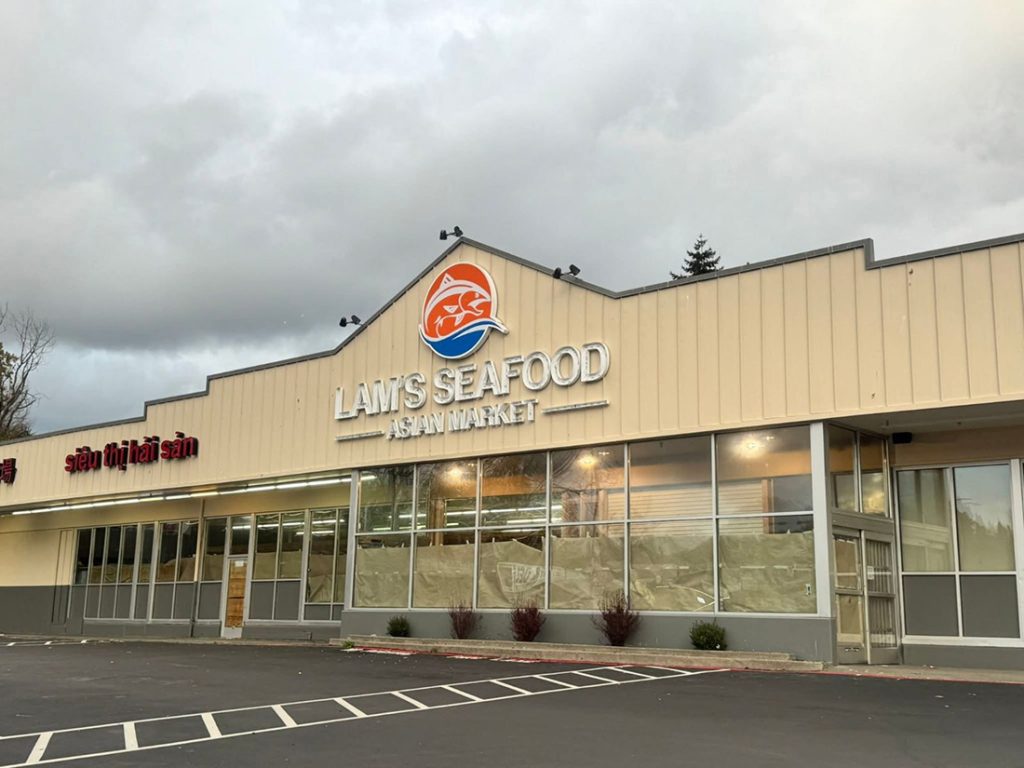
 Lam’s Seafood Asian Market has been part of Seattle’s Chinatown-International District (CID) for decades, serving generations of shoppers with Asian groceries and seafood. Now, as the family-owned business prepares to open its third location, it is also becoming a model for how the city plans to support neighborhood grocery stores.
Mayor Katie Wilson announced on Thursday that Seattle will invest $1.7 million in new programs aimed at helping grocery stores expand, improve operations and strengthen storefront security in neighborhoods underserved by food retailers.
The effort, administered by the city’s Office of Economic Development, will include grocery market studies, industry-specific technical assistance and funding for security and facility improvements.
Lam’s was the pilot business for the city’s expanded approach. The city helped the grocer navigate permits, contributed to repairs after recent break-ins and is working with the company on facade and security improvements ahead of the opening of its third store in Rainier Valley.
The new location will fill a grocery site that has been vacant for eight years, according to David Tran, owner of Lam’s Seafood Asian Market.
“With support from the City of Seattle, we’re excited to bring Lam’s Seafood Asian Market to Rainier Valley and fill a grocery site that has been vacant for 8 years,” Tran said. “As a community-focused independent grocer, our goal has always been to bring high quality, culturally relevant foods to our community and this is the perfect site to do so.”
Tran said city funding will help pay for security upgrades intended to create a more welcoming storefront while reducing the risk of break-ins and vandalism.
Lam’s also has a store in Tukwila, near the Westfield Southcenter mall.
The City of Seattle’s investment will extend beyond Lam’s. The Independent Grocers Alliance will conduct market analyses in eight Seattle neighborhoods to identify areas with untapped demand for grocery stores and determine what types of retailers could best serve each community.
Seattle also plans to create a grocery-specific version of its Back to Business Program. The initiative will provide one-time funding for security and facility upgrades at supermarkets experiencing high levels of retail theft.
“Every person deserves to have access to fresh, healthy food,” Wilson said. “We are supporting local grocers because neighborhood stores play a vital role in making our city more affordable and livable.”