



By Kai Curry
NORTHWEST ASIAN WEEKLY
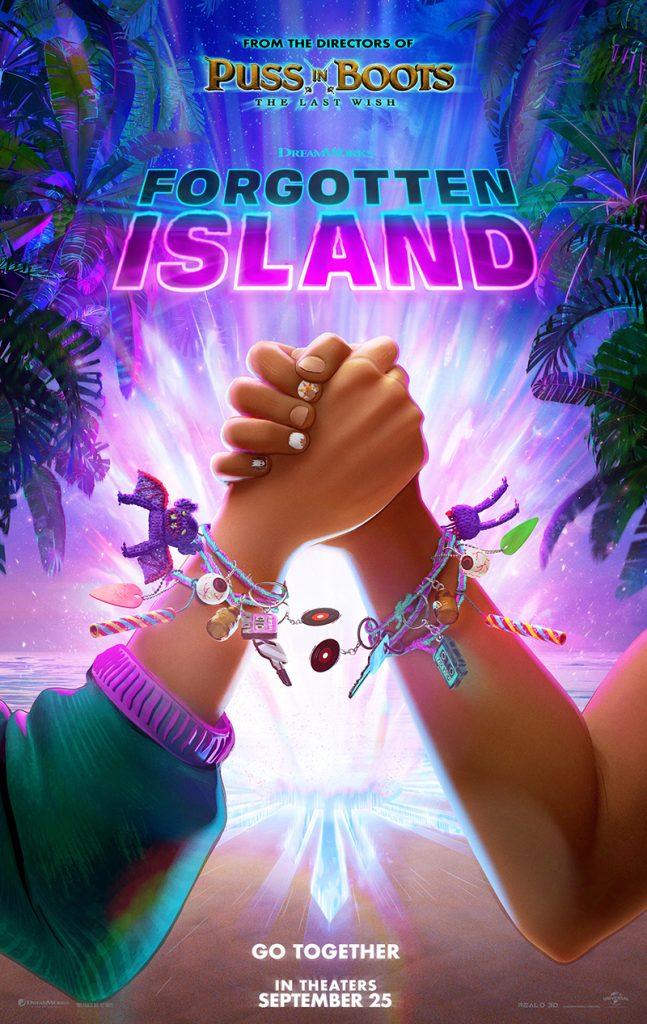 Filipino folklore is freaky, and that’s the fun of it. As Filipino American History Month approaches, consider that your warning. If you want to learn more about it, or if you already know, the new Filipino-leaning animated film, “Forgotten Island,” will set you straight. We all want to disappear to a magical place sometimes. In this story, the two protagonists, Jo and Raissa, actually DO. Even if the magic is a little bit creepy, it’s hard to return to real life.
Jo and Raissa are best friends. Jo is voiced by H.E.R., an R&B singer and actor with multiple awards under her belt. Raissa is voiced by Liza Soberano, who was named one of the most influential person in Asia a few years back. “Forgotten Island” might be Soberano’s breakout film in the U.S. Jo and Raissa have been best friends since Jo created a scene in elementary school and Raissa defended them. The scene was Jo telling a story about a place called “Nakali,” a fictional island created by the film’s team to purposely showcase Filipino folklore. It’s a “forgotten” island because most people don’t believe it exists and it also makes anyone that does visit it forget everything important to them—the longer they stay, the more they forget. The island’s name, Nakali, is from the Tagalog word nakalimutan: forgotten; to have forgotten.
Jo’s grandmother, “Lola” (voiced by Dolly De Leon), who raises Jo, has been to Nakali. She has regaled Jo and Raissa throughout their lives with stories of the fantastical beings there, all of which are based on Filipino legends. Jo got in trouble in school because the assignment wasn’t to tell a made-up story, her teacher chastised. Yet for Jo and her grandmother, Nakali is real. For most of their young lives, Jo and Raissa have had a pact to find and go to Nakali—which can only be reached through a magical sand dollar that opens a portal. However, when Raissa decides to attend college in the U.S., this pact starts to fall apart. Jo fears not only losing Raissa to distance, but that maybe Raissa doesn’t view their friendship the same way Jo does—a friendship memorialized in the charms they wear around their wrists.
Spoiler alert: Jo and Raissa go to Nakali. Right. You knew that. Nakali both is and isn’t everything they thought. It is populated by wondrous and terrifying beings, sometimes both at once. As many have pointed out, the curious cast of characters on the island makes for some very original animation. In depicting these beings, the film’s animators have broken new ground. The animation, as a whole, is very layered and fun, sometimes mixing up to three styles of animation at the same time. When the characters experience something dramatic, for instance, their faces turn very cartoony and wildly exaggerated. The music that goes along with their adventures has caught some attention, mainly the remake of INXS’s gorgeous “Never Tear Us Apart.”
Let’s get a rundown of Nakali’s residents. Primary among them is Batiba, the memory thief, and Manang, the psychotically scary vampire lady. Both are gorgeous and freaky. Batiba has this luxuriously soft fur and then these glowing eyes that you just know mean bad news. She initially greets the two girls as their savior—their path back home—but it turns out, she really doesn’t have their best interests at heart. Further twist though, Batiba’s not fully aware herself of how out-of-pocket her demands are. As is often the case with a deity, you’ve got to make a trade to get what you want. Batiba asks for your memories. Manang is the one that everyone supposes from the start is the true enemy—the vampire that relentlessly hunts anyone in her way. She is based on Manananggal, a creature from Filipino folklore. She’s got all the traditional vampire moves—the crawling on walls, the flying—and some new, Filipino-inspired moves thrown in, such as breaking in half. She rages out with a staticky horror movie effect that, let me tell you, works really well. Like Batiba, though, Manang is not everything we expect. There are lots of friendly residents, too, that, nevertheless, could turn on you at any moment. These are godlike creatures, after all, and godlike creatures are finicky and unreliable as a rule. The overall term for these beings that populate the island is “aswang”—and in Filipino myth, they are described as malevolent.
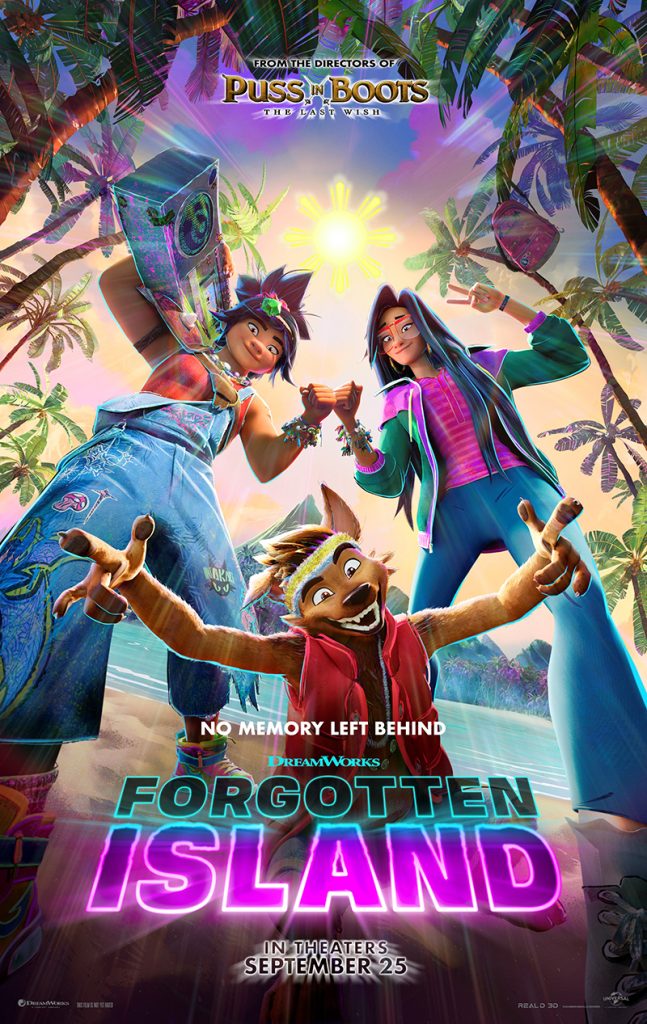
The cast of characters for “Forgotten Island” are voiced by a stellar Filipino cast. Jo Koy, of course, is there, in the shape of a mostly benign tree spirit or “Datu.” The esteemed singer and actor, Lea Salonga, voices Malang. Other notable actors include Dave Franco as “Raww,” the weredog that, sort of, helps Jo and Raissa navigate the island; and a hilarious Ronny Chieng as “King Truffle”—an adorable, tiny villain.
For the Filipino community, in the U.S. and in the Philippines, “Forgotten Island” already holds a very important place in their representation in film. The nods to Filipino culture go much further than the folklore of the island; there are constant satisfying references to everyday traditions and lifestyle, such as the roast suckling pig for a party, the ever-present image of Jesus on the wall, the love of karaoke, the pursing of one’s lips to point—the list goes on and on. Just the fact that the story, when not in fantasyland, is set in the Philippines, is a huge win for representation. While watching the movie, one gets a sense of the enormous amount of pride and love that went into it. Like Jo and Raissa, as soon as the adventure was over, I wanted to go back.
Kai can be reached at newstips@nwasianweekly.com.