




By Samantha Pak
NORTHWEST ASIAN WEEKLY
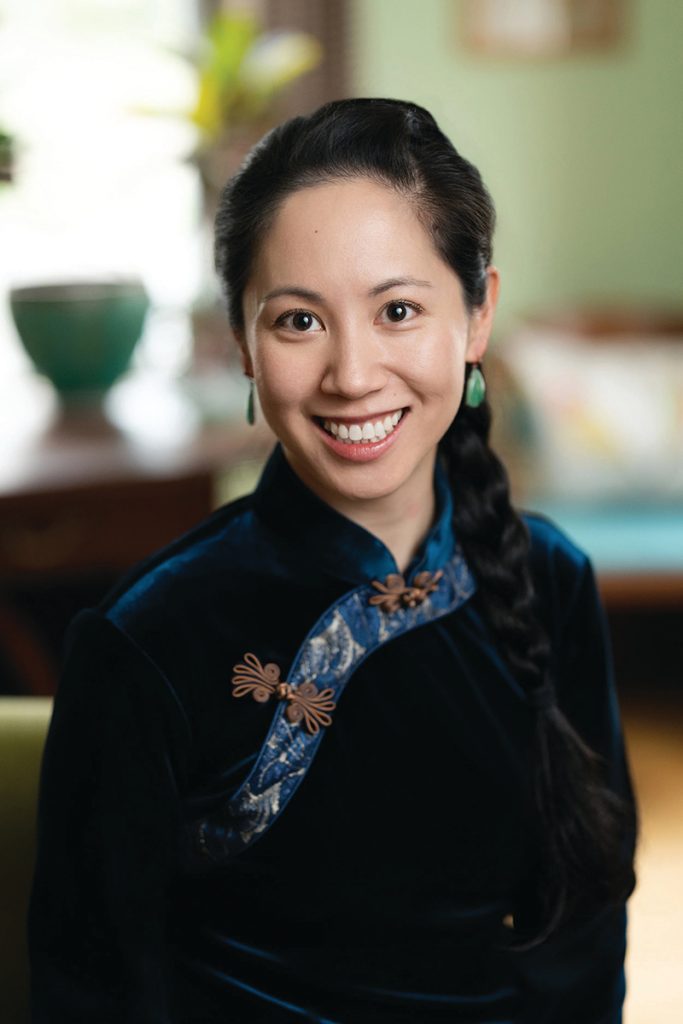
Credit: Nicole Loeb
Afong Moy is widely considered to be the first Chinese female immigrant in the United States.
Believed to have come to the United States as a teenager, the name on the ship log that brought her to this country in 1834 was either “Auphinoy” or “Auphmoy,” before evolving into Afong Moy. Upon arrival, Moy was put on display as an exhibit called “The Chinese Lady.” People would come to see her “exotic” clothing, as well as her bound feet. After this, Moy ended up in the menagerie of P.T. Barnum as a sideshow. Following her time as a curiosity, not much is known about Moy, as she more or less vanishes from history. In addition, not much is known about her early life in China before arriving in the United States.
“We have no idea what happened after she was lost from the public eye,” Bo Wang said. “We don’t know where she came from, what her childhood was like before she came to the U.S. And after she left Barnum’s museum, nobody really knows what happened to her. There’s no documentation.”
With her early and late life essentially unknown, Wang has taken the opportunity to imagine what Moy may have experienced during those times in her new book, “The Chinese Lady,” published Tuesday, Sept. 8. The historical fiction novel tells the story of Moy’s life—including the known parts of her life, as well as a fictionalized childhood as the daughter of a concubine in China, and a fabricated post-performing life. The latter, Wang said, is borrowed from the life of Ah Toy, a successful Chinese business woman who ran brothels in San Francisco and—as Moy does in the book—used the courts to her advantage in protecting herself from being taken advantage of, exploited, or cheated out of her money.
“Ah Toy is so cool. There’s also very little known about her before and after, and so their timelines could work,” Wang said. “The timeline would have been right, in that it was 1854, in the early 1850s. And so I was like, ‘Oh, I can take this really cool piece of history that happened with another woman (and add it to my story).'”
“The Chinese Lady” is the 39-year-old Bostonian’s debut novel, though Wang has been writing her whole life.
“This is just the first book that took,” she said.
Historical events, contemporary themes
And like many writers, Wang was also a big reader growing up—and she particularly loved historical fiction, with the 19th century also being one of her favorite eras. Historical fiction, she said, is a fun way of learning about history, especially if the historical background is well researched and accurate. It’s a great way to understand social history as most of the time, history textbooks focus on big political or economic events, rather than what happens in the lives of everyday people: what they wore, what they ate, marriage customs, what a household looked like at the time, etc.
“I also think historical fiction is really important and could be a very useful tool because it allows people to explore really contemporary themes like immigration and otherization in a really deep way without feeling as much threatened by it,” Wang said. “So you can be more open to it, because it is removed to a different time. It creates a little bit of distance that you can look at it with more safety, maybe, and explore those issues.”
Historical fact versus historical fiction
Wang first came across Moy, when she was working at GBH, Boston’s public media station. She was in the children’s media and education division, and one of the projects they were working on at the time was a U.S. history collection that focused on “lifting untold stories and diversifying perspectives in history.”
“I was just Googling around to see what there was, and came across both Afong Moy and Joice Heth, who is the enslaved woman in the Barnum section (of the book),” Wang said. “That’s the first time I heard of both of those people. And I was just really, really interested, and got historical nonfiction books about both of them. It was just really interesting. And I just started creating the story to fill in the gaps.”
And while both Moy and Heth were “owned or employed by” Barnum during his exhibition phase (rather than his circus phase), Wang said they actually did not cross paths as the two women do in her book. That is another fictional part of the story.
In writing about Moy, specifically, Wang said one thing about the woman’s story that caught her interest was the fact that she had bound feet, which is a very present trope in Chinese-based historical fiction, she admitted, but what made Moy’s story stand out was that she was brought over to the United States.
“You usually would think she would have come from an impoverished family who had to sell her, or she wasn’t worth much to her family, and so they were able to sell her to American traders to bring her over,” Wang said. “But generally, you would think that someone with bound feet, because it diminishes your value as someone working, you come from a household of more wealth.”
This got Wang thinking about how someone from a wealthier household would have ended up in a situation in which she was separated from her family and brought to the States.
Becoming the main character in her own story
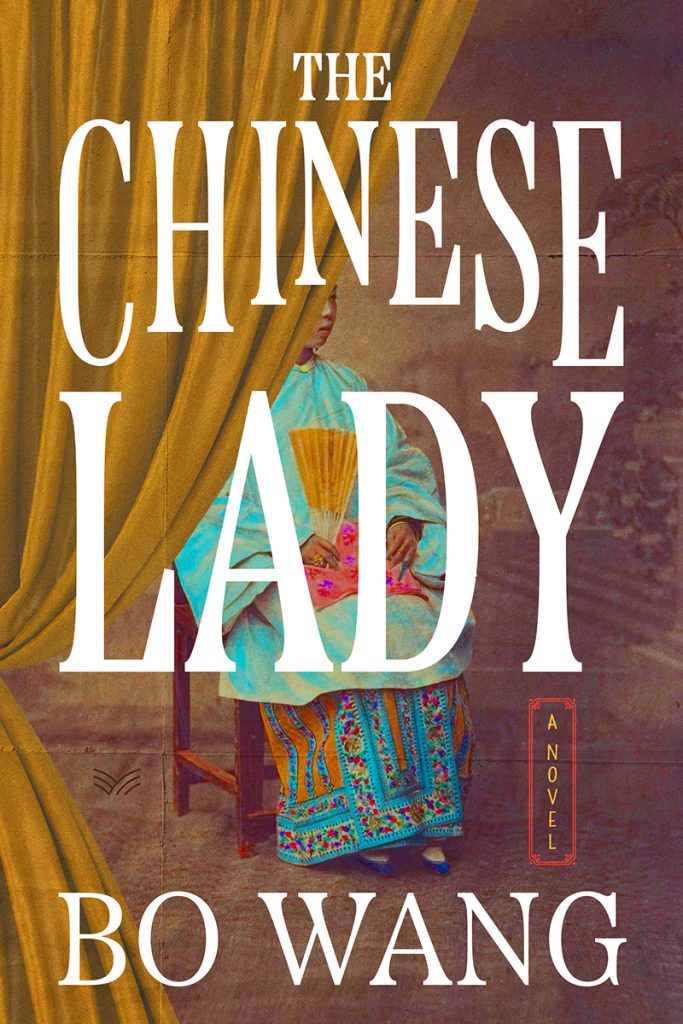 “The Chinese Lady” covers four sections of Moy’s life, told from the perspectives of those around her—and all women in different situations, but still trapped and limited in their own way. Her childhood is seen through the eyes of her mother, who actually wanted a son who could help raise her status among the other wives and concubines in the household. Her first years in the United States are from the point of view of the white American woman whose husband brought Moy over to be a companion for her, as well as to be put on display. While she is with Barnum, her experiences are filtered through the aforementioned Heth. It’s not until Moy reinvents herself one last time as a business owner that readers get her perspective.
Wang said she chose to write it that way—with Moy basically as a secondary and tangential character to these other women’s lives—because that reflected the way her life would have been like in the United States. Always told through other perspectives, whether that was in newspapers or advertisements.
“She never had a voice. She’s never interviewed in the places where she was quoted,” Wang said. “There are very few quotes, but (they) would be written in pidgin, and so it’s unlikely. You don’t even know if she actually said those things, and so I wanted it to reflect her experience.”
The last section is told from Moy’s perspective because that is when she is finally able to take ownership and control of her own life.
Wang started writing “The Chinese Lady” in 2019, and finished her first draft in late 2022. With revisions, querying the book, as well as giving birth to her son during that time, it has taken some time for the book to finally publish. And now that it is finally out in the world, Wang hopes people develop an interest in Chinese American and Asian American history. She said while she studied history in college and loves historical fiction, a lot of what she had read was from white perspectives. If she had been exposed to more diverse historical fiction, it would have led her to study more diverse history.
“I hope people enjoy and have fun with it, also,” she said. “It explores clearly heavy topics around women and ownership in the 19th century, but also I tried to be funny sometimes. I don’t know if you thought any parts were funny, but I wanted there to be some humor in it.”
For future projects, Wang said she is “really into murder and crime right now” and is working on a 1920s crime noir, as well as a contemporary crime noir, but doesn’t have a publishing timeline for either of these stories as she is still in the writing process.