



By Samantha Pak
NORTHWEST ASIAN WEEKLY
-

- Jash Vohra
-

- Ekansh Jain
Students Jash Vohra and Ekansh Jain couldn’t find many opportunities or resources for them to learn more about business and entrepreneurship.
So the two 17-year-olds decided to create their own opportunities. In 2024, they co-founded LUMA, a student-led nonprofit organization focused on giving young people experience with being entrepreneurs, including participating in global pitch competitions and being placed in internships. Essentially, they saw a need in their community and are now working to fulfill it.
“The main goal, basically, has been to keep everything free—especially in our region because we’ve seen a smaller emphasis on entrepreneurship and business—so we wanted to make that an emphasis, and provide that for our community,” said Vohra.
Jain added that they also want to provide essential skills for students and to be a platform for the next generation of business founders and leaders.
The co-executive directors and incoming Redmond High School seniors likened LUMA’s pitch competitions to the TV show “Shark Tank.” Jain said they typically have a theme for the competition, and students are asked to create a minimum viable product, and have five minutes to create a video and pitch their product to sell judges on their ideas and why they should win. Since May 2024, LUMA has hosted six pitch competitions—both in person and virtually—with their next virtual competition scheduled for Sept. 20-28.
Trial and error
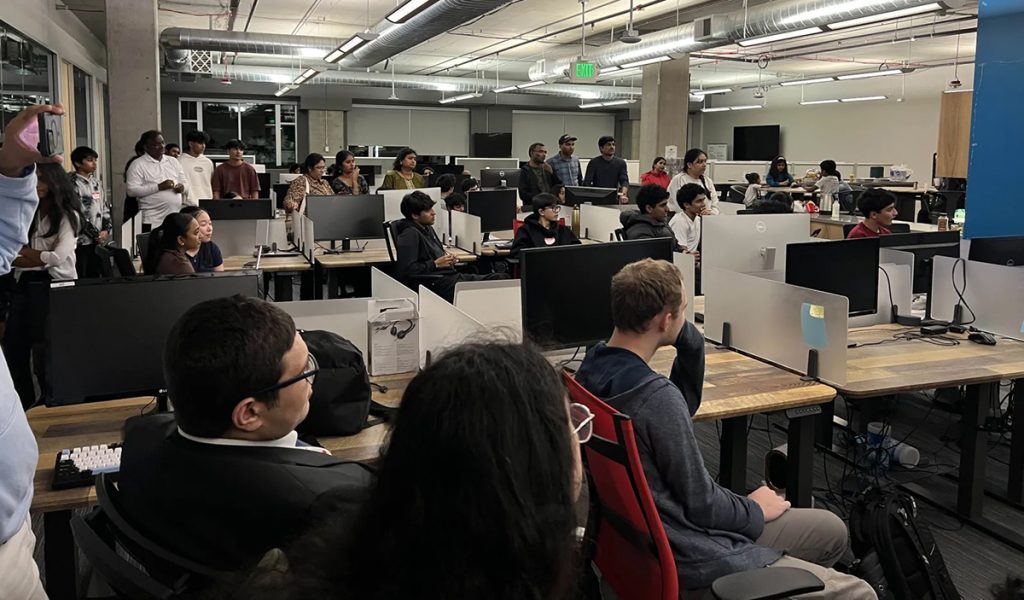
Despite their most recent competition in July having more than 700 middle school and high school-aged participants, Jain admits things haven’t been easy, and it took time for the events to grow. Their first competition had only about 40 participants, with only five signups in their first few months of marketing the event (and the signups were all pretty much Jain and Vohra’s friends). But after figuring out the best ways to market their events through trial and error, the competitions increased in numbers each time.
“We tried a lot of things to see what would work because we were really new to it,” Vohra said. “We did Facebook ads. We even did Reddit. The big one that stuck has been Devpost, where it’s specifically for hackathons. It’s been our biggest audience that we’ve been able to advertise to. That’s been the biggest breakthrough for us.”
Jain added, “Honestly, that was a pretty good experience. Because we learn how a business works the more we’re working on it, and we’re actually helping other people at the same time with it.”
Growing beyond the Pacific Northwest
While LUMA initially focused on the local community, holding the competitions virtually was another way that allowed them to expand and include students from all over the world. And since then, their competitors have represented more than two dozen countries.
Vohra said they are really happy to see how much their competitions have grown, especially since their goal was to help other people. To see more people wanting to participate each time—more than they ever imagined when they first founded LUMA—has been satisfying.
“It’s not just our location anymore,” he said. “It’s basically worldwide now. So yeah, it’s been really great, and it’s been a really good process for both of us.”
And while the two teens may have started working on LUMA during their freshman year, it’s not just the two of them anymore. Over the years, they have worked with more than 70 volunteers and Jain said that has been the most exciting part of LUMA, as they are able to work with other like-minded people.
“We all have the same goal, and all of us working towards it just makes me really happy,” he said. “That’s definitely been the greatest thing so far.”
Giving their time, money, and more
From their six competitions, LUMA has given away more than $20,000 in prizes.
“Obviously we have cash prizes that we give out,” Jain said. “But another interesting thing that some sponsors have agreed to give is their tools that our students can use to create their businesses, and use it to actually jumpstart their business.”
Some of those tools include subscriptions to software that could help students with coding, or free website hosting so they can create a website for their business.
The competition judges are industry experts who have often actually reached out to LUMA after seeing their advertising on Devpost. And the participating judges are narrowed down based on the themes of any given competition or who Vohra and Jain feel would be the best fit.
Internship matchmakers
In addition to the pitch competitions, LUMA also places students for internships at organizations ranging from startups to nonprofits.
Vohra said their internship placement program began with students in the local community, but has since grown into an international program. LUMA has placed 20 interns so far, and are in the process of placing 50 more. Students are matched with organizations based on the interests and goals they share on their applications.
“We started this program because we ourselves struggled to land internships as high schoolers,” Vohra said. “And we wanted to give other students a way to explore fields they’re interested in outside the classroom—something we felt was missing for us at that age.”