



By Carolyn Bick
NORTHWEST ASIAN WEEKLY
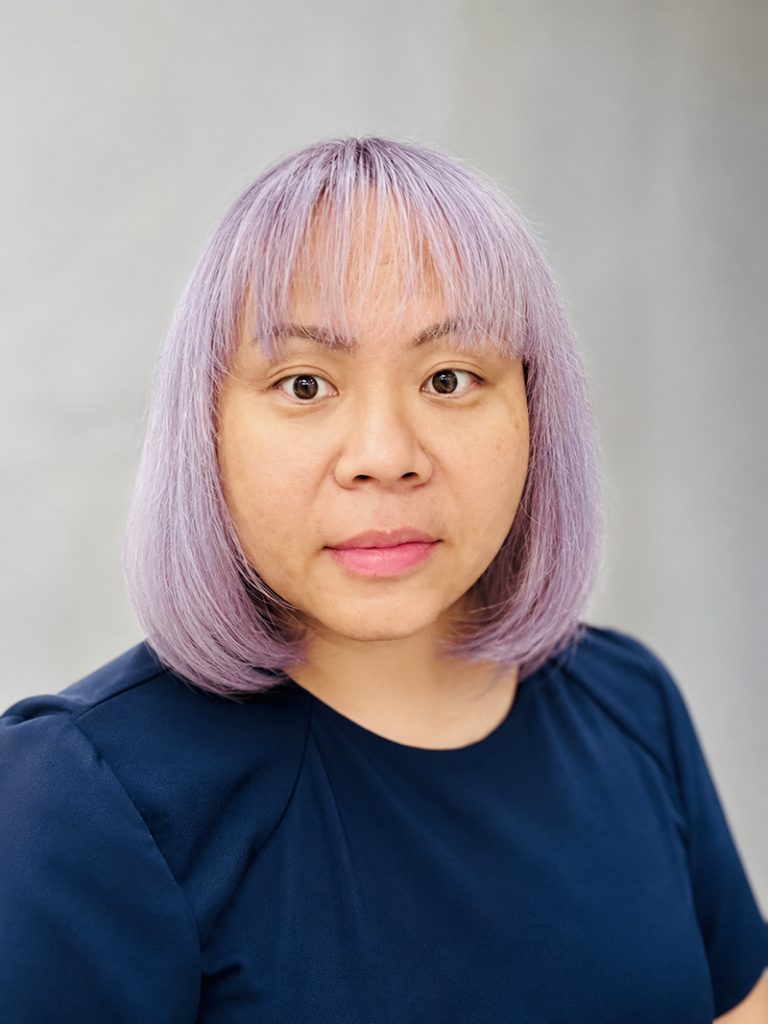
Robin Liao
Robin Liao is a principal software engineering manager at Microsoft by trade.
But it’s not figures, strategy, or management that floods her mind. It’s music.
The Taiwanese-born Liao grew up steeped in music, finding her way into the country’s indie scene as a keyboardist for metal bands Melodic Death Metal and Gothic Metal. She also plays guitar, bass, and drums, and composed and arranged music with her bandmates. Even though her career path led her into the world of tech, she said, “My devotion to music never faded; I still compose and practice in my home studio today.”
Though she co-founded Taiwanese arts-focused Seed Kite Foundation, and is a leader in the local Taiwanese American community, Liao still felt a pull towards something dedicated to music and the intersecting communities the art brings together.
Thus was born FORMOSOUND, a Taiwanese music and cultural festival meant to celebrate diversity and joy. The name “FORMOSOUND” is a combination of Taiwan’s historic, self-proclaimed republic name, “Formosa,” and the words, “for more sound.”
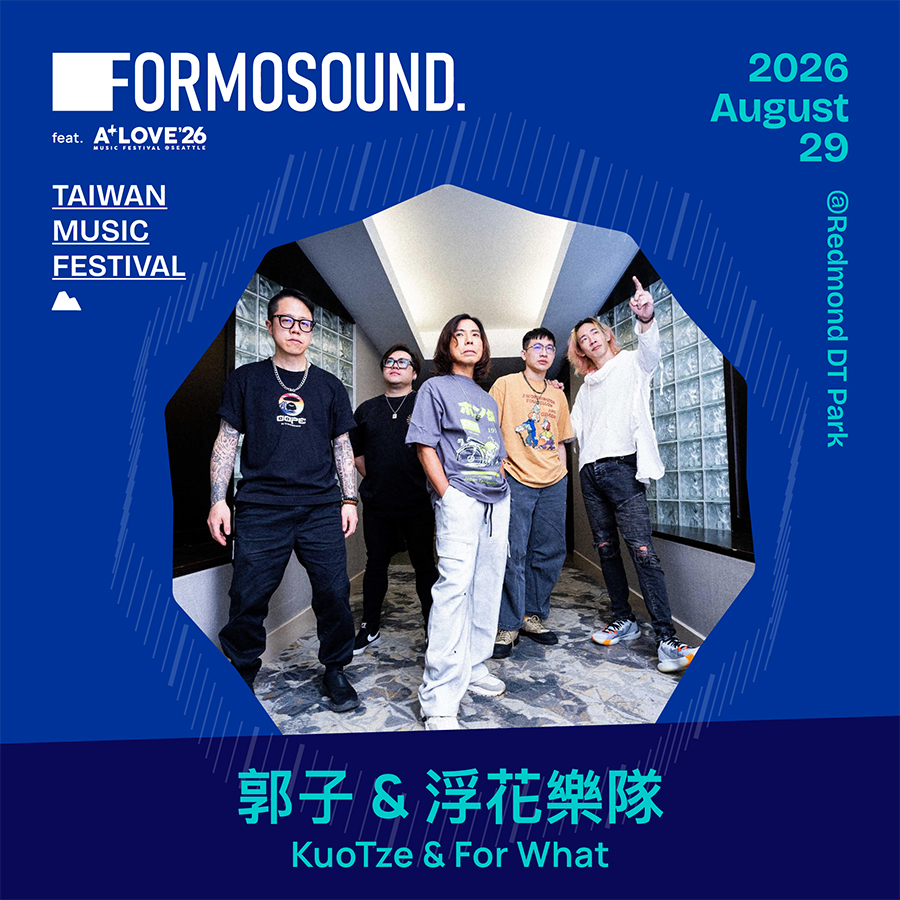
Fresh off the heels of a debut festival showing in Toronto last year, FORMOSOUND will be coming to Redmond on Aug. 29. It will be the first all-Taiwanese music festival in Seattle.
International partnership
Liao partnered with A+ Love Music Festival to put on this year’s FORMOSOUND. Musician and A+ Love Music Festival co-founder Kuo Tze said that the Taiwan-based A+ Love Music Festival is “rooted in advocating for Taiwan’s diversity and equality and care for those affected by HIV.”
Even though Taiwan is the first Asian country to legalize same-sex marriage, Tze said, there is still widespread misunderstanding regarding gender, and discrimination against people with HIV persists. He co-founded the A+ Love Music Festival after meeting the director of Taiwan’s HIV Prevention and Care Center, who asked him if he could write a theme song for HIV awareness and care.
“In the process of writing it, I gradually came to feel that there was another ‘world’ we didn’t know about—a group of people abandoned and left helpless by society, forced to hide their identities, living alongside us in the dark,” Tze said. “And I began to wonder: With so many NGOs and government efforts working so hard to promote this for so many years, why has it still been so difficult and so slow for people to truly understand?”
He realized that a single song was not enough, and decided to bring together Taiwan’s pop music scene to foster connection between those living with HIV and the wider populace. The music festival’s cause is centered around an idea: “In a life filled with love, we are all the same.”
“In Mandarin, ‘愛之日常’ (a life of love) is a play on words with ‘愛滋日常’ (a life with HIV), and from there, it expanded to mean ‘a life of love’ that belongs to everyone,” Tze explained. “And the English name ‘A Plus’ means ‘the very best’—A Plus Love is the most beautiful kind of love. That’s how we named this festival, which should be filled with love: the A+ Love Music Festival (愛之日常音樂節).”
Because FORMOSOUND shares the same vision and ethos, the festival organizers decided to pair up, seizing the opportunity to bring both Taiwanese culture and music to similarly minded communities around the world.
The language of connection
Kay Huang serves as the chairperson of the Taipei Music Center. The multi-award-winning artist is known as a “music fairy” for her mastery in composition, arranging, and production. For her, the A+ Love Music Festival co-founder, joining together the two festivals is more than just an international collaboration.
“It’s a meaningful cultural exchange. Inspired by both ‘Formosa’ and ‘For More Sound,’ FORMOSOUND brings people from different backgrounds together through music, food, and art, creating space for more voices to be heard—a vision that deeply resonates with A+ Love’s commitment to inclusion and diversity,” she said. “Through this collaboration, we hope to turn the energy of Taiwanese pop music into an open, welcoming space where everyone—regardless of where they’re from, who they are, or who they love—can enjoy music, connect with Taiwan, and feel accepted.”
The festival isn’t just about a single space for acceptance, Huang continued. As the area’s first all-Taiwanese music festival, it also serves as a vehicle for “genuine gathering and exchange, not just introduction,” bringing Taiwanese music and values to an international community.
Chien-Chi Chen, a versatile, well-known Taiwanese musical artist and another A+ Love Music Festival co-founder, began learning the piano at age 6. He discovered that “creating music helped me find a language to connect and communicate with others—a form of communication that transcends language, space, and distance.” He feels the festival is important because it strips away the complexities and hurdles many often find in trying to fit in or feel accepted.
“It’s music that allows us to meet and come to know one another here in America,” he said.
The intersection of communities at the heart of FORMOSOUND is “deeply personal” to Liao. The festival includes a core organizing team consisting of several established Taiwanese American organizations in Seattle, including the Greater Seattle Taiwanese Women’s Organization, the Taiwanese Association of Greater Seattle, and the Taiwanese Junior Chamber of Commerce Seattle.
“Together, we span generations and backgrounds, all rallying behind a shared vision for this inaugural music festival,” she said. “Cultural identity, gender identity, and health advocacy shouldn’t be siloed—music is the connective tissue. In Asian culture, topics like HIV and LGBTQIA+ identities are often shrouded in silence due to traditional privacy and taboos. As Taiwan was the first country in Asia to legalize same-sex marriage, this festival is a genuine opportunity to showcase a modern side of Taiwan defined by openness, progress, and radical inclusivity.”
A space of resilience and joy
Despite the ongoing, vitriolic rhetoric from the federal level against the Asian and Asian American community, Liao is undeterred—in fact, she is more determined than ever to spotlight the festival’s intersecting communities.
“Holding a public event right now isn’t just symbolic—it is necessary. In the face of ongoing hostility and anti-Asian rhetoric, this is not a moment to go quiet; it is a moment to raise our voices even louder,” she said. “Civic visibility has real, material stakes. Every 10 years, the U.S. census tracks community demographics, and those numbers directly shape policy decisions and budget allocations. If we don’t make ourselves heard and counted, our community doesn’t receive the resources it needs. Filling a public park with 3,000 people celebrating Asian art, joy, and culture is a deliberate act of community assertion.”
The current environment is why FORMOSOUND matters so much right now, she said. Instead of shrinking back, she has watched as more and more leaders from the broader AAPI community have stepped forward in a demonstration of resilience and unity.
The festival deliberately ends on its overall theme, “I See Your True Colors (愛你真實的色彩)” for this reason, she said. It is “a direct message encouraging everyone to show up fully as themselves,” even in the face of hate.
“Gathering publicly through music is a form of survival and resilience, not just celebration. This carries the same foundational spirit on which the A+ Love Music Festival was built in Taiwan: turning stigma and silence into visibility and voice,” she said. My greatest hope is that someone in the crowd—especially a young, queer, Taiwanese or AAPI individual—sees themselves reflected on that stage, feels validated, and leaves knowing they are less alone. FORMOSOUND is our way of saying that joy, identity, and belonging don’t have to be hidden or earned—they are valid right now, in this park, on this day.”
The FORMOSOUND music festival will take place on Aug. 29 at Redmond Downtown Park from 2 p.m.-9 p.m. The event is free, and features a number of musical artists and a market with 50 vendors and additional area organizations, including Indigenous and LGBTQIA+ nonprofits.