



By James Tabafunda
NORTHWEST ASIAN WEEKLY
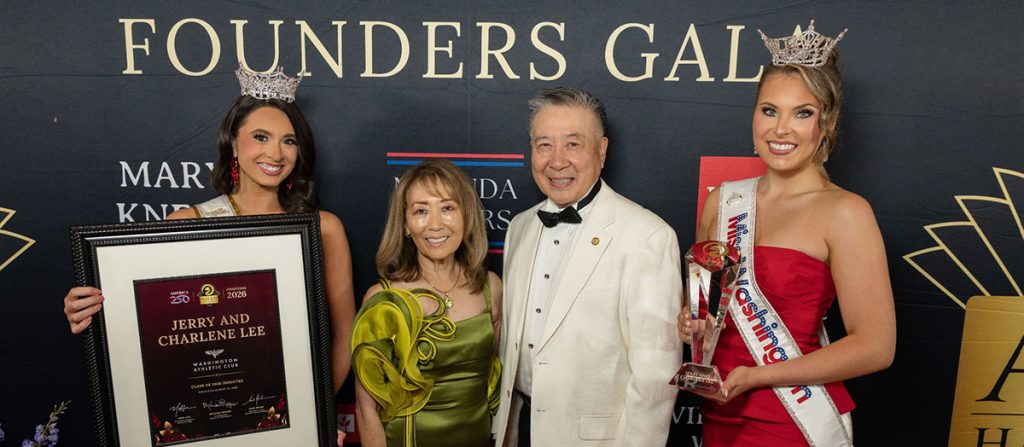
Give it away, and it comes back.
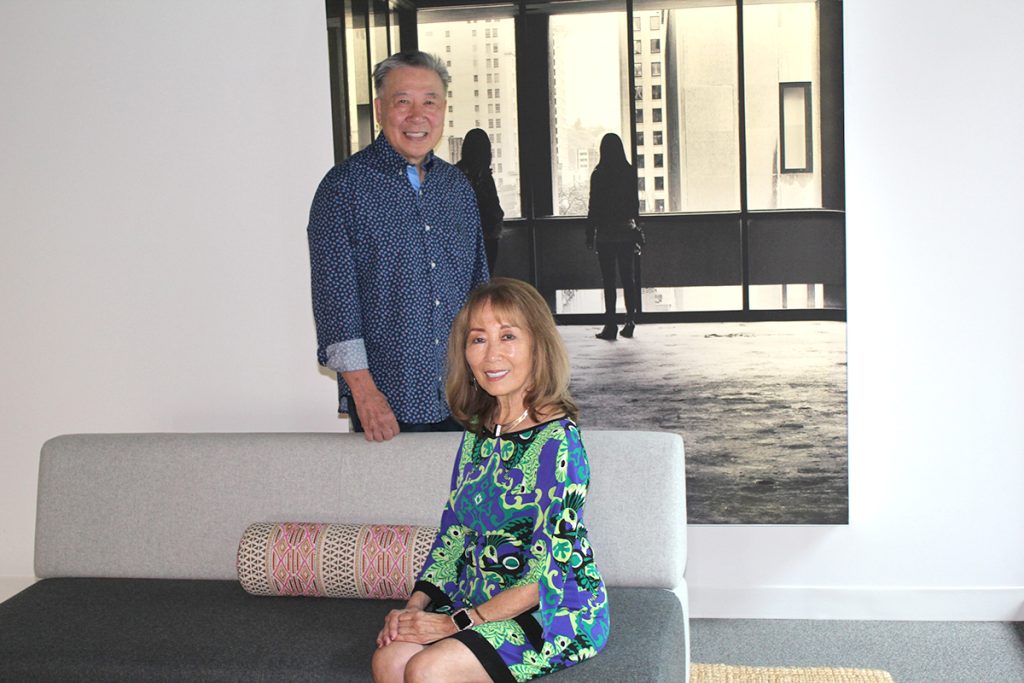
Jerry and Charlene Lee demonstrate what teamwork at the highest level looks like. For their decades of community involvement, there is one, top accolade left: their 2026 induction into the Asian Hall of Fame.
Seventeen years ago, on a day so cold it was painful, Jerry and his friend, Cordell Lui, vice president of Yuen Lui Photography, drove past a food-bank line in Seattle’s Chinatown-International District (CID). It was 17 degrees, Jerry remembers exactly. Their first idea was simple: run to Costco, grab some rotisserie chickens, hand them out to whoever was waiting.
Then, on a whim during their lunch hour, they started calling friends. Twenty-five chickens for $125. Lee asked his friends, “Are you in?”
By the time they hung up the phones, they had orders for 400 chickens. Last year, that same lunch-hour idea handed out 2,500 chickens across Seattle, at multiple sites for Thanksgiving and Christmas.
What a marriage looks like when it works
Jerry built his career the same quiet way he built that chicken drive—one phone call, one small act at a time. He joined Douglas Mulvanny Architects in 1975 and eventually served as its chief executive officer, growing it from three people to roughly 400 employees with offices in Shanghai, China, New York City, and Los Angeles.
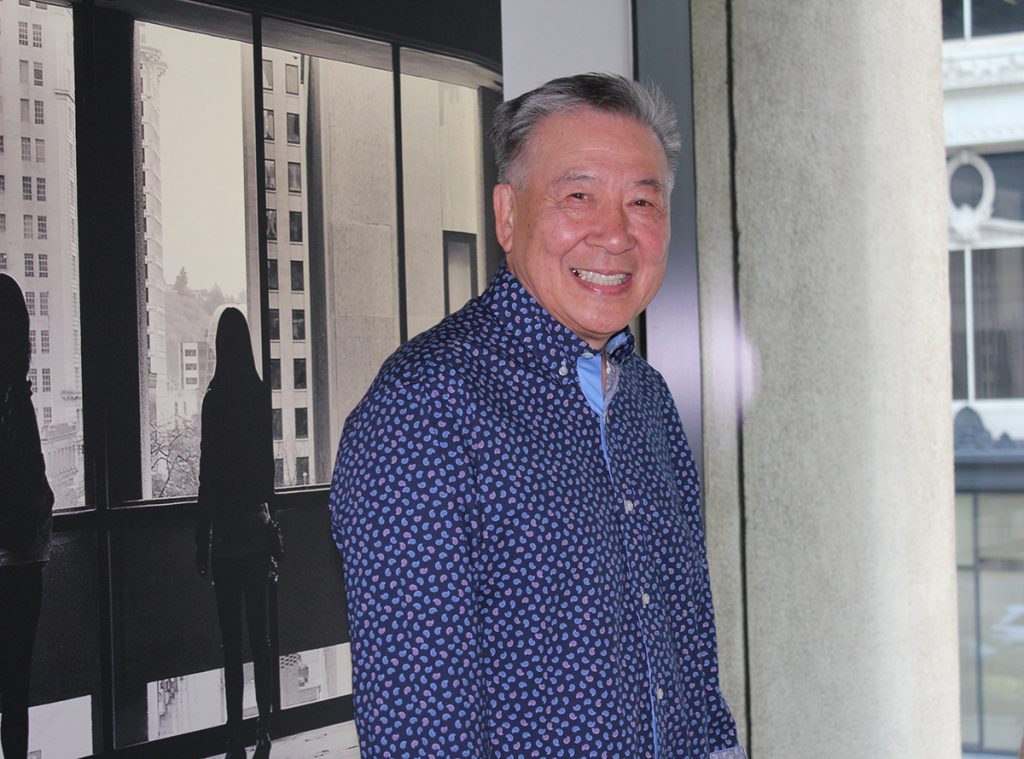
Born and raised in Portland, Oregon, Jerry’s family emigrated from Taishan in Guangdong Province in southern China. His path in architecture began in the sixth grade when he visited a Hong Kong immigrant friend whose entire family—parents and kids—lived in one room built from plywood panels. “I was so appalled,” he said. “I came back and told my mom … ‘Mama, I want to become an architect and design housing for these immigrants.’”
“Can you believe in the sixth grade deciding on a career?” Charlene said. “We all come up with an idea of wanting to be something, but I think that’s so impressive.”
Jerry’s former company, now known as MG2, provided architectural design for the Gashora Girls Academy of Science and Technology in Rwanda, pro bono, for girls at risk of dropping out—it’s still educating 212 students today. MG2 also provided architectural design, pro bono, for the CID’s Historic Chinatown Gate, one of the city’s most photographed structures.
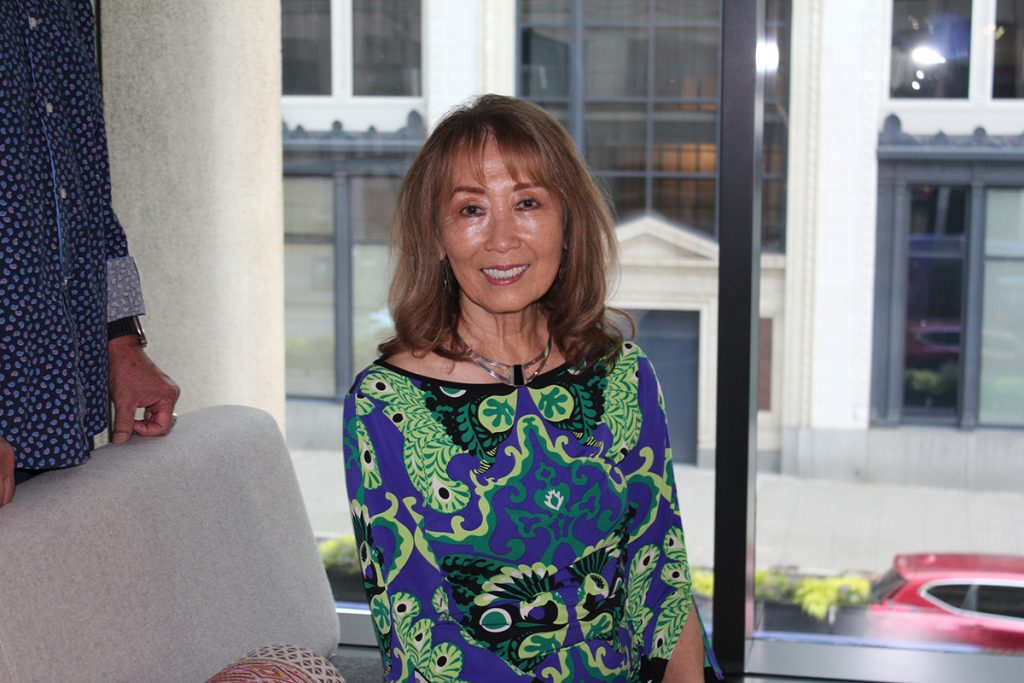
Born and raised in Seattle, Charlene said, “I’m Japanese American.”
“I came from a family that really felt saving money was paramount.”
She also spent her first years in Woodinville, where her parents worked as farmers. “It’s such hard work that they finally gave that up and moved to Seattle and both found jobs.”
“When I met Jerry, who got such joy from doing that (community involvement), it really changed my life,” she said. “He made it possible for me to have the time available. I’m real crazy about the arts.”
“In our relationship, he’s the one that always has these ideas of how an organization can raise money or better themselves … He definitely has been my inspiration to help organizations, to donate.”
The long list of community organizations and institutions they have supported over the last 25 years includes Kin On Health Care Center, the Seattle Art Museum, and the College Success Foundation. They were recognized by the Seattle Mariners as community philanthropists in 2025. Also in that same year, their friend, Mimi Gan, paid tribute to the couple at a Seattle Chinese Garden banquet, saying, “Their philosophy is simple: Treat everyone like family. Approach every relationship, whether in business, charity, or friendship, with generosity and partnership because giving always finds its way back.”
Among the dozens of other honors and awards, they received the 2015 Outstanding Philanthropists award from the Association of Fundraising Professionals’ Advancement Northwest Washington chapter.
“I feel uncomfortable with the word ‘philanthropist,’” Jerry said. “We like to support the community … A lot of times, it’s just the joy of putting something together.”
It’s a small distinction, but it gives an insight into how the Lees see themselves—not as donors writing checks from a distance, but as two people who show up, again and again, to enrich their community and even people outside their community.
When the Asian Hall of Fame first contacted them about the induction, Charlene felt honored. “But I also felt that, oh no, just let Jerry be in the spotlight,” she said.
Jerry refused being singled out. “I wouldn’t have done it if it was just me,” he says. “We’ve been a team for 25 years and are active. Char’s a breast cancer survivor, too.”
History is a key component of the Asian Hall of Fame
Their lifelong teamwork laid the groundwork for their induction into the Asian Hall of Fame—Jerry, executive director of the MG2 Foundation and staff sergeant for the U.S. Army National Guard, and Charlene, former board member of Susan G. Komen and the Seattle Art Museum, joining past inductees Bruce Lee, Connie Chung, and Masaharu Morimoto.
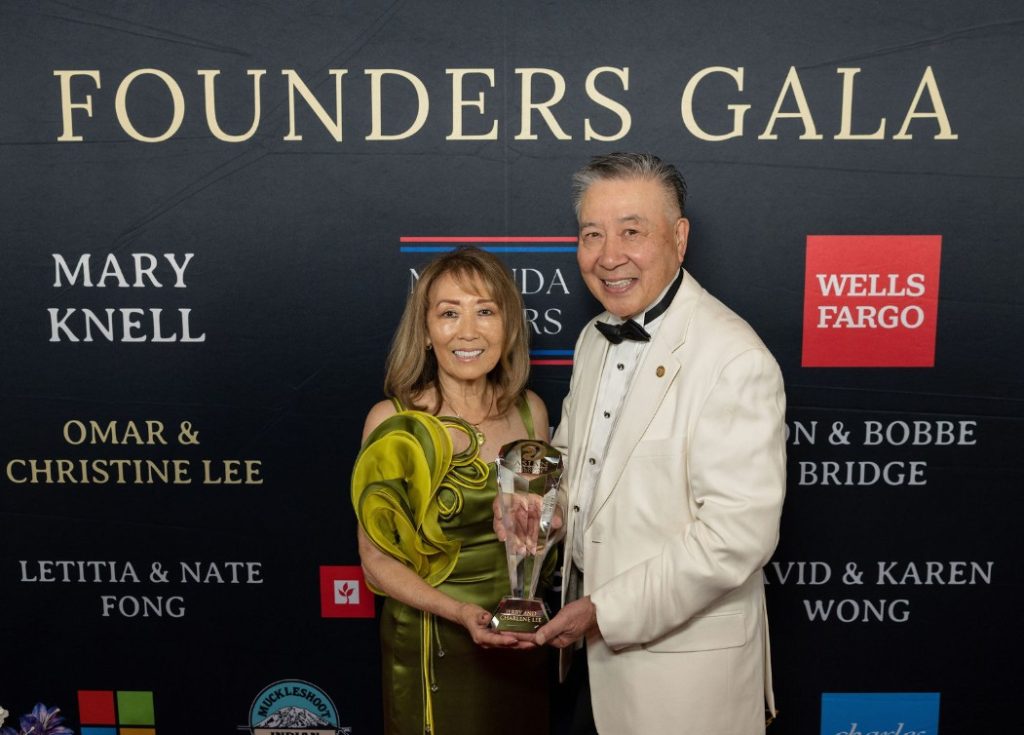
The honor traces back to Seattle’s own Robert Chinn Foundation, founded by a family whose roots in America go back to 1863, when the first Chinn arrived to help build the transcontinental railroad. The Chinn family later opened the first Asian-owned bank in the country and, in 2004, created the Asian Hall of Fame. Its purpose is to preserve Asian and Indigenous American history.
The Asian Hall of Fame has grown into a national nonprofit with a mission Charlene says speaks directly to her. “It’s the kind of thing that’s never been done before—Japanese Americans, Chinese Americans, Filipino Americans are being recognized,” she said. “Not necessarily movie stars but ordinary people who’ve worked hard and contributed to the community. That means a lot to me.”
Underneath both their stories sits history neither one takes lightly. Charlene’s grandparents immigrated to the U.S. as farmers; her paternal grandmother arrived as a “picture bride and probably my maternal grandmother also.” Both sides of her family were incarcerated during World War II, at Heart Mountain in northwestern Wyoming and Tule Lake in northern California.
“My sister was born in the internment camp, too. I’m a little bit younger so I wasn’t, but we felt the repercussions of all of that interruption in their lives,” she said.
Jerry accepted a Congressional Gold Medal on behalf of his father, who served in World War II, during a ceremony in Bellevue. “I brought a picture of my dad in his uniform,” he said. “It was pretty emotional.”
There’s still one bit of history Jerry is fighting to complete: a statue of Bruce Lee, planned for Hing Hay Park. “I felt that if we’re able to install a bronze Bruce Lee statue … people would come visit. They would buy flowers from the flower shop in Chinatown and place them on the statue as a tribute.”
What comes back to Jerry and Charlene Lee
On Aug. 14, they were formally inducted at the Asian Hall of Fame’s Founders Gala at the Washington Athletic Club, an evening emceed by KOMO News anchor Molly Shen, with welcome remarks from Gary Locke—the same man Jerry once asked to join the Asian Hall of Fame’s inaugural class in 2004.
“I feel he deserves a lot of credit for that, being involved with that. But he always shuns it,” Charlene said.
The black-tie benefit raises scholarship funds for young women in tech, entertainment, science, and sports.
Ask Jerry why he continues supporting the community, and he tells a story about a bat and a jersey.
During Ichiro Suzuki’s 2001 rookie season, Jerry donated a signed baseball bat as an auction item at a Susan G. Komen fundraising event. He described it as “the coolest possession I had at the time.”
Ten minutes later, he said, a friend gave him a birthday present: a jersey signed by retired hockey star Wayne Gretzky. Lee donated the jersey to a Susan G. Komen dinner the following year, where it raised $10,000.
Six months later, another Gretzky jersey arrived in a box at his office—this one signed specifically to Jerry with a note that read, “You can’t give this one away.”
“It’s not a metaphor. It really does happen,” he said about giving. “If that’s one thing I’d like to pass on … you’re going to receive much more in return.”
Their legacy in 2076
When Charlene considers what people will say about them 50 years from now, she doesn’t mention any of the awards lining their shelves. “I would hope by then, the differences that we have—to me that are so strong ethnically—will melt, and that Asians will be on the same level as everyone else and be recognized and honored and accepted,” she said. “That to me would just be wonderful in my mind, give me such peace.”
For more information on the Asian Hall of Fame, go to www.asianhalloffame.org.