



By Carolyn Bick
NORTHWEST ASIAN WEEKLY
Using food or medical assistance could soon make it harder for some immigrants and refugees to stay in the U.S.
Come September, the federal overhaul of the so-called public charge rule will give officials greater discretion to deny green cards and citizenship to people using certain assistance programs.
Even though the rule has not yet been enacted, it’s already had a chilling effect: Immigrants and refugees awaiting their green cards have already stopped using these crucial programs—leaving many children without either health insurance or needed nutrition.
“Public charge is going to make a bad situation even worse … particularly for mixed-status families—families with U.S. citizen children and parents with other immigration status,” said Dr. Giridhar Mallya, speaking during an American Community Media briefing on Aug. 7. Mallya is a public health physician who currently serves as senior policy officer at the Robert Wood Johnson Foundation. “I believe [the rule change] will lead to mistaken decisions, and also decisions that are done intentionally to reduce the number of people who are using these critical public programs.”
Many Asian American and Pacific Islander families use public benefits, and are likely to live in a family with at least one non-citizen member. More than 1 million AAPI families use the Supplemental Nutrition Assistance Program (SNAP), while about one in five AAPI families use Children’s Health Insurance Program (CHIP) or Medicaid.
Public charge rule
The public charge rule targets people who are likely to become a “public charge”—in other words, to use government benefits as a major source for things like food or medical care—and allows officials to deny them citizenship or green cards, based on that likelihood.
Starting on Sept. 18, the federal government, at the direction of President Donald Trump, will change the rule to give officials broader discretion to deny immigrants and refugees green cards. The change uses broad language, stating only that immigration officials may deny a person a green card or a visa if they are “likely at any time to become a public charge,” but does not give any further details.
The change reverses a 2022 Biden-era policy that undid the same changes to the rule Trump made the first time he took office.
“The last time the administration tried this, families pulled their kids out of food and health programs out of fear,” said Xiao Wang, co-founder and CEO of Boundless Immigration, speaking during an American Community Media briefing.
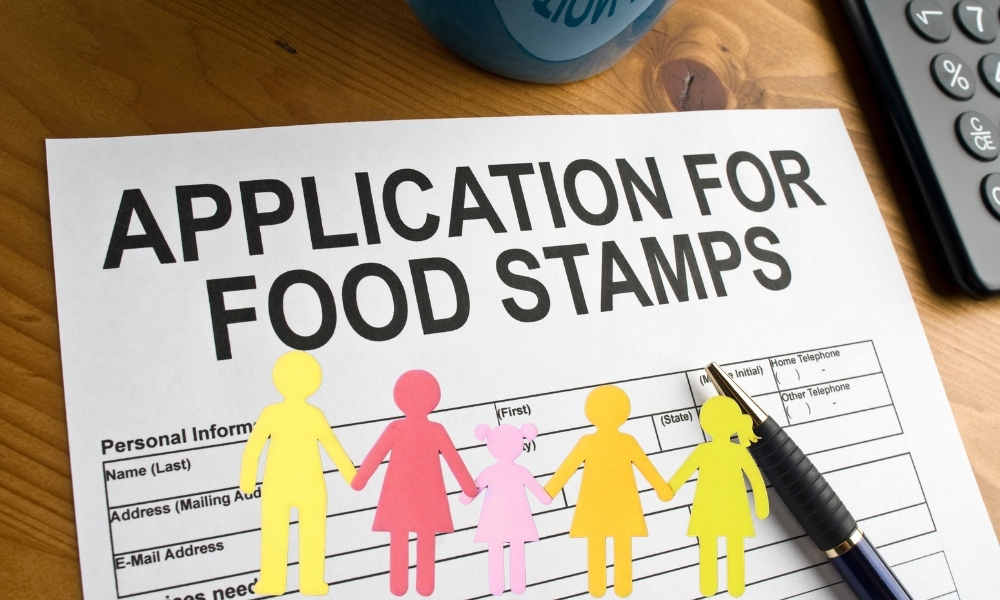
While the rule change makes things much more difficult and nebulous for immigrant families, he said, the fear these families carry may be “bigger than the rule. Typically speaking, again, the benefit received by family members, including a U.S. citizen’s children for Medicaid food assistance, is not generally treated as a benefit received by the applicants. On top of that, most immigrants can’t even get some of these Medicaid or SNAP benefits until later on through the immigration process.”
“So families are giving up benefits for their children, especially to guard against a risk that isn’t there,” he said.
More than 2.3 million children already without insurance
Just 18 months into Trump’s second presidential term, 2.3 million children have been disenrolled from Medicaid or CHIP. Washington has seen fewer disenrollments than other states, including Indiana, Alaska, and Texas, which have enacted further restrictions on enrolling in public benefit programs.
“We don’t know how many of these 2.3 million children are uninsured. We do know that when Medicaid enrollment goes down, that the uninsured rate per children goes up,” said Joan Alker, the executive director of the Center for Children and Families and a research professor at the Georgetown McCourt School of Public Policy. “Maybe some of them have found other insurance, but certainly a lot of them have not.”
By comparison, towards the end of Trump’s first presidency, at least 726,000 children had lost healthcare coverage, with the rate of uninsured Asian American and Pacific Islander children increasing from 4% to 4.4%. Before he took office, the number of uninsured children in the U.S. had hit historic lows.
While demographic data for the current decline in children’s healthcare coverage is unavailable, due to federal census data delayed until autumn, experts who weighed in on the situation are concerned that the number of children who have lost coverage is already so high. This heralds a much more significant loss of coverage in Trump’s remaining two-and-a-half years in office.
Alker said that the public charge issue and the fallout Wang pointed to has had a significant impact on children who live in mixed-status families.
“That’s children who are citizens themselves, but who have a parent who is an immigrant of any category, or even a naturalized citizen. That is one out of four children in the United States. So that is a heck of a lot of children in these mixed-status families.”
The federal government’s policies targeting immigrant and refugee families are prompting some to think twice before seeking medical care, even when they or their children need to.
“We’ve heard from pediatricians and other providers that even in [healthcare] settings, they’re seeing declines in families coming in because they are scared of deportation and ICE activities,” Alker said. “It’s hard to think of a worse government policy, in terms of how hard that is for families—for parents—to have to make a choice as to whether they feel that they’re risking deportation at the cost of being able to take their child to the doctor.”
SNAP
Mallya pointed to the impact of the first Trump administration’s policies on immigrant families.
“More than 700,000 children in these families lost SNAP in just a two-year period, and overall, the first public charge rule probably led to the loss of SNAP for almost 2 million people,” he estimated.
And much like with Medicaid and CHIP, the fallout this time around is much, much worse.
“Based on national data from the Center on Budget and Policy Priorities, we have seen SNAP participation fall by 4.5 million people just in the last nine months. And that includes almost 1.5 million children,” he said. “These are declines, enormous declines that we haven’t seen since the 1990s.”
Over the last 18 months, he said, the Trump administration has “taken an ax to the SNAP program, and as folks on this call know, instituted a severe, inhumane crackdown on immigrants and immigrant communities. The administration has deported many, many undocumented immigrants, but also lawfully present immigrants have been caught up in this. ICE continues to raid communities, remove people from their homes arbitrarily and often violently.”
Crucially, he continued, the administration is “sharing data between agencies that was never meant to be shared—between agencies that administer Medicaid, SNAP—with agencies that are involved in immigration enforcement.”
The federal changes to SNAP further undermine immigrants’, refugees’, and trafficking survivors’ ability to survive. Not only does it dramatically expand work requirements for SNAP recipients—including parents of teenagers—but it also shifts program costs to states and takes away benefits from qualified immigrants.
“And the bottom line is with all these changes, we will see cuts of almost $200 billion to SNAP over the next decade,” he continued. “And already, even before the public charge rule goes into effect, we’re seeing devastating impacts on the SNAP program. … And not all these provisions have gone into place, so we’re likely to see many, many more.”
Countering Trump’s false claims, Mallya underscored that the data shows that intentionally targeted policies, not a better economy, account for the drops in SNAP participation.
“There really are multiple intersecting factors that are harming families right now and harming their ability to put food on the table,” he said. “These widespread and dramatic cuts to SNAP, paired with the public charge rule and other anti-immigrant policy, will lead to more hunger in this nation.”