



By Carolyn Bick
NORTHWEST ASIAN WEEKLY
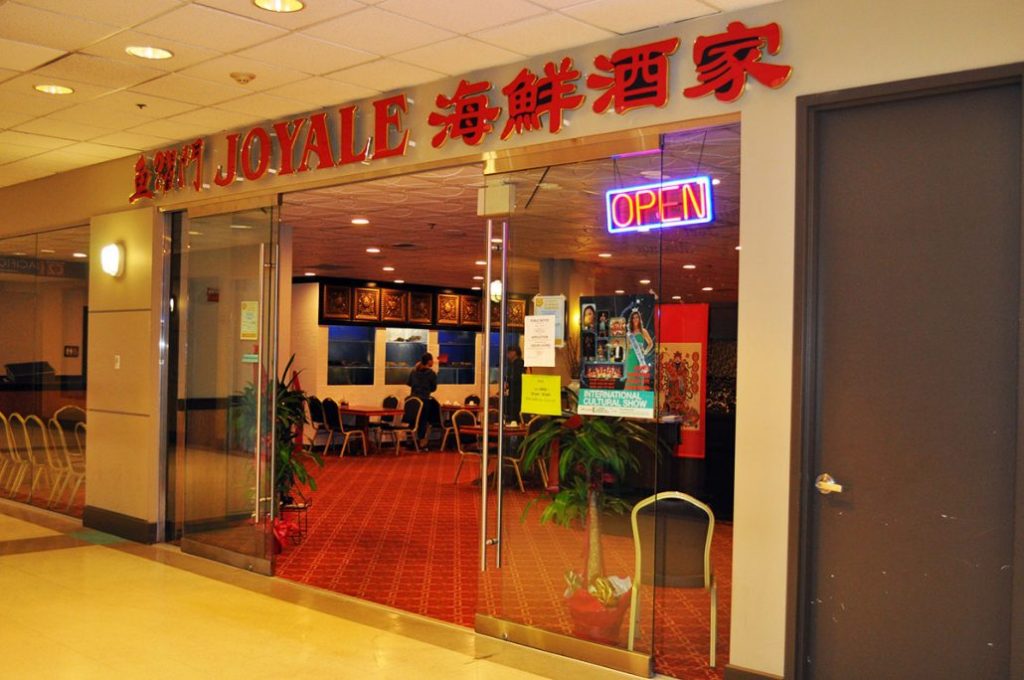
From JoyaleSeattle.com
With the FIFA World Cup coming to town, Vincent Zhao thought the expected boost in revenue would help make up for the loss he’s seen over the last several years at his beloved dim sum restaurant and Little Saigon mainstay, Joyale Seafood Restaurant. Before the announcement that Seattle would host some of the games, Zhao had been considering closing the restaurant.
“The reason why I held on to Joyale so long is because I thought FIFA would shine some light into business, bring extra income—things like that,” he said. “But that was just wishful thinking.”
The World Cup didn’t bring in new revenue. In fact, the Chinatown-International District (CID) as a whole saw a significant decline in revenue, including on days the U.S. team faced off against Australia and Belgium—two much-anticipated match-ups that drew throngs to Seattle Stadium, right next to the CID. For many CID restauranteurs, it was the MLB All-Star Game all over again.
And for Joyale, whose fortunes have been on the decline for years, it was a death knell.
“It’s a hopelessness”
Joyale has been operating for a little more than 10 years, and was originally founded by Joy and Joyale Zhao. It is one of the few locations that still does push-cart dim sum, and had been the chosen spot in the CID for everything from community events to weddings to political victory parties.

Photo provided by Joyale Seafood Restaurant
Following the lack of customers over the course of the World Cup games, Zhao made the difficult decision to close the restaurant. He told only a few people, he said, but word spread like wildfire. Thanks to an outpouring of community support—especially from one group of regulars, elders who dine every Tuesday at Joyale “rain or snow,” Zhao said—and a gracious landlord, Zhao decided to keep the restaurant open for limited hours. Joyale now opens for weekend brunch on Saturday and Sunday mornings.
But even if a miracle happened today, Zhao said, and he somehow got 500 new regular customers, it likely would not be enough to keep Joyale open.

Vincent Zhao (standing), with the former owners of China Harbor (now Seattle Harbor)
Over the last two years, he said, Joyale has seen a 70%-80% drop in revenue. Regulars who still dine at his other restaurants, including Seattle Harbor Restaurant (formerly China Harbor Restaurant), have told him that they don’t want to go to Joyale, if they don’t have to. So, he said, as “I have told a lot of reporters, I have the same product in Seattle Harbor, and we get quite a bit of attention and attraction. I feel like my product still works.” It’s the location that appears to be the problem.
“We have banquets [at Seattle Harbor], left and right, which Joyale had years before—left and right, every week, especially during the summer. It’s wedding season. [Now,] there’s absolutely no ask, no interest, even from previous clients,” he said. “That shows to me they’re reluctant to go there or don’t even want to look into it at all. I have built a 10-year-plus of my career in Joyale, and plus many, many, many years more from other restaurants that I have. I have a client base that’s [been] loyal to me for a long time.”
Zhao has looked into other options, too. He said that local community organization Friends of Little Sài Gòn suggested a small business loan, and that he has tried to sell the business. He’s had no luck with either path.
“No lender would lend to a business that’s losing money,” he said. Zhao’s business neighbors in the CID are “moving towards the same direction. And I talk to them on a daily basis and it’s the same kind of feeling. It’s a hopelessness.”
Lip service
It’s a hopelessness that stems from what Zhao feels is years, if not decades, of neglect by the City of Seattle and the rapid increase in drug dealing in the area. Briefly, he said, “the sun came out” after Bruce Harrell took office in 2021, but that only lasted for about a month-and-a-half. After that, everything went back to the way it used to be.
This is representative of what Zhao said he feels is essentially the City paying lip service to the area about how much it values the neighborhood. He’s seen the City follow through on some things, but the noticeable increase in cleanliness of the area and the absence of drug dealing prior to and throughout the course of the World Cup underscored just how much more the City could do for the CID—but isn’t.
“I’ve seen pressure washers coming out to clean the street every day. … This was a repeated process over and over again,” he recalled. Even then, cleaning up the streets was “a really, really last-minute job,” and “it wasn’t done months before.”
Outside of the games, he said, the City has continued to do comparatively little.
“I’ve seen some work here and there. I’m not going to say they didn’t do anything. I see consistent police patrols, vehicles, police officers on bikes, things like that,” he said. “But I don’t see [many] people get arrested. I don’t see much of those. I feel like they’re trying to do something but not doing the right thing.”
Uncertain future for the CID
Zhao admits he doesn’t know what the “right thing” to do would be. He said that is a question for legislators, but that he doesn’t have the resources to approach the city council. He said that he just wants to focus on his business, but that the situation is impossible to navigate—not just for himself and Joyale, but for his fellow business owners in the CID. This is why he does not see Joyale surviving, regardless of what happens.
“Because we are all bleeding. We’re not billionaires. We work hard for what we got today, and we’re tapping into life savings and taking on loans that I never thought I would and still looking for more help,” he said. “And yet there’s no hope of customers coming back or new signs of customers coming in. There’s none of that. So how do we continue to keep going?”