



By Jack Kiyonaga
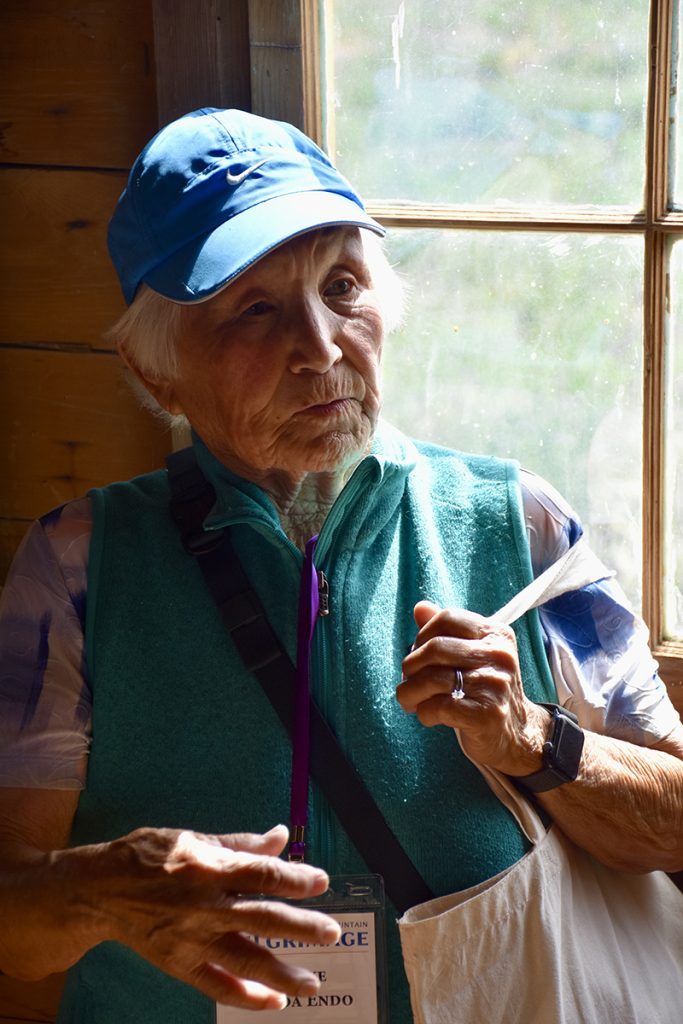
Fujiye Okida Endo was on the last train to leave Heart Mountain on Nov. 10, 1945. At 95, she made her first trip back to Heart Mountain for the annual pilgrimage. She’s standing inside the original barracks exhibit at Heart Mountain.
Credit: Heart Mountain Wyoming Foundation.
Fujiye Endo hadn’t been back to Heart Mountain since it closed in 1945. In fact, her family, known as number 5474 in camp, were on the last train to leave Heart Mountain on Nov. 10, 1945. Endo recalled hordes of coyotes prowling the nearly abandoned settlement on those last days.
Endo had experienced the camp through the eyes of an 11-year-old girl.
“We made good with what we had,” she said, sharing memories of going down to the stream with her friends––although passing under the highway for fear of being shot by the guards––exchanging sugar rations for manju, attending dances, sewing classes and girl scout meetings.
According to Endo, who was from El Monte, California, the Issei generation of her parents bore the pain and confusion of incarceration especially acutely.
“Our parents really suffered,” she said. “It was a horrible time for the old folks.”
At 95, Endo was the oldest former incarceree to attend the Heart Mountain Pilgrimage from July 25 to 27. She recalled how her family had no place to live when they returned to Southern California, taking up residence in a trailer park.
For Endo, the camp experience, while devastating, has also helped unite Japanese Americans. It was a painful and difficult experience but one from which Japanese Americans today continue to draw strength.
This year’s pilgrimage gave survivors and descendants of the camp, members of the Japanese American community and many others with interests in this historic chapter a chance to participate in discussions, author panels, film screenings, lectures, small group activities and happy hours. Over the course of three impactful days of programming, attendees had an opportunity to reflect authentically on what Heart Mountain means to them.
“You feel the souls, the spirits of those who stepped on the land before us,” explained Tamlyn Tomita, an acclaimed actor, Japanese American advocate, and herself a descendant of Heart Mountain incarcerees. “Those are the stories that matter to us as Japanese Americans. Those are the stories that matter to us as Americans.”
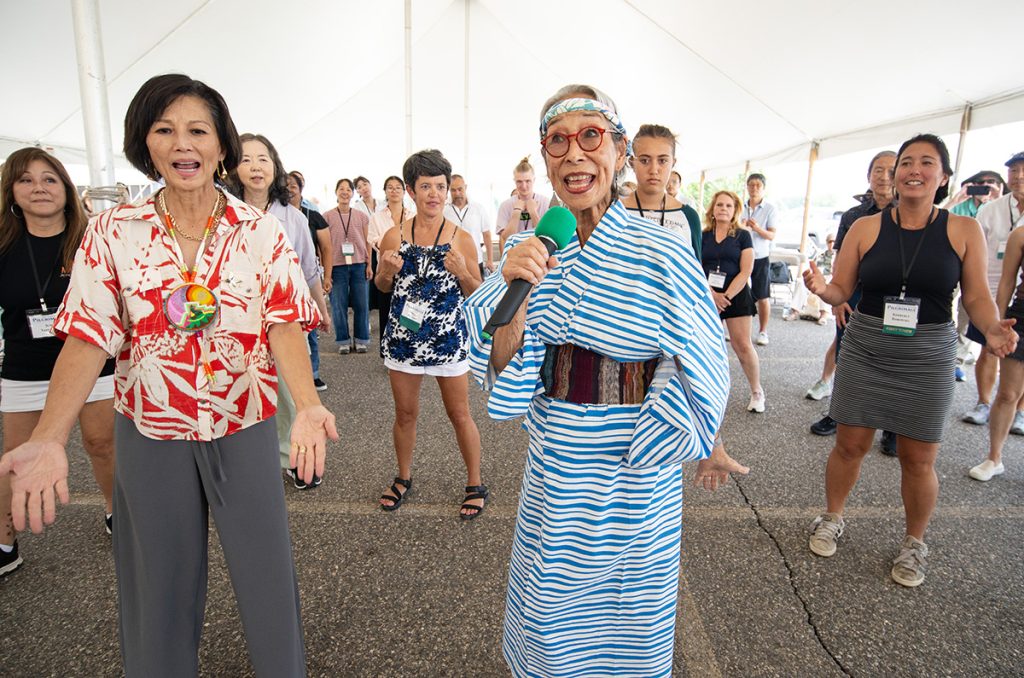
Actor Tamlyn Tomita (left) and dancer Nobuko Miyamoto, both Heart Mountain descendants, lead a dance workshop at the Heart Mountain Pilgrimage. Credit: Heart Mountain Wyoming Foundation.
And the stories of Heart Mountain are not so far in the past. Among this year’s nearly 400 attendees, 27 were former Heart Mountain incarcerees. Kiyo Fukumoto was one of them.
“I grew up thinking this is what happens to everybody,” Fukumoto explained. Fukumoto remembered details from life in the camp as a young child, ranging from the armed guards in the towers to the occasional fly-fishing excursion with his uncle to funerals with paper flower wreaths. He was just 2 years old when President Franklin Roosevelt signed Executive Order 9066, which forced Japanese Americans from their homes on the West Coast. Along with 120,000 other Japanese Americans, Fukumoto and his family were herded into stables and trains and finally left in a wooden box in a field with gaps in the walls, no running water and a single bare lightbulb. That’s where they contended with dusty, scorching summers and fatally cold winters for three years.
Fukumoto comes back to Heart Mountain to help others understand what life was really like here, and to ensure that it never happens again.
“It’s our story,” he said. “People like me who were here to help people understand what took place.”
Sam Mihara was also a young boy living in San Francisco when Executive Order 9066 was signed. In his presentation at this year’s Heart Mountain Pilgrimage, Mihara clicked through photos by Dorothea Lange depicting the human faces of life in the camps. He relayed a simple message.
“Never again,” said Mihara, “to anyone.”
Mihara’s presentation is what earned him the honor of being the 2025 Jefferson Lecturer for the National Endowment for the Humanities, which puts him in the same league as filmmaker Martin Scorsese, documentarian Ken Burns and author Tom Wolfe.
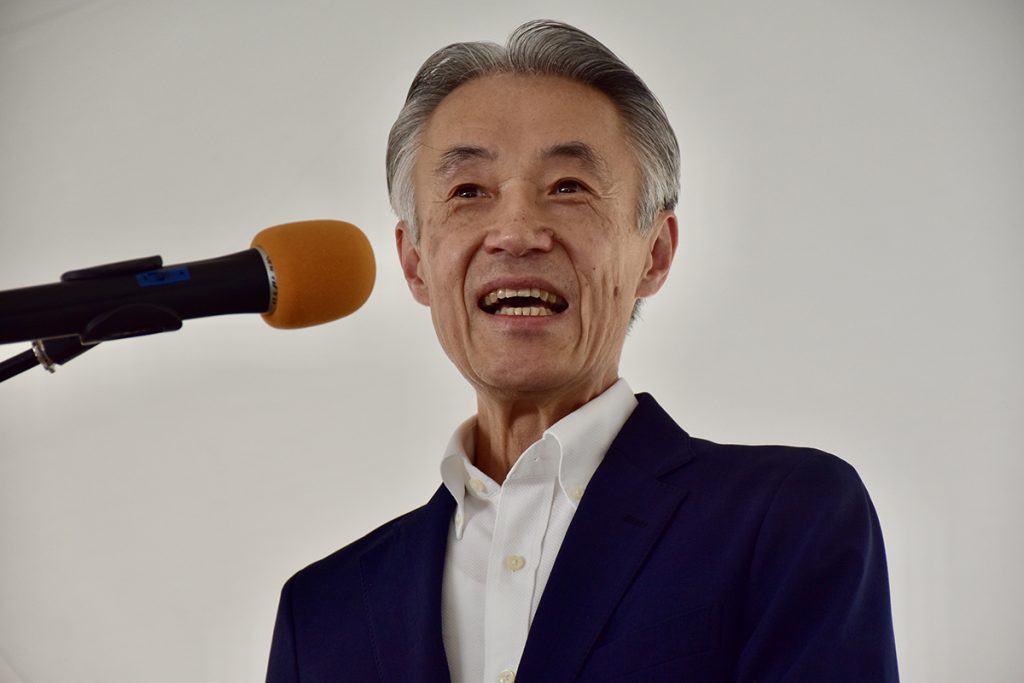
Shigeo Yamada, Japanese ambassador to the United States, addresses the Heart Mountain Pilgrimage. Credit: Heart Mountain Wyoming Foundation.
This year’s Heart Mountain Pilgrimage contained several firsts: the first time that the Ambassador of Japan to the United States Shigeo Yamada visited the site, the first screening of David Ono’s acclaimed multimedia presentation “Defining Courage” depicting the story of Nisei soldiers in World War II, a new exhibit on military draft resistance at Heart Mountain, as well as the first time 170 of the attendees made the pilgrimage.
On his first trip to Heart Mountain, Ambassador Yamada reflected on his “unforgettable” and “deeply emotional” experience walking the grounds of the camp.
“Japanese Americans incarcerated here preserved their pride, dignity, families and patriotism,” Ambassador Yamada said. “I will continue to encourage and find ways to have more and more Japanese people understand the history of Japanese Americans.”
A strong relationship between Japan and Heart Mountain has existed since the inception of the Heart Mountain Wyoming Foundation (HMWF), and the Japanese government has sent representatives every year to the pilgrimage.
“Generations of Japanese Americans who overcame hardship, while making significant contributions to American society, have become one of the strongest and most enduring bridges between Japan and the United States,” Ambassador Yamada explained.
This important dialogue is continuing to grow with HMWF leading a program this fall that will bring Japanese museum curators and educators to Heart Mountain. Likewise, a team of HMWF staff will go to Japan to tour Japanese universities and museums.
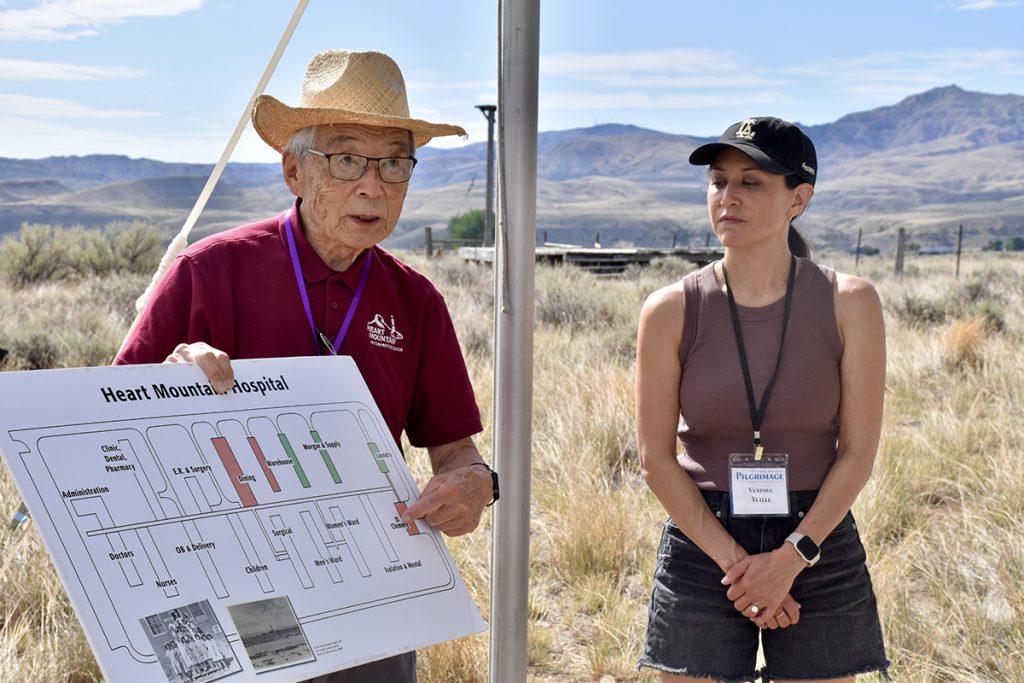
The vibrant identity of the Japanese American community was evident throughout the pilgrimage. Among the presenters were acclaimed artists and curators like Glenn Kaino, Damion Thomas, Stephen Zaima and Kenji Fujita, award-winning filmmakers such as Rachel Watanabe-Batton and Ono, and authors Evelyn Iritani and John Kiyonaga. In such a way, the annual pilgrimage serves as a conference of Japanese Americans, where this community can come together once again to fortify their bonds and relationships.
“You’re strangers, but you’re not,” said one descendant of camp incarcerees at a small group discussion after identifying personal connections between almost all the members of the group. In the same place where these families had forged community through hardship, their families had found each other once again in friendship.
This year’s pilgrimage was also unique in that it held an inaugural Yonsei and Gosei meet-up to discuss what it means for younger generations to be Japanese Americans today. As time has passed, the Japanese American community has become more diverse. Of the 25 Yonsei and Gosei present, only a handful were full Japanese. Still, these new generations are determined to preserve and represent their family histories.
“There’s not a singular Japanese American experience anymore, but I think that what binds our community together are the traditions and cultural norms,” explained Rikio Inouye, a Yonsei who has attended multiple Heart Mountain Pilgrimages and helped organize the young adult meet-up. For Inouye, the pilgrimage represents a sense of homecoming.
“It’s like a big family reunion,” he said. The pilgrimage allows him to “come back, reconnect, and understand that there are certain threads that bind our community together.”
For 21-year-old Katelyn Moriwaki, being back in the place where her family had been incarcerated, where they suffered and lived and did the best with what they could, is what matters the most––especially as the older generations have passed away.
“He was here,” Moriwaki said about her deceased grandfather. To get to know this place, is to get to know him, she explained.
Remembering all aspects of the Japanese American experience is at the core of what the pilgrimage has always been all about, as HMWF Chair Shirley Higuchi explained.
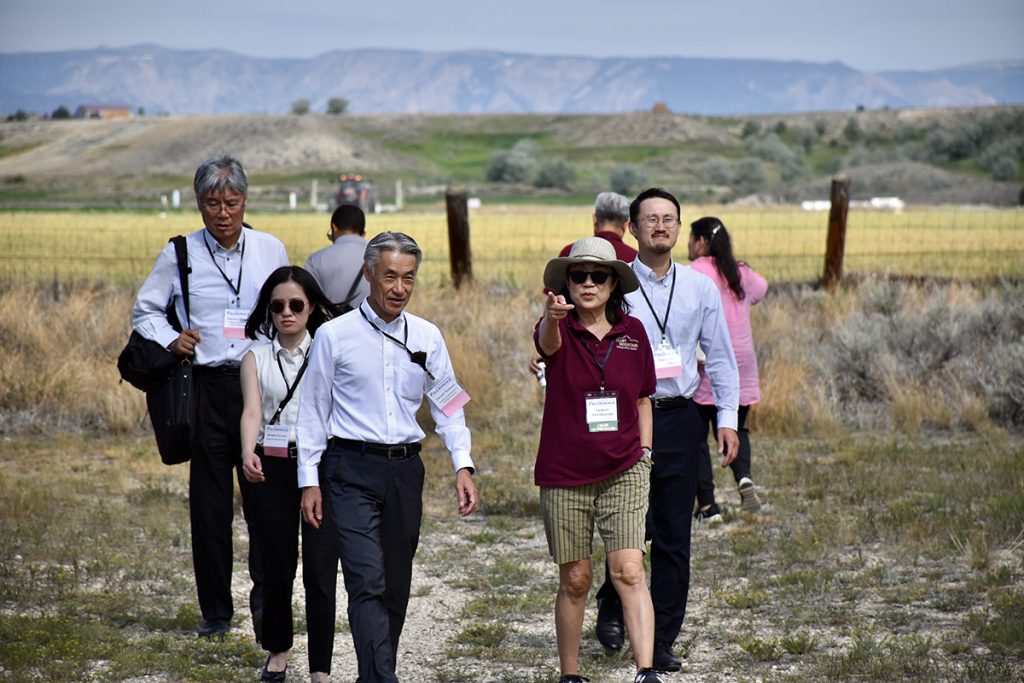
Shirley Ann Higuchi, chair of the Heart Mountain Wyoming Foundation, leads a group of Japanese diplomats on a tour of the site. From left: Denver Consul General Hiroyuki Okajima, Japanese Embassy secretary Michiko Sueyoshi, Ambassador Shigeo Yamada and Deputy Consul General of Denver Yuki Zaitsu. Credit: Heart Mountain Wyoming Foundation.
“This year was especially powerful as we celebrated the 250th anniversary of our country. The presentations featured a unique blend of military service, resistance, academic importance, and emotional connection,” Higuchi, who is also a descendant of Heart Mountain incarcerees, said.
“Let’s continue to tell those stories, respect our elders and remember our history,” Higuchi said. “We’ve come a long way.”
Jack Kiyonaga is a Washington, D.C., writer and grandson of a member of the 442nd Regimental Combat Team.