





By Nina Huang
NORTHWEST ASIAN WEEKLY
For Sheldon Simeon, a recipe is never just a recipe.
It can be a memory of his grandparents, a way to honor his parents’ work ethic, a dish that reminds someone of home, or an invitation to gather around a table with the people they love.
That idea of celebration was at the heart of Simeon’s recent book talk at the Wing Luke Museum, where the Maui-based chef and Top Chef favorite discussed his second cookbook, Ohana Style: Everyday Recipes for Sharing With Friends and Family.
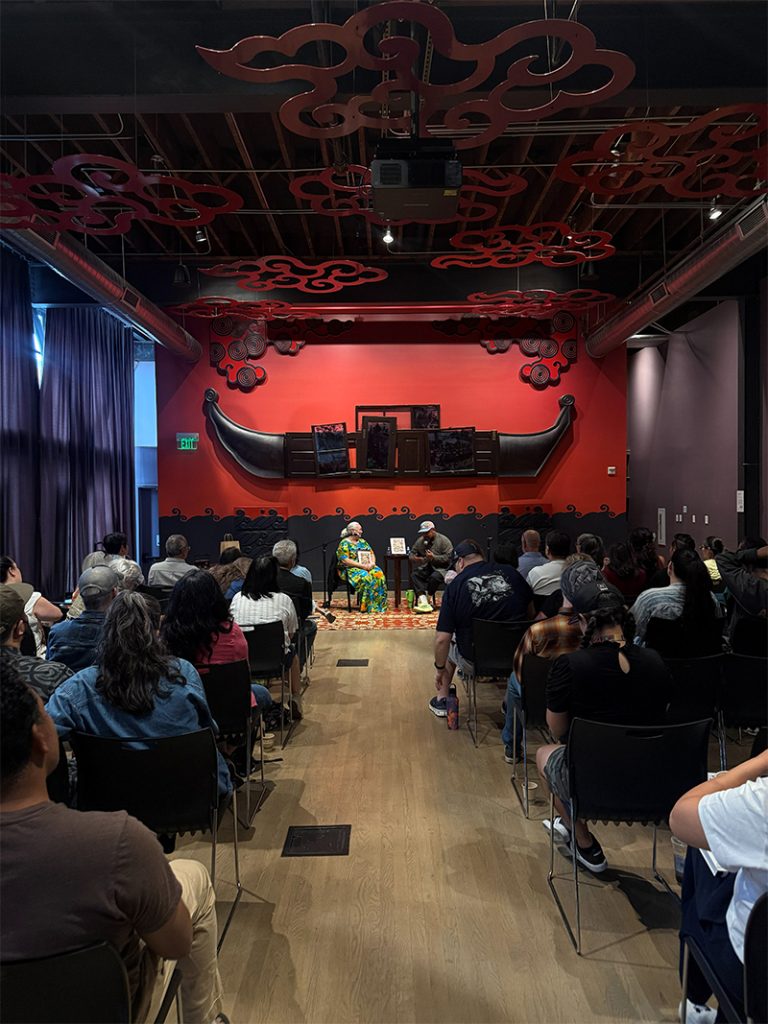
Photo by Damian Kuluhiwa
The cookbook features 100 unfussy recipes designed to encourage people to cook—and, more importantly, to cook together.
“All we do is talk about food,” Simeon told the audience. “The food of Hawaiʻi connects us all.”
Simeon, who was born and raised in Hilo and graduated from Hilo High School in 2000, went on to study culinary arts at Leeward Community College on Oahu before interning at Walt Disney World in Florida. He also met his future wife there, a Lahaina girl. And they eventually returned to and settled on Maui, where he has spent the past 25 years.
His culinary career has included appearances on Top Chef, work with Alaska and Hawaiian Airlines and his restaurants, including Tiffany’s in Wailuku and Tin Roof in Kahului. But his approach to food began long before any of that, in a family where food was both celebration and discipline.
His parents worked hard, he said, but his father always found time to make food. Simeon’s grandparents were sacada—Filipino plantation workers who came to Hawai‘i—and his mother grew up with 11 siblings while his father had nine.
His childhood home became a gathering place, with food always at the center.
“I came up in a family where food was a celebration,” Simeon said.
That family history is woven throughout Ohana Style. One of the book’s recipes is his father’s tuna patty recipe, which Simeon described as the epitome of the cookbook. Other recipes are inspired by the resourcefulness that comes naturally when feeding a family—including raiding his father’s freezer for smoked pork and sausage.
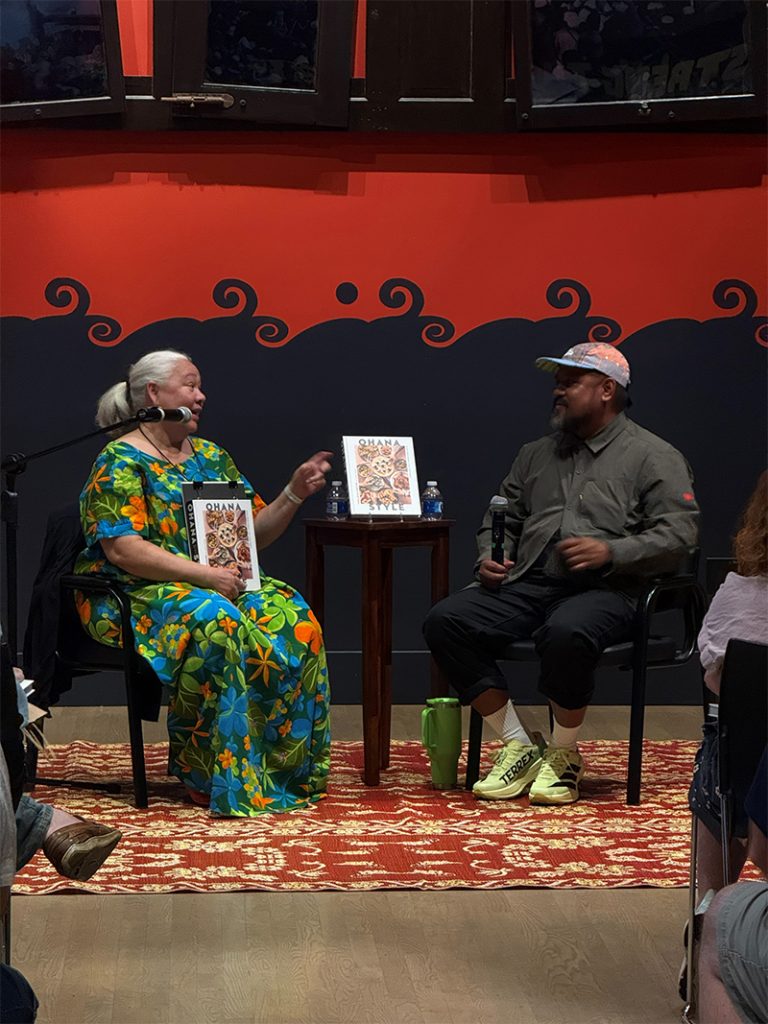
Photo by Damian Kuluhiwa
The cookbook also came out of a very different period of family life: the pandemic.
With restaurants closed and tourism to Hawai‘i halted, Simeon suddenly had the opportunity to cook breakfast, lunch, and dinner for his own family instead of constantly cooking for restaurant guests. He joked that he treated his house like a restaurant, complete with schedules, dishwashers, and chores.
But he also discovered something important.
Cooking can start to feel like a burden when it becomes another responsibility. His children, like many young people, were watching cooking videos on TikTok and learning from them rather than their dad.
That helped inspire Simeon to create recipes that would bring his family back into the kitchen together.
And for him, “ʻohana” extends far beyond the people who share his last name.
“Ohana is not only your blood,” he said. “It’s the people that surround you and make up your life. The mechanic that I trust, the doctor that took care of aunty, all of them.”
That message resonated with Jesse Labalan, who attended the event with his wife, almost 4-year-old son, and sister-in-law, Moira Crawford.
Labalan’s family has roots in Kaimuki and Kapahulu on Oahu, though he now lives in the greater Seattle area. He wanted his son to experience an event where someone was proudly sharing his culture through food.
Food is also a major part of Labalan’s own Filipino American family. He grew up eating chicken adobo, but said Simeon’s pork belly adobo was a “gamechanger” and has become a family favorite. In addition, his brother who was a chef for 20 years in Hawai’i now owns Hawaiian restaurant Unko’s Kitchen in Silverdale.
For Labalan, bringing his young son to hear Simeon speak was about more than cooking.
“It’s exposure for my son to hear from someone who’s proud of their culture and shows that through food,” he said.
That same curiosity brought Filipino Americans Makayla Doran, her sister, Antonia, and their friend, Jillian Jocson, to the talk. They were interested in learning how Simeon approaches creativity in the kitchen and what pushed him to experiment with different foods and eventually write another cookbook.
They had recently returned from Hawai‘i, where good food was already part of the trip. Among their cookbook favorites were chicken thighs with sinigang dust and sardines in a banh mi.
Simeon’s own relationship with Filipino food is complicated by the unique culinary history of Hawaiʻi.
“My province of the Philippines is Hawai‘i,” he joked during the discussion, explaining that some Filipino traditions in Hawai‘i can feel older and different from the food being made in the Philippines today. He said Filipino food should be celebrated according to the specific places and traditions from which individual dishes come.
That idea—that traditions evolve—is central to Simeon’s cooking philosophy.
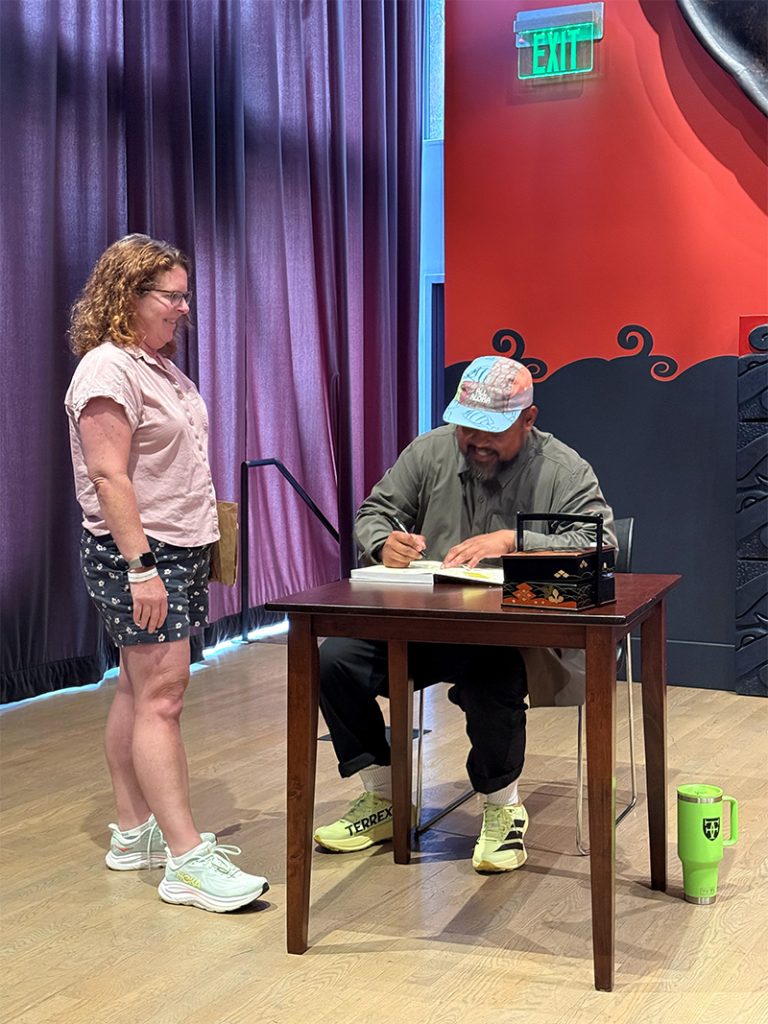
Photo by Nina Huang
He told the audience that Hawaiian recipes are not necessarily meant to be rigid or “steadfast.” Instead, traditions are transmitted “from hands to the next generation,” changing along the way.
For people trying to recreate a dish from their own culture, he offered encouragement: Don’t worry about getting it exactly right.
The act of trying to learn and celebrate the food is itself meaningful.
“Just cook,” Simeon encouraged.
He also wants home cooks to know that cooking well does not mean making everything from scratch. He has no shame in using a Costco rotisserie chicken, frozen fish sticks, or other premade ingredients if it gets people into the kitchen.
For example, audience members got to taste Simeon’s furikake animal crackers during the book talk.
“I’d rather encourage just cooking for yourself and others than no cooking at all,” he said.
For Simeon, that is ultimately what celebration looks like: not perfection, but gathering.
When he hosts, he likes to prepare food in advance so that the dishes are ready when guests arrive. He loves contrasting textures, temperatures, and flavors—the crunch of a topping against something creamy, or the salty, savory flavors that make a familiar dish feel new.
And after a year spent traveling around the country promoting Ohana Style, he is looking forward to hosting friends and family again.
The book tour has allowed Simeon to see how food travels far beyond Hawai‘i—connecting people who have never met, preserving memories for those who grew up there, and introducing others to the islands’ culinary traditions.
That is also what he hopes the cookbook leaves with readers.
He wants people from Hawai‘i to see recipes and recognize pieces of their own stories. He wants people who are learning about Hawaiian food to feel encouraged to make those traditions their own.
“Make what’s ono to you,” he said.
Because recipes, like families and cultures, are meant to evolve.
And when food brings people together, Simeon believes, something bigger happens than simply eating a good meal.
“Celebrate,” he said. “It feels good.”
When asked where he frequents in Seattle, he told the audience that he often just likes to go to
Seattle Fish Guys, buy oysters, and sit and eat them in the car.
For a chef whose career has taken him from Hilo to Maui, television kitchens and restaurants, and now across the country promoting his second cookbook, that may be the simplest recipe of all: cook something you love, share it with your people, and keep the tradition going.
Nina can be reached at newstips@nwasianweekly.com.