



By Andrew Hamlin
NORTHWEST ASIAN WEEKLY
Shooting a film set eighty-odd years in the past has its challenges. Just ask writer/director Kelsi Umeko, who’s shooting “I Am American,” a tale of a local Japanese family caught up in the forced removal of Japanese Americans to camps during World War II.
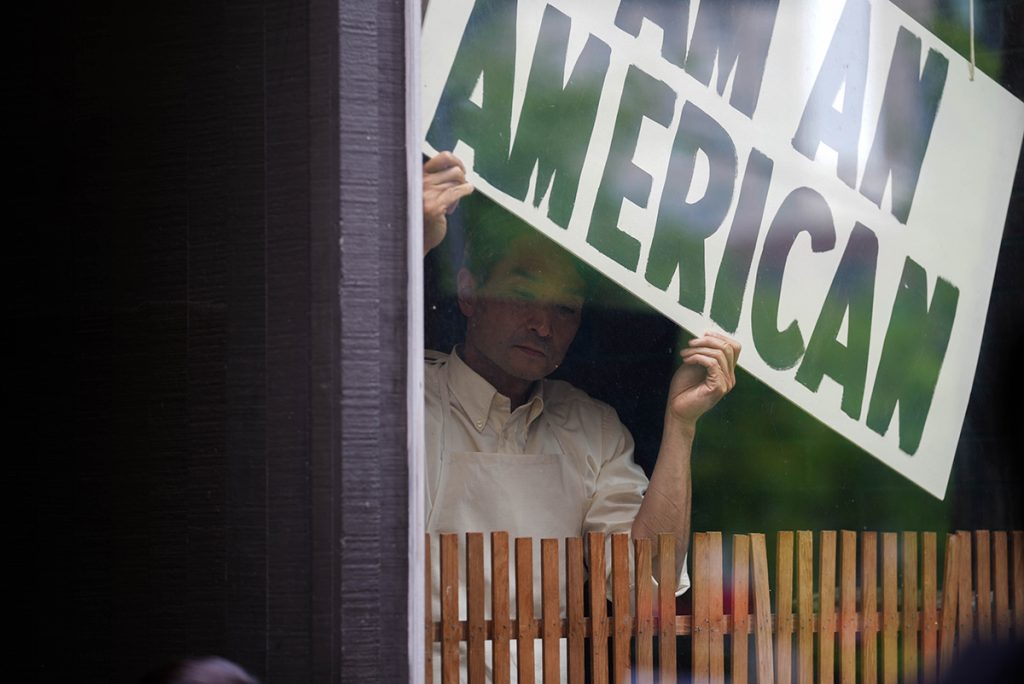
But those same strenuous conditions, Umeko allowed, allow for extraordinary moments of community.
“One of the most moving moments was inviting our background actors, descendents of the family who were incarcerated, to honor their loved ones by bringing any luggage that their family members had taken to the concentration camp in 1942,” explained the filmmaker. “We also honored them by writing their own family name and number on the identification tags that their family had to wear on their clothing during their forced removal and incarceration.
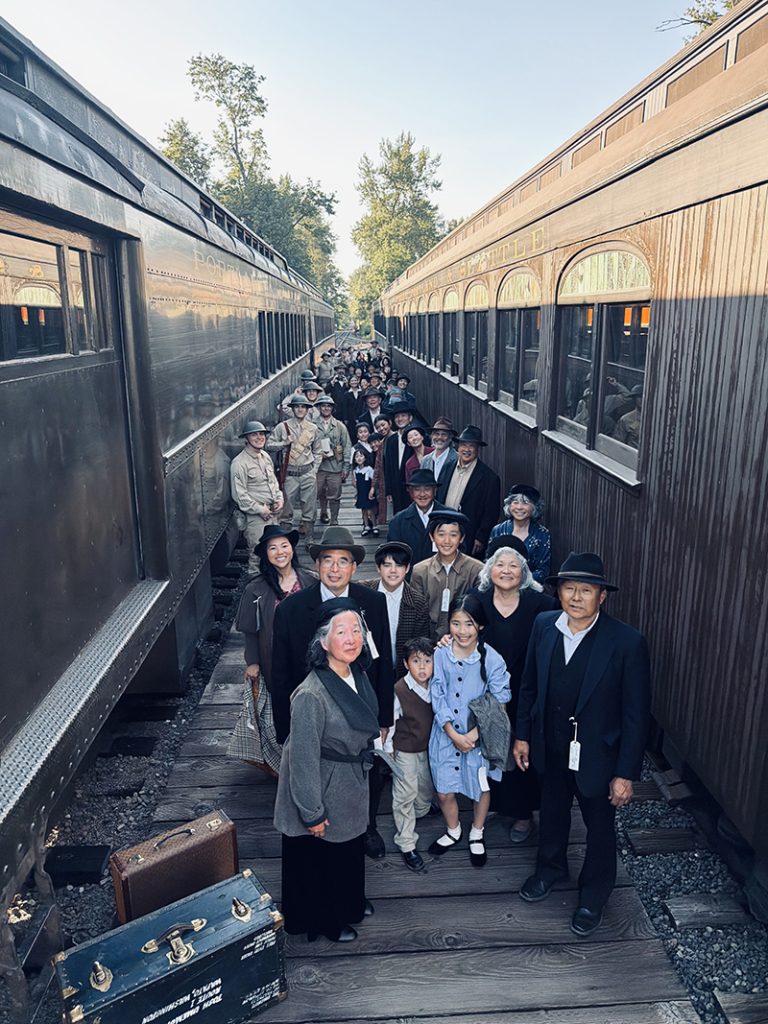
Photo by Chris Koser
“Suddenly, those props weren’t just props anymore—they represented real people, real families, and real stories. There were many tears throughout production because we all understood we weren’t simply recreating history. In many ways, we were walking in the footsteps of our own grandparents and great-grandparents.”
Umeko grew up in Woodinville, outside Seattle, where she competed in gymnastics. She worked as an actor and TV presenter, eventually starting a production company with her husband, Curtis McGann.
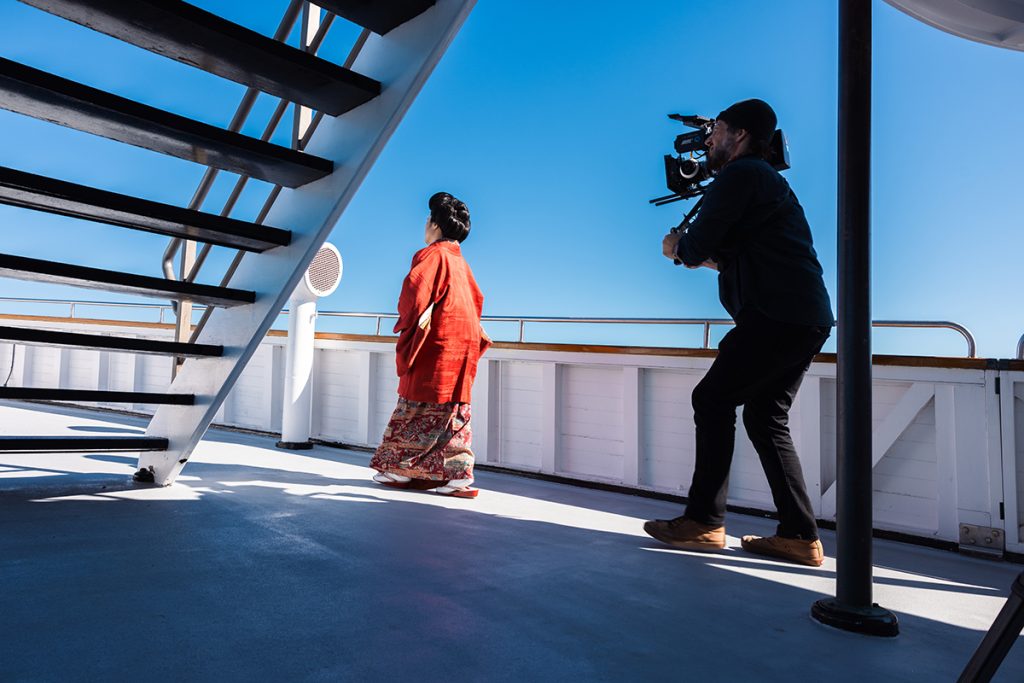
Photo by Tyler Mayeno
“As I transitioned into filmmaking, I realized what I loved was creating the stories I wished existed when I was younger. Growing up, I rarely saw Asian Americans portrayed authentically on screen. If there was an Asian character, they were often reduced to stereotypes or written from an outsider’s perspective.
“Today, we’re finally beginning to see more authentic representation, but I believe the most meaningful change happens behind the camera. When Asian American writers, directors, producers, and actors are telling stories rooted in lived experience, the details become richer, more truthful, and more human.”
She based the script around her own family’s story.
“One of the greatest gifts in making this film has been learning directly from my great uncle Ben Tsuchida, who survived incarceration and is still with us today. His memories became invaluable to the filmmaking process. He shared not only what happened, but how it felt—the fear, the uncertainty, the heartbreak of being forced from his home simply because of his ancestry.”
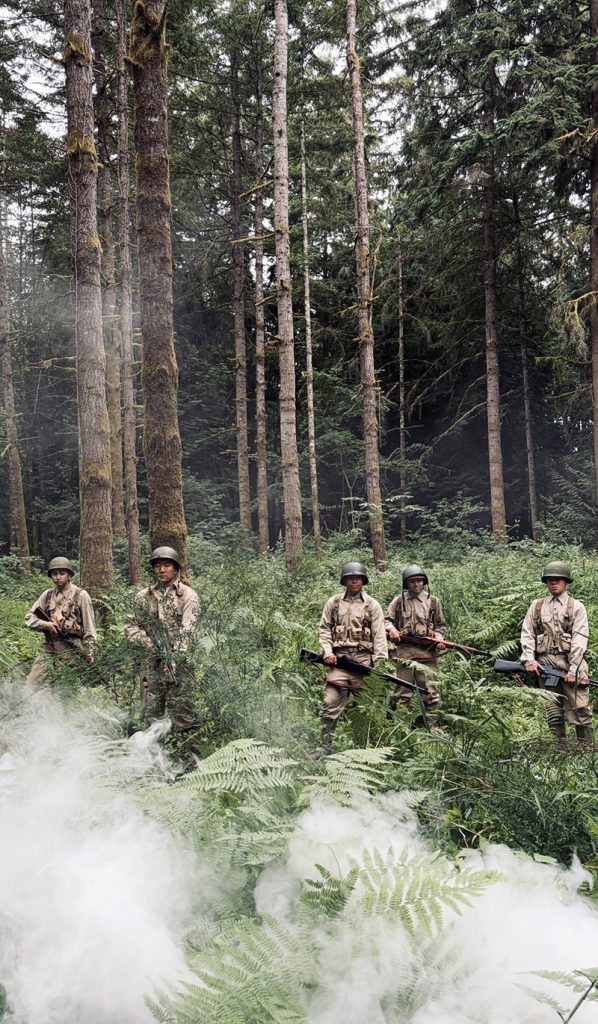
Photo by Kelsi Umeko
Telling the story involved shooting in some historical sites in the Chinatown-International District, including the Onibaba Restaurant and the Panama Hotel.
“Marin and Sho Caccam were incredibly gracious to open the doors of Onibaba to us. It isn’t just the spot for the most delicious Japanese food in Seattle. It was the visually perfect location for the story we were trying to tell. Marin is deeply invested in bringing foot traffic back to Japantown and revitalizing the district. When she offered us the space for free, her only request was that we help spread the word about the beauty of this neighborhood.”
The Panama Hotel’s well-known as a Japanese American historical site, but shooting there involved accessing some areas not open to the public.
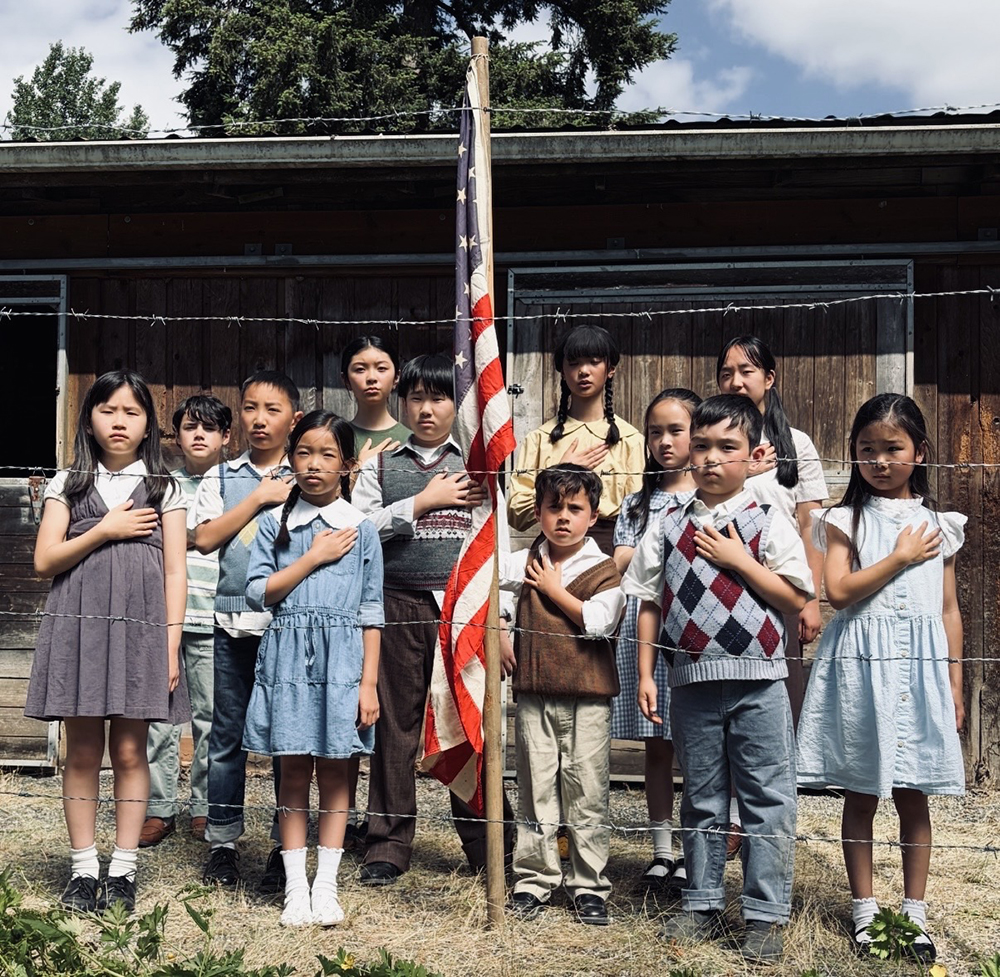
Photo by Kelsi Umeko
“Filming at the Panama Hotel was entirely surreal. For our production, our [featured] prop was an actual, historic piece of luggage that the Tekawa family took to a concentration camp. Bringing that specific suitcase down into Panama’s basement, and placing it alongside other original luggage from 1942, felt like a heavy, full-circle moment. It wasn’t just acting anymore; history felt alive in the room. I broke down in tears filming that day. It was an incredibly bittersweet feeling to look through the glass floor of the tea room and know we were telling a story right where so much history and heartache still rests.
“The biggest challenge was balancing the raw emotion of the space with the immense
responsibility of filming in a living museum. When you are surrounded by real-world artifacts and the spirits of families who lost everything, you can’t just treat it like a movie set. Every camera setup, every light placement, and every footstep had to be handled with extreme care and reverence. We had to navigate tight, delicate spaces without disturbing the history around us, all while holding space for the heavy emotional toll it took on our cast and crew. You want to do justice to the families who walked those floors, and carrying that weight while keeping a production on schedule was easily our greatest challenge.
The film’s scheduled for completion by the end of August, allowing Umeko to submit it to Sundance and other prominent festivals.
Asked to sum up the film, she answered, “‘I Am American’ is fundamentally a film about healing. It addresses the deep, generational trauma that resulted from the unconstitutional and unjust treatment of a fiercely loyal American minority group.
“There is a profound lesson in this history for all of us. I hope it challenges the audience to look inward, to examine their own modern ideologies, and to think critically about how unchecked prejudice can allow history to repeat itself. If we can spark that reflection, then we’ve done our job.”