




By James Tabafunda
NORTHWEST ASIAN WEEKLY
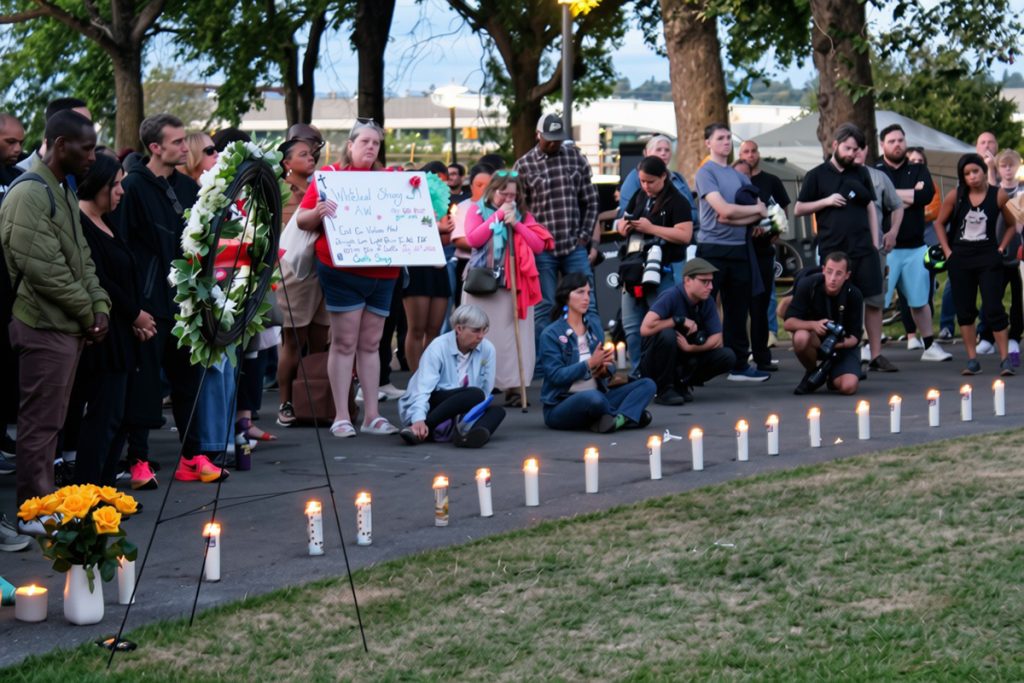
Dozens gathered for a candlelight vigil on July 27, 2026 in Seattle (Photo by James Tabafunda)
Hundreds of mourners gathered under a darkening, blue sky at Seattle Center’s International Fountain on July 27 to grieve three people killed and at least seven others wounded in a shooting during the final hours of the Bite of Seattle festival. Some brought flowers to place near a memorial wreath.
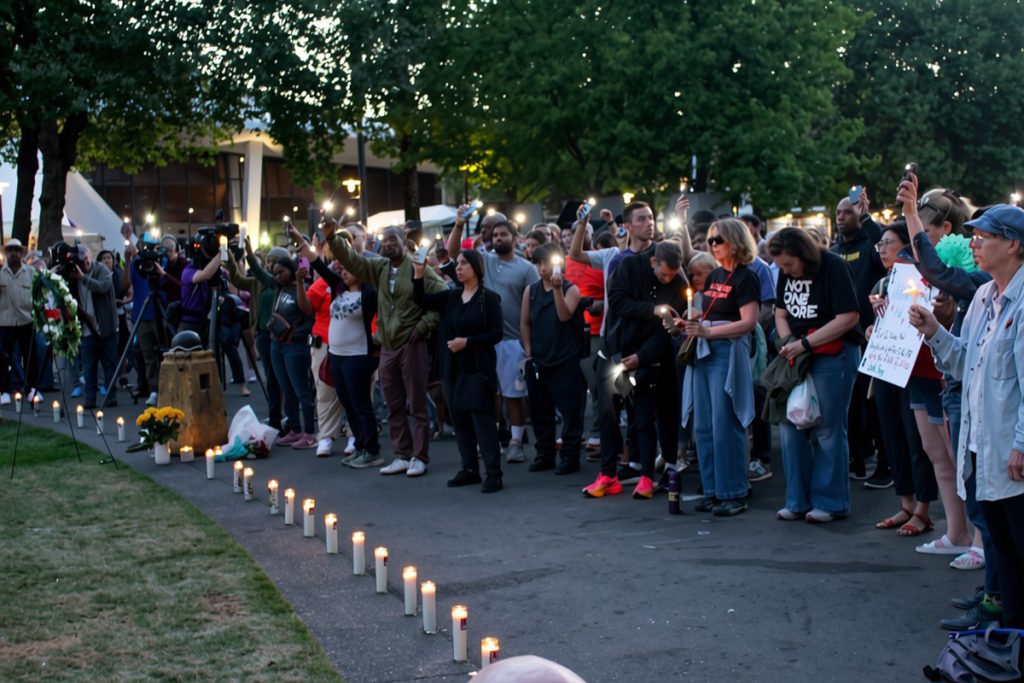
Photo by James Tabafunda
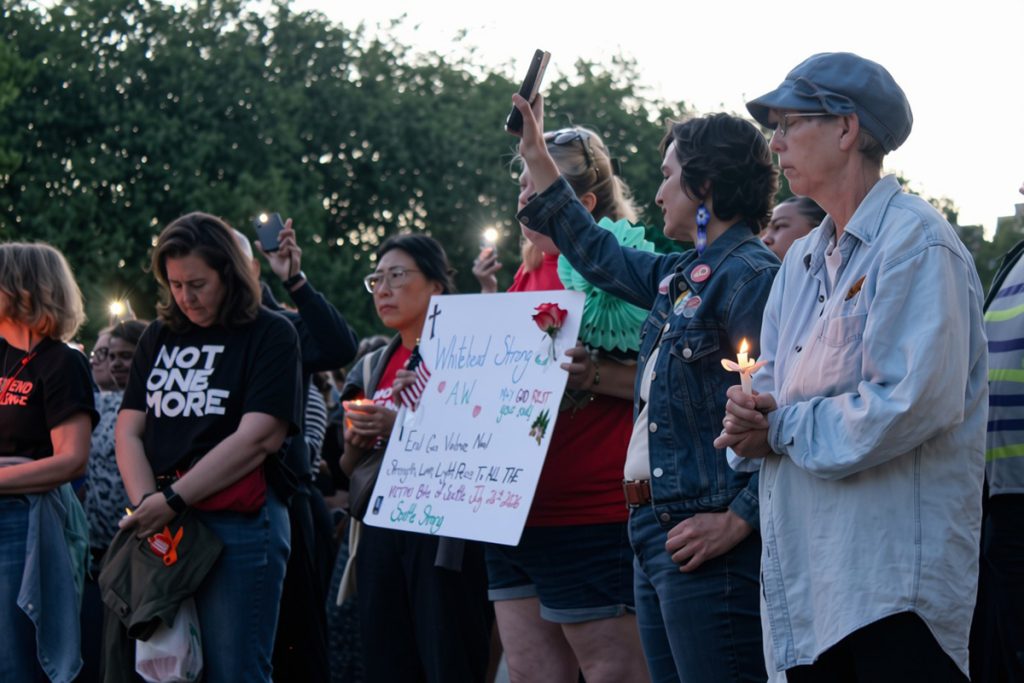
Photo by James Tabafunda
The candlelight vigil took place, roughly 26 hours after gunfire began near the Seattle Center Armory around 6 p.m. on July 26, killing a 44-year-old man, a 56-year-old woman, and a 19-year-old man. Among the injured included a 2-year-old boy.
Seattle Police Department (SPD) officers, including Chief Shon Barnes, arrived with emergency response personnel ahead of the vigil’s start.
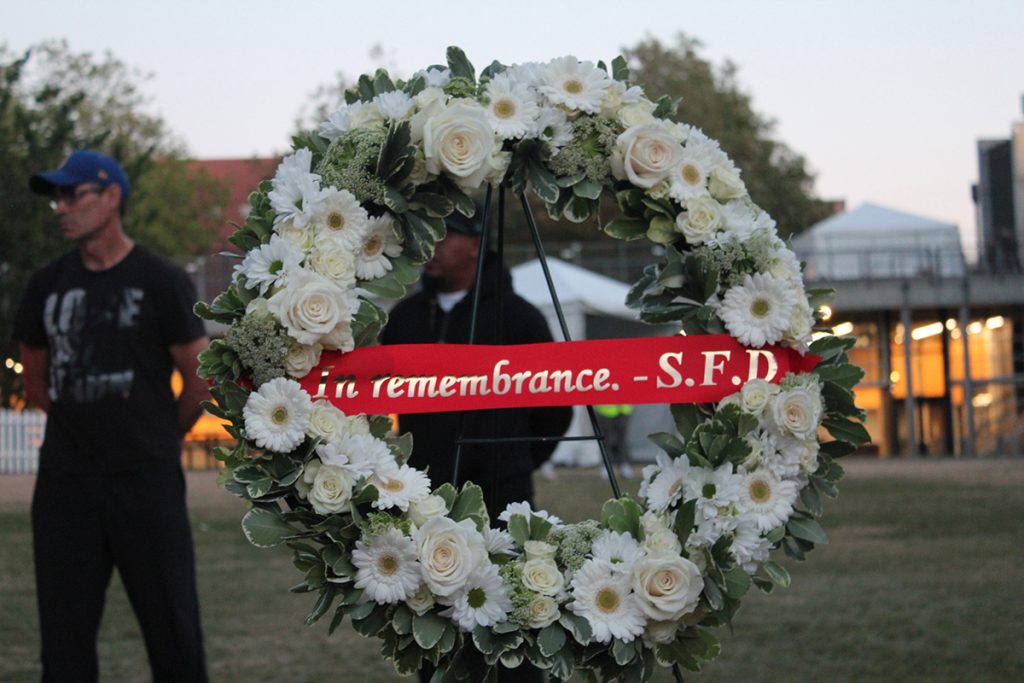
Photo by James Tabafunda
Victims identified by medical examiner
The King County Medical Examiner’s Office identified the three people killed as Carlos Israel Sanchez Villalba, 44, who died at the scene from a gunshot wound to the torso; Ashley Whitehead, 56, who was shot in the pelvis and died later at Harborview Medical Center; and Junior Cee Niko Semo, 19, who died from multiple gunshot wounds.
Villalba was a husband and father of three remembered as kind and generous to others, according to a GoFundMe campaign to cover “day-to-day needs and costs associated with laying Carlos to rest.”
Four other people were treated for gunshot wounds: a 2-year-old boy; a 27-year-old man treated at the University of Washington Medical Center; a 23-year-old man; and a 39-year-old woman, all of whom were discharged. A 40-year-old woman suffered minor injuries at the scene and declined transport to a hospital.
Mourners gather where tragedy struck
The vigil drew families, individuals, elected officials, and community members to the International Fountain, a symbolic gathering spot near the Armory where the shooting took place. Coverage in the hours before the vigil did not identify a formal sponsoring organization, and speakers at the event described it as a grassroots gathering that came together online not through any government office.
Various speakers opened the vigil shortly after 8:30 p.m., offering condolences “to all the victims of gun violence” the city has experienced and calling for moments of silence. One unnamed speaker took the hand-held electric megaphone and read the names of those killed, urging mourners to “create a community of safety for our little ones.” He introduced Seattle Center Director Randy Engstrom and acknowledged the presence of the mayor, Chief Barnes, and the King County executive among the crowd.
City and county leaders pledge action
Engstrom, who said he is not quite four months into his role overseeing Seattle Center, told the attendees he had experienced a school lockdown four decades earlier, when a woman who had babysat his daughter walked into an elementary school and shot seven children, killing a boy in the second grade. “And here we are. I don’t know how to make sense out of it, but I also know this is not going to break us,” he said.
“I don’t know how to make sense out of the nonsense that is gun violence in this city, in this country, in this world. But I know that I and the incredible team that I get to work with here are committed to being part of solving it. I believe the mayor believes that. I believe the police chief believes that. And I imagine you wouldn’t be here if you didn’t believe it, too.”
Engstrom added that Seattle Center did not organize the vigil but was there “to support” the community that did.
Mayor Katie Wilson told the crowd she was speaking not as mayor but “as a member of the community” and as a mother. “No father, no parent should have to bury their child,” she said, adding that the city wants “more than thoughts and prayers.” Wilson’s office said earlier on July 27 that Community Pathways, a victim-support organization, was reaching out directly to affected families to help navigate hospital, legal, and victim-compensation systems, and that two city victim advocates were working alongside SPD’s violent crimes unit. Wilson also noted the shooting was the third gun violence incident in the city within a single week, following shootings near Aurora Avenue in North Seattle on July 23 and in Capitol Hill on July 24.
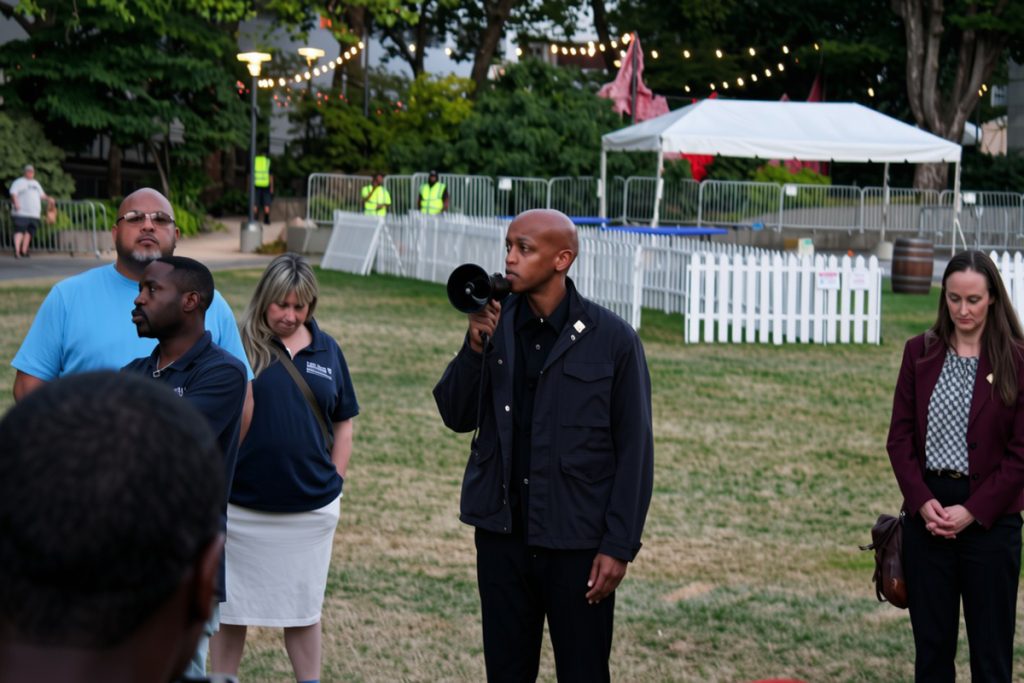
Girmay Zahilay, King County executive (Photo by James Tabafunda)
King County Executive Girmay Zahilay told mourners he had struggled to process news that a toddler had been shot, saying he and his wife also have a 2-year-old. “We do have to imagine what it’s like to wake up and not have one of your loved ones there at the dinner table every day,” he said, thanking county violence-intervention workers and outreach professionals for showing up. Zahilay said every person present “has a role to play” in a solution that requires intervention, family support, and prevention and provides youth with a “good education and a roof over their heads and health care and after-school activities.”
Practical fallout continues across campus
Beyond the vigil, the shooting disrupted daily life across the Seattle Center campus. The Pacific Science Center canceled all shows and general admission on July 27, and the Seattle Center Monorail suspended service the night of the shooting before resuming service the next morning. Vendors who abandoned their booths during the chaos returned on the morning of July 27 to collect equipment left behind.
Police chief vows renewed commitment
Chief Barnes spoke to the crowd near the end of the vigil, telling mourners he internalizes every phone call informing him of a death in the city.
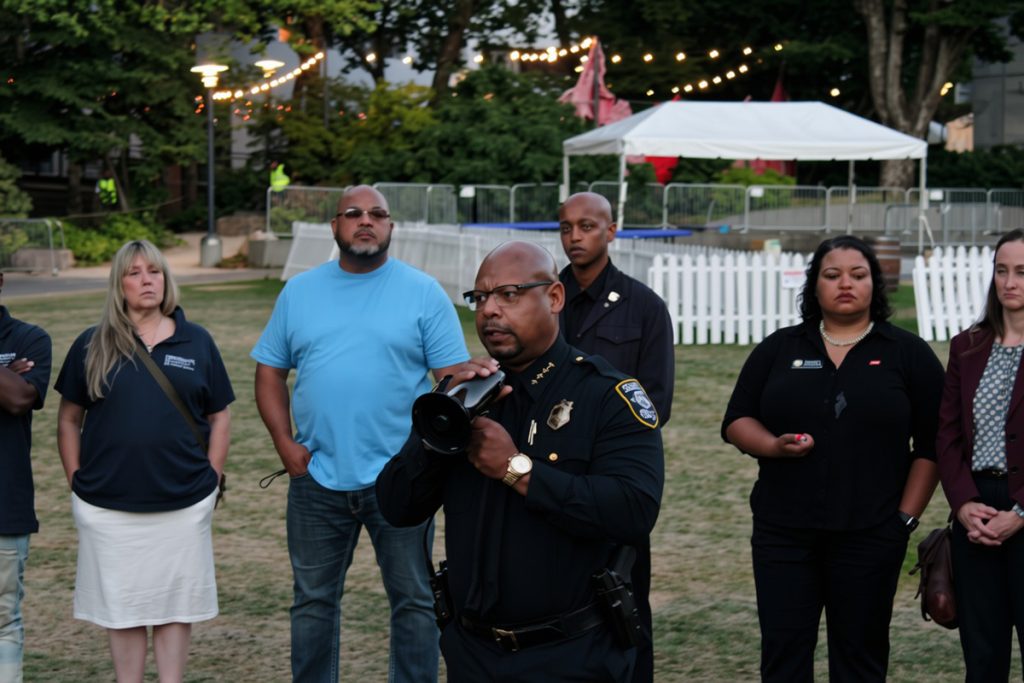
Shon Barnes, Seattle Police chief (Photo by James Tabafunda)
“I want to tell you what that process is like for me,” he said. “I listen to the information. I internalize the information. I get angry. Sometimes, I speak before I think, but once that is over, I go back to the drawing board with my team, and I ask very, very tough questions. What could we have done better, and what do we need to do better?”
“And I keep coming back to the same solution: partnerships, trust, and community,” Barnes said, pledging that Seattle police “commit to being better each and every day to serve you with the help and support of all of these people who are standing behind me.”
The future consists of coming together
“This is not something that we can keep happening in our community. And I’m not here to talk about policies and programs. There’s plenty of time for that. I’m here right now to express commitment, to express solidarity, to say that I stand with you,” Wilson said.
“The solution is all of us here together. We all hold pieces of the solution. And we know that the only way that we are going to make progress, that we’re going to keep our kids safe is by coming together, and we’re not going to be perfect. We’re going to make mistakes. But if we stick together and if we learn and if we keep moving forward, we can make progress.”
As the crowd tried to make sense of the Bite of Seattle shooting as one community, Engstrom’s words from earlier in the evening lingered throughout the gathering: “I believe in this city. I believe in this place. I believe in every single person that showed up here today and that what we believe and the love that’s here is stronger than all that.”