



By Kai Curry
NORTHWEST ASIAN WEEKLY
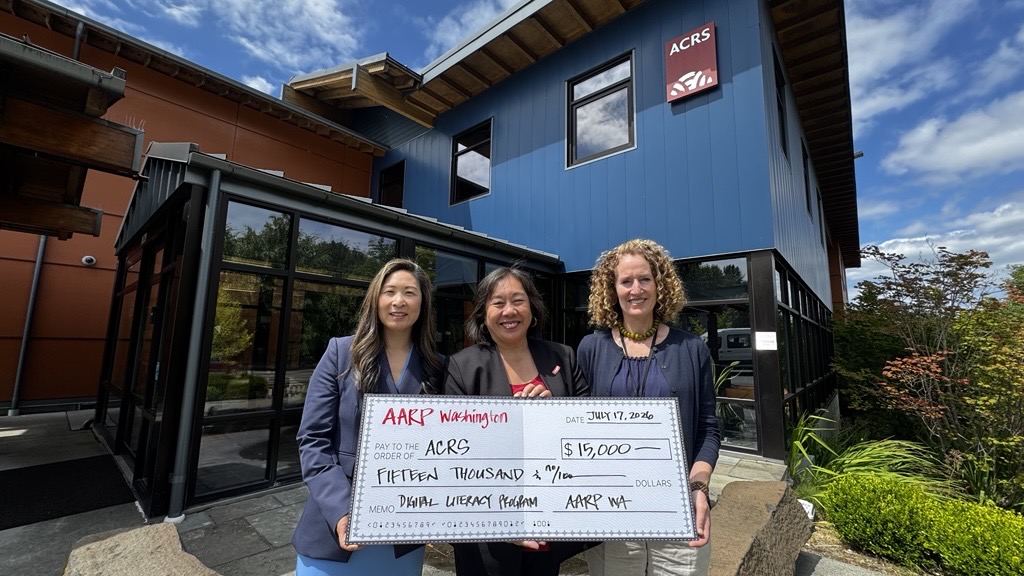
From left: ACRS CEO Kendee Yamaguchi; Marguerite Ro, State Director for AARP Washington; and Alexandra Olins, ACRS Employment and Citizenship Director; celebrate a $15,000 AARP Community Challenge grant supporting ACRS’s Digital Literacy program. (Credit: ACRS)
Older adults in Seattle’s immigrant and refugee communities will soon have more opportunities to build essential digital skills, thanks to a $15,000 grant awarded to the Asian Counseling and Referral Service (ACRS). The funding, provided through AARP’s 2026 Community Challenge, will allow ACRS to expand its on-site digital literacy classes for adults ages 50 and older, with a focus on immigrants, refugees, and English language learners.

Heidi Wong, Associate State Director of Outreach and Engagement, AARP Washington
It is the 10-year anniversary of this nationwide grant from AARP, which aims to promote community engagement and improvement through locally run projects. As Heidi Wong, AARP Washington’s Associate State Director of Outreach and Engagement, told the Northwest Asian Weekly, the grant may go towards a range of projects, from a public garden to an ADA (Americans with Disabilities Act) ramp to programming and education—the grant’s flagship. The grant is open to nonprofits and government entities. “This is a way for AARP to do some quick action-type projects that could make a huge impact,” Wong explained. Even though the Washington office might be small, through this grant, they can extend their impact state-wide.
“ACRS is deeply grateful to AARP for this generous investment in our community,” said Kendee Yamaguchi, CEO of ACRS, in a news release announcing ACRS’s selection. “This grant will help strengthen culturally responsive support for older adults and families so they can remain connected, cared for, and rooted in the community.” ACRS has been assisting Asian American, Native Hawaiian, Pacific Islander (AAPI) immigrants, refugees, and other communities in a multitude of important ways for more than 50 years. Language access, cultural understanding, and trust are at the heart of what they do, said Alexandra Olins, ACRS Employment and Citizenship Director, and integral into digital literacy courses for older adults. The AARP Community Challenge grant gave ACRS the opportunity to respond to a need we see every day, Olins said, which is older adults trying to navigate a world that is moving fast and moving online. Digital literacy, Olins continued, is no longer optional. “It affects how people access health care, benefits, transportation, housing information, emergency alerts, and connection with loved ones.”
With this grant, to add to the classes and other resources which ACRS already provides, ACRS helps open doors, which, according to Olins, is part of what technology can do.
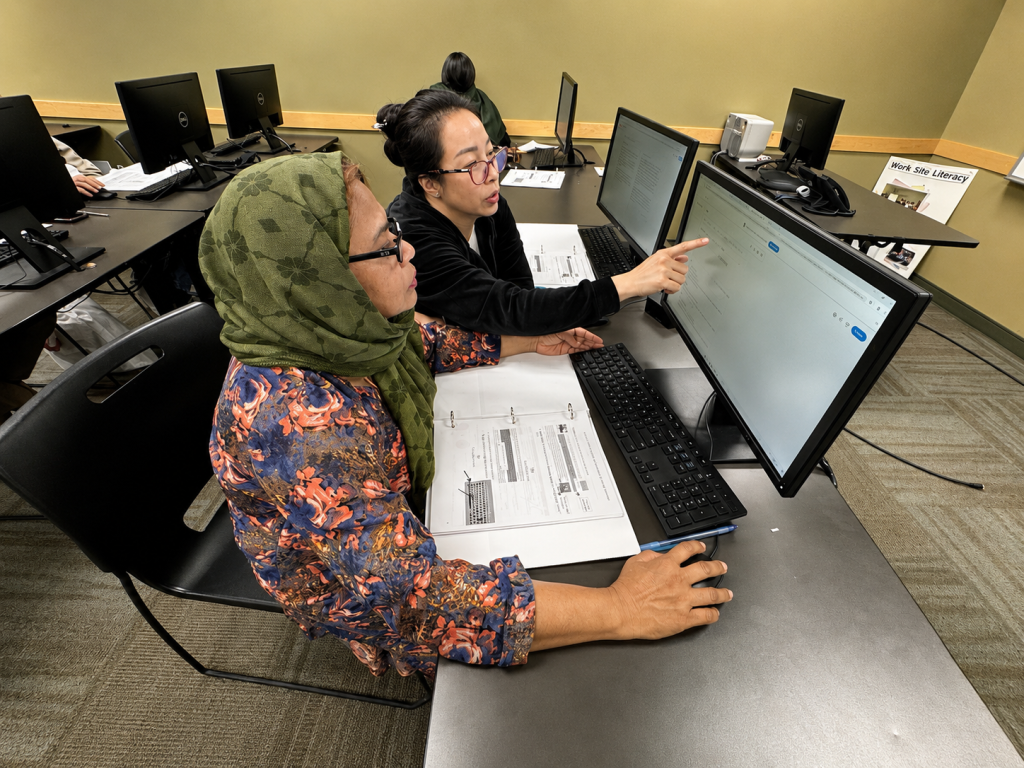
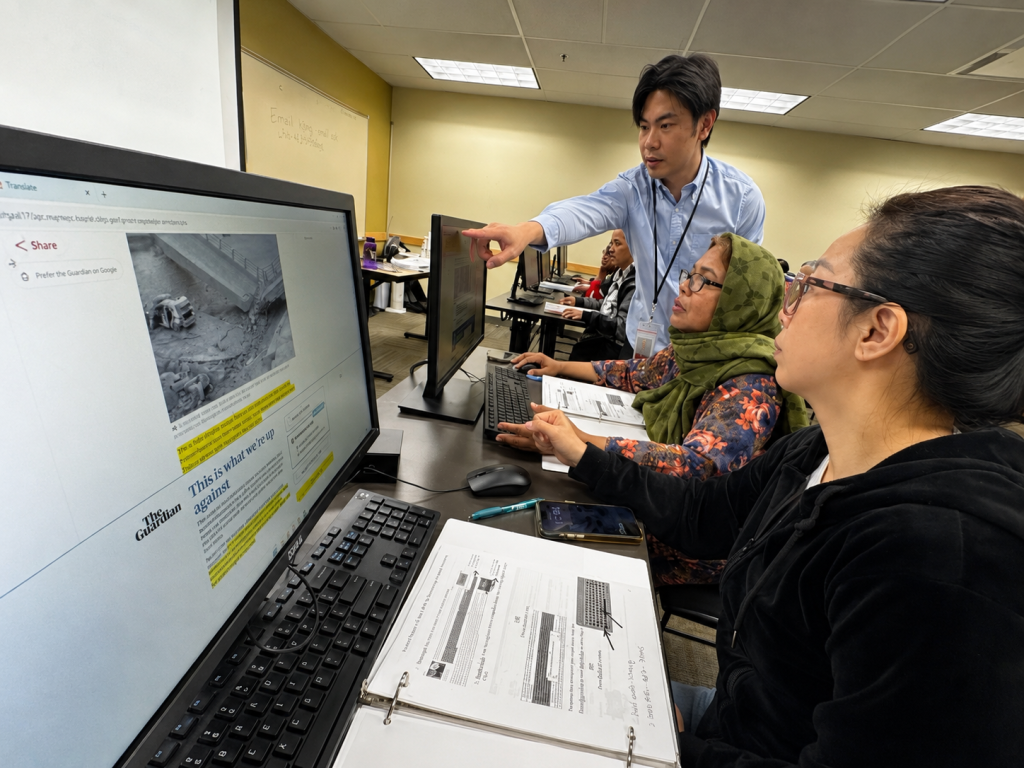
“This grant helps us make [technology] a bridge” rather than a barrier, Olins said. In ACRS’s digital literacy classes, participants will learn how to use (or more effectively use) smartphones, tablets, email, messaging apps, online resources, virtual meetings, transportation tools, and health-related information, Olins told the Northwest Asian Weekly. They will be educated on recognizing online scams, which tend to target seniors, and thereby learn how to better protect themselves from such dangers. Just as important, Olins went on, those in these classes will have a supportive place where they can ask questions freely. “Many older adults feel embarrassed when they do not understand technology. These classes are designed to be patient, welcoming, and culturally responsive,” Olins explained. “They also create connection. Participants learn together, support one another, and build confidence as a community.”
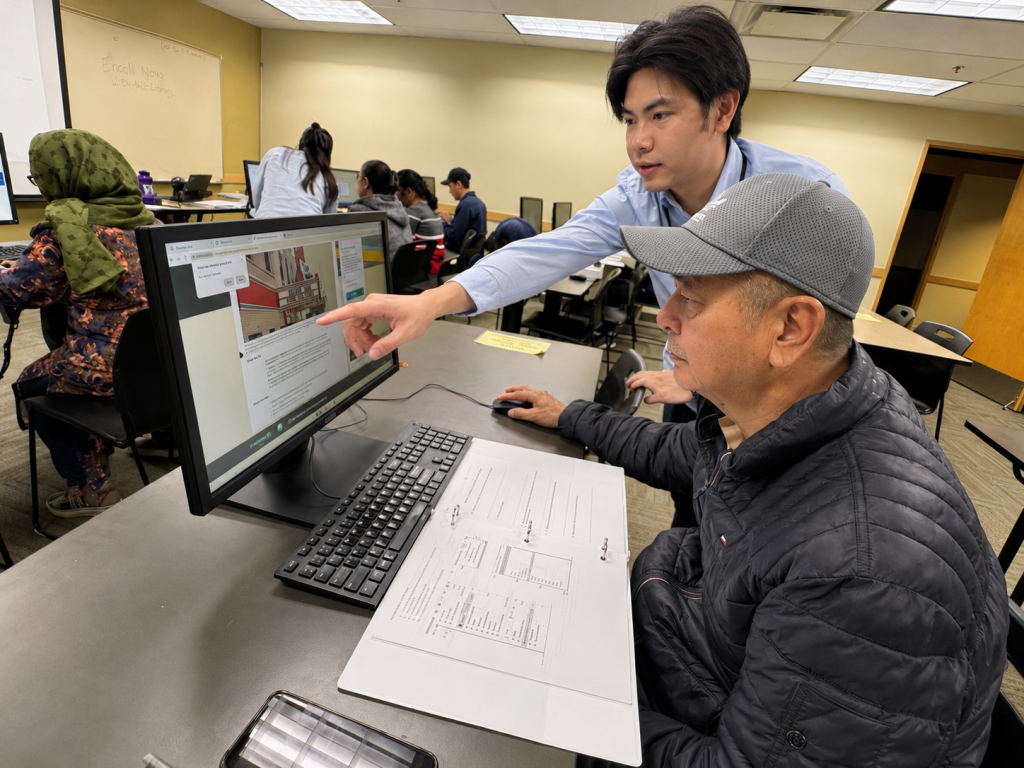
Instructor Enoch Wong welcomes students to the first Digital Literacy Level 2 class of the quarter and introduces the practical computer, internet, email and online job-search skills they will learn. (Credit: ACRS)
The AARP Community Challenge grant process starts in the winter, with a spring deadline for those organizations that wish to apply. AARP’s state offices then review the applications received before sending their recommendations to the national review board. Each state office does its best to submit a range of project ideas. This year, Wong said, each state was allowed to submit up to 15 of their selections to nationals. Out of these 15, Washington state had 11 accepted for Community Challenge grant funding for 2026. There are several eligibility requirements for those that wish to apply, Wong explained. For instance, the project must have something to do with older adults, which is AARP’s focus. That could mean the proposed project relates only to older adults or, at the very least, includes them, such as an outdoor space that is open to the public. Wong hopes that the net cast will continue to get wider every year, and that more will apply.
This grant comes at a critical time, said Olins. “Community needs are growing, public funding is increasingly uncertain, and many families are still carrying the weight of economic hardship, health challenges, isolation, and fear about the future.” While the needs of the community are increasing, the funding provided to ACRS has been decreasing in some cases, such as the federal grant to assist green card holders that was terminated by the U.S. Department of Homeland Security terminated in March of 2026. Food and nutrition is one of the largest areas of need, Olins said, with the ACRS food bank experiencing a 16% increase of clients in 2025 as compared to the year before. They are also seeing a ramped up need among young people who are facing emotional and mental crises related to identity, belonging, and a feeling of instability both at home and in the community, Olins said. Digital literacy is one more piece of the puzzle. People rarely have just one need, Olins emphasized. “Our goal is to make it easier for people to enter through any part of ACRS and connect with the full range of support they need.”
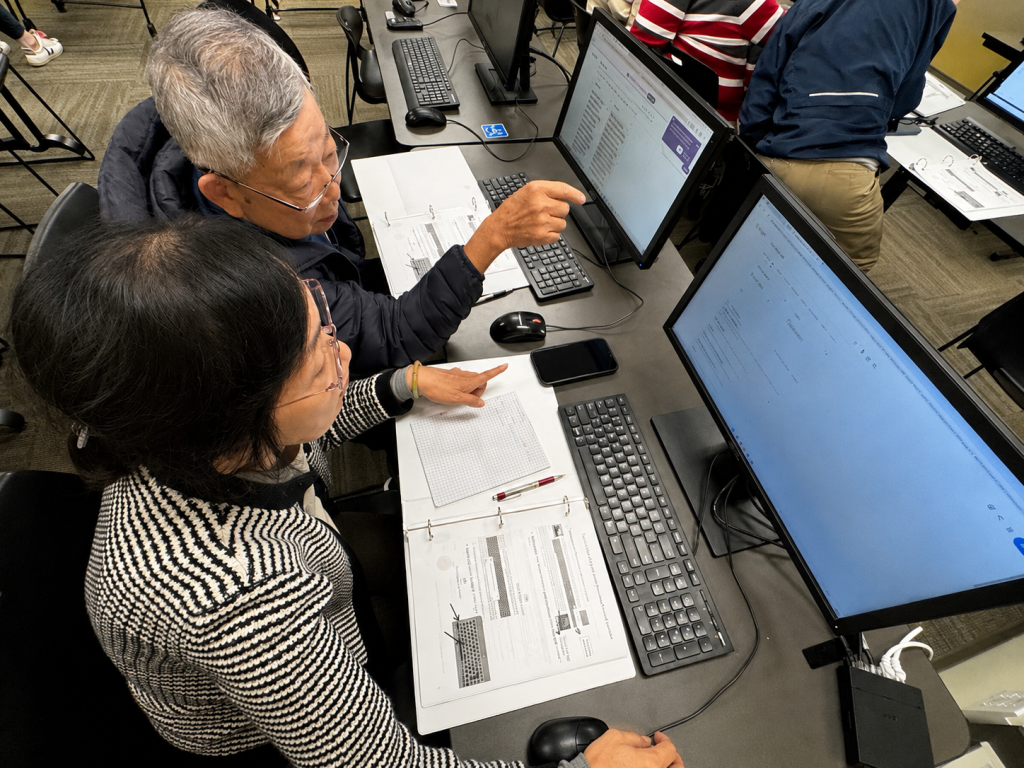
Part of AARP’s success, Wong said, is their commitment to partnering with local organizations such as ACRS and elevating their work. Older adults are daily bombarded with technological challenges, which classes such as those offered by ACRS can help them navigate. Maybe it’s the app that is now required to access their medical and hospital data and appointments. Maybe it’s another app that is now mandatory to park their car. Oftentimes, there’s no one around when an older person confronts these challenges, no one to alleviate their confusion, so these types of classes provide proactive assistance for such situations. In many cases, a person might just need to gain confidence in using a phone, table, or computer. Wong recalled an instance where her mother had to create an account online but was afraid to touch anything, afraid she might make a mistake or break something. Or an auntie’s delight that she now has a button she can press in an emergency and that might save her life. These are not trivial cases. Language barriers or lack of familiarity can cause real problems for those that need access. Older adults did not grow up with technology the way that younger people did, Wong explained.
While a grant like this is a drop in an ocean of need, it makes a difference. Every investment matters, said Olins, when adequate funding is an ongoing problem. Through this Community Challenge grant, ACRS will provide older adults with not only crucial hands-on skills, but also “greater independence, stronger connection, greater safety, and peace of mind,” said Olins.
Kai can be reached at newstips@nwasianweekly.com.