



By Kai Curry
NORTHWEST ASIAN WEEKLY

The founder of the first-ever Asian American Native Hawaiian Pacific Islander (AANHPI) Summit, John Chen started the summit by telling the story of his ancestor, the first in his family to immigrate to the United States in the early 1900s. Chen’s story served a purpose. It demonstrated the long history of Chinese and Asians in this country, and their subsequent achievements. On this year of the 250th anniversary of the establishment of the United States, this summit proclaimed they were here to celebrate AANHPIs and their contributions to this nation.
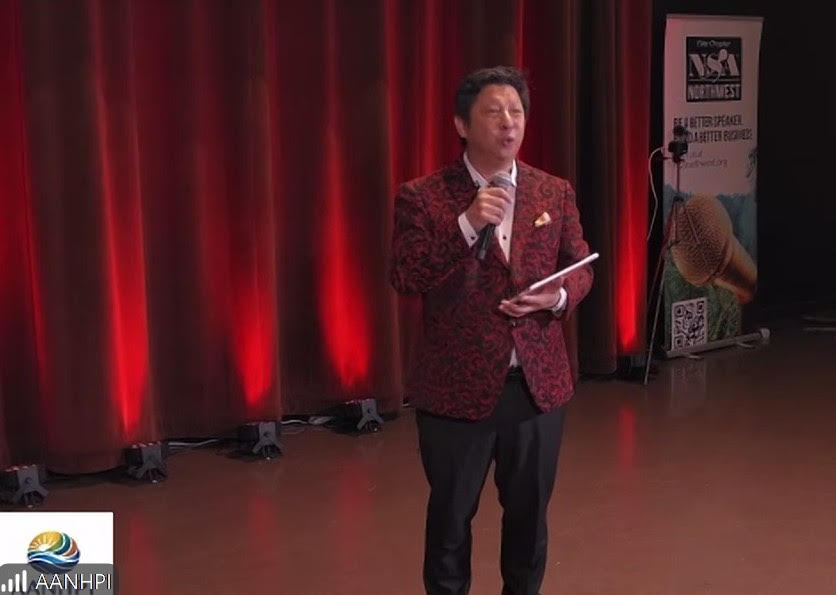
John Chen
The summit was held at the Seattle Public Library’s Central Library in Seattle and was funded by Chen, who has decades of experience as an event organizer. He is the founder of Asian Pacific Islander Event Professionals and the Asian Pacific Islander National Speakers Association. This event featured only Asian speakers. The idea came to Chen, he said, after the George Floyd murder and the COVID-19 pandemic, when he noticed a lack of attention to the rise of anti-Asian hate that was also happening simultaneously. In addition to speakers who talked about the lived experience of AANHPIs, there were those who offered advice on important soft skills affecting many people of color during these turbulent times, such as managing anxiety.
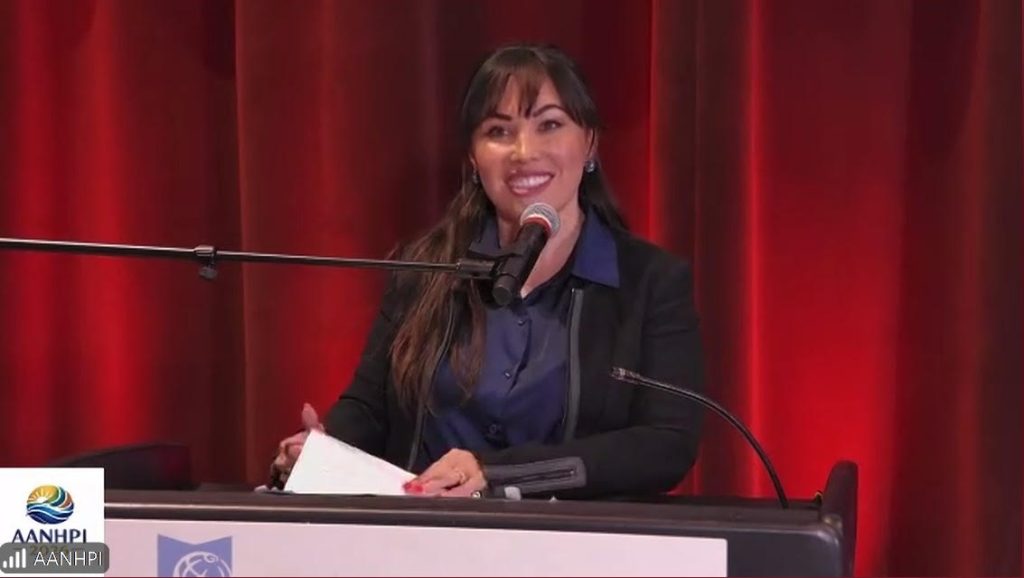
Toshiko Grace Hasegawa
The who’s who of Washington’s AAPI (Asian American and Pacific Islander) leadership showed up in support of this event, starting with a video greeting from Rep. Pramila Jayapal. “Today is all about lifting each other up and celebrating our diverse community,” said Jayapal, who briefly related her own family’s story of immigration. “I know what the American Dream means. I’ve lived it, but for way too many people, that dream is too far out of reach.” Jayapal recognized the accomplishments of those who came before while emphasizing the need for continued advocacy and community building among communities of color. Port of Seattle Commissioner Toshiko Grace Hasegawa (who attended in person along with fellow Port commissioner, Sam Cho) chimed in on the importance of mentoring the next generation. “What we do now isn’t for ourselves,” she said. “It’s about carving the world that we want to see.”
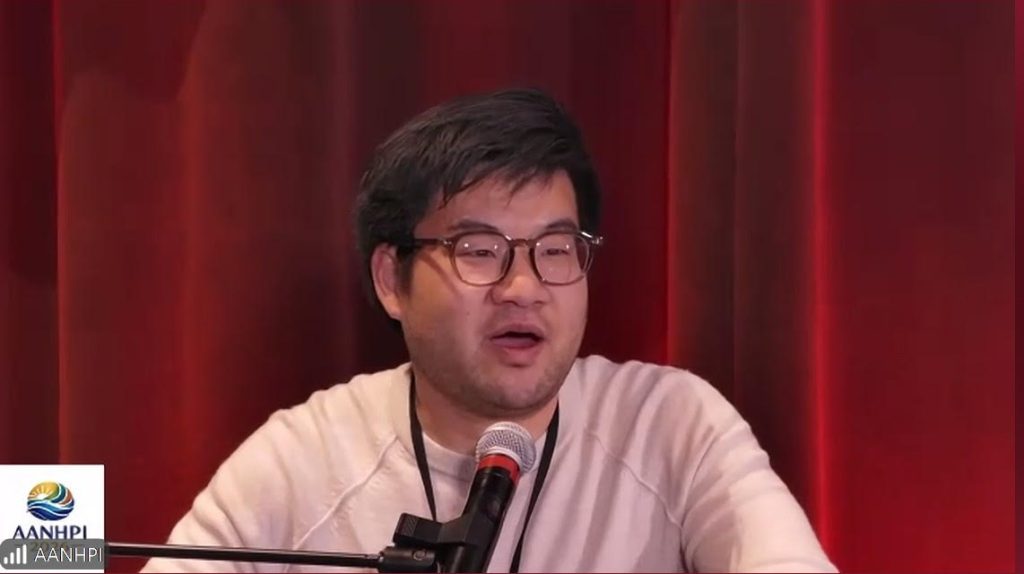
Sam Cho
Cho was shortly afterward a part of a panel discussion on the topic of AANHPIs at work. (Cho is also a co-owner of the Northwest Asian Weekly.) In his introduction, Cho mentioned the landmark his own appointment to the port represented, as the descendent of immigrants who entered the United States through this very same Port of Seattle. He talked about his proudest career moments so far as a public servant. He advocates for people of color, such as during the COVID-19 pandemic when so many airport employees were suffering due to business shutdowns. He and the other panel speakers brought up the extra effort that most AAPIs must put forth in order to obtain their goals in the workplace, as compared to their white counterparts. “That hard work mentality, that chip on the shoulder—whatever you want to call it—remains in me even today as an elected official,” said Cho.
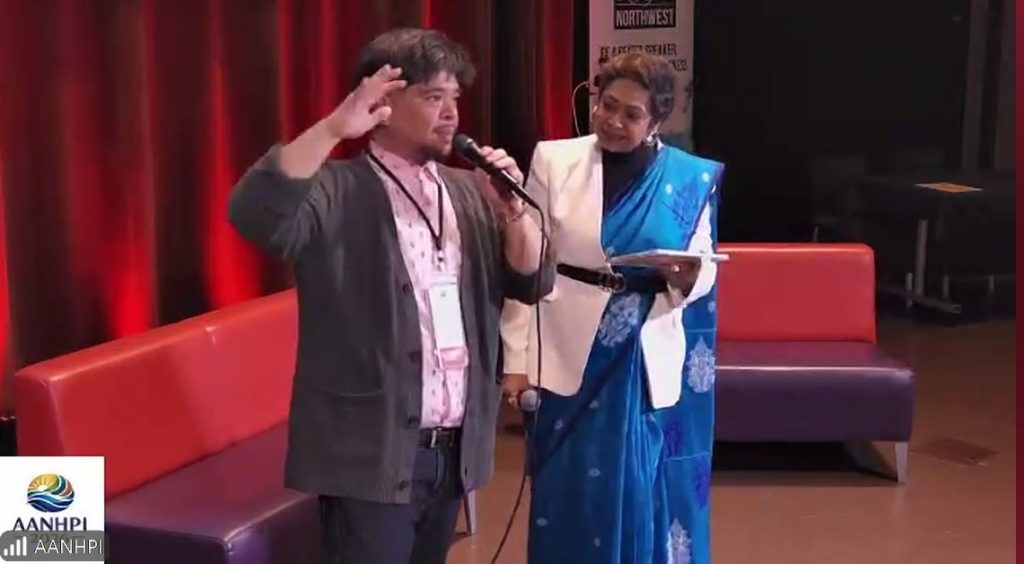
Beat Box Panda (left) and Srijata Bhatnagar.
A delicious lunch was served by Tai Tung, Seattle’s oldest Chinese restaurant, and accompanied by the rhythms of Beat Box Panda. Throughout the day, the summit organizers conscientiously engaged the audience, in person and online, even during breaks. After lunch, the Northwest Asian Weekly’s own publisher emeritus, Assunta Ng, stepped up to the podium. Ng told the tale of her career, from a young reporter and businesswoman to the owner of a newspaper and a positive force for AAPIs. She asked everyone in the audience to remember a person who had rejected them. “Plenty of people have said no to me, more than I can think of,” Ng said. “Did it stop me? No, not for a second. I fought back.” Like many in the room, Ng wasn’t fighting just for herself, but for a larger cause— the voice of the community. Although it was a hard call, several attendees unofficially voted Ng’s talk as the most moving of the day.
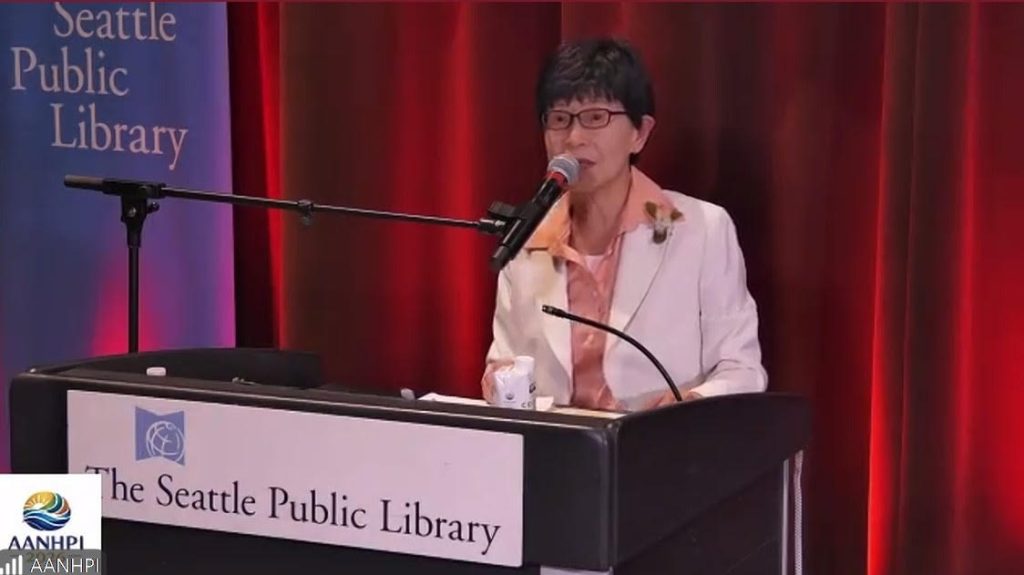
Assunta Ng
Other emotionally charged talks included that of Lei Wang, the first Asian woman in history to complete the “Explorer’s Grand Slam” (or “Adventurer’s Grand Slam”). This is the impressive achievement of trekking to not only the North and South Poles but also climbing “the Seven Summits,” or the highest mountain peaks in the world, such as Denali, Kilimanjaro, and Everest. Wang described a journey from being not at all sportive to being one of the few to earn this title. Along the way, Wang was repeatedly underestimated, and even lost contact with their parents, who disapproved, only to persevere. And perseverance, Wang suggested, is what really makes a winner, not one’s perceived abilities. “Courage is not a feeling. Courage is a decision.”
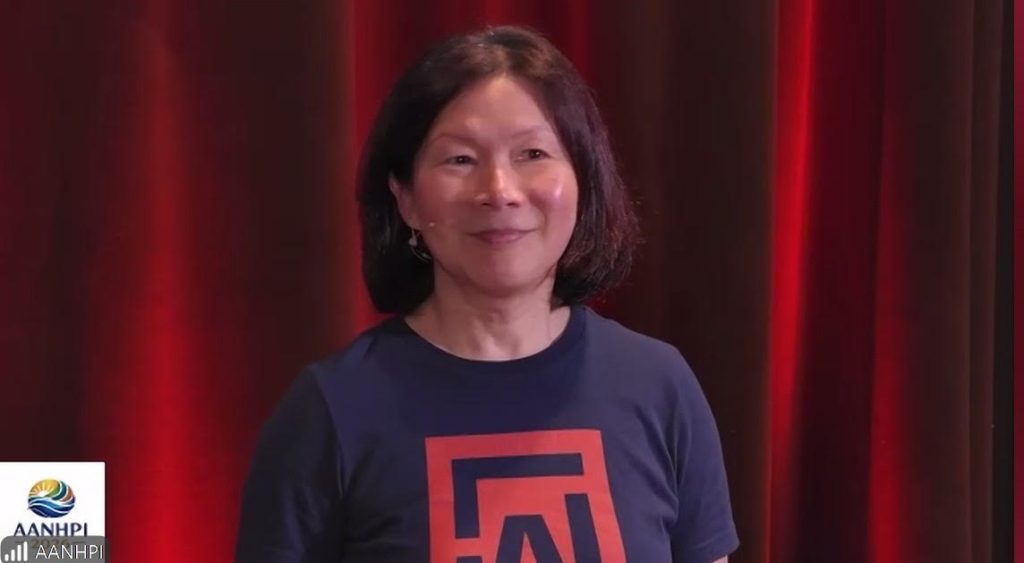
Lei Wang
Other participants in this first-ever summit included retired Seattle television news journalist Lori Matsukawa, who moderated a morning panel on how to support AANHPIs; Kelly Goto, award-winning author of “Seattle Samurai: A Cartoonist’s Perspective on the Japanese American Experience,” a story largely about her father; certified LEGO SERIOUS PLAY trainer and facilitator, Leo Chen; and many more inspirational AANHPIs, both local and national.
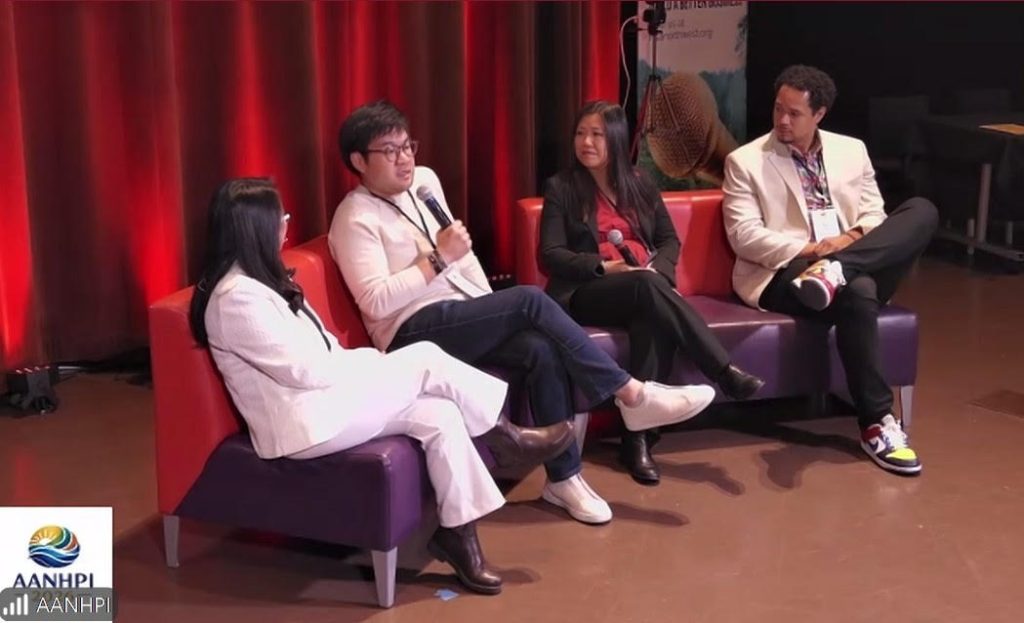
Panel on How do AANHPI’s Work In Seattle?: (Left to right) Veni Folta, Sam Cho, Lien Ngu, and Kiva Geiger.
Everyone who spoke on this day was there to uplift others. Maybe they gave advice on how to change your paradigm, such as the emcee and final speaker, Srijata Bhatnagar, author of the bestselling book, “Setback Leadership: How leaders turn their setbacks into successes. And how you can, too!” When faced with a setback, instead of whining, “Why me?!” Bhatnagar said, “say to yourself, “Wow, it’s me!” Bhatnagar, too, told her story, of a wife reined in by marital expectations, who rediscovered her own power and talents. From this, she said, “I built a system to thrive, not because I was smart. No, that’s not what it is—but I had to survive, damn it.”
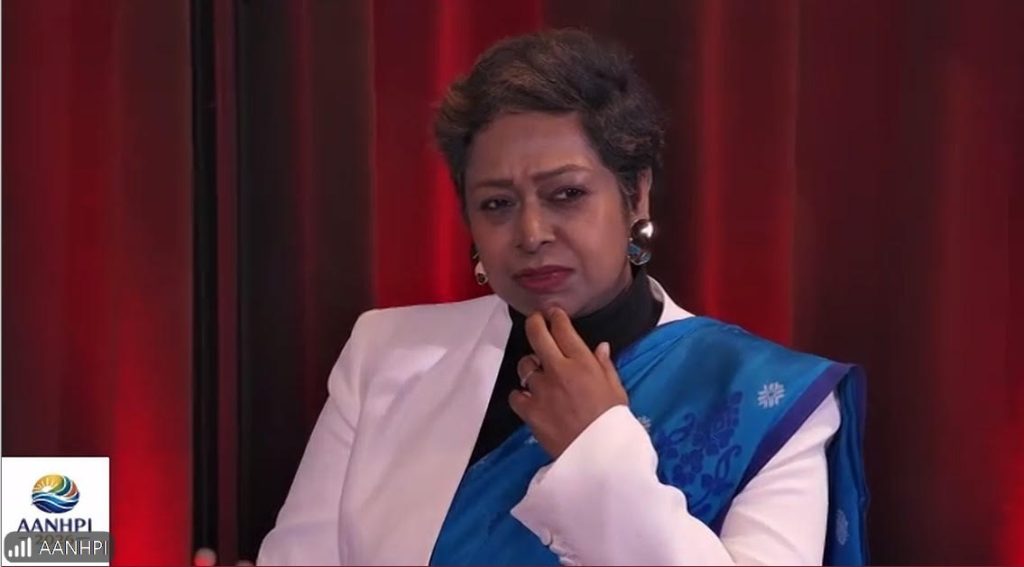
Srijata Bhatnagar
Chen urged everyone who attended to remember where they came from, and also to recognize the help they were given to get where they are now. “We all need allies,” he said.
Kai can be reached at newstips@nwasianweekly.com.