



By James Tabafunda
NORTHWEST ASIAN WEEKLY
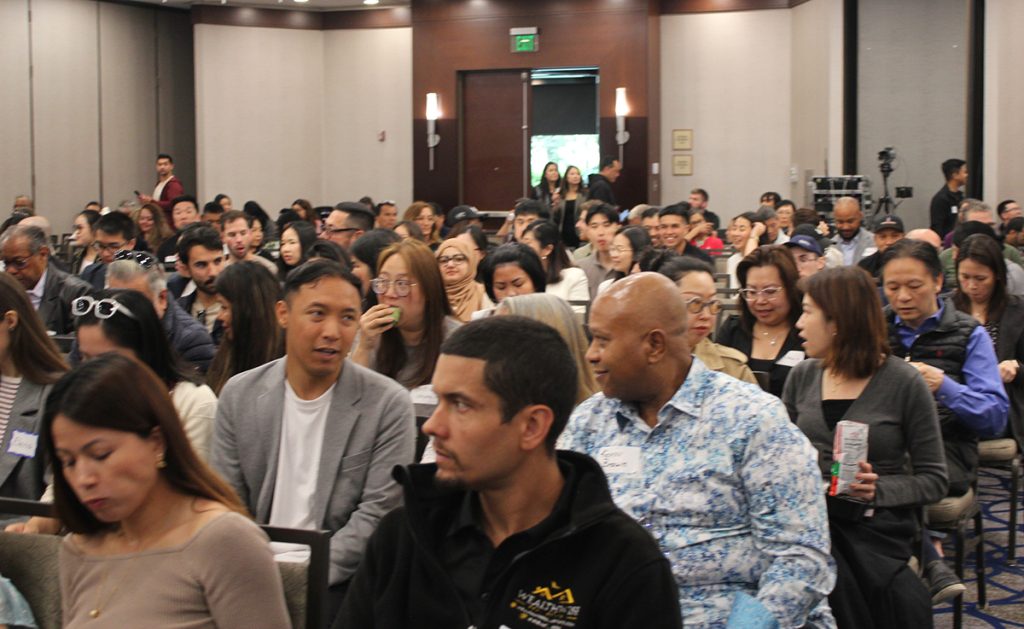
Attendees at “Built to Last: Financial Serenity Across Generations,” a free real-estate expo organized by AREAA Greater Seattle (Photo by James Tabafunda)
More than 450 registered attendees packed the Hilton Bellevue for “Built to Last: Financial Serenity Across Generations,” a free real-estate expo organized by Asian Real Estate Association of America (AREAA) Greater Seattle, delivering a full day of education on homeownership, generational wealth, and financial wellbeing to the area’s Asian American, Native Hawaiian, and Pacific Islander (AANHPI) community.
The expo, held May 30 in Bellevue, marked the third consecutive year AREAA Greater Seattle hosted the event—and its first as a multi-chapter gathering, with participation from the Portland, Salt Lake City, and Denver AREAA chapters.
Biggest crowd yet, third year running
Frances Nguyen, the 2026 AREAA Greater Seattle president and a mortgage lender and real estate investor, opened the expo with a declaration that set the tone for the day.
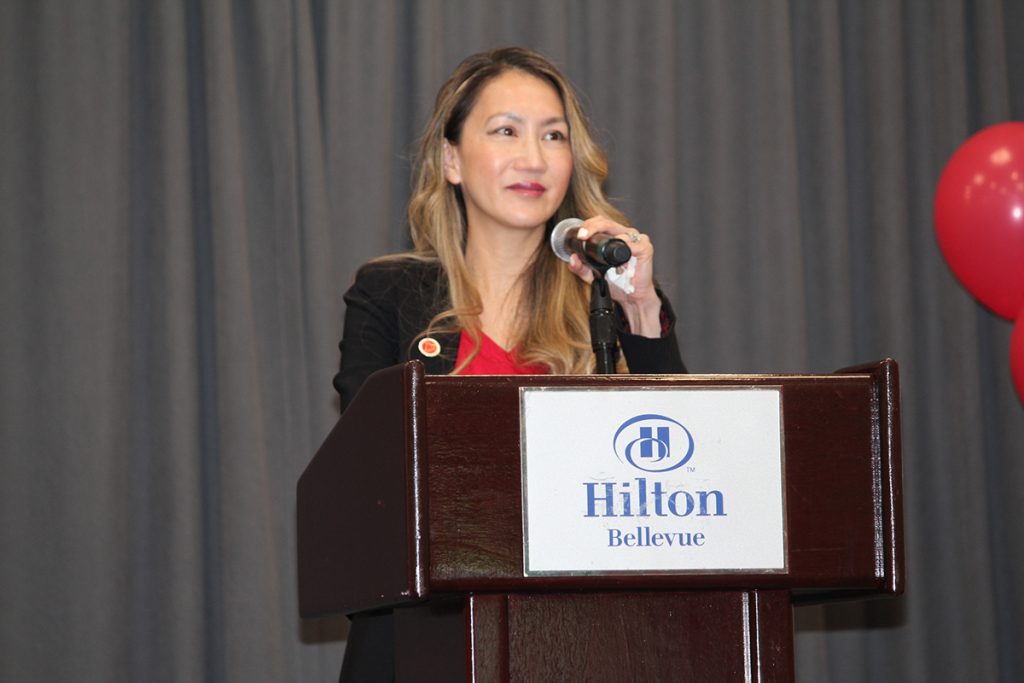
Frances Nguyen, AREAA Greater Seattle president (Photo by James Tabafunda)
“This is our first multi-chapter event highlighting our 2026 AREAA initiative, Financial Serenity Across Generations,” she said. “This is the third year that we’ve been doing this, but I have to say, this is our best year. This is a bigger event. It’s at a bigger venue. We have more vendors, and we have the best crowd.”
Nguyen said registrations had reached 450 by the morning of the event. The expo drew first-time homebuyers, investors, and real-estate professionals from across the Greater Seattle metro area.
Three pillars define the day’s mission
Christina Lee, the 2026 AREAA Greater Seattle vice president and expo chair, outlined the framework that anchored the program.
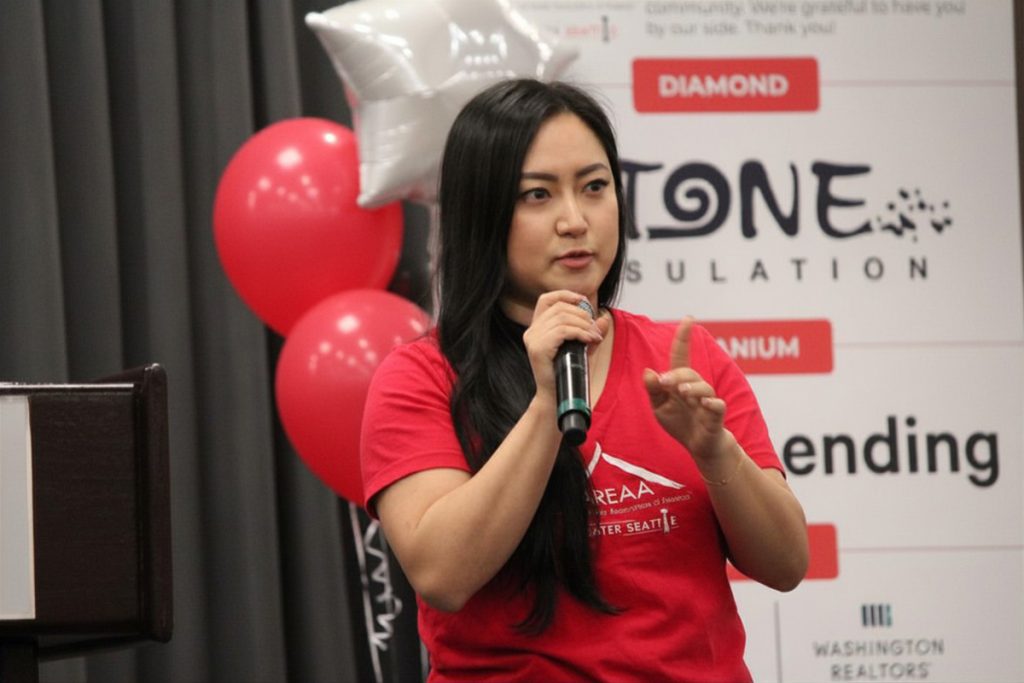
Christina Lee, AREAA Greater Seattle vice president and expo chair (Photo by James Tabafunda)
“The expo is focused on three pillars: generational wealth, wealth management, and health and wellness,” she said. “We want to make sure resources are available.”
Those resources took the form of seven educational sessions and 42 vendor booths.
Lee, who is also the founder of Bellevue-based AIM Financial Partners, an insurance-focused financial services agency and independent representative of SYNCIS, described the wealth management pillar as the most urgent. “There is a lack of financial literacy,” she said. “Wealth management goes hand-in-hand with financial literacy. We’re focused on filling that gap with free resources.”
On the third pillar, Lee addressed a cultural barrier head-on. “Culturally, mental health is looked down on,” she said. “It’s important we’re taking care of ourselves as well.” Andy Song, a Tacoma Community College professor in the Department of Education, Social, and Behavioral Sciences, spoke about mental health issues.
National president cites data, makes it personal
Bryan Ahn, the 2026 AREAA national president and a 12-year veteran of the organization, flew in from California to deliver the event’s opening remarks and unveil the association’s 2026 national initiative.
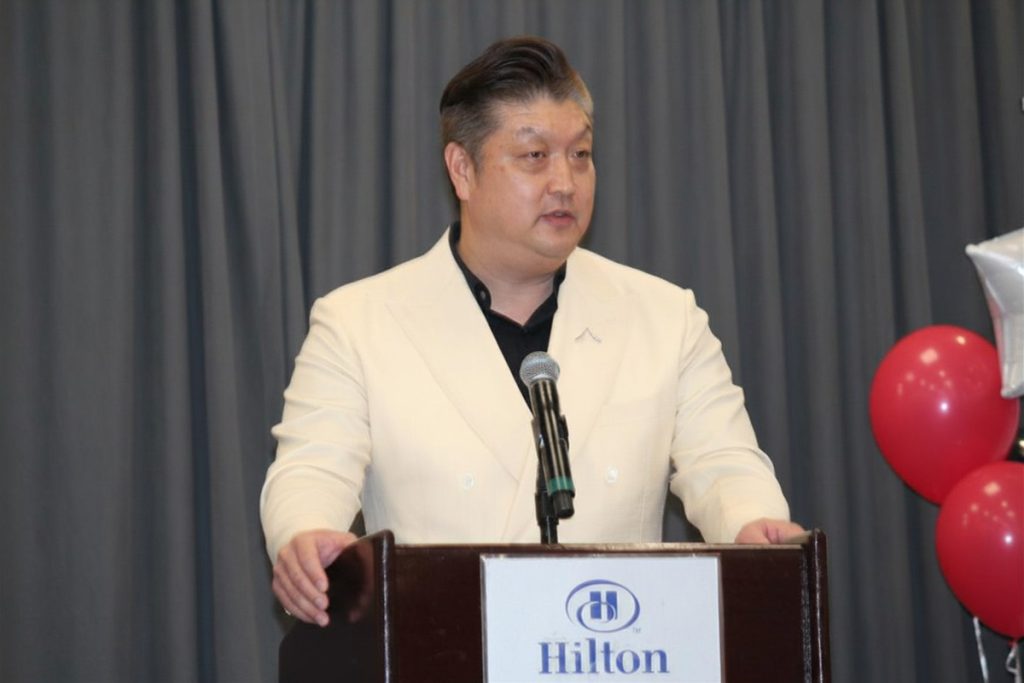
Bryan Ahn, AREAA national president (Photo by James Tabafunda)
He grounded his speech in research and personal narrative. Ahn cited data showing that two-thirds of the AANHPI community are foreign-born and that one in four AANHPI households engages in multigenerational living. A recent Urban Institute study found that one in eight AANHPI are caregivers—a statistic Ahn said applied to him personally.
“Wealth is not simply about accumulation,” he told the audience. “It’s about stewardship. It’s about care. And ultimately, it’s about legacy.”
Ahn cited Urban Institute data showing that AANHPI homeowners build a median of more than $180,000 in equity within their first five years of ownership, more than $340,000 by year 10, and more than half a million dollars by year 20. He called homeownership “the single most important engine when it comes to wealth building” for the community.
But he also pointed to an alarming gap: nearly half of AANHPI adults expect to transfer more than 50% of their wealth at age 65 or older. Yet only about 10% of recipients actually receive that wealth—a disparity he attributes to lack of estate planning, language barriers, and limited access to cultural competence and financial guidelines.
“I’m the first person in my family to own a home in the United States,” Ahn said. “Because of that, I was able to take the equity and my retirement money to purchase my mom’s forever home in Hawaii.”
Keynote speaker delivers ADU strategies and five Springboard to Wealth student testimonials
The noon keynote came from Thach Nguyen, founder of Springboard to Wealth and CEO of Thach Real Estate Group. He is a Vietnamese refugee who became a millionaire at age 27 and has since assisted more than 2,500 families with homeownership in Washington state. Nguyen, a top-1%-ranked real estate professional nationally and Frances Nguyen’s mentor—the two are not related—addressed a packed grand ballroom.
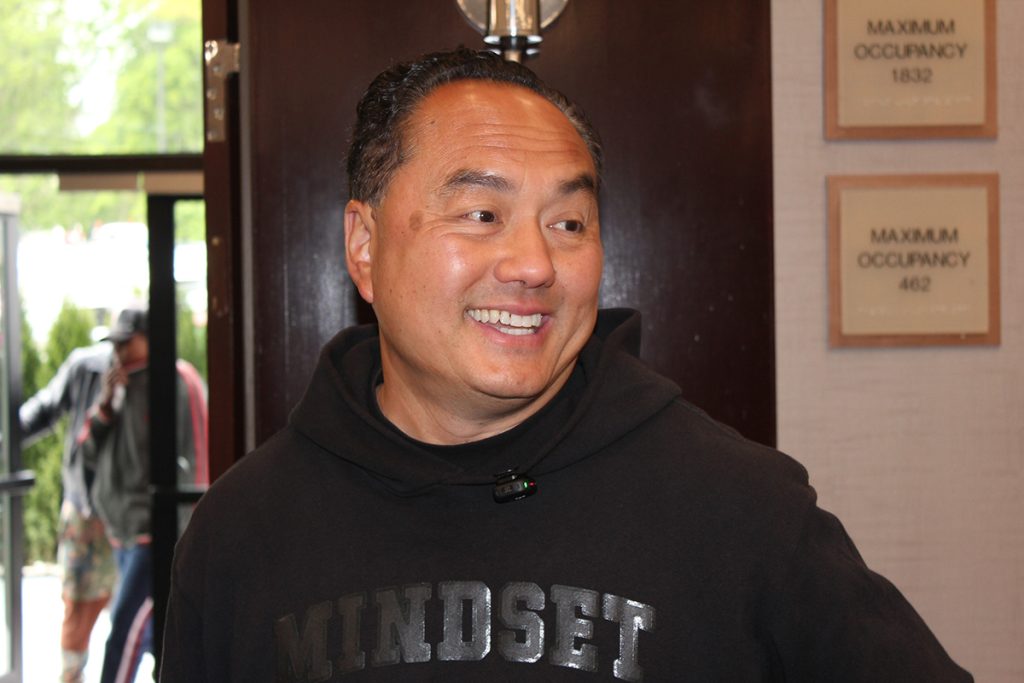
Thach Nguyen, founder of Springboard to Wealth and CEO of Thach Real Estate Group (Photo by James Tabafunda)
Thach Nguyen’s session focused on accessory dwelling unit (ADU) and detached accessory dwelling unit (DADU) strategies as tools for generating income, housing extended family, and building long-term equity—a subject Frances Nguyen described as central to the AANHPI cultural tradition of multigenerational living.
“In the AANHPI community, we have filial piety where we feel like we have to be a family, we have to stick with each other,” she said. Filial piety is a deep sense of respect and responsibility children feel toward their parents and elders.
“With multigenerational living, they all pooled their money together. You can get rent from your cousin who’s living with you and help pay for some of that mortgage for you,” Frances Nguyen said. “That’s a great thing about multigenerational living and what we do to help the Asian community.”
Experts address barriers: Down payment myths, credit, and estate planning
The day’s education sessions covered a spectrum of topics across two breakout rooms, including building ADUs and DADUs, led by Tod Sakai of Sockeye Homes, and estate planning and real estate law, presented by Inslee Best attorneys Kyung Sun Park, Maili Barber, Kelly Huo, and Marcia Cho.
During the same 10:30 a.m. time slot as the ADU and DADU session, Lee led a class on asset protection and wealth transfer in a neighboring room. At 11:15 a.m., while the estate planning and real estate law session was underway, a separate class on reverse mortgages, led by Larry Melton of New American Funding, took place.
A finance panel moderated by Vincent Ha followed the keynote, featuring representatives from Wells Fargo, Chase Bank, U.S. Bank, Certain Lending, and the Washington State Housing Finance Commission on the topic of “Homeownership—Pathway to Wealth Creation.”
Frances Nguyen said one of the most persistent misconceptions holding back first-time buyers is the belief that a 20% down payment is required. “You don’t need 20% down. You can do 3% down. And there are also down payment assistance programs for you,” she said. “A lot of people in the AANHPI community think that cash is king. But in reality, you need that credit history.”
A third round of afternoon sessions at 2 p.m. covered real estate appraisals, led by Joyce Conner of Conner Appraisals, and home insurance, presented by Amy Loh of State Farm.
AREAA foundation doubles down payment grants
AREAA Greater Seattle announced at the expo that it is expanding its first-time homebuyer grant program through the AREAA Foundation, a 501(c)(3) organization. In 2025, the program awarded $10,000 each to two families. In 2026, the chapter is doubling that commitment–awarding grants to four families, with one earmarked for a veteran.
“Last year, we awarded two families $10,000 each, $20,000 total,” Nguyen said. “This year, we’re doubling it. We’re going to award four families this year, with one of them being a veteran.”
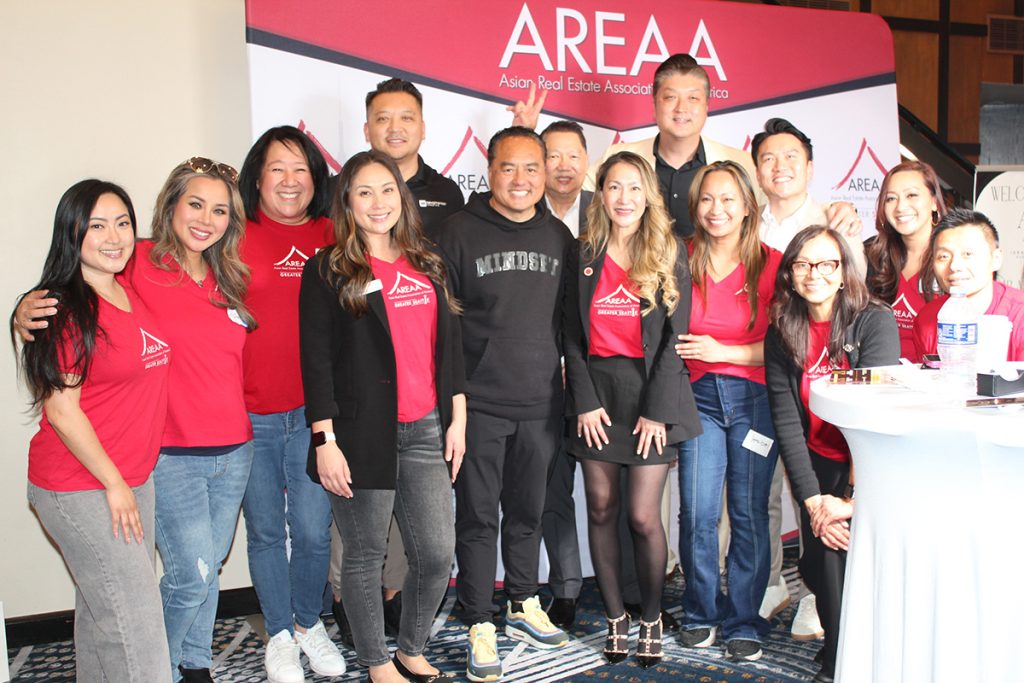
AREAA Greater Seattle officers, board members, supporters, Thach Nguyen, and AREAA National President Bryan Ahn (Photo by James Tabafunda)
AREAA, which was founded in 2003, has grown to more than 19,000 members nationwide across 46 chapters. The organization’s “No Other” campaign, launched years earlier, successfully advocated for the U.S. Census Bureau and mortgage application forms to disaggregate AANHPI subgroup data—separating identities such as Vietnamese, Filipino, Cambodian, and Chinese—enabling researchers and policymakers to identify which communities face the steepest homeownership barriers.
Professionals urged to become ‘legacy-minded advisors’
Beyond serving first-time buyers, the expo challenged real estate professionals to rethink their role. Nguyen told agents and brokers that a single transaction can alter a family’s trajectory for generations.
“You’re not only closing a deal for them, but you’re changing the trajectory of their lives and the trajectory of their future generations,” she said. “My parents, they are immigrants. When I was 14 years old, they bought a house. That home became my first primary home. Then that home became my first rental property. And from there, I started buying more homes.”
Ahn echoed that call from a national vantage point, urging AANHPI professionals and community leaders alike to be “the voice.” “A single chopstick can be easily broken,” he said. “But when you have a bundle of chopsticks, it’s very hard to break. We need to be that strength together.”
The expo’s vendor booths, sponsored by 14 organizations including Stone Insulation, Bank of America, East West Bank, and Goosehead Insurance, gave attendees a chance to get their questions answered. Corporate partners included Compass, Northwest Multiple Listing Service, and Banner Bank.
Ahn said the Seattle chapter started planning the 2026 AREAA initiative two years ago. “The Seattle chapter has always been very proactive in the community,” he said. “Year after year, it’s grown into the opportunity that it presented today.”
For more information on AREAA Greater Seattle, go to www.areaa.org/greaterseattle.