



By Kai Curry
NORTHWEST ASIAN WEEKLY
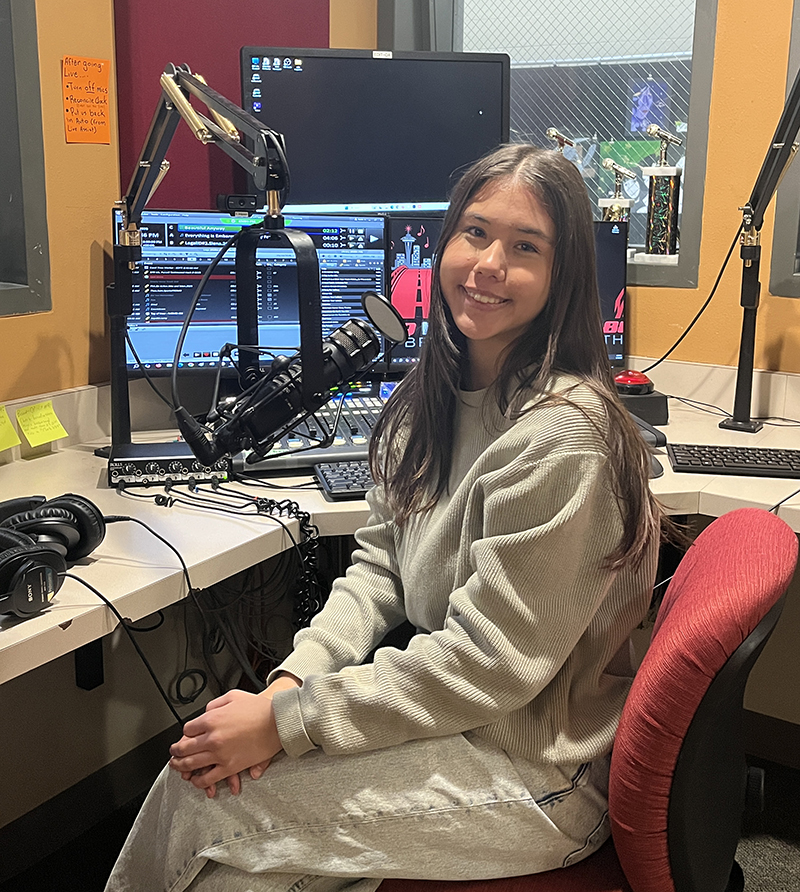
Sophie Perrenoud
There are no scales at Sophie Perrenoud’s house on Mercer Island. She and her parents, Gilles Perrenoud and Anne Ho, are all too aware of how damaging hyper-fixating on weight can be. Sophie suffered from a severe eating disorder, from which she has now recovered. To help others experiencing similar challenges, she started Letters of Light, a peer-led support initiative that uses letters and shared stories to remind people in treatment that they are not alone.
Sophie struggled with disordered eating since at least the fifth grade. Disordered eating is a broad term for “abnormal” eating habits that may or may not lead to serious health consequences. For Sophie, her unwillingness to eat, due to concerns about her weight, escalated when she transitioned into high school. She stopped eating lunch while still participating in athletic after-school activities. The changes in her body were gradual at first. “Maybe I’ll just lose a few pounds, just a little bit,” she would say to herself. “You don’t really notice how far you’ve gone. All of a sudden, I was barely eating, not even a meal a day.”
It might not be possible to pinpoint exactly what caused this situation for Sophie. Peer pressure, certainly. The influence of damaging and unhealthy advice given by influencers online, definitely. Neither her nor her parents believed that the pressure was coming from home, yet somehow Sophie’s refusal to eat and parallel loss of weight kept getting worse. It was Sophie’s brother who noticed first and told their parents, “This isn’t normal.” Sophie’s mom and dad were determined to work through their daughter’s illness together—which turned out to be a much harder feat than any of them imagined. They tried to handle everything on their own initially, yet Sophie kept regressing. Her life was in danger. She was admitted to an eating disorder treatment center—the same center where she and other volunteers now send supportive letters.
The entire Perrenoud family had to get onboard and learn about eating disorders. “Why don’t you just eat?!” Anne and Gilles asked in the beginning. “Why is this so hard?!” There were shouting matches and tears at the dining table. Rather than progressing into ordered eating, Sophie would hide and throw away food, and get up early in the mornings to exercise in secret. Gilles and Anne had to leave work to be with their daughter at mealtimes, to monitor her. They had to go through the awkward necessity of demanding she show them her pockets. Sophie was mad at them at the time, but is grateful now. In addition to going to the treatment center, she saw a therapist and a dietician. “There’s a separate voice inside of you,” Sophie said. “Telling you, whenever you look at food, ‘If you eat this, you’re going to get fat. If you eat this, you’re going to ruin your life.” Sophie wouldn’t even touch medicine, for fear of the calories it contained.
No one besides Sophie’s family really knew what was going on. She told only one friend. Sophie was embarrassed and ashamed, she said. It was about a year before she could go unsupervised. When Sophie formed Letters of Light to help others in similar situations, people at school started to put two and two together. After her recovery, Sophie started a podcast called “Dear Body, Dear Mind,” through Letters of Light. The podcast is also a result of a radio and podcasting class Sophie was taking with Mercer Island High School teacher, Natalie Woods. According to Woods, the podcast dives into complex, often misunderstood, topics around our relationship with food. Topics include the science of starvation and its impact on the brain, breaking free from diet culture, and the connection between blood sugar and mood. “Sophie is able to take these complicated issues and present them in an accessible and engaging way,” said Woods, who has seen how frequently subjects like food, nutrition, and body image come up in the lives of high school students, particularly girls. What stands out to Woods the most about Sophie and her advocacy endeavors is “how she has turned a very challenging personal experience into something that supports and educates others through kindness and positivity.”
To be the advocate that Sophie needed while she fought and recovered from her eating disorder, Sophie’s parents had to take a crash course in what everything happening to Sophie meant. In a way, they described their own process as the same steps people go through when they are grieving—anger, denial, finally understanding, and acceptance. Her mom, who is Vietnamese and Chinese, recalls having been criticized for being “curvy” when she herself was a young girl. “People made fun of me, so I was always very aware around Sophie and my kids not to mention anything,” she said. Sophie corroborated that she did not feel pressure about her weight from her parents, nor did she feel any pressure particularly related to being part Asian. Anne and Gilles read up on eating disorders and realized how unhealthy food culture can be, such as those who inappropriately label foods “good” or “bad,” when there is really no such thing. These types of signals, though, set up a poor relationship with food for anyone listening or watching.
“Be curious,” Anne and Gilles advise other parents. “Because you don’t know what you don’t know.” Since October of 2025, Letters of Light has sent more than 500 letters and released over 10 podcast episodes. Sophie hopes to continue expanding the program so more people in recovery can feel seen, supported, and connected, and to remind young people everywhere that they are not alone. “There’s a big misconception that disorders are a choice,” Sophie said, when in fact there are actual changes happening in your brain that impact thinking and behavior. Those who help Sophie write the letters are learning that an eating disorder is a journey. “No matter how hard it gets, keep going,” Sophie urged. “You’re working to recover not just for yourself, but also for the people that love you. I think they were in almost as much pain as I was.”
“We’re so proud of her,” said her parents. Like “Dory” in the movie “Finding Nemo,” during her ordeal, Sophie kept saying to herself, “Just Keep Swimming.” After a peer at the treatment center was discharged, she made Sophie a bracelet and gave her a sweet letter. “I think that really got me through.” With Letters of Light, Sophie wants to give others the same encouragement.
Sophie’s podcast, “Dear Body, Dear Mind,” airs weekly on KMIH 88.9 The Bridge and has reached a worldwide audience. For information or to help, visit www.letters-of-light.com.
Kai can be reached at newstips@nwasianweekly.com.