





By Becky Chan
NORTHWEST ASIAN WEEKLY
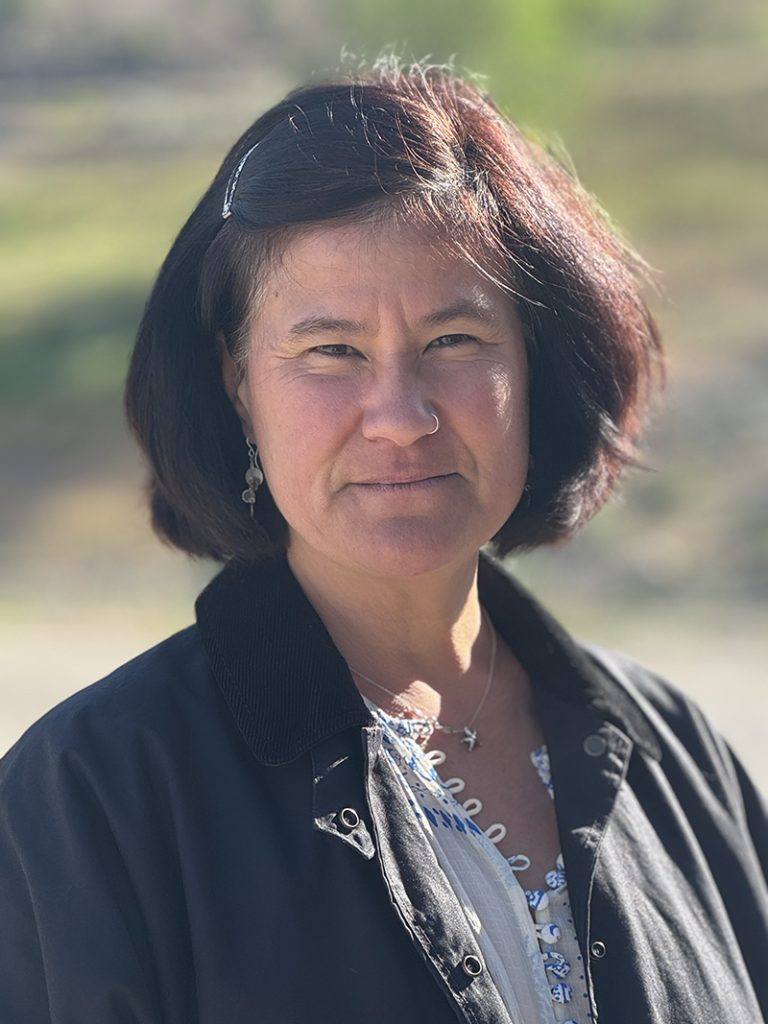
Judge Rachel Hong, Okanogan County Superior Court. (Photo by Becky Chan)
Rachel Hong’s small, thin nose ring sparkled when she spoke. Clad in fashionable wide legged jeans, REI or LL Bean black field jacket, and sensible shoes, Hong looked like a typical Pacific Northwesterner. However, her journey to the Okanogan County Superior Court bench as the newest judge was anything but typical.
The Winthrop resident was appointed by Gov. Bob Ferguson last June to replace Judge Robert Grim, who resigned to run for mayor of Winthrop.
Hong was sworn in on July 3. Hong received her education at the University of Virginia and the University of Michigan Law School. Her 25 years of legal experience as a litigation attorney, a career clerk for Judge Barbara Rothstein, U.S. District Court for the Western District of Washington, and a volunteer attorney at the Northwest Immigrant Rights Project stood out amongst six applicants for the bench vacancy. In selecting Hong, Ferguson noted Hong’s “commitment to public service and deep connection to Okanogan County inside and outside the courtroom.” Outside, literally, Hong worked stints as an organic farmer in between law.
When Hong began the judgeship, she equated it to “drinking from a firehose.” Hong had a week to learn the toughest part of her new job—navigating the historic 1915 Spanish Mission style courthouse building in Okanogan. Once she put away her compass, she turned to ruling in felony criminal cases, civil lawsuits to juvenile matters. She is honored and humbled to be selected. She remains committed to gaining the “trust of the people of Okanogan County, by working tirelessly to ensure that all who come into court are treated with fairness and respect.”
Facing new challenges and being curious seem to invigorate Hong.
In 2004, while working as an attorney, Hong wrote a monthly restaurant review for the now defunct glossy Seattle magazine Colors NW, which covered news in the communities of color in the PNW. Her editor-in-chief was Naomi Ishisaka, who is now the Seattle Times social justice columnist and assistant managing editor.
“It was a side hustle until I ran out of adjectives,” Hong said.
Then in 2006, Hong and her sister, Becky, worked tirelessly on the dream of opening a Jewish deli on the West Coast. They spent time researching and learning a whole new industry. While the project never got beyond the fantasy stage, Hong said, it was a valuable lesson on teamwork and collaboration.
In 2011, disillusioned as a litigation attorney, Hong quit her job at the private law firm of Yarmuth Wilsdon Calfo PLLC in Seattle and drove around the country in a Ford Transit van. She was yearning for a new challenge and a new way to contribute.
Hong’s father, Dr. Songho Hong, had passed away the previous year in 2010. Otherwise, Hong said she would’ve had a difficult time quitting because her father was so proud of her “being a lawyer and working at a big law firm.” Her father always instilled in Hong and her siblings to “get your degree first” so they could always have something to fall back on.
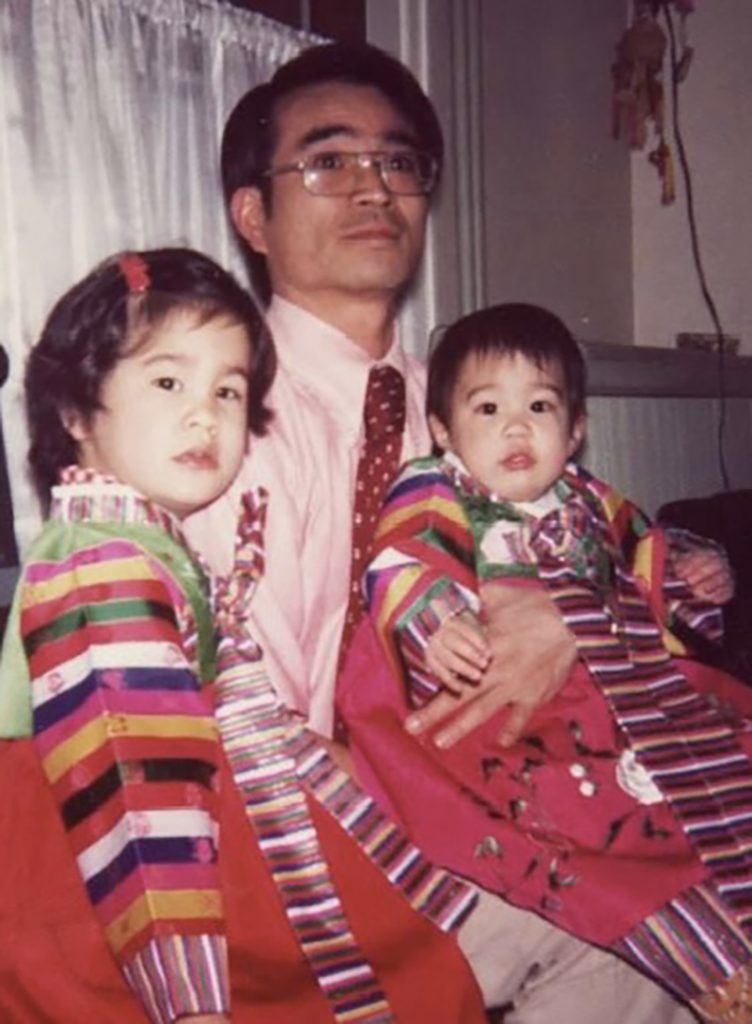
Dr. Song Ho Hong with his daughters Rachel and Becky (Provided by Rachel Hong)
Dr. Song Ho Hong was born in the mid-1930s in Seoul during the Japanese occupation from 1910 to 1945. Song Ho had a difficult and complicated relationship with Korea. Having grown up as a second-class citizen in his own country during this period of aggressive cultural suppression and forced assimilation, Song Ho was conflicted and might not be able to or not allowed to express his mixed emotions. Song Ho had many kind Japanese teachers whom he revered. The turmoil in his own country brought shame to himself being Korean. Hong said her father claimed he didn’t speak Korean well since Koreans weren’t allowed to speak their mother tongue during the occupation. The painful experience of witnessing your own culture being erased took a psychological toll on many Koreans. Song Ho lived it.
“He loved China though,” Hong said of her father, who was fascinated with China. To him, it was a glorious culture, a vast kingdom. Rightly so because Song Ho believed his family descended from the nobles of the Ming Dynasty.
Song Ho was also enamored with American culture. During the Korean war, Song Ho befriended Capt. Berle Strawser, an American soldier from Ohio stationed in Korea. Capt. Strawser later sponsored him to the U.S. Song Ho was 14 when he left Korea alone, with one bag. He also went to Germany for three years shortly after his arrival in Ohio. He subsequently reunited with Capt. Strawser in Delaware, Ohio, and settled there.

A newspaper clipping from July 16, 1952 documenting Rachel Hong’s father’s arrival and reuniting with Capt. Berle Strawser (Provided by Rachel Hong)
After high school, Song Ho studied at Case Western and then traveled to Berlin, Germany, where he got his medical degree. It was in Berlin where he met and married an American, Kay Kahl, from Wisconsin. The couple’s son, Matthew, was born in Berlin. The young family returned to the U.S. and eventually settled in Burlington, Vermont, where Hong and her sister were born.
Hong grew up in the small town of Sunderland in Southern Vermont after the family moved from Burlington. In nearby Manchester, Dr. Hong founded a medical center so people in the surrounding towns wouldn’t have to drive for miles to go see a doctor. The only town doctor there for 15, 20 years, Song Ho was probably the first Korean there.
Although Hong’s father never imparted any Korean culture on his children, Hong’s parents both encouraged them in schools and instilled in them strong work ethics. All three children succeeded academically and professionally.
The oldest, Matthew, is an accomplished jazz saxophonist in New York City. He has played on Broadway hits such as Jersey Boys and Moulin Rouge. Hong’s younger sister, Becky, is Head of School at Sequoyah School, a private K-12 school in Pasadena, California. The three siblings remain close and see each other every year. They text or call each other most days.
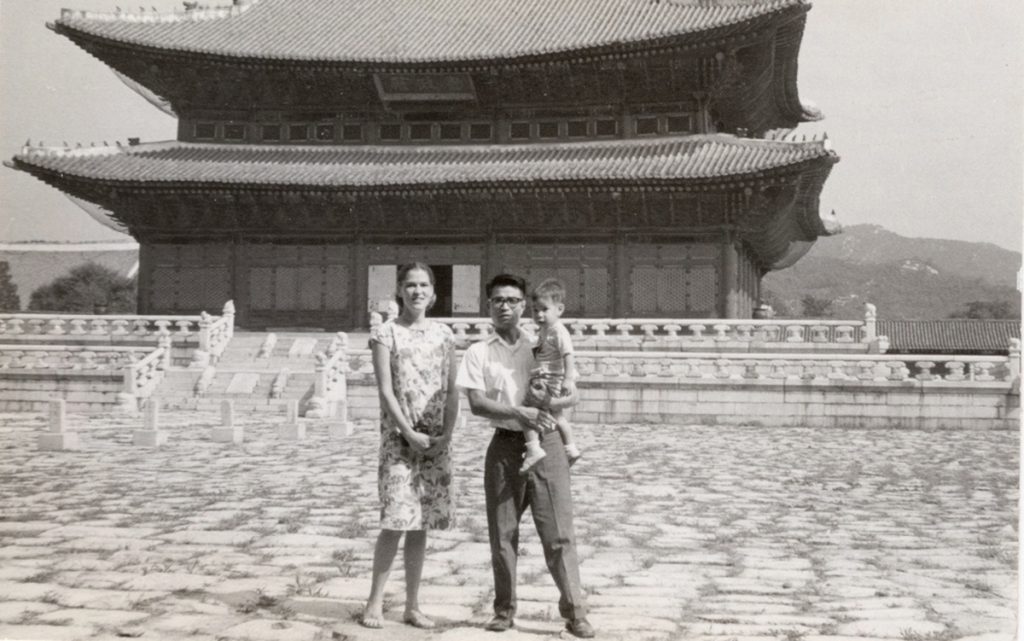
Rachel Hong‘s parents, mother Kay Kahl and father Dr. Song Ho Hong, with brother Matthew taken in 1965 or 66 in Seoul in front of the temple where Song Ho‘s family once hid during the war. (Provided by Rachel Hong)
Like many Asian families who gravitated toward familiar foods, the Hongs made frequent shopping trips to Albany, New York, to buy Asian groceries that were not available in Sunderland. Hong’s mom, of German heritage, made the effort of learning how to make kimchi, and they would eat that with their meals. Rice was a nightly staple.
After her father died, Hong felt free to leave the litigation job she didn’t love. She used the time and freedom to ponder her next phase.
“I asked myself, what is the most basic thing that people need?” Hong said.
She realized food production in the U.S. is broken. She wanted to get back to the basics and contribute to elemental goods in this world. Farming was the answer.
She threw herself into learning everything about organic farming when she didn’t even own any house plants. She attended the University of Vermont Organic Farm School in Burlington during the 2014 growing season. From there, she went to work on a farm in Indianola for a year before running a farm in Shelton.
“There’s problem solving, math, planning, imagination, and physical labor. And the PR, salesmanship, and running a business,” she said. The uncovering of this whole new world of complex challenges of farming captured her imagination and kept her engrossed for several years.
Seeking to live in a small rural town similar to the small Vermont town she grew up in, Hong was lured by the dramatic beauty of the Methow Valley. She moved to Winthrop in 2016 and began working at an organic pear and apple orchard in Carlton. Almost simultaneously, Judge Rothstein of the U.S. District Court, Western District of Washington at the time, asked her to clerk for her again. Hong had clerked for Judge Rothstein twice previously. The offer was attractive because it was remote, and Hong could still work at the Carlton orchard.
With her new role as a county superior court judge, Hong no longer has time to clerk or farm. She still serves on the advisory council at TwispWorks, a creative hub for community collaboration in the Methow Valley. Hong’s unorthodox journey to the bench gave her first hand knowledge of the economic and practical issues facing rural communities dotting Okanogan County. Hong has filed for re-election in November to retain her position since she’s now used to “drinking from the firehose.”
And Dr. Song Ho Hong would be immensely proud of his daughter, having to address her in court as “Your Honor.”