




By Nina Huang
NORTHWEST ASIAN WEEKLY
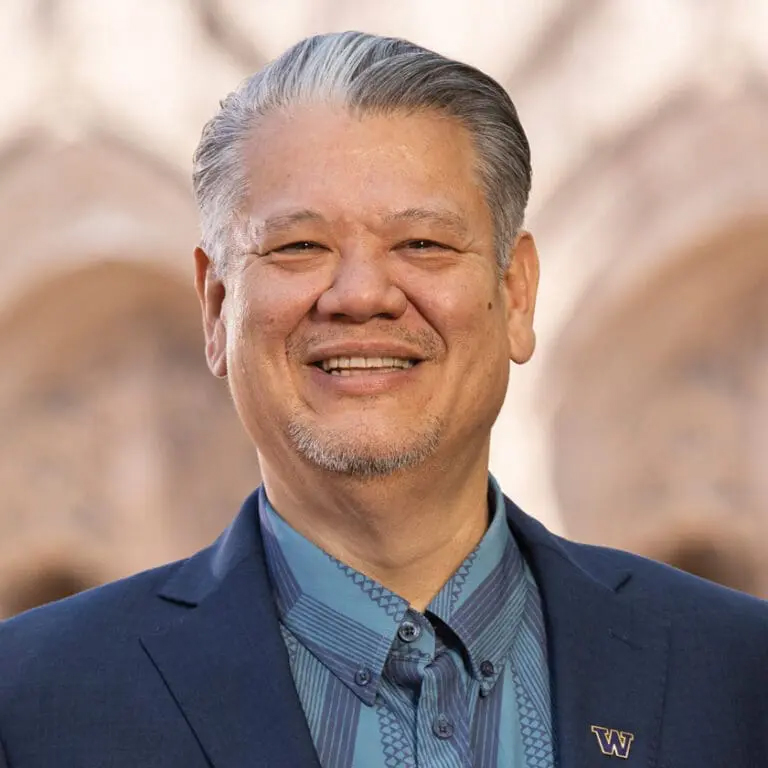
Michael Spencer
For Michael Spencer, the path to becoming the first Kānaka Maoli or Native Hawaiian dean at the University of Washington’s School of Social Work has been shaped by geography, identity, and a deeply rooted sense of purpose.
Born and raised in Honolulu, Hawaii, Spencer, like many folks from the Hawaiian islands, is of mixed race. His mother is from Japan and his father is Hawaiian-Chinese-English-Irish. He attended Kamehameha Schools, a prestigious school whose admissions policy is to give preference to applicants of Hawaiian ancestry to the extent permitted by law.
Spencer received his Bachelor of Arts in Psychology from the University of Hawaii at Manoa, his Master of Science Degree in Social Work from the University of Texas at Austin, and his Ph.D. from the University of Washington (UW) in Social Welfare in 1996.
His career took him across the country, including 23 years at the University of Michigan as faculty and associate dean. But a turning point came when family and cultural connection pulled him back west.
A few years before the COVID pandemic, his mother had become ill, and he wanted to move back closer to home. When he started to go back more, he realized Michigan wasn’t the place for him anymore, and his desire to return to the West Coast grew.
That return reconnected him with work grounded in Native Hawaiian communities. “My work in Hawaii was with Native Hawaiian communities there—healthy lifestyles-type intervention, food sovereignty, restoration of our land, plant-based medicines, and traditional healing.”
Although much of that work paused during the pandemic, it led him to a new focus in Washington state.
Spencer wondered how he could help the AAPI population in Washington state. He did a lot of research and community work during the pandemic, working with local organizations including Asian Counseling and Referral Services.
That work, combined with his leadership, led to his appointment as dean in July of 2023. “It was a long road and I’m happy to be back in the Pacific Northwest. I’m really enjoying my second stint in the state of Washington.”
Inspired by mentorship and community roots
Spencer credits much of his journey to mentors who guided him when few people of color were represented in academia.
He recalls the late Anthony Ishisaka as a defining influence. “He’s mentored so many—around when there were few students of color, he took the responsibility of mentoring all of us,” Spencer said. “He told me, ‘You’re the only one Ph.D. student [of color] that came through.’ I was very honored to be mentored by him.”
The current Native Hawaiian/Pacific Islander population at UW is less than 1%t.
That experience continues to shape his leadership today.
“That’s one of the values I learned, to make sure I make time for students today—especially those from marginalized groups. There’s not very many of us and it can feel isolating at times. That’s one of the joys of my job—to mentor the next generation of scholars,” he said.
His early influences also extended beyond academia into community leadership, including local legends like Al Sugiyama and Frank Irigon. Spencer worked closely with them in the Rainier Valley and Chinatown-International District areas—they were influential in shaping his perspectives and he’s grateful for their guidance.
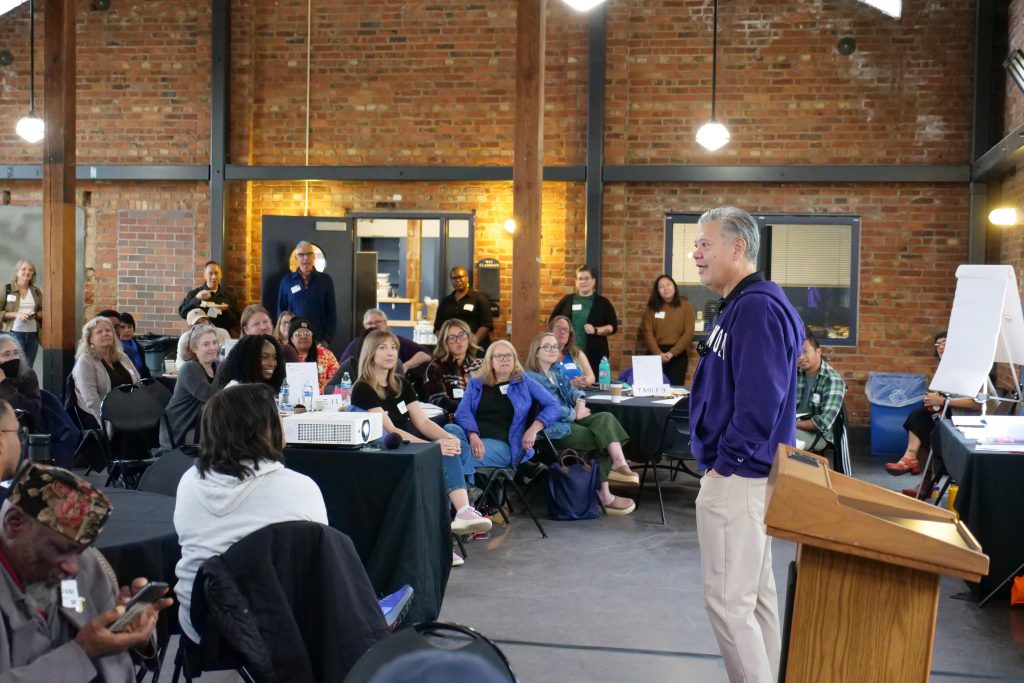
Navigating the complexity of identity and belonging
Spencer’s identity as a mixed-race Native Hawaiian has shaped both his personal journey and academic work.
“Native Hawaiians by definition are mixed race. Most of us are mixed race,” he explained, pointing to the islands’ history as a cultural crossroads shaped by migration and colonization.
But navigating identity across different regions hasn’t always been straightforward.
“In Michigan, most times people would call me the Asian guy,” he said. “In Hawaii, no one reads me as Asian.”
Even within his own heritage, belonging has been complicated. “My mom is from Japan… but in Hawaii, no one looks at me and says I’m Japanese… you get excluded from that community,” he said. “I felt isolated from my own heritage.”
At the same time, experiences abroad offered unexpected validation. “I’ve been to China twice, they squinted at me and said, ‘I see it,’” he said. “When I went back to China, I felt a sense of validation.”
“In Japan, when I open my mouth, I’m like a native speaker and they’re amazed by my identity,” he added.
These layered experiences informed his academic focus. “When I was a student, I studied mixed race identities and realized I’m not the only one that felt like this.”
Research and the next generation
Spencer’s research has helped shed light on disparities within Asian American, Native Hawaiian, and Pacific Islander communities—groups often treated as monolithic despite vast differences.
“Within those groups, we have over 50 different ethnicities,” he said.
In a report commissioned by the Washington Governor’s Office, UW researchers Max Halvorson (who is also Kānaka Maoli), Santino Camacho, and Jenn Nguyễn spent two years studying Asian/Asian American (A/AA) and Native Hawaiian Pacific Islander (NHPI) K-12 student experiences and outcomes to better understand these differences.
In collaboration with Washington State Commission on Asian Pacific American Affairs and local educators and leaders from the A/AA and NHPI communities, they created two distinct reports: one focused on NHPI students’ experiences and another on A/AA students’ experiences. Spencer served as a senior editor for both reports.
The report findings highlighted critical mental health concerns, particularly among multiracial youth. “Mixed race students’ mental health is not as good as other students’, there are more incidents of depression, anxiety, suicidal thoughts.”
Despite decades of research, the issue persists. “From when I was studying this in the 1990s to now, it’s still an issue and it’s still something a lot of our youth struggle with.”
He hopes to continue expanding this work. “We’re looking for funding to look more deeply at that and we hope to do more continued research.”
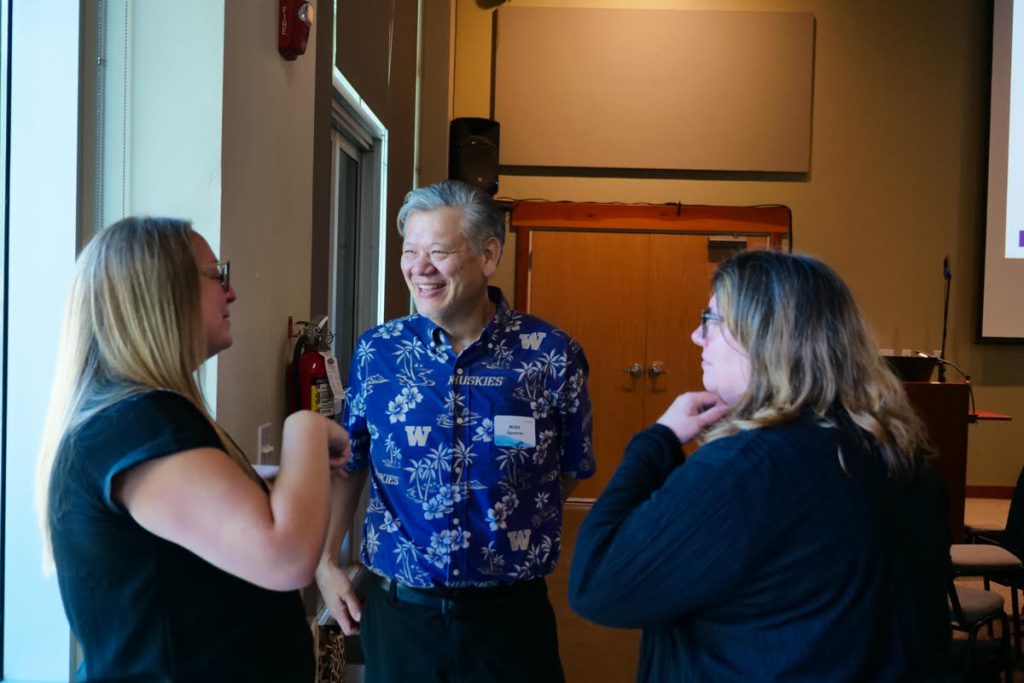
The importance of purpose and representation
Becoming the first Native Hawaiian dean at UW carries deep personal meaning for Spencer.
“It means a lot to me,” he said. “Both my parents were working class people and their expectations for me were to be a good person and work hard.”
That grounding shaped his guiding question: “What is my purpose? What is my why?”
“My ‘why’ has always been my family, and also for my ancestors… the opportunities they never have,” he said. “It’s a sense of pride—to make the most of the opportunity I’ve been given.”
But his vision extends beyond personal achievement.
“My ‘why’ is also to continue to provide access to higher education, to prepare our students to serve their communities,” he said. “It also puts me in a position to keep doors open and provide opportunities for people to come after me.”
Representation, he believes, matters deeply.
“When they see someone in this position, maybe one day I can aspire to do that too—maybe I can even surpass that,” he said. “That would make me super happy.”
As Spencer reflects on his journey—from Hawaii to the mainland and back to the Pacific Northwest—his story is one of movement, identity, and responsibility. It is also, at its core, about opening doors.
“This is my why,” he said. “To continue to provide access… and create opportunities for the next generation.”
To learn more about Spencer’s research, read the following reports: Centering Asian Diasporic Voices & Shaping Policy: The Educational Experiences and Well-being of Asian and Asian American Youth in Washington Schools and Stories of Educational Wayfinding: Supporting the Educational Voyages of Native Hawaiian and Pacific Islander Students.
Nina can be reached at newstips@nwasianweekly.com.