




By Carolyn Bick
NORTHWEST ASIAN WEEKLY
When Dr. Meré Tari Sovick was 20 years old, she became one of just three young women the Australian government chose from the entire South Pacific island region to attend university. But none of the three young women chose what they got to study.
“Basically, the government gets to choose, because it’s part of development. Because this is the colonized way of saying ‘putting aid into a country,’” Tari Sovick said. “How do you make sense of that? Yes, it’s a privilege—but on the other hand, it’s like this oxymoron … a purpose is driven into it for continuing to put your hands on and make decisions for these little island nations and call it ‘empowerment’ or ‘education’ or ‘development.’ So, I went off to New Zealand to further my education, but that always stayed with me.”

Courtesy of Melanesian Women Today
Just the fact that she was in school at all was unusual. Tari Sovick hails from Vanuatu, a Melanesian archipelagic country located in the South Pacific between New Zealand and Australia. When she was growing up—and to this day—it’s unusual for girls to attend school, because it’s not free. Typically, she explained Pacific Islander families tend to be large— “so, imagine parents trying to pay for school fees.”
“In most countries, depending on what your parents believe, depending on how you were raised, most priorities are given to the boys, and then the girls pretty much get married, have children, take care of your elders and continue life,” she continued. “But my dad in particular was a very stern believer in educating girls.”
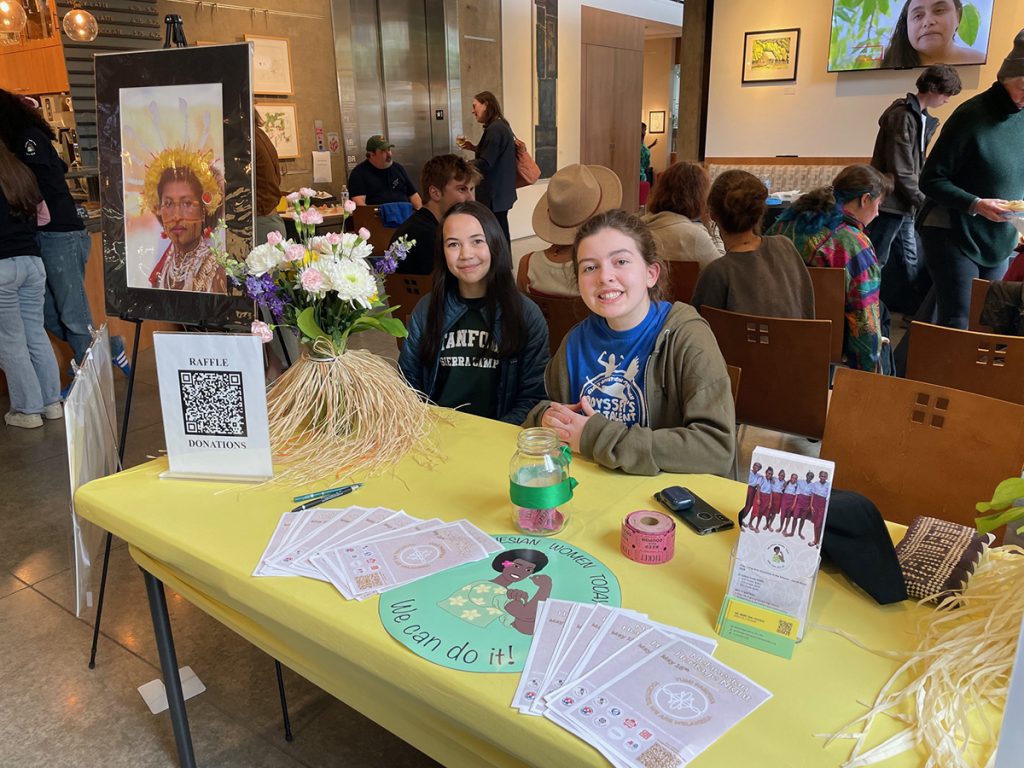
That’s why, in 2018, Tari Sovick founded and serves as the executive director of Melanesian Women Today (MWT), a nonprofit organization based both on Bainbridge Island and in Vanuatu that focuses on uplifting and supporting Melanesian and South Pacific women both in the Pacific and in diasporic communities in the U.S.
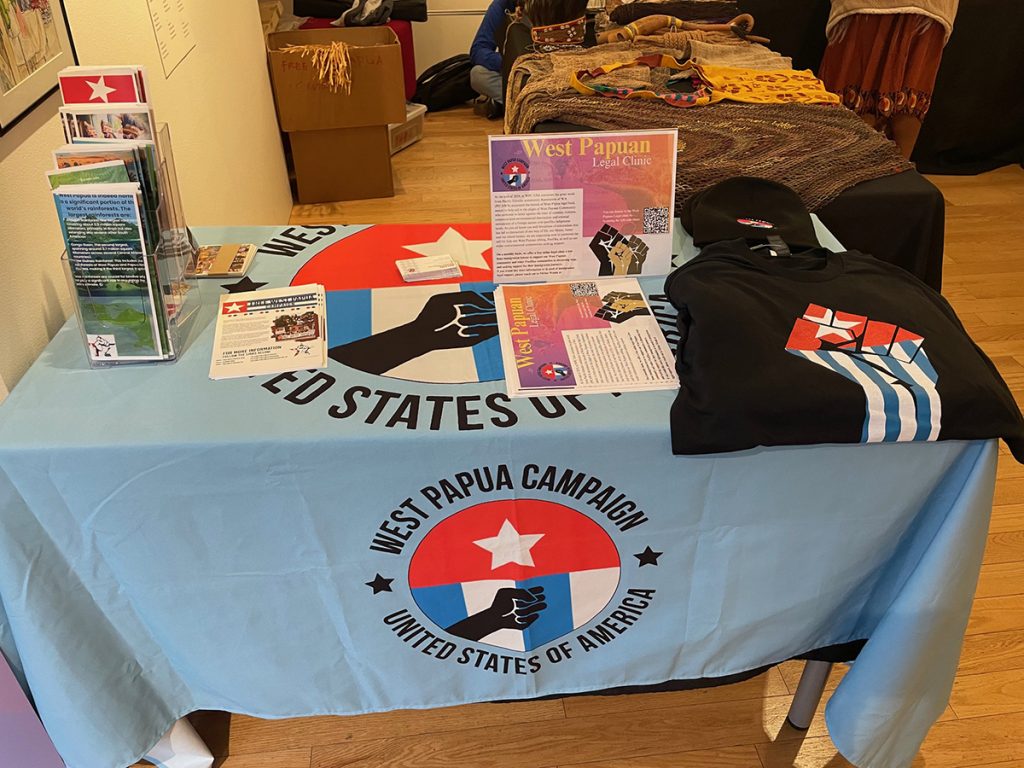
As part of Bainbridge’s Asian Arts & Heritage Festival month, the organization will be holding a Vanatuan Bislama language and cultural experience on May 7, and the second annual Pacific Island Melanesian Heritage Celebration on May 17—the first of its kind in the entire United States.
Melanesian Women Today
Tari Sovick said in a later email that the organization’s goal is to bring Melanesian and South Pacific women’s voices into “spaces where decisions, narratives, and resources are shaped … to know that they have a voice and they should not be afraid to use it and be represented as well as where decision making is made — especially where our stories, knowledge systems, and leadership are not only visible, but valued.”
Courtesy of Melanesian Women Today
“We support women and girls to become leaders and agents of change in their communities. Our tenets are grounded in respect for Indigenous knowledge, community-led development, and intergenerational learning,” she said. “This is important because too often, development and gender equality efforts overlook cultural context. We believe culture is not a barrier—it is the pathway.”
The organization’s operations are grounded in a model Tari Sovick describes as “two canoes,” and the concept of vanua.
“Canoes are very important to us because we are voyagers as well. So, one canoe, obviously, is the Melanesian region, and then the other one is the diaspora,” Tari Sovick said. So, she said, one office is located on Bainbridge Island and works with other South Pacific diasporic communities, like the Fiji Women’s Association of Washington State, while the organization’s home base is located in Vanuatu with an additional office in Fiji.
“It doesn’t matter where you are,” she continued, “you have to be able to embrace your community—your vanua, which is, for us, Bainbridge Island.
Vanua is the “placeperson” concept of the world, treating the land as a treasured relative. Vanua demonstrates both that nature’s health and well-being is deeply entwined with humans’, and that humans are an inseparable part of, rather than “above,” nature. This idea isn’t unique to Vanuatu. Many cultures throughout Melanesia express this concept, and similar ideas can be found throughout the world in both contemporary and ancient cultures.
“Vanua is more than land—it is identity, belonging, and relationship. It holds people, culture, ancestors, and spirit. The idea of a ‘placeperson’ reflects that you are not separate from where you come from; you are shaped by it, and you carry it with you,” Tari Sovick said. “In Melanesian worldviews, there is no separation between humans and the natural world. The environment is not a resource to be used, it is a relative to be respected. Our responsibilities to land, sea, and community are deeply interconnected. This way of thinking challenges Western frameworks that separate people from nature. For us, wellbeing is collective—it includes the health of our environment, our relationships, and our spiritual connections.”
Courtesy of Melanesian Women Today
Foundational pillars
The nonprofit’s four pillars are education, climate leadership action, health and overall well-being, and social entrepreneurship. Because of both her own experience and her Ph.D. research focus on international business, the organization began its work with the inroad of education, given the obstacles Melanesian women face in that arena.
“Education is not available to them, and then they’re stuck in a position where they’re being married as sort of the alternative to, ‘What’s going to happen to you when you’re 14 years old, and you’re not going to school anymore?’” Colleen Huck, MWT’s Bainbridge-based volunteer program coordinator, said. “This is a significant challenge. There’s tons of research about why this is a problem for girls and continues the cycle of poverty. And then on the flip side of that are the vast benefits of educating women and girls when they do have the opportunity, because when women and girls get an education, there’s this ripple effect. They come home, and they teach their children, and they teach their sisters, and their aunties, and their cousins, and their friends, and everyone in the village learns how to read.”
Thus, one of MWT’s first education-focused projects was Vanuatu Mamas’ English Class. Even if they are not pursuing education or a specific career path, Huck explained, learning English allows women to be better equipped even for home life, including selling things at the market to the increasing number of English-speaking tourists who visit the islands.
The organization also gives out several grants to young women looking to pursue higher education, and supports women on their career journeys—but it doesn’t just give out grants or find these young women jobs and then bid them farewell.
“We’ve had some amazing stories about girls who do finish their education. They graduate from high school. They go get a job,” Huck said. “There’s a girl who went and got a job at the bank and sent a picture in her bank uniform.Those really personal stories are also hugely impactful.”
MWT has also decided to focus in particular on climate leadership action, Saiya McElderry, the organization’s board secretary and editor of MWT’s Kalja Magazine said. Not only is climate activism directly related to the concept of vanua, but it also most immediately affects Melanesian women and girls.
Courtesy of Melanesian Women Today
“Obviously, a lot of these issues are very complex … [and] there’s not always going to be a one-size-fit-all solution, but … there’s a lot of smaller grassroots actions … [and] one thing that we’ve tried to do is weave education into that,” McElderry said. “How can we promote for young girls to both be gaining their education, but doing so in a way where their culture is valued within that, and they are also understanding the importance of their own practices and their own ability to preserve their own environment in a way that is not always going to be encouraged?”
First celebration of its kind
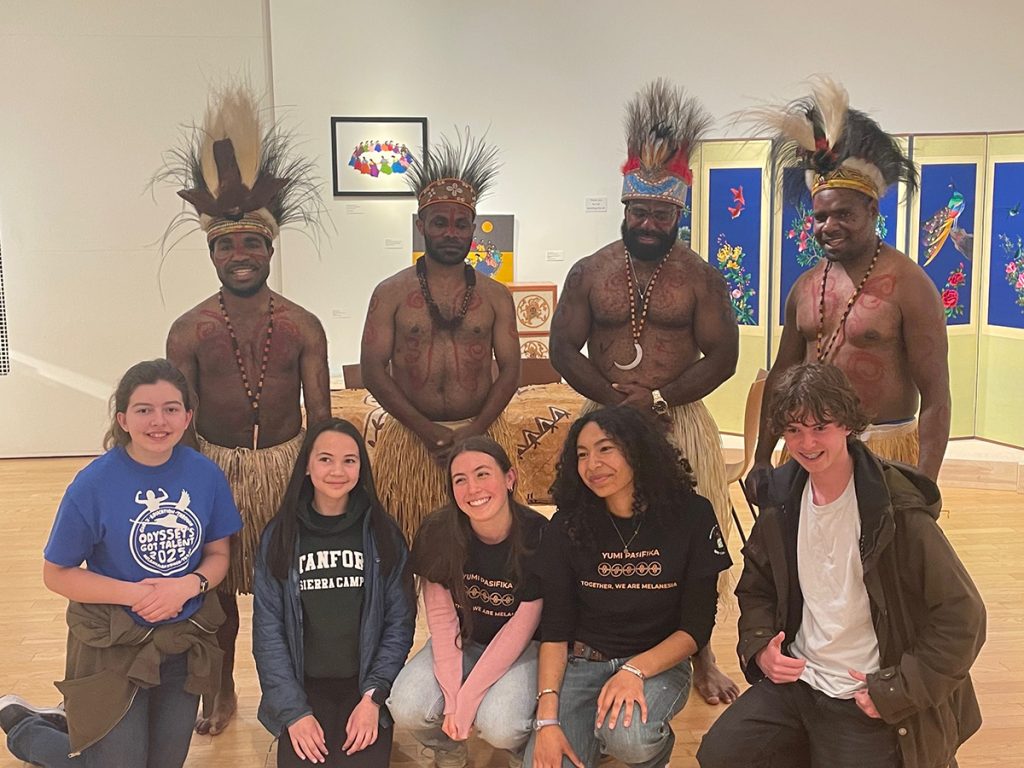
Last year marked the first Pacific Island Melanesian Heritage Celebration during AAPI Heritage Month—but it wasn’t just the first one on Bainbridge Island, or even the first in Washington state. It was the first Melanesian-specific celebration intentionally incorporated into the month throughout the entire U.S.
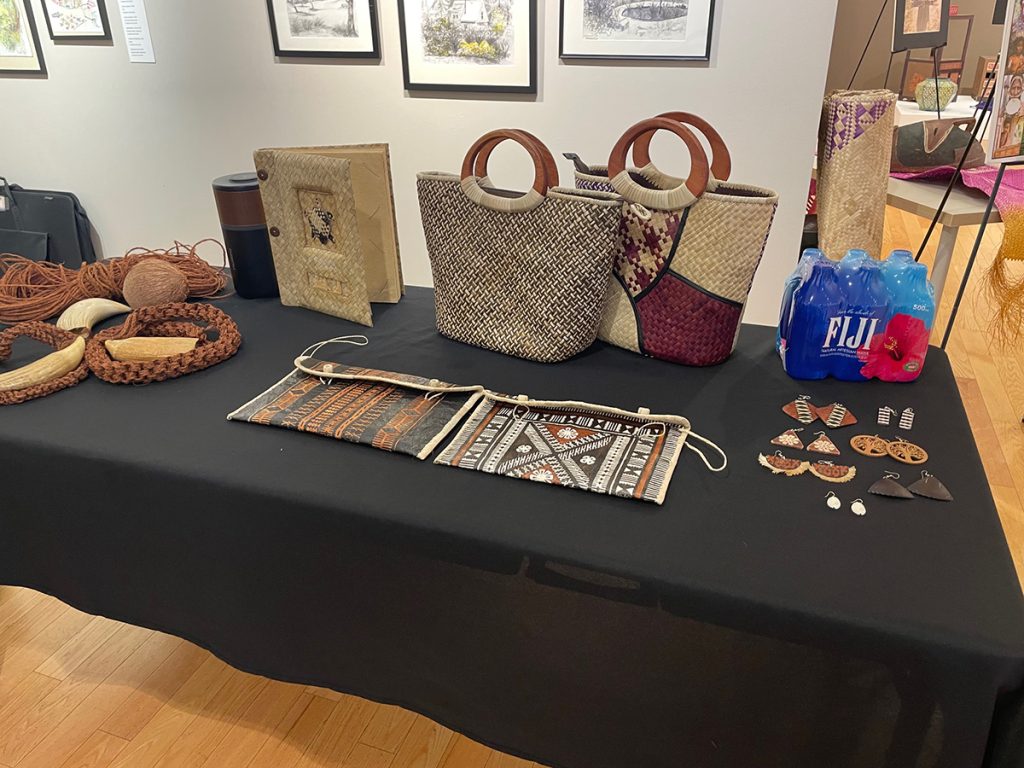
This year’s May 17 festival at the Bainbridge Island Museum of Art will feature storytelling, cultural activities and displays from MWT and sister organizations, including the Fiji Women’s Association of Washington State.
Courtesy of Melanesian Women Today
“People can come and talk to each of the groups, and look at the artifacts that they bring with [them],” Tari Sovick said, adding that they will also screen a Fijian production, Adi.
In addition to these different cultural displays, she continued, climate leadership action will feature heavily in celebratory goings-on.
“We try to rotate as well around storytelling, because it’s important for us to tell our stories of what’s happening, respecting each country and the issues of climate change as well,” Tari Sovick said.
Incorporating the arts and education “constitutes a little bit of the climate impact,” she explained, because the money that the organization raises goes towards women and their families, who are directly affected by “the huge impact of climate change, which is the number one issue in the whole Pacific. So the heart of the festival is really about building relationship and creating visibility for our community that is often underrepresented, and that’s so important.”
The Bislama Language & Cultural Experience will be held at the Bainbridge Island Senior & Community Center on May 7 from 5 p.m. – 6:30 p.m.. The Pacific Island Melanesian Heritage Celebration will be held at the Bainbridge Island Museum of Art on May 17 from 11 a.m. – 2 p.m.